
Explore more Articles in
UK
Youth Charter Launches “From Luanda to Legacy”: A Global Campus Campaign for Africa’s Youth – beyond the 4th African Youth Games

Download logo
The Youth Charter Community Campus (www.YouthCharter.org), the global movement using sport, culture and digital innovation for social development and peace, today announces the launch of its “From Luanda to Legacy” Global Campus Campaign, aligned with the 4th African Youth Games and extending far beyond the Closing Ceremony.
Hosted in Angola across Luanda and five additional cities, the 4th African Youth Games represent a defining moment for Africa's young people. Taking place in the year Angola marks 50 years of independence, the Games unite youth from across the continent in a powerful expression of solidarity, aspiration and African identity.
The Youth Charter calls on African institutions, governments, National Olympic Committees, corporate partners, development agencies and global allies to seize this moment, not just to celebrate sport, but to secure a lasting legacy for Africa's next generation.
From Games to Global Legacy
The “From Luanda to Legacy” campaign positions the African Youth Games as a launchpad for long-term youth and community development, embedding sport within education, health, culture, enterprise and digital inclusion.
“Africa's youth deserve more than moments of inspiration. They deserve systems, spaces and opportunities that endure,” said Geoff Thompson MBE FRSA DL, Founder and Chair of the Youth Charter.
“This campaign is about converting continental celebration into community impact — from Luanda to every village, township and city across Africa.”
The Youth Charter Global Campus Vision
At the heart of the campaign is the Youth Charter Global Community Campus model, a proven framework that transforms sporting moments into permanent community assets.
Key Legacy Commitments
1. African Youth Community Campuses
- Repurposing Games and training facilities into inclusive Community Campuses
- Integrated provision of sport, education, arts, health and enterprise
- Safe spaces for young people to learn, lead and innovate year-round
2. Youth Leadership & Pathways
- Leadership forums and mentorship programmes linked to the Games
- Clear pathways from African Youth Games → Dakar 2026 Youth Olympic Games → global opportunity
- Empowering athletes as community leaders and role models
3. Digital Africa Youth Platform
- Connecting young people across borders through digital learning, coaching and storytelling
- Pan-African youth dialogue rooted in Olympic values, peace and social cohesion
- Building a connected ecosystem of youth, educators and partners
4. Economic & Social Impact
- Youth employment and skills development in sport, media, technology and events
- Support for youth-led enterprises in sport, culture and tourism
- Health, wellbeing and inclusion programmes targeting the most marginalised communities.
A Call to African & Global Partners
The Youth Charter invites African and international partners to co-create this legacy through:
- Public–private partnerships
- CSR and ESG-aligned investment
- Education and skills collaboration
- Infrastructure and digital innovation
- Monitoring, evaluation and impact reporting aligned to the UN SDGs
This campaign aligns directly with:
- African Union Agenda 2063
- UN Sustainable Development Goals
- UN Youth 2030 Strategy
- IOC Olympism 365
- Sport for Development and Peace (SDP) frameworks
Beyond Luanda - A Continental Movement
“From Luanda to Legacy” is not confined to one host nation or one event. It is a pan-African and global movement, designed to:
- Strengthen youth ecosystems across Africa
- Build resilient communities through sport
- Position African youth at the heart of global development and peacebuilding
“Africa's greatest legacy will not be medals won, but lives transformed,” Thompson added. “Together, we can ensure the African Youth Games are remembered as the moment Africa chose legacy over spectacle.”
Distributed by APO Group on behalf of Youth Charter.For Partnership & Stakeholder Engagement:
Youth Charter – Community Campus
www.YouthCharter.org
contact@youthcharter.org
Follow the Campaign:
#FromLuandaToLegacy
#YouthCharter
#AfricaYouth
#SportForDevelopment
#Olympism365
#International Olympic Committee
#Olympism
#Fight4theStreets
#YoungLivesLost
#Call2Action
#LegacyOpportunity4All
#SportDevelopmentPeace
#Empowerthenextgeneration
#CommonwealthSecretariat
#UNSustainableDevelopmentGoals
About Youth Charter:
The Youth Charter is a UK registered charity and UN accredited non-governmental organisation. Launched in 1993 as part of the Manchester 2000 Olympic Bid and the 2002 Commonwealth Games, the Youth Charter has Campaigned and Promoted the role and value of sport, art, culture and digital technology in the lives of disaffected young people from disadvantaged communities nationally and internationally. The Youth Charter has a proven track record in the creation and delivery of social and human development programmes with the overall aim of providing young people with an opportunity to develop in life.
Specifically, The Youth Charter Tackles educational non-attainment, health inequality, anti-social behaviour and the negative effects of crime, drugs, gang related activity and racism by applying the ethics of sporting and artistic excellence. These can then be translated to provide social and economic benefits of citizenship, rights responsibilities, with improved education, health, social order, environment and college, university, employment and enterprise.
African Development Fund mobilises a historic $11 billion, marking a new era of African ownership and investment-led development
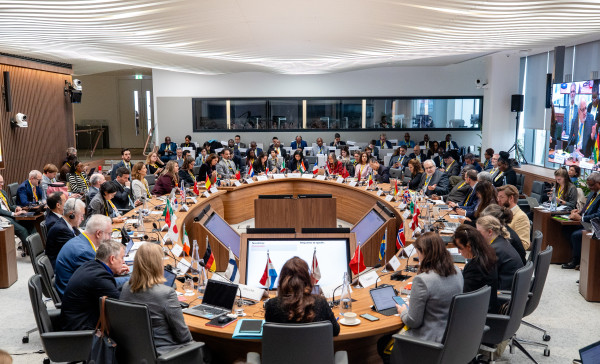
The African Development Fund (ADF), the concessional financing arm of the African Development Bank Group (www.AfDB.org), has secured a record $11 billion from 43 Partners for its 17th Replenishment (ADF-17), the largest in the Fund's history, despite severe global fiscal constraints and declining aid budgets.
The outcome represents a 23% increase over the previous replenishment and sends a clear signal of confidence in Africa's development prospects, the African Development Bank Group's leadership, and a new development model centred on investment, risk-sharing, and scale.
“This is not just a replenishment,” said Dr Sidi Ould Tah, President of the African Development Bank Group. “It is a turning point. In one of the most difficult global environments for development finance, our partners chose ambition over retrenchment, and investment over inertia.”
Africa steps forward as a co-investor in its own future
For the first time in the Fund's history, 23 African countries have made unprecedented contributions to their own concessional financing window.
A total of $182.7 million was pledged by African countries, with 19 countries contributing for the first time, alongside long-standing regional contributors. This represents a five-fold increase compared to the previous replenishment.
“This is not symbolic,” Dr Ould Tah said. “This is transformational. Africa is no longer only a beneficiary of concessional finance. Africa is a co-investor in its own future.”
From aid to investment: a new financial era for concessional finance
ADF-17 marks a structural shift in how concessional resources will be used. Partners endorsed a new financial model that allows the African Development Fund to:
- Leverage its balance sheet, including through a Market Borrowing Option to be operationalised during this cycle;
- Deploy innovative instruments, including hybrid capital;
- Use concessional finance strategically to absorb risk, crowd in private capital, and catalyse investment at scale.
Each dollar invested through the Fund already unlocks more than $2.50 in co-financing and private capital, a ratio expected to increase further under the new model.
“This allows concessional finance to do what it must do best,” Dr Ould Tah said: “Absorb risk, unlock private investment, and accelerate development at scale.”
New generation of large-scale partnerships
ADF-17 also anchors, for the first time, large-scale concessional co-financing partnerships alongside the Fund.
Development finance partners announced major commitments, including:
- Up to $800 million from the Arab Bank for Economic Development in Africa (BADEA);
- Up to $2 billion from the OPEC Fund for International Development.
These partnerships signal the launch of a new generation of scaled, risk-sharing collaboration, significantly strengthening the Fund's ability to deliver transformational projects in the most challenging environments.
Delivering impact where it matters most
Resources mobilised under ADF-17 will support 37 low-income and fragile African countries, with a focus on:
- Expanding access to energy;
- Strengthening food systems and food security;
- Investing in human capital;
- Advancing regional integration and trade;
- Building resilient infrastructure.
Targeted support will continue for countries facing fragility and vulnerability, including through the Transition Support Facility.
A global signal of confidence
Co-hosted by the United Kingdom and Ghana, the London pledging session concluded a year-long replenishment process conducted amid exceptional global uncertainty.
Baroness Jenny Chapman, the United Kingdom's Minister of State for International Development and Africa, said: “The UK is proud to co-host the 17th replenishment of the African Development Fund alongside the Republic of Ghana. We have a long-standing partnership with the African Development Bank and support it in driving sustainable and inclusive growth on the continent – for the benefit of the UK and our African partners.”
Thomas Nyarko Amprem, Ghana's Deputy Minister of Finance, said: “The African Development Fund is a strategic instrument of the African Development Bank Group to reduce vulnerability on the continent.”
“The success of ADF-17 confirms strong international confidence in the Fund's strategic direction and in Africa's potential to deliver results at scale,” Dr Ould Tah said. “This replenishment goes beyond aid. It is a strategic investment, with measurable returns in stability, growth, trade, and global resilience.”
Distributed by APO Group on behalf of African Development Bank Group (AfDB).Media Contacts:
Communication and External Relations Department
media@afdb.org
About the African Development Fund:
Established in 1972, the African Development Fund has provided more than $45 billion in grants, concessional loans, and guarantees to Africa's lowest-income countries. It remains a cornerstone of African-led multilateral development finance and a central instrument of the African Development Bank Group's mission to drive inclusive and sustainable growth across the continent.
The National Football League (NFL) Announces International Player Pathway Program Class of 2026

The NFL (www.NFL.com) has announced its International Player Pathway (IPP) program Class of 2026, featuring 13 athletes representing 10 nations around the world.
Established in 2017, the IPP program identifies elite global talent with the aim of providing selected athletes with the opportunity to improve and develop their skills and ultimately earn a spot on an NFL roster. Historically, it has welcomed athletes from a range of sporting backgrounds, including rugby, basketball, Gaelic football, track & field and more.
The International Player Pathway Program Class of 2026 includes:
PLAYER | COUNTRY |
Kaia Clarkin | Australia, New Zealand |
Kaylan Faumui | Australia, Samoa |
Jarrod Gray | Australia, New Zealand |
Felix Lepper | Germany |
Kansei Matsuzawa | Japan |
Joshua Weru | Kenya |
Laekin Vakalahi | Australia, New Zealand |
Collins Arogunjo | Nigeria |
Uar Bernard | Nigeria |
Michael Daramola | Nigeria |
Chibuike Madu | Nigeria |
Anjola Oketola | Nigeria |
Seydou Traore | Algeria, Ivory Coast, United Kingdom |
“We're thrilled to welcome a new group of talented international athletes to the 2026 IPP program,” said NFL Director of International Football Development Patrick Long. “The IPP program is a key component of the growth of our game globally, providing a pathway for these elite athletes, a number of whom have gone on to achieve tremendous success in the NFL and beyond. We wish the Class of 2026 the very best of luck as they get to work next month and look forward to following their progress in the new year.”
Starting in January 2026, athletes in the program are invited to train in American football — both on the field and in the classroom for 10 weeks at X3 Performance and Physical Therapy in Fort Myers, Florida, before showcasing their skills in front of NFL club scouts.
The IPP program is part of a long-term commitment by the NFL and its 32 clubs to accelerate global football development efforts and establish a pathway for international talent to play the game at the highest level.
Players can be signed as free agents or, if eligible, selected during the 2026 NFL Draft. Each NFL club is permitted one roster exemption for a qualifying international player from the start of the club's offseason program through the roster reduction to 53 players. At that time, qualifying international players are eligible to be signed to a 17th practice squad roster spot reserved for international athletes across any of the 32 teams.
Following its inception, 70 international players have signed with NFL teams (allocated, drafted or signed as free agents), with 22 IPP athletes currently on NFL rosters. Since 2017, eleven of these players have been elevated to active rosters including: Jordan Mailata (Australia), Jakob Johnson (Germany), Efe Obada (United Kingdom), Sammis Reyes (Chile), Thomas Odukoya (Netherlands), David Bada (Germany), Charlie Smyth (Ireland), TJ Maguranyanga (Zimbabwe), Mapalo “Maz” Mwansa (UK / Zambia), CJ Okoye (Nigeria), Haggai Ndubuisi (Nigeria).
For more information visit: https://apo-opa.co/48FLzLf.
Distributed by APO Group on behalf of National Football League (NFL).International Player Pathway Program Appendix:
International Player Definition: A qualifying International Player (IP) is defined as a player whose citizenship and principal place of residence are outside the United States and Canada, and who has a maximum of two years of United States high school experience. In addition, an IP must: (i) satisfy all NFL player eligibility rules; and (ii) have been eligible for a prior NFL Draft. An IP can also play any position, including kicker or punter.
Relevant IPP Program Rules: Each of the 32 NFL clubs can fill a 17th roster spot on the practice squad with a qualifying international player. A player may be an International Practice Player for a maximum of three (3) seasons, with a season defined as being on the Practice Squad or Active/Inactive List for at least six games (a bye week counts as a game). After an IP's third season as an International Practice Player, the player remains eligible to be signed to a club's Active/Inactive List or Practice Squad subject to standard roster rules (i.e., Standard, Exception, Veteran player).