
Explore more Articles in
UK
Protecting the game: Fighting piracy to keep African football alive


On the evening of 21 December 2025, a football match will kick off between Morocco and Comoros in Rabat. It will be the opening game of the 35th edition of the TotalEnergies CAF African Cup of Nations (TotalEnergies CAF AFCON) tournament. The game will have an audience of millions.
There will likely be a full house of 68,000-odd fans at the Prince Moulay Abdellah Stadium, but the overwhelming majority of fans will watch the game via streaming and television, from across the African continent – and the world.
At the previous TotalEnergies CAF AFCON tournament in 2024, the semi-final match between South Africa and Nigeria had a record-breaking audience (https://apo-opa.co/4rJl26Z) of 10.3 million. The tournament itself had an estimated cumulative total viewership of 1.4 billion TV viewers.
The sale of broadcast rights to reach this enormous audience provides the income that makes the tournament possible. Media businesses invest billions in securing the feed for their home markets. In sub-Saharan Africa, those rights (https://apo-opa.co/4iGjuXm) have been secured by MultiChoice, a CANAL+ company, through SuperSport, its sports broadcasting affiliate.
Beyond rights payments, media investment sustains an entire economy that runs for the duration of the month-long tournament. Film crews, accommodation, logistics, and catering are hired by broadcast teams.
Media funds football
Broadcast licence fees also finance the Confederation of African Football (CAF) itself, the body that administers football on the continent. In many ways, media coverage funds football. Revenue from broadcast rights underpin the development programmes that find talent at youth level, and help to nurture it.
Media income funds infrastructure that makes football possible – the fields, the kits, the match officials, the transport, the administrators. At the top level, media income funds national teams, the coaching teams, and the elite training camps, so they can attend the continental showpiece, where they carry hopes and dreams of their nations.
However, the entire football edifice is a precarious one, heavily dependent on the ability of official media partners to recoup the multi-million-dollar costs of broadcast rights. If broadcaster income from subscriptions, contracts and pay-per-view sales does not cover rights fees, then ultimately, football dies.
Only large media businesses, with the advantage of regional scale, are able to fund the costs of media sports coverage. Perversely, their business model is threatened because the same sports events they bring to their viewers are prime targets of content piracy.
Viewers might not see the harm of accessing a pirate stream, but the impact runs deep. Where a subscription paid to a legitimate rightsholder would help to fund African football, any income earned by a pirate stream goes directly to criminal syndicates in other parts of the world.
Content piracy undermines football. It robs football associations of the funding they desperately need to survive, to develop youth structures and to compete at the highest level. It's therefore critical that sports fans understand the damage they do to the sport they supposedly love when they use pirate streams.
The impact is global. In Spain, LaLiga (https://apo-opa.co/4oC1TRL) reported that audiovisual fraud was costing Spanish football €600 and €700-million. In the UK, the Premier League blocked more than 600,000 illegal live streams (https://apo-opa.co/4pt6VRU) in a single season in its fight against piracy.
Pirate websites also place users at risk, exposing them to malware, hacking and identity theft, as well as unwanted pop-ups, viruses, fraud and adult content. When football content is spread across hundreds of thousands of sites, it also becomes harder to measure audiences, and makes the sport less attractive to sponsors.
Fight to save the game
Helping to fight sports piracy and keep football alive are initiatives such as Partners Against Piracy, which work to strengthen legal frameworks to prosecute pirate sites and pirate users, and to educate fans about the consequences of piracy.
Cybersecurity organisations like Irdeto harness tech and digital solutions (https://apo-opa.co/4aB6nog) to protect streams and track the source and the users of pirate feeds. For instance, a new innovation enables continuous renewal of authentication keys, which degrades the pirate experience and shifts users back to legal platforms.
The best partner in the fight to save football from piracy is the African public. Knowing how piracy destroys the football ecosystem empowers fans to make ethical choices in how they support their sport and makes them more likely to access games through legitimate channels.
As a fan, when you watch football content, the choice is yours: Will you be part of destroying football, or building it up? Choose wisely, the future of your sport depends on it.
- To report content piracy, contact Partners Against Piracy on any of these channels:
- International Hotline: +27 11 289 2684
- piracy@multichoice.co.za
- mcg@irdeto.com
- supersport@irdeto.com
- Visit: https://apo-opa.co/44KEGpm
The the Standards for Official Statistics on Climate – Health Interactions (SOSCHI) Conference Calls for Stronger Climate–Health Indicators to Guide Policy and Protect Communities
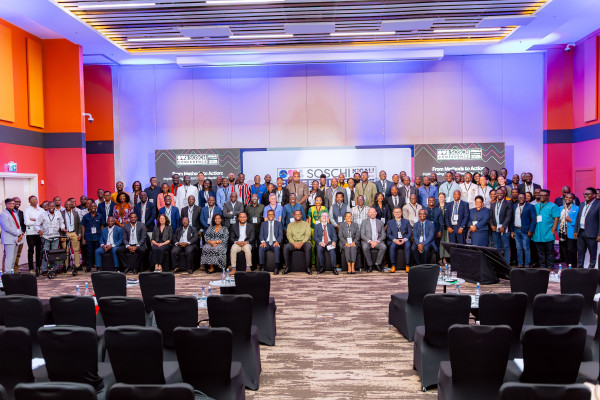
A Conference bringing together African government officials, scientific institutions, development partners and global organisations from 23 countries, issued a clear call to strengthen climate–health intelligence. It emphasised that countries will remain vulnerable to climate hazards unless they build and sustain systems that measure how climate change affects human health. The call followed three days of dialogue and technical exchange at the Standards for Official Statistics on Climate – Health Interactions (SOSCHI) Conference held in Kigali from 3 to 5 December 2025.
Climate change is already driving severe health impacts across Africa, yet most countries collect data in those fields in isolation. To effectively quantify risk of climate change impacts on health and protect vulnerable populations, comparable indicators are needed to guide preparedness, shape policy, or allocate resources for adaptation.
The joint communiqué adopted in Kigali emphasises that enhancing climate–health intelligence will strengthen existing national strategies and unlock new possibilities for targeted interventions, resilience building and the development of early warning. It highlights the “urgent need for more robust information on the health impacts of climate hazards to strengthen national policies and to guide target interventions.”
Delegates agreed that robust climate–health interactions indicators are essential to move from reactive responses to proactive, evidence-based planning. They emphasised that data alone is insufficient: decision-makers require harmonised indicators that reveal where climate hazards are affecting health, how disease patterns are shifting, and where adaptation efforts will have the greatest effect. Participants therefore committed to embedding the SOSCHI indicators into national statistical systems, with particular focus on extreme weather, water-related disease, vector-borne disease and mental health.
A major theme across the discussions was sustainability. Participants highlighted that climate–health interaction monitoring cannot depend on short-term projects, but must be rooted in long-term domestic financing, skilled personnel and systems that persist across political and funding cycles. Strengthening civil registration and vital statistics systems, improving the timeliness of health data, and enhancing environmental and meteorological monitoring were identified as critical foundations for sustainable climate–health intelligence. Collaborative data sharing and system interoperability were also deemed essential, given that climate–health indicators rely on multi-sectoral datasets that are rarely analysed together.
Technical demonstrations from Rwanda, Ghana and the UK showed how the SOSCHI indicators reveal emerging vulnerabilities and shifting disease burdens. Rwanda's results illustrated spatial changes in malaria risk linked to temperature and rainfall patterns, while Ghana's results highlighted how diarrhoeal disease, air pollution and heat-related mortality can be quantified and tracked over time. These findings underscore the value of harmonised methods for informing policy and supporting adaptation planning.
Participants left Kigali with a shared commitment to advance the scaling and institutionalisation of the SOSCHI framework. The communiqué invites national statistical offices, health ministries, research institutions and funders to join this effort, noting that together they can “deliver validated climate-health metrics that inform policy, strengthen resilience, and safeguard population health in the face of climate change.”
The Kigali meeting affirmed that Africa is not only experiencing the most immediate impacts of climate change but is also shaping the global standards required for effective climate–health action. The collective commitment expressed by participants represents a significant step towards building the climate–health intelligence necessary for a safer and more resilient future.
Distributed by APO Group on behalf of African Institute for Mathematical Sciences - Research and Innovation Centre.Media contact:
Joseph Ndiritu
Programs delivery and reporting
AIMS Research and Innovation Centre
Email: jndiritu@aimsric.org
Phone: +250 780 440 935
About the SOSCHI Partnership:
Standards for Official Statistics on Climate – Health Interactions (SOSCHI) is a collaboration between the UK's Office for National Statistics, the African Institute for Mathematical Sciences Research and Innovation Centre (AIMS-RIC) in Rwanda, and the Regional Institute for Population Studies (RIPS) at the University of Ghana, supported by global partners and funded by Wellcome Trust. The project provides a harmonised statistical framework and open-source platform enabling countries to generate actionable climate– health indicators.