
Explore more Articles in
Resource
African Energy Chamber Calls for Pragmatism, Strengthened United Kingdom (UK) Partnerships to Drive Africa’s Oil Future

Download logo
The African Energy Chamber (AEC) (https://EnergyChamber.org) has called for pragmatic and common-sense approaches to Africa's oil and gas development at the Wider African Energy Summit in Aberdeen on Wednesday. Pointing to Africa's need to alleviate energy poverty, NJ Ayuk, Executive Chairman of the AEC highlighted the need to make Africa a home for international companies, underscoring the abundant opportunities for UK-based operators and service providers across the continent' evolving hydrocarbon supply chain.
“We believe in affordable and abundant energy. There are so many people in Africa that don't have economic opportunities. Our job is to change that and to bring pragmatic, common-sense approaches to how we address the twin demons of climate change and energy poverty. They are two sides of the same coin,” he shared.
With over 125 billion barrels of proven oil reserves and 620 trillion cubic feet of natural gas, Africa's hydrocarbon industry has the potential to unlock long-term economic benefits across its economies. Efforts are underway by African governments to monetize these resources. However, challenges remain, highlighting the need for a coordinated approach by African states to engage investors and drive projects forward.
“The African advantage comes down to our population and an industry with a hunger for technology. We are going to see opportunities in new provinces, such as the MSGBC basin in Senegal and Mauritania as well as basins in Mozambique, Namibia and South Africa. We are seeing countries becoming more open and friendly, without focusing on resource nationalism. This is where the advantages are. We have seen UK companies active in these markets, shooting seismic and opening doors. But we need to explore more,” Ayuk explained.
To incentivize foreign investment across the African market, Ayuk emphasized the need to address above-ground risks. Notably, through improved fiscals and realigned regulatory structures, he explained that African countries can increase their competitiveness for foreign capital at a time when expenditure is becomingly increasingly restricted.
“Most African countries have started to realize that the more we address above-ground issues, the most investable we become. We are not competing for capital between Mozambique and Zimbabwe, we are competing with Guyana and Suriname. We have seen countries like Angola turning above-ground issues around, providing better fiscals and attracting investment. The result? We have seen Shell go back and investing,” Ayuk said.
Ayuk also highlighted opportunities for UK service companies across the continent's midstream sector. He explained that “our infrastructure deficit is a big problem. Nigeria, for example, has not been able to power the region with gas – and this is not because of lack of resources. How can we move resources across the continent? We need to look at baseload energy and natural gas. We don't have LNG receiving terminals and need to look at this.”
Strengthened partnerships with companies that have seen success in the North Sea could support these efforts, creating a more affordable, diverse and connected energy system in Africa. Closing the discussion, Ayuk said: “Choose Africa. Whatever you do in Africa, it will be worth it – both in a financial sense and in the ability to change lives.”
Distributed by APO Group on behalf of African Energy Chamber.A Call for People-Centered Development and Reparatory Justice in African Union (AU)-European Union (EU) Engagements
Download logo
1. Introduction: Why the Church's Voice Matters
As the AU–EU Summit convenes in Luanda, the Catholic Church in Africa, represented by the Symposium of Episcopal Conferences of Africa and Madagascar (SECAM) (https://SECAM.org/), reaches out to all people of goodwill with a message of concern, truth, and hope. We speak as a Church deeply embedded in the daily lives of the African people, sharing in their joys and hopes, as well as their griefs and anxieties, particularly for the poor and afflicted (cf. Gaudium et Spes, n. 1). Our moral responsibility is informed by lived experiences throughout the continent, through our schools, universities, clinics, parishes, and communities.
2. The Significance of the Year 2025
The year 2025 holds particular significance, as the African Union has declared it the Year of “Justice for Africans and People of African Descent through Reparations” and will launch the Decade of Reparations (2026-2036). The Catholic Church's Jubilee Year calls for truth, renewal, and reparatory justice. Following COP30 in Belém, where voices from Churches in the Global South underscored the urgent need for ecological justice, climate finance, and respect for Indigenous and local communities, the AU–EU Summit must not only negotiate but also listen, remember, and address longstanding injustices.
3. Concerns Over Restricted Civil Society Participation
SECAM is compelled to highlight the restrictions imposed on civil society organizations in the official Summit process. Numerous African civil society organizations, including those willing to self-finance their participation, have been excluded. This includes faith-based organizations with a long-standing presence on the ground, humanitarian and justice networks linked to the Church, women's and youth associations, farmer and Indigenous organizations, local development movements, and peacebuilding and reconciliation bodies. This exclusion raises a critical moral question: How can a summit focused on Africa's future exclude those who support African communities daily?
4. The Parallel Peoples' Summit in Luanda
In response to the official Summit's inability to accommodate African civil society, a Parallel Peoples' Summit has been organized at the Catholic University of Angola in Luanda on 19–20 November. This is not an act of rebellion; it is a necessary response to insufficient participatory channels, a lack of transparency, technocratic top-down processes, and an imbalance of power between institutions and communities.
5. Historical Responsibility and the Call for Reparatory Justice
The Church in Africa expects the AU–EU Summit to demonstrate honesty about history and a genuine commitment to reparations, acknowledging the ongoing impact of the Transatlantic slave trade, slavery, colonialism, neocolonialism, economic domination, and resource extraction as matters of historical fact and moral responsibility. We are deeply concerned that the European Union has not fully committed to reparatory justice for Africans and people of African descent, despite the fact that key members benefited from the Transatlantic slave trade and colonization. The legacy of this exploitation persists today in an unfair trade system and the transgenerational trauma suffered by Africans and people of African descent.
6. People-Centered Development
Guided by the Church's social teaching principle of the primacy of the human person over systems, SECAM advocates for a people-centered development model. The joint SECAM–COMECE–Caritas–CIDSE statement warns that many AU–EU initiatives risk perpetuating extractive patterns; development must serve communities, not geopolitical interests. Reparatory justice is essential, encompassing both structural fairness and restorative healing.
7. Economic, Debt, and Ecological Justice
Economic and debt justice are crucial, as Africa's debt burden—rooted in historical injustice—requires serious reform as a matter of justice, not pity. Following COP30 in Belém, ecological responsibility must be upheld, recognizing that ecological justice cannot be separated from social justice. Africa's forests, water sources, mineral resources, biodiversity hotspots, and vulnerable communities must never again be sacrificed for profit, geopolitics, or external interests. Respect for African sovereignty and the sovereignty of its people is vital; African sovereignty belongs not only to governments but also to its citizens.
8. Conclusion: Toward a Strengthened AU–EU Partnership
The Church in Africa hopes for a renewed and strengthened AU–EU partnership. However, this requires inclusion rather than exclusion and transparency rather than opacity. A partnership that listens to the people will endure; a truly inclusive summit will foster trust, and a dialogue rooted in justice will have the power to heal historical wounds. The Church in Africa stands ready to accompany Africa and Europe toward a future of justice, peace, and human dignity.
Distributed by APO Group on behalf of Symposium of Episcopal Conferences of Africa and Madagascar (SECAM).Contact:
Rev. Fr. Uchechukwu Obodoechina
Director of SECAM - Justice, Peace and Development Commission
secamjpdcdirector@gmail.com
Tel: +233 55 733 7871
Rev. Fr. Louison Emerick Bissila Mbila, C.S.Sp.
SECAM Liaison Officer at the African Union
secamauliaisonoffice@gmail.com
Tel: +251 900 485 018
Senegal’s Minister of Energy, Petroleum and Mines Invites Energy Stakeholders to MSGBC 2025
Download logo
Birame Souleye Diop, Minister of Energy, Petroleum and Mines of Senegal, has invited all energy stakeholders to participate in the MSGBC Oil, Gas & Power 2025 Conference and Exhibition, taking place on December 8–10 in Dakar.
Speaking during a press conference on Thursday, he emphasized that the conference has become a cornerstone of African energy cooperation and called on institutions, companies and regional partners to join the dialogue shaping the next phase of the MSGBC basin's development.
Taking place under the theme Energy, Oil and Mining in Africa: Synergies for Inclusive Economic Development, MSGBC Oil, Gas & Power 2025 Conference and Exhibition will be held under the patronage of Bassirou Diomaye Faye, President of Senegal and in partnership with the Ministry of Energy, Petroleum and Mines, the national oil company Petrosen and state-owned COS Petrogaz.
“The MSGBC region–Mauritania, Senegal, The Gambia, Guinea-Bissau and Guinea-Conakry–is not just a geological basin. It is a community of shared destiny, united by one ambition: to transform our resources into drivers of inclusive and sustainable growth,” Minister Diop said, adding that the event is a platform for institutions, companies and international investors to explore new opportunities and forge partnerships across the region.
During his address, Minister Diop highlighted bp and Kosmos Energy's Greater Tortue Ahmeyim gas projects (GTA) as a key example of cross-border partnership.
“GTA is a symbol of successful cooperation and economic integration,” the Minister said. Phase 1 of the project began producing gas in December 2024, with 20–25% expected to supply domestic power and industrial needs. Plans for Phase 2 could raise production to around 5 million tons of LNG per year, while technical inspections have confirmed stable operations.
He noted Senegal's Gas-to-X strategy, saying, “Our goal is to transform gas into electricity, industrial inputs, fertilizers and cleaner fuels.” He explained that the strategy supports economic diversification while positioning gas as a complement to renewable energy in the country's energy transition.
Minister Diop also emphasized strengthening local content. “Every project must benefit our citizens first,” he said.
Recent initiatives in Senegal's energy sector align closely with this strategy. In November 2025, the Senegalese university INPG partnered with global energy company Woodside Energy (https://apo-opa.co/4rq3rB8) on the Sangomar project to expand local capacity, awarding contracts to Senegalese companies and providing skills development for engineers and technicians. Earlier in April 2025, the INPG (https://apo-opa.co/4rc4zIl) signed a tripartite agreement with the state-owned Vocational and Technical Training Fund and the National Committee for Monitoring Local Content to train and integrate 1,000 young professionals by 2026, with a long-term goal of 15,000 by 2029.
Sandra Jeque, Project Director at Energy Capital & Power, stated, “MSGBC 2025 will showcase how the region is developing talent, infrastructure and partnerships that place African capabilities at the center of Africa's energy future.”
Minister Diop concluded, “MSGBC 2025 is a unique opportunity to advance energy access, resource transformation and economic development across the African continent.”
Explore opportunities, foster partnerships and stay at the forefront of the MSGBC region's oil, gas and power sector. Visit www.MSGBCOilGasAndPower.com to secure your participation at the MSGBC Oil, Gas & Power 2025 conference. To sponsor or participate as a delegate, please contact sales@energycapitalpower.com.
Distributed by APO Group on behalf of Energy Capital & Power.Saudi Arabia to Host Landmark Innovation Driven Water Sustainability Conference in Jeddah, Under the Patronage of HRH Prince Khalid Al-Faisal
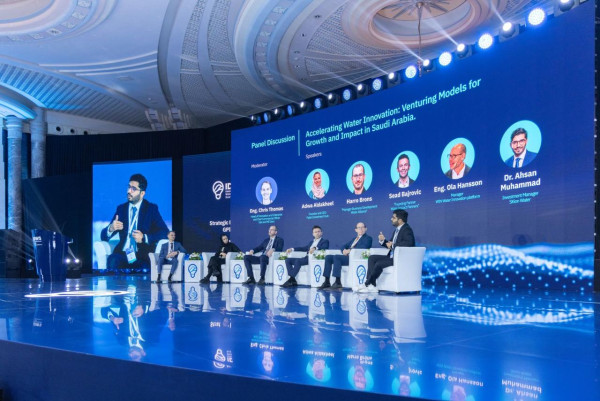
As the world faces unprecedented water scarcity, with more than 2 billion people lacking access to safe drinking water and global demand expected to exceed supply by 40% by 2030, Saudi Arabia will host one of the world's most influential gatherings dedicated to water innovation and sustainability.
The Innovation Driven Water Sustainability Conference (IDWS 2025) will take place 8–10 December 2025 at The Ritz-Carlton, Jeddah, under the esteemed patronage of HRH Prince Khalid Al-Faisal bin Abdulaziz Al-Saud, Advisor to the Custodian of the Two Holy Mosques and Governor of Makkah Region. Organized by the Saudi Water Authority (SWA), IDWS 2025 will convene global leaders, policymakers, innovators, and industry pioneers to address the planet's most pressing water challenges and accelerate the transition toward a secure and sustainable water future.
A centerpiece of the conference, the Global Prize for Innovation in Water (GPIW) will recognize and fund breakthrough solutions that reimagine how the world produces, treats, and reuses water. The GPIW stands as the largest water innovation prize in the region and among the most significant globally. The prize bridges science, entrepreneurship, and impact; connecting innovators with investors, implementers, and networks to transform ideas into real-world applications. Winning projects will gain financial support and operational backing to pilot and scale their technologies within the Kingdom and beyond.
Returning for its second edition, Miyahthon (The Water Innovation Hackathon) invites young innovators, startups, technologists, and entrepreneurs to co-create scalable solutions spanning the entire water cycle, from production and reuse to digital transformation and efficient management. The program offers hands-on mentorship through virtual and in-person bootcamps, supported by sector experts, and provides winning teams the opportunity for incubation and commercialization. The Miyahthon will also feature a dedicated investor track designed to connect participating teams with potential funders and strategic partners to fast-track their market-ready innovations.
As part of its commitment to capacity building, the Water Academy will launch a series of advanced professional development programs in partnership with London Business School and 15 international training institutions.
These courses are designed to empower Saudi and Arab professionals with expertise in water management, sustainable leadership, and organizational innovation, strengthening the sector's human capital and competitiveness.
IDWS 2025 will host specialized technical workshops focusing on emerging technologies, regulatory frameworks, financing models, and sustainability strategies. The program will also feature the presentation of peer-reviewed scientific papers, highlighting the latest academic and practical advancements in water resource management.
A major highlight of the conference is the international exhibition, which will feature cutting-edge technologies and newly launched products across water treatment, desalination, and resource management. Several new solutions will be unveiled for the first time in the region. Participating organizations include Siemens, ABB, Saudi Services for Electro Mechanic Works (SSEM), Saudi Investment Bank, ACWA Power, KSB, the Local Content & Government Procurement Authority, and Toray, underscoring their collective commitment to advancing a sustainable water future for the Kingdom.
The core conference will convene panels, keynote sessions, and networking forums addressing critical water priorities. IDWS 2025 will showcase a stellar global lineup of thought leaders, including (but not limited to):
- H.E. Vera Eiro, President of WAREG (European Water Regulators), who is advocating for sustainable water governance across 27 European states.
- H.E. Dr. Mansoor Al Hinai, Chairman of the Authority for Public Services Regulation in Oman, a regional leader in integrated utility and sustainability regulation.
- Ben Tarbell, Co-Founder & CEO of Ebb Carbon, a pioneer of carbon removal through ocean based alkalinity technology.
- Gustavo Saltiel, Lead Water and Sanitation Specialist of World Bank, a global authority on sustainable water access and sanitation policy.
- Michael Toh, Managing Director of Singapore Water Association, who is an architect of Singapore's global water innovation ecosystem and NEWater strategy.
This diverse roster reflects IDWS's ambition to include water sector luminaries, innovation drivers, and decision makers from government, finance, academia, and the private sector.
Mr. Mehaideb Saleh Al Mehaideb, Chairman of the Supervisory Committee of the Innovation Driven Water Sustainability Conference, said: “Through the Innovation Driven Water Sustainability Conference, the Kingdom reaffirms its global leadership in advancing sustainable water management. IDWS embodies our shared vision to harness innovation, technology, and collaboration to ensure long term water security. By convening the world's brightest minds and honoring breakthrough solutions through the Global Prize for Innovation in Water, we are creating a legacy of impact that extends well beyond our borders”
As part of its mission to raise public awareness and inspire creative engagement, the Saudi Water Authority will launch the “Water Content Creators Award” during IDWS 2025. This national initiative aims to encourage media creativity and empower content creators across the Kingdom and beyond to enrich Arabic-language content about water sustainability. The award seeks to elevate societal awareness about the critical role of water in sustainable development while promoting creative storytelling that reinforces environmental responsibility and supports the objectives of Saudi Vision 2030. The competition includes multiple tracks such as Innovation in Water, Saudi Water Through the Eyes of Its People, Community Engagement, Awareness and Conservation, Water Security, and Knowledge-Based Content, welcoming submissions from individuals and organizations alike.
Interested participants are invited to register for free before October 31, 2025, via the official conference website: https://IDWSC.com/
Distributed by APO Group on behalf of Innovation Driven Water Sustainability Conference (IDWS).Media Contact:
Yazeed Alnwaiser – Public Relations
Saudi Water Authority
yalnuwaysir@swa.gov.sa
Lama Alqasem, PR & Communications Executive
Tahaluf
marketing@idwsc.com
About the Saudi Water Authority (SWA):
The Saudi Water Authority (SWA) is the national regulatory and strategic body responsible for overseeing, developing, and sustaining the Kingdom's water sector. Established to align with Saudi Vision 2030, SWA ensures the efficient management of water resources across the Kingdom through integrated planning, regulation, and innovation. SWA's mission is to guarantee water security and sustainability by driving transformation across the entire water value chain; from production and distribution to treatment and reuse, while enhancing operational efficiency and service quality. The Authority plays a pivotal role in enabling collaboration between the public and private sectors, fostering research and innovation, and implementing world class standards that advance environmental stewardship and economic resilience.
About IDWS:
The Innovation Driven Water Sustainability Conference (IDWS) is the Gulf region's premier gathering aimed at accelerating sustainable water solutions through investment, policy, innovation, and cross-sector collaboration. It convenes global leaders, innovators, academics, governments, and private sector actors to catalyze real impact. Over its editions, IDWS has hosted hundreds of speakers, drawn thousands of participants, and elevated the visibility and scalability of cutting-edge water technologies internationally.