
Explore more Articles in
Resource
Libya Energy & Economic Summit (LEES) 2026 to Spotlight United States (U.S.) Corporate Engagement as American Firms Recommit to Libya’s Energy Future
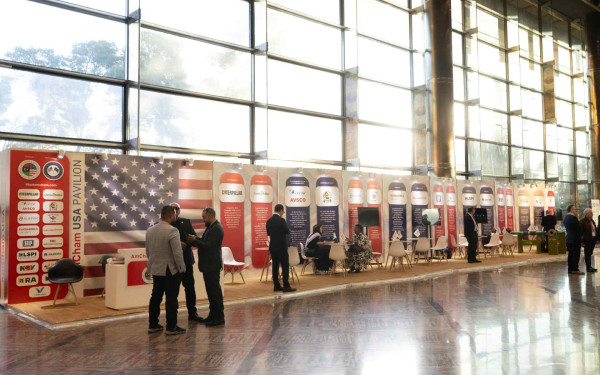

The Libya Energy & Economic Summit (LEES) 2026, taking place on January 24-26 in Tripoli, will showcase a renewed surge of U.S. participation as American companies re-engage with Libya's oil, gas and infrastructure sectors. This year marks a significant moment for U.S. investment momentum, reinforced through expanded commercial programming and strategic dialogues, signaling renewed confidence in Libya's oil, gas and infrastructure markets – and marking a strategic shift in the way American majors are approaching the region.
A major highlight of the Summit will be a dedicated U.S.-Libya Roundtable and a U.S. pavilion, underscoring growing institutional and corporate commitment to Libya's energy future. Discussions will explore collaboration in exploration, field redevelopment and energy services, highlighting areas where American firms can add unique value – from advanced technologies and workforce training to midstream and gas infrastructure innovation. Through these contributions, U.S. investment can accelerate technology transfer, strengthen local supply chains and support Libya's broader industrial development and energy transition objectives. Meanwhile, the pavilion will host a broad range of American firms, industry associations and technical service providers, offering a platform for partnerships across upstream, midstream, downstream and infrastructure development.
Industry leaders ConocoPhillips and SLB will feature prominently at LEES 2026, reflecting the resurgence of U.S.-linked investment interest. ConocoPhillips, a key partner in the Waha Oil Company, continues to support major redevelopment efforts aimed at boosting output at one of Libya's most strategic concessions. SLB, one of the most active technology and service providers in Libya, is deepening its collaboration with the NOC to enhance crude production, modernize operations and support the country's long-term sustainability goals. The company is deploying advanced drilling, well placement and production optimization technologies across priority fields, while expanding its footprint through new contracts – including a milestone agreement to drill three wells in the Nesr and Al-Waha fields. Hill International, meanwhile, recently secured a $235 million contract for the Structures A&E gas field project, forming part of a multi-billion-dollar program to strengthen Libya's natural gas capacity.
These players will be joined by Halliburton, Baker Hughes and ExxonMobil, all of which are deepening their engagement with Libya's National Oil Corporation (NOC) and assessing new commercial, technical and exploration opportunities. ExxonMobil recently signed an MoU with the NOC to undertake geological and geophysical studies covering four offshore blocks in the northwest and Sire Basin – reflecting analytical interest and preliminary evaluation of future partnership potential. The company is also expected to participate in Libya's current licensing round, which covers 22 onshore and offshore blocks.
Chevron has also re-emerged as a major talking point ahead of LEES 2026. Following high-level discussions in London, the NOC confirmed that Chevron is showing serious interest in returning to Libya after a 15-year hiatus. Talks have centered on cooperation in exploration, unconventional resources and undeveloped reservoirs, with Libyan officials emphasizing the country's significant untapped potential across oil and natural gas.
Technical programming will represent another major pillar of U.S. engagement. The Society of Petroleum Engineers Libya will host technical sessions on January 24, featuring discussions on enhanced oil recovery, field redevelopment, marginal field development strategies and digitalization in Libya's oilfields. On January 25 and 26, S&P Global Commodity Insights will lead specialized technical sessions covering market intelligence, production trends, resource monetization and global energy outlooks relevant to Libya's future planning. These sessions are designed to attract active exploration and support the NOC's ambitious target of 2 million barrels per day by 2030.
Institutional participation is set to complement private-sector involvement. The U.S. Embassy – expected to participate at LEES 2026 – supports expanded commercial cooperation between the two countries, encouraging transparent governance and reinforcing bilateral economic engagement. The American Chamber of Commerce (AmCham) in Libya – once again a strategic partner of the summit – continues to promote U.S. company participation following its Washington D.C. forum spotlighting opportunities across hydrocarbons, renewables and infrastructure.
“The U.S.-Libya Roundtable reflects a decisive turning point in commercial engagement,” says James Chester, CEO of Energy Capital & Power. “American companies are now investing in Libya in ways we haven't seen for decades – driving technology transfer, securing long-term production and helping the country realize its full energy potential.”
With exploration interest rising, redevelopment underway and several U.S. majors and service providers reassessing market entries, the U.S.-Libya Roundtable at LEES 2026 will serve as a critical platform to consolidate this momentum and shape a long-term roadmap for sustainable growth in one of the North Africa's most promising energy markets. With the previous edition of LEES featuring 18 U.S. companies in the national pavilion – momentum next year is expected to build significantly. Together, these developments mark a strategic pivot, with U.S. companies taking a leading role in shaping Libya's energy future by deploying capital, technology and expertise at an unprecedented scale.
Join industry leaders at the Libya Energy & Economic Summit 2026 in Tripoli and explore investment opportunities in one of North Africa's most dynamic energy markets. LEES 2026 offers a premier platform for partnerships, innovation and sector growth. Visit www.LibyaSummit.com to secure your participation. To sponsor or participate as a delegate, please contact sales@energycapitalpower.com.
Distributed by APO Group on behalf of Energy Capital & Power.Youth participation a catalyst for democratic renewal and accountability, say participants at Afrobarometer/Youth Democracy Cohort event

African youth's political and civic engagement is necessary for rejuvenating democracy and ensuring accountability across the continent – that was the message that resonated strongly with stakeholders as Afrobarometer (www.Afrobarometer.org), in collaboration with the Youth Democracy Cohort (YDC), co-hosted a side event during the 5th African Peer Review Mechanism (APRM) Youth Symposium at the Pan-African Parliament in Midrand.
Held under the theme “Youth in governance: From promise to prosperity,” the two-day symposium brought together young leaders from across Africa, diplomatic representatives, policy makers, private sector leaders, and media voices for intergenerational dialogue and peer engagement aimed at building a bold and united future for African democracies.
Participants explored the growing influence of “Gen Z” and the ways in which youth-led activism is reshaping civic and political activities throughout the continent. They stressed the urgency of governance reforms that genuinely respond to citizens' expectations, noting that unmet promises risk deepening youth frustration and disengagement. The conversations also highlighted the vital role of communication in the digital age for promoting transparency, accountability, and citizen participation in governance.
The Afrobarometer/YDC side event, dubbed “Youth voices in data: Turning insights into action,” reinforced the power of data in shaping responsive policies for Africa's youth. The session provided data-driven perspectives on African youth's aspirations, unemployment, views on migration, and political and civic participation.
Afrobarometer data presented by the Communications Coordinator for Southern Africa, Asafika Mpako, showed that African youth are less likely than older generations to engage in a variety of political and civic activities, although they are more likely to protest. While many young Africans support democratic governance and reject authoritarian alternatives, they are less trusting of their elected leaders than older citizens, and more likely to perceive them to be corrupt. African youth are also the most likely of any generation to express willingness to accept military rule, should elected leaders abuse power. Meanwhile, high levels of unemployment and restricted access to economic opportunities drive young people's desire to emigrate.
Complementing these insights, the Global Youth Participation Index (GYPI) (http://apo-opa.co/4p0XUiR), developed by the European Partnership for Democracy (EPD) with the expertise of the Youth Democracy Cohort (YDC), offered a global comparative lens to youth involvement in political and civic activities. Covering more than 140 countries and measuring four key dimensions – socio‑economic context, civic space, political affairs, and elections – the index demonstrates that, while young people are eager to engage, they face a range of major challenges, including access to information, resources, spaces, and representation, and whether they have a genuine ability to influence decision making.
Mikhail Nyamweya, research consultant for the GYPI, stressed youth's desire to reshape the future, but noted the slow pace of reforms.
“The message is very simple: The youth are active, but the systems are slow to respond,” he said. “Africa is the world's youngest region, yet most decision-making structures do not institutionalise youth representation.”
Speaking at the main plenary, Dr. Nkosazana Dlamini-Zuma, former African Union Commission chairperson, emphasised the importance of empowering young people.
“The important thing is that we must invest in young people,” she said. “The people are our most precious resource.”
Distributed by APO Group on behalf of Afrobarometer.For more information, please contact:
Asafika Mpako
Communications coordinator for Southern Africa
Telephone: +27 83 979 8299
Email: ampako@afrobarometer.org
Social Media:
Facebook
X
LinkedIn
YouTube
Instagram
WhatsApp
Bluesky
Follow our releases on #VoicesAfrica.
About Afrobarometer:
Afrobarometer (AB) is a trusted source of high-quality data and analysis on what Africans are thinking. With an unmatched track record of 430,000+ interviews in 45 countries, representing the views of more than 75% of the African population, AB is leading the charge to bridge the continent's data gap. AB data inform many global indices, such as the Ibrahim Index of African Governance, Transparency International's Global Corruption Barometer, and the World Bank's Worldwide Governance Indicators. The data are also used for country risk analyses and by credit rating and forecasting agencies such as the Economist Intelligence Unit. All AB data sets are publicly available on the website (www.Afrobarometer.org) and may be analysed free of charge using AB's online data analysis tool (http://apo-opa.co/49FcvvA).
Visit us online at:
About the Youth Democracy Cohort:
The Youth Democracy Cohort was launched on 15 September 2022 during the European Year of Youth in 2022 as an inclusive platform bringing together governments, civil society and the private sector to advance youth political and civic engagement. Originally, this cohort was designed to take meaningful action toward implementing government commitments from the Summit for Democracy, supported by the European Commission through the Women and Youth in Democracy Engagement (WYDE) initiative.
The Youth Democracy Cohort (YDC) has since grown beyond the Summit for Democracy, expanding to more than 550 member organisations (http://apo-opa.co/3M13a7m) and advocating for youth political participation globally via a wide range of impactful activities. In 2025, the YDC received new funding from the Digital Democracy Initiative, to focus specifically on the digital rights of young people.
Visit us online at:
Support to Senegal’s financing strategy: The Government of Senegal and the West African Development Bank (BOAD) enter into a strategic partnership for the structured...

The Government of Senegal and the West African Development Bank (BOAD) (www.BOAD.org) have signed a Memorandum of Understanding establishing a strategic partnership framework based on the country's public asset development.
This innovative mechanism is designed to strengthen Senegal's financing strategy, to consolidate its financial performance and support its development goals, while improving resource mobilization. Structured around leveraging the economic potential of the country's infrastructure, the Senegal Asset Development Fund (FOVAS) will use revenues generated from these assets to diversify funding sources and provide sustainable support to national economic growth.
Under this partnership, BOAD will provide expertise in financial structuring and act as a catalyst in attracting private investors and international development partners. This initiative will help consolidate strategic infrastructure within a dedicated vehicle in order to mobilize additional resources for the State and improve the quality of services provided to the population.
Mr. Cheikh Diba, Minister of Finance and Budget, stated: “This agreement is a major step forward for Senegal. The FOVAS, more than just a financial mechanism, reflects the State's drive to structure the economic leveraging of public assets in a bid to create greater value, increase fiscal flexibility and strengthen the financing of our development process. We are confident that BOAD's expertise will be instrumental to the success of this initiative.”
“This partnership reflects the shared commitment of BOAD and the Government of Senegal to work jointly to accelerate funding mobilization. Our role will consist of supporting the Senegalese Government to unleash the value potential of its strategic assets, thereby ensuring sustainable investments and strengthening the country's financial resilience for the benefit of regional integration” emphasized Mr. Serge Ekue, President of BOAD.
Distributed by APO Group on behalf of Banque Ouest Africaine de Développement (BOAD).For further information, please contact:
Communication and Public Relations Department
Tel: +228 22 23 25 65
WhatsApp: +228 99 99 32 15
Fax: +228 22 23 24 38
Email : boadsiege@boad.org
Social Media:
Youtube: https://apo-opa.co/3XNUQug
About the West African Development Bank (BOAD):
The West African Development Bank (BOAD) is the common development finance institution of the member countries of the West African Monetary Union (WAMU). It is an international public institution whose purpose, as provided under Article 2 of its Articles of Association, is to promote the balanced development of its member countries and foster economic integration within West Africa by financing priority development projects. It is accredited to the three climate finance facilities (GEF, AF, GCF). Since 2009, BOAD sits as an observer at the UNFCCC and actively participates in discussions on devising an international climate finance system. Since January 2013, it has been home to the first Regional Collaboration Centre (RCC) on Clean Development Mechanism (CDM), whose aim is to provide direct support to governments, NGOs and the private sector in identifying and developing CDM projects. Since 15 October 2023, the Bank has been co-chairing the International Development Finance Club (IDFC) and has been holding the club's sole presidency as of 27 February 2025. This Club brings together 27 national, regional and multilateral development banks from around the world.
About the Republic of Senegal:
Senegal, a founding member of the West African Economic and Monetary Union (WAEMU), is located at the western end of Africa and bordered by Mauritania, Mali, Guinea, Gambia and Guinea-Bissau. With a population of about 18 million, the country actively participates in regional integration mechanisms, notably the monetary, financial, and regulatory components. Its diversified and growing economy contributes significantly to the performance of the entire zone. Therefore, Senegal plays a key role in the implementation and strengthening of community policies.
Suriname’s Economic Affairs Minister to Share Vision Built on Offshore Oil at Caribbean Energy Week (CEW) 2026
Download logo
Suriname's Minister of Economic Affairs, Entrepreneurship and Technological Innovation, Andrew Baasaron, will join Caribbean Energy Week (CEW) 2026 as a key speaker, where he is expected to offer insights into the country's long-term strategy amid one of the most significant energy transitions in its history. The inaugural event takes place from March 30 to April 1 in Paramaribo under the theme, “Leveraging Energy Diversity Across the Caribbean,” and will position Suriname's emerging offshore sector as a pillar of regional growth.
Minister Baasaron is expected to provide a detailed look at Suriname's plans for responsibly managing its upcoming oil revenues and translating resource wealth into wider economic development. Central to this vision is the $10 billion GranMorgu development in offshore Block 58 – operated by TotalEnergies and APA Corporation – which represents the largest industrial investment in Suriname's history. Targeting first oil in 2028, the project is designed to produce 220,000 barrels per day from an estimated 750 million barrels of recoverable reserves.
Suriname's development model emphasizes environmental responsibility, including plans for an all-electric, zero-routine-flaring FPSO for GranMorgu. This approach aligns with the government's Multi-Annual Development Plan 2022–2026, which seeks to broaden economic growth across the agriculture, services and technology sectors. Efforts underway include strengthening the business environment, establishing a Local Content Development Office and launching a new SME fund.
Technological innovation is also at the forefront of the government's strategy. Suriname is advancing spatial AI and extended-reality applications in both industry and education. A UNIDO-supported loan collateral facility launched in October aims to expand financial access for indigenous farmers, while fiscal stability measures include a proposed sovereign savings and stabilization fund and a Staatsolie bond issuance in March 2025, which raised over $515 million to help finance the company's 20% participation in the GranMorgu project.
Regionally, Suriname continues to deepen cooperation with neighboring states, including agreements with Guyana and Trinidad and Tobago on shared electricity infrastructure, natural gas development and renewable energy initiatives – among them Staatsolie's 45 MWp solar program. CEW 2026 will offer investors and industry leaders direct access to Surinamese stakeholders and a front-row seat to one of the Caribbean's most dynamic emerging energy markets.
“Minister Baasaron's insights on Suriname's economic diversification and investment climate will be invaluable to delegates at CEW 2026. His participation reinforces the event's role as the definitive platform for connecting global capital with the precise opportunities driving the Caribbean's energy future,” said Sandra Jeque, International Conference Director at Energy Capital & Power.
Join us in shaping the future of Caribbean energy. To participate in this landmark event, please contact sales@energycapitalpower.com.
Distributed by APO Group on behalf of Energy Capital & Power.