
Patient Outcomes
The African Medical Centre of Excellence (AMCE) achieves two landmark successes as it completes its first Open-Heart Surgery and delivers West Africa’s first Stereotactic...
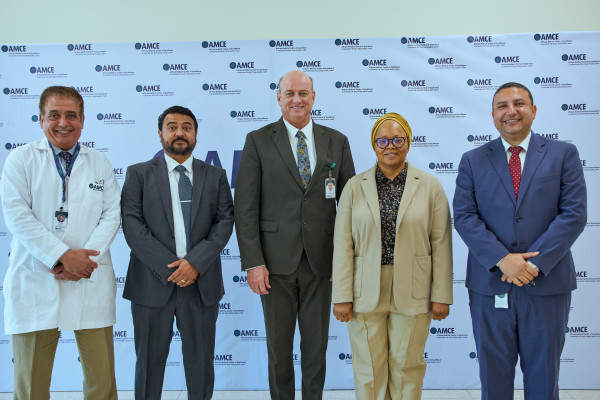
Only six months since its opening in June this year, the African Medical Centre of Excellence (AMCE) in Abuja is redefining top-class medical care in West Africa, achieving two ground-breaking clinical milestones. The world-class tertiary medical facility developed by African Export-Import Bank (Afreximbank) (www.Afreximbank.com) in partnership with King's College Hospital London, AMCE has successfully completed its first open-heart surgery – a complex Triple Coronary Artery Bypass Grafting (CABG) and delivered the region's first Stereotactic Body Radiation Therapy (SBRT) for lung cancer. These achievements underscore AMCE's commitment to providing complex, life-saving treatments in Africa, significantly reducing the critical need for medical travel abroad.
Building on the quaternary hospital's recent outpatient and inpatient landmark advancements, AMCE's clinical teams have rapidly expanded the Centre's capability to deliver high-acuity care across both cardiovascular medicine and oncology.
On the oncology front, AMCE successfully delivered West Africa's pioneer SBRT for lung cancer, a highly advanced radio surgical technique that achieves surgical-level precision without incision. The milestone case involved an octogenarian with a localised lung tumour who received treatment enabled by sophisticated imaging, real-time motion tracking, and highly personalised radiation planning.
In cardiovascular care, AMCE's cardiac team continues to scale its interventional and surgical capabilities. In its first six months of operations, the hospital has performed over ten successful cardiac interventions, including coronary angiographies, permanent pacemaker insertions, and percutaneous coronary interventions (PCI). The successful completion of its first CABG now places AMCE among the few centres in Africa offering a fully integrated cardiac care pathway from advanced diagnostics and interventional cardiology to complex open-heart surgery within one facility.
Together, these achievements underscore AMCE's commitment to world-class, patient-centred cancer care in West Africa and accelerates its long-term goal of reversing outbound medical tourism and averting brain drain by providing the infrastructure, technology, and training environment needed to support the continent's most skilled specialists.
Brian Deaver, Chief Executive Officer of AMCE, commented: " Delivering our first open-heart surgery and West Africa's first SBRT treatment represents a defining moment for AMCE and for healthcare on the continent. These milestones reflect the exceptional skill and dedication of our multidisciplinary teams, who have worked tirelessly to ensure that patients can access the most advanced cancer and cardiac care right here in Africa. With our oncology systems, Cath labs, and theatres fully operational, we are closing long-standing gaps in access to high-quality treatment and enabling people to receive life-saving care close to home. Our commitment remains steadfast: to invest in our people, technology, and infrastructure so that Africans no longer need to travel abroad for the highest standards of care."
Commenting on these remarkable milestones, Oluranti Doherty, Managing Director of Export Development, Afreximbank said “AMCE's successful delivery of its first open-heart surgery and West Africa's first SBRT treatment demonstrates the transformative impact of Afreximbank's investment in world-class medical infrastructure. These achievements show what is possible when we build capacity locally, reducing the continent's dependence on outbound medical tourism, retaining vital clinical expertise, and strengthening Africa's broader health ecosystem. AMCE is advancing a new era of health dignity for Africans, and we are proud to support its continued leadership in complex and innovative care.”
AMCE is also in the process of preparing patients for further complex procedures, including valve repairs and replacements. By expanding its cardiovascular and specialised services, the hospital is reinforcing its commitment to curb medical tourism by reversing the estimated US$6–10 billion Africans spend annually seeking treatment abroad and stem the long-standing brain drain of medical professionals by creating high-quality career opportunities within Africa's borders.
AMCE's key services include cardiovascular services, haematology, comprehensive oncology, and general medical services. The facility has a current capacity of 170 beds with a plan to expand to 500 beds. It features the largest stem cell laboratory in the region, fifteen post stem cell isolation rooms and three catheterisation laboratories. The facility also includes specialised imaging equipment including an 18 Mev cyclotron, 3 Tesla Magnetic Resonance Imaging, 256 slices computed tomography, brachytherapy machine with iridium source, 4 biosafety cabinets and 128 slices computed tomography machines.
Distributed by APO Group on behalf of Afreximbank.About the African Medical Centre of Excellence (AMCE) Abuja:
The African Medical Centre of Excellence (AMCE) Abuja is a US$300 million, fully operational, quaternary -level multi-specialty hospital developed by Afreximbank in collaboration with King's College Hospital London. Since opening in June 2025, AMCE has been delivering world-class specialist care and setting new benchmarks for clinical excellence, patient outcomes, and medical innovation across Africa.
Built to close critical gaps in Africa's healthcare landscape, AMCE provides comprehensive services across oncology, haematology, cardiovascular care, and general medicine. The hospital has already achieved major clinical milestones including successful open-heart surgery and advanced oncology procedures cementing its role as a hub for complex care on the continent.
AMCE's mission goes beyond treatment. By offering procedures that previously required travel abroad, the Centre is directly reducing medical tourism and helping retain top medical talent. Its growing workforce, spanning medical, technical, and administrative roles, is contributing to job creation, knowledge transfer, and the strengthening of Nigeria's health ecosystem. Through ongoing research, education, and partnerships, AMCE is shaping a more self-sufficient, skilled, and healthier future for Africa.
Africa Centres for Disease Control and Prevention (CDC) Study Explores SMS Messaging to Strengthen Tuberculosis (TB) Treatment
Download logo
A new study by the Africa Centres for Disease Control and Prevention (Africa CDC) is exploring how mobile phone messaging can improve tuberculosis (TB) treatment adherence in Ethiopia and Liberia, two of the continent's most affected countries.
The research is supported by a US$100,000 grant from the World Bank and is running from 17 November to 12 December 2025. It is being carried out in partnership with the Ministries of Health in Ethiopia and Liberia, the University of Liberia College of Health Sciences, Dire Dawa University, and the Dire Dawa Health Bureau, with technical coordination provided by Africa CDC's Science and Innovation Directorate.
Tuberculosis remains a major global health challenge. In 2023, an estimated 10.8 million people worldwide were infected, resulting in over 1.25 million deaths. Ethiopia and Liberia are among the highest TB-burden countries, with estimated incidence rates of 119 and 308 cases per 100,000 population, respectively. Despite progress in diagnosis and treatment, adherence to TB medication continues to be one of the weakest links in TB control – leading to treatment failure, relapse and drug-resistant TB.
To address this persistent challenge, the Africa CDC study is leveraging mobile technology as a practical solution. It aims to improve TB treatment adherence by testing SMS reminders, identifying barriers to digital technology adoption, and evaluating their impact on patient outcomes. It is titled ‘Improving TB Treatment Adherence through Mobile-Phone Messaging: Identifying Barriers, Facilitators, and Adoption Pathways in Ethiopia and Liberia'.
“This research is significant because it provides an opportunity to integrate digital innovation into TB care in Africa, advancing patient-centred solutions that address real-world barriers to treatment adherence,” said Dr Mosoka Fallah, Acting Director of Science and Innovation at Africa CDC. “By leveraging the widespread use of mobile phones, we can make TB treatment support more accessible, responsive and effective – particularly for vulnerable communities.”
The research will be conducted in two phases across Ethiopia and Liberia: a quantitative baseline assessment to measure current adherence levels among TB patients, followed by a pilot intervention using SMS-based reminders for patients identified with low adherence. A total of 844 TB patients (422 in each country) will be enrolled, with about 200 participants receiving SMS reminders. Both quantitative and qualitative approaches will be used to generate insights that inform national TB strategies and continental policy recommendations for digital health integration.
“Africa CDC continues to prioritise implementation science that directly strengthens public health interventions in Member States,” Dr Fallah added. “This initiative will not only generate actionable evidence for TB programmes but also contribute to the broader digital health agenda in Africa.”
The study will provide evidence on the effectiveness of SMS-based TB adherence support in Africa, identify barriers and enablers to the use of digital adherence tools, and guide TB control policies and programmes in Ethiopia, Liberia and other Member States.
Dr Fallah explained that the research reflects Africa CDC's commitment to driving evidence-based innovations that accelerate progress toward ending TB by 2035, in alignment with the WHO End-TB Strategy and the African Union's health priorities.
Distributed by APO Group on behalf of Africa Centres for Disease Control and Prevention (Africa CDC).Nigeria Launches First National Antimicrobial Resistance Survey
Download logo
Nigeria has launched its first nationally representative survey on antimicrobial resistance (AMR), marking a milestone in the country's public health response. Supported by the World Health Organization (WHO) and partners, the initiative will generate critical data to guide evidence-based policies, improve patient outcomes, and strengthen health system resilience.
The Federal Ministry of Health and Social Welfare (FMoH&SW) and the Nigeria Centre for Disease Control and Prevention (NCDC), with technical support from WHO, recently concluded a five-day planning workshop. The workshop brought together stakeholders from government, academia, and international partners to finalize the technical protocol and operational strategy.
Nigeria is the third country globally to partner with WHO on a national AMR survey. The country was selected based on its strong commitment to AMR surveillance, its updated WHO Nigeria NAP 2.0, and readiness to expand laboratory and data systems.
Why Surveillance Matters
Nigeria ranks 20th globally for age-standardized mortality due to AMR. In 2019, an estimated 263,400 deaths in Nigeria were linked to AMR—more than the combined deaths from enteric infections, tuberculosis, respiratory infections, maternal and neonatal disorders, neglected tropical diseases, malaria, and cardiovascular diseases (Global Research on Antimicrobial Resistance – GRAM, IHME, University of Washington, 2023).
Globally, resistant infections in tertiary care settings cost between US$2,371 and US$29,289 per patient episode, extend hospital stays by an average of 7.4 days, and increase mortality risk by 84% (Poudel AN et al., PLoS One, 2023).
AMR occurs when bacteria, viruses, fungi, and parasites evolve to resist treatment, making infections harder to cure. Surveillance is essential to track resistance patterns, identify priority pathogens, and guide targeted interventions.
“This planning workshop marks a significant milestone in Nigeria's AMR response,” said Dr Tochi Okwor, Acting Head, Disease Prevention and Health Promotion, NCDC. “With WHO's support, we are confident the survey will generate the evidence needed to protect public health.”
Survey Objectives and Scope
The survey will:
• Establish a national baseline on AMR prevalence to monitor interventions.
• Assess the distribution, burden (morbidity, mortality, DALYs, cost), and diversity of AMR across regions and populations.
• Contribute to the global target of reducing AMR deaths by 10% by 2030, in line with the political declaration endorsed at the 79th United Nations General Assembly in 2024.).
• Strengthen routine AMR surveillance, including diagnostics, sample referral systems, and laboratory capacity.
Using WHO's standardized methodology, the survey will run for 12–15 months and cover 40–45 randomly selected health facilities nationwide. Patients with suspected bloodstream infections (BSIs) will be identified using standard case definitions, and blood samples will be analysed in quality-assured laboratories.
Data will be collected across all age groups, covering clinical, demographic, laboratory, financial, and outcome indicators. Follow-up will occur at discharge, 28 days, and three months post-infection. The survey will sample approximately 35,000 patients suspected of BSIs to obtain around 800 isolates of the most common pathogens.
Building National Capacity
WHO Representative in Nigeria, Dr Pavel Ursu, reaffirmed WHO's commitment:
“Nigeria is taking a decisive step toward combating AMR with an approach grounded in data, science, and measurable impact. This survey will provide the clarity needed to drive smarter policies, stronger surveillance, and better patient outcomes. Nigeria is laying the foundations for a resilient health system, one that protects lives, strengthens trust, and ensures that essential medicines remain effective for future generations.”
Dr Laetitia Gahimbare, Technical Officer at WHO Regional Office for Africa, added:“Strengthening surveillance enhances Nigeria's capacity to detect and respond to AMR threats, supporting better patient outcomes, reinforcing health security, and building a resilient system.”
Professor Babatunde Ogunbosi, Paediatric Infectious Diseases Specialist at University College Hospital, Ibadan, highlighted the broader impact:
“This survey is about more than data. It's about building national capacity for research, diagnostics, and policy. It integrates science into public health decision-making.”
Supporting Global Health and Universal Health Coverage
AMR is a global health challenge. Nigeria's participation contributes to regional and international efforts to monitor resistance and coordinate responses. The survey also supports the One Health approach, recognizing the interconnectedness of human, animal, and environmental health.
By improving diagnostics, strengthening laboratory infrastructure, and promoting responsible antimicrobial use, the initiative will help reduce treatment failures and advance Nigeria's progress toward Universal Health Coverage (UHC), national health security, and the National Health Sector Renewed Investment Initiative.
A Shared Commitment
AMR is among WHO's top global health priorities. Nigeria's efforts supported by WHO, NCDC, the National Agency for the Control of AIDS (NACA), and the Global Fund, demonstrate strong national ownership and multisectoral collaboration.
Through science, partnership, and evidence-based action, Nigeria is laying the foundation to safeguard lives, preserve the efficacy of essential medicines, and build a healthier future.
Distributed by APO Group on behalf of World Health Organization (WHO) - Nigeria.