
Explore more Articles in
Industrial
Africa Finance Corporation (AFC) Deepens Central African Presence as Equatorial Guinea Becomes 47th Member State

Download logo
Africa Finance Corporation (AFC) (www.AfricaFC.org), the continent's leading infrastructure solutions provider, today announced that the Republic of Equatorial Guinea has officially acceded to membership, becoming the Corporation's 47th Member State. The decision, which closely follows the Central African Republic's recent accession, marks a significant step in AFC's deepening presence in Central Africa and Africa as a whole.
Equatorial Guinea, one of Africa's most resource-rich nations, has outlined a long-term national vision focused on industrialisation, economic diversification beyond hydrocarbons, and the expansion of world-class transport, logistics, energy, and digital infrastructure. The country's Horizon 2035 strategy prioritises investments that can accelerate value addition, boost regional integration, enhance human capital, and strengthen resilience against global market volatility.
Membership of AFC aligns directly with these priorities. It enables the government to leverage AFC's technical expertise, project development capacity, and robust balance sheet to accelerate the delivery of high-impact infrastructure projects. AFC will work alongside public and private sector stakeholders to unlock opportunities across key sectors including renewable energy, logistics and transport corridors, and natural resources beneficiation.
H.E. Ivan Bacale Ebe Molina, Honourable Minister of Finance, Planning and Economic Development, Republic of Equatorial Guinea, commented saying: “Joining Africa Finance Corporation represents an important milestone in our national development journey. As we advance the goals of our Horizon 2035 strategy, Equatorial Guinea is prioritising investments that diversify our economy, strengthen our infrastructure base, and create sustainable opportunities for our people. AFC's proven track record, deep expertise, and commitment to African-led development make it an ideal partner for delivering bankable projects that support long-term growth. We look forward to working closely with the Corporation to unlock the full potential of our economy.”
Samaila Zubairu, President & CEO of Africa Finance Corporation, added: “We are delighted to welcome Equatorial Guinea as our 47th Member State. The country has set a bold and forward-looking agenda to drive economic diversification, enhance resilience, and build world-class infrastructure to support long-term prosperity. AFC stands ready to deploy our unique approach to project development, de-risking and financing to catalyse transformational projects, working closely with the government and key partners in the private sector. Together, we will work on critical infrastructure projects that will accelerate sustainable growth for Equatorial Guinea and the wider Central African region.”
Equatorial Guinea's membership also enhances AFC's ability to mobilise global capital to strategic sectors across Central Africa, strengthening the region's integration into global trade routes and value chains. The country now joins other Central African nations such Angola, Burundi, Cameroon, Central African Republic, Chad, the Democratic Republic of Congo, Gabon, Rwanda, and São Tomé and Príncipe in partnering with AFC to accelerate sustainable growth through infrastructure development.
As a Member State, Equatorial Guinea gains access to AFC's suite of products including project preparation, equity investments, debt financing, and risk mitigation instruments designed to mobilise financing into bankable, transformational projects. Membership also reinforces AFC's mandate to foster African-led solutions to the continent's infrastructure deficit, an indispensable foundation for job creation, industrial competitiveness, and long-term prosperity.
With Equatorial Guinea's accession, AFC caps a remarkable year in which three new countries joined the Corporation, expanding our membership to 47 African nations and significantly deepening our continental footprint. This momentum underscores AFC's role as Africa's leading infrastructure solutions provider, accelerating industrialisation and strengthening regional value chains.
Distributed by APO Group on behalf of Africa Finance Corporation (AFC).Media Enquiries:
Yewande Thorpe
Communications
Africa Finance Corporation
Mobile : +234 1 279 9654
Email : yewande.thorpe@africafc.org
About AFC:
AFC was established in 2007 to be the catalyst for pragmatic infrastructure and industrial investments across Africa. AFC's approach combines specialist industry expertise with a focus on financial and technical advisory, project structuring, project development, and risk capital to address Africa's infrastructure development needs and drive sustainable economic growth.
Eighteen years on, AFC has developed a track record as the partner of choice in Africa for investing and delivering on instrumental, high-quality infrastructure assets that provide essential services in the core infrastructure sectors of power, natural resources, heavy industry, transport, and telecommunications. AFC has 47 member countries and has invested over US$17 billion in 36 African countries since its inception. www.AfricaFC.org
African Energy Chamber (AEC) Calls for Greater Global South Cooperation at Third Global South Think Tanks Dialogue

Stronger cooperation among Global South nations is becoming increasingly urgent as countries seek new pathways to accelerate development, expand trade and strengthen long-term economic resilience. For Africa, strengthened ties among Global South nations is particularly valuable, offering a viable solution to unlocking the continent's natural and mineral wealth and allowing the continent to move beyond fragmented growth and toward coordinated strategies that deliver tangible results.
The African Energy Chamber (AEC) - represented by Leoncio Amada NZE, Executive President of the AEC for CEMAC and Vice President of Equatorial Guinea's National Council on Economic and Social Development - underscored the need for a more inclusive and cooperative approach among Global South nations during the Third Global South Think Tanks Dialogue, held in Shanghai from December 2-4, 2025. During the event, Amada NZE highlighted how strengthened trade networks, partnerships and technology transfer can unlock long-term and sustainable growth across the continent, with the shift from aid to trade serving as a cornerstone of the continent's future development.
Despite being one of the continent's richest energy and mineral regions, CEMAC countries have long-struggled with attracting the requisite foreign investment, largely due to ineffective fiscal policies, strict forex regulations and barriers to regional trade. Examples include the implementation of stricter rules on currency transfers and payments by the Bank of Central African States in 2022. These challenges have not only served as a deterrent to foreign investment but impacted regional energy trade, cross-border projects and multi-lateral business exchange. This comes as many regional nations implement bold production goals with a view to using energy development as a catalyst for economic growth. In the oil and gas sector, Gabon targets 220,000 barrels per day (bpd), the Republic of Congo is aiming for 500,000 bpd, Equatorial Guinea is advancing gas monetization while Cameroon is pursuing new field developments. Nations are also pursuing accelerated energy and power developments, striving for enhanced energy and fuel security.
Enhanced trade frameworks, harmonized standards and improved logistics systems will help African nations achieve these goals by promoting free movement of services and people, strengthening economic ties and building more resilient energy systems across the continent. This would also serve as a vehicle for foreign direct investment, promoting forays by international players and driving projects forward in energy, mining and infrastructure development. As such, Amada NZE called for the dismantling of structural barriers that hinder growth, stressing the importance of regional energy cooperation as a core pillar of Africa's development strategy. By fostering platforms for business, research and cultural exchange, Amada NZE emphasized that Global South countries can accelerate their development trajectories and achieve shared prosperity.
Amada NZE also highlighted the need to move beyond traditional aid-driven models, underscoring the importance of building self-reliant economies anchored by trade, private-sector participation, innovation and homegrown industrial capabilities. For Africa, this means transitioning toward development frameworks that promote entrepreneurship, regional value creation and investment-driven growth. Meanwhile, as the Global South increases its share of global economic output, partnerships with global allies remain essential. Technology providers, financial institutions and strategic investors play a critical role in supporting African nations as they expand energy access, diversify revenue streams and modernize industrial bases. Stronger collaboration between African countries and global partners will help advance large-scale infrastructure projects, improve technical capabilities and accelerate digital transformation - elements vital to bridging development gaps and strengthening long-term stability.
“The AEC's engagement in Shanghai reflects its ongoing commitment to ensuring Africa has a strong voice in shaping global development agendas. By championing cooperation, trade expansion and regional energy integration, the Chamber continues to advocate for reforms that will unlock opportunity, enhance resilience and support the continent's rise as a competitive economic force within the Global South,” says Amada NZE.
Distributed by APO Group on behalf of African Energy Chamber.Cabo Verde Inaugurates Major Expansion of Cabeolica Wind Farm and Battery Storage, Enabled by Africa Finance Corporation’s (AFC) Catalytic Financing
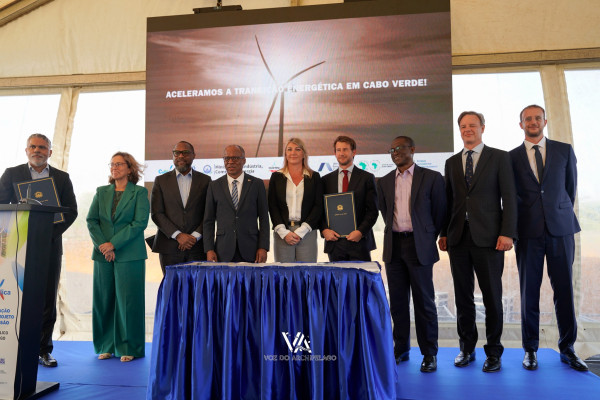
Africa Finance Corporation (AFC) (www.AfricaFC.org), the continent's leading infrastructure solutions provider, today announced the inauguration of the expanded Cabeolica Wind Farm and Battery Energy Storage System (BESS) in Cabo Verde- an achievement made possible through AFC's catalytic €55million bridge financing provided in 2024. The ceremony, officiated by Prime Minister Ulisses Correia e Silva, marks a major step forward in the country's renewable energy ambitions.
AFC's early financing enabled rapid implementation, bringing the expansion and BESS online sooner to enhance grid stability, support renewable integration, and advance Cabo Verde's emissions-reduction and energy-security objectives. The expansion delivers 13.5 MW of new wind capacity on Santiago alongside 26 MWh of battery storage across four islands, significantly enhancing the stability and resilience of Cabo Verde's national grid. The BESS is already contributing to improved frequency regulation and higher renewable penetration, reducing curtailment and strengthening energy security across the archipelago.
Since 2010, AFC has been a majority investor in Cabeolica S.A, supporting its evolution into one of Cabo Verde's strongest corporate institutions and the first commercial-scale renewable PPP in sub-Saharan Africa. Over the past decade, the company's 25.5MW wind farms across four islands have generated more than 800,000 MWh of affordable electricity, contributing approximately 25% of the country's total power generation while offsetting over 560,000 tonnes of CO₂ emissions. With this new phase, Cabeolica further consolidates its role as a cornerstone of the country's clean-energy system.
The newly inaugurated BESS, expected to reach nearly 30 MW of storage capacity upon final completion in January 2026, marks a significant advancement in stabilising Cabo Verde's grid, allowing greater integration of intermittent renewables and reducing dependency on imported fossil fuels. AFC's bridge financing was pivotal in fast-tracking construction activities and ensuring alignment with the Government's clean-energy delivery timelines, while long-term financing from senior lenders, including the African Development Bank and the European Investment Bank, is being finalised.
“From the early days of the Cabeolica project to this milestone inauguration, AFC's mission has remained unwavering: to catalyse renewable energy solutions that enhance the reliability and resilience of power systems across Africa,” said Samaila Zubairu, President & CEO of Africa Finance Corporation. “Our innovative financing accelerated this expansion, and the successful integration of new wind capacity with one of the continent's most advanced grid-stabilising battery storage systems stands as a clear testament to AFC's position as Africa's leading infrastructure solutions provider,” he added.
Ayotunde Anjorin, Chairman of Cabeólica and Chief Financial Officer of AFC said: “As the first renewable energy commercial scale PPP in sub-Saharan Africa, Cabeólica is again proud to partner with AFC to lead this transformative expansion project comprising additional wind capacity and battery energy storage. This project underscores the Cabeólica's deep commitment to delivering reliable, clean energy infrastructure in line with national goals and priorities and continues to set a replicable model for the region.”
AFC is committed to accelerating Africa's energy transition, by deploying capital, expertise, and innovative solutions that strengthen grids, enhance energy security, and drive climate-resilient growth across the continent. Most recently, the Corporation's portfolio company, Infinity Power, Africa's largest independent renewable energy provider, reached financial close on the 200MW Ras Ghareb Wind Farm in Egypt, which will power over 300,000 homes.
Distributed by APO Group on behalf of Africa Finance Corporation (AFC).Media Enquiries:
Yewande Thorpe
Communications
Africa Finance Corporation
Mobile: +234 1 279 9654
Email: yewande.thorpe@africafc.org
About AFC:
AFC was established in 2007 to be the catalyst for pragmatic infrastructure and industrial investments across Africa. AFC's approach combines specialist industry expertise with a focus on financial and technical advisory, project structuring, project development, and risk capital to address Africa's infrastructure development needs and drive sustainable economic growth.
Eighteen years on, AFC has developed a track record as the partner of choice in Africa for investing and delivering on instrumental, high-quality infrastructure assets that provide essential services in the core infrastructure sectors of power, natural resources, heavy industry, transport, and telecommunications. AFC has 47 member countries and has invested over US$17 billion in 36 African countries since its inception.
Vestergaard and Harvestfield break ground on landmark Ogun State facility to boost malaria prevention with cutting-edge mosquito net production

Vestergaard Sàrl (www.Vestergaard.com) and Harvestfield Industries Limited today marked a historic milestone with the ground-breaking of a first-of-its-kind joint venture to transform malaria prevention and strengthen health security through direct investment in mosquito net manufacturing in Nigeria. The new joint venture, named SNG Health, will manufacture PermaNet® Dual, Vestergaard's latest, dual active-ingredient pyrethroid-chlorfenapyr net designed to combat insecticide resistance. Production at the state-of-the-art facility is scheduled to begin in April 2026, with at-scale annual capacity of 10 million nets, creating 600 skilled jobs.
The ground-breaking ceremony took place at the site in Ogun State, with contributions from Dr Abdu Mukhtar, National Coordinator of the President's Value Chain Initiative (PVAC); Dr Godwin Ntadom, Director of Public Health at the Federal Ministry of Health and Social Welfare; Dr Nnenna Ogbulafor, Director and National Coordinator of the National Malaria Elimination Programme; Ms Cornelia Camenzind, Consul General, Consulate General of Switzerland in Lagos, Nigeria; and Mr Onoriode Ezire, Task Team Leader, World Bank Nigeria.
Dr Abdu Mukhtar, National Coordinator of PVAC, said: “Nigeria is signalling that we are ready to lead the next frontier of malaria control in West Africa. This facility is a direct outcome of the Federal Government's commitment to industrialize our health sector and anchor critical health products within the country. Every mosquito net produced here represents a Nigerian job, a Nigerian skill strengthened, and value created within our economy. This joint venture between Vestergaard and Harvestfield shows what responsible, future-focused partnership looks like. Today's ground-breaking reaffirms our determination to ensure that lifesaving tools like PermaNet Dual are manufactured at scale, to global standards, and with long-term sustainability built into the system.”
Nigeria shoulders the world's highest malaria burden, accounting for a quarter of all global cases and tragically, two out of every five children lost to malaria are Nigerian. While these are daunting statistics, new evidence from the Malaria Atlas Project shows we know what works: insecticide-treated nets have been instrumental in the fight against malaria, responsible for 72% of all malaria cases prevented (https://apo-opa.co/3KjuMEr) globally between 2000 and 2024. Notably, dual active-ingredient nets including PermaNet Dual have alone stopped 40 million cases from 2019 to 2024. These findings underscore that, though the challenge is immense, scaling up access to these proven, life-saving tools can unlock progress towards both national and global malaria control targets.
In March 2024, Nigeria signed the Yaoundé Declaration, pledging that “no one should die from malaria given the tools and systems available.” Today's ground-breaking ceremony turns that pledge into action, building on the momentum from the memorandum of understanding (https://apo-opa.co/3KjuNbt) that was signed between the Nigerian Ministry of Health and Vestergaard last year, and turning technological advancements into tangible progress for a malaria-free generation.
Amar Ali, CEO of Vestergaard, said: “This facility embodies Vestergaard's commitment to long-term partnership with Nigeria, demonstrating that private sector leadership can drive lasting impact. By directly investing in local production of PermaNet Dual—and putting our brand's reputation behind this venture—we are not only delivering world-class innovation, but also ensuring families across Nigeria have quality protection against malaria. We believe that responsible enterprise must support African leadership in health by investing in local systems, training professionals and strengthening the capacity needed for countries to have the autonomy to protect the health of their own people.”
Martins Awofisayo, CEO of Harvestfield Industries, said: “Today marks an important step in strengthening Nigeria's health security and industrial capacity. By partnering with Vestergaard to establish this facility in Nigeria, we are creating a reliable local source of world-class mosquito nets that will support malaria prevention efforts across the country. This investment is a testament to our commitment to saving lives, empowering communities, and building a sustainable manufacturing base for essential public health tools.”
Prosper Ndayiragije, Managing Director, SNG Health, said: “Today's ground-breaking opens a new chapter of malaria control for Nigeria, underlining this country's steadfast commitment to defeating this devastating disease. We are honoured to have the unwavering support of PVAC as we work together with Vestergaard and Harvestfield to make this initiative a reality. By manufacturing Vestergaard's latest mosquito net innovation – PermaNet Dual – we are committed to doing our part to ensure that no Nigerian family will have to endure the burden of malaria in the future.”
Distributed by APO Group on behalf of Vestergaard Sàrl.Media contacts:
Vestergaard
Sarah-Jane Loveday
Director of Communication & Marketing
media@vestergaard.com
Harvestfield Industries
Morenikeji Lannisa
Compliance Manager
morenikeji@harvestfield-ng.com
About Vestergaard Sàrl:
Vestergaard is a social enterprise making innovative fabrics that have life-changing impact. Our PermaNet® insecticide-treated mosquito nets are a mainstay of global malaria elimination programmes, and our agricultural products safeguard harvests and protect high-value crops. Founded in Denmark in 1957, today the company is based in Switzerland and the USA, which leads all our research and innovation. Our manufacturing and quality testing operations are located in Vietnam, and we have teams across Africa, with facilities including a vector control research laboratory in Ghana. We have been a member of the United Nations Global Compact since 2006 and a certified B Corporation since 2021.
More information: www.Vestergaard.com
About Harvestfield Industries Limited:
Harvestfield Industries Limited (HIL) focuses on the importation and distribution of agrochemicals (herbicides, insecticides, fungicides and store fumigants), provision of malaria vector control products and services to the Roll Back Malaria Programme in Nigeria, and agricultural spraying equipment used in the crop production value chain. HIL currently has offices and warehouses in 26 locations in the six geo-political zones of Nigeria, with a multi-billion naira agro-chemical formulation and manufacturing factory in Ogun State and Head Office in Lagos State.
More information: www.Harvestfield-ng.com
About SNG Health:
SNG Health is a first-of-its-kind joint venture between Vestergaard Sàrl and HarvestField Industries Limited, created to transform malaria prevention and strengthen health security through direct investment in mosquito net manufacturing in Nigeria. The state-of-the-art facility will manufacture PermaNet® Dual, Vestergaard's flagship dual active-ingredient mosquito net designed to overcome insecticide resistance. Facilitated by the Nigerian President's Value Chain Initiative (PVAC), SNG Health combines Vestergaard's long-term vision for sustainable, locally anchored solutions with Harvestfield's extensive distribution network and manufacturing excellence, setting a benchmark for quality, safety, and resilience in regional supply chains.
More information: www.SNG-Health.com
Minister of Planning, Economic Development, and International Cooperation meets with the International Monetary Fund Mission to present developments in economic and structural reforms and...
Download logo
H.E. Dr. Rania Al-Mashat, Minister of Planning, Economic Development, and International Cooperation, received the International Monetary Fund (IMF) Mission visiting Egypt within the framework of the implementation of the 5th and 6th reviews of the Economic Reform Program. The meeting included a presentation on the most prominent developments in economic and structural reforms and the growth model under “Egypt's Narrative for Economic Development,” in addition to the growth rates achieved during the first quarter of the current year, and the State's efforts regarding private-sector empowerment and strengthening public investment governance. The meeting was attended by a number of senior officials of the Ministry.
During the meeting, H.E.Dr. Rania Al-Mashat reviewed the developments in GDP growth announced by the Ministry of Planning, Economic Development, and International Cooperation for the first quarter of the current fiscal year, which reached 5.3%, exceeding expectations explaining that the most important feature of this growth is the continued improvement in industrial production and the increase in growth rates of several industries such as vehicles, textiles, and ready-made garments—reflecting the State's shift toward high-productivity, tradable sectors.
The Minister of Planning, Economic Development, and International Cooperation also pointed out that, for the first time, the “Quarterly GDP Note” issued by the Ministry includes the structural reforms implemented during the period, which were reflected in positive developments in the economy, thereby reinforcing the principles of transparency and governance in presenting economic reform indicators.
H.E. added that with the continued pace of economic and structural reforms, we expect the Egyptian economy to achieve growth of at least 5% by the end of the current fiscal year. She also presented the Public Investment Governance Report for last fiscal year, which is a fundamental pillar for maintaining macroeconomic stability and enhancing the efficiency of resource allocation, adding that commitment to the investment ceiling of EGP 1 trillion last year opened the way for greater private-sector investment.
The Minister of Planning, Economic Development, and International Cooperation noted that the government launched “Egypt's Narrative for Economic Development,” which represents a comprehensive framework achieving integration between Vision 2030 and the Government Program, as well as transforming sectoral strategies and directions into clear indicators and targets. It also promotes the transformation of the Egyptian economic growth model to focus more on production and exports.
H.E. also noted that the State is implementing the programs-and-performance methodology, that enhances the monitoring and evaluation system and the periodic review of national, sectoral, and spatial policies and objectives through the “Adaa” System, and its role in strengthening the commitment of all units to provide all information and data that allow for the monitoring and evaluation of programs, projects, and activities, which reflects on the effectiveness of the development plans implemented and the targets set, and ensures the efficiency of public spending by linking the allocated appropriations to the results to be achieved.
In a related context, H.E. Dr. Rania Al-Mashat spoke about the State's efforts to implement the State Ownership Policy Document to empower the private sector, and to establish the State-Owned Enterprises Unit to maximize the benefits of these companies, explaining that the unit has clear powers to implement the most appropriate scenarios for state-owned companies.
The reforms implemented by the ministry to facilitate resilience and flexibility were also presented, which include adding two new projects to the “NWFE” Program to enhance the transition toward renewable energy, as well as a review of the executive position of climate-responsive public investment management reforms undertaken by the Ministry of Planning, Economic Development, and International Cooperation, particularly with regard to integrating environmental dimensions into the methodology and criteria for evaluating and selecting investment projects included in the plan, studying the climate changes to which investment assets may be exposed and developing measures to address these changes, and increasing the number of green projects included within the “NWFE” Country Platform.
Al-Mashat reaffirmed that the government is continuing with reform efforts to increase growth, enhance economic resilience, achieve development, and create job opportunities.
Distributed by APO Group on behalf of Ministry of Planning, Economic Development, and International Cooperation - Egypt.