
Explore more Articles in
Industrial
From Gorée to Energy Sovereignty: Africa’s Path to Energy Independence


Africa is at a crossroads. The continent is rich in resources, brimming with potential, and finally taking control of its own destiny. Nowhere was this clearer than at the MSGBC Oil, Gas & Power 2025 conference in Dakar, Senegal, held December 8-10, which brought together governments, investors, energy companies and multilateral organizations to discuss the next chapter of West Africa's energy revolution. The event was a showcase of opportunity: Senegal and Mauritania are now oil and gas producers, the region is attracting international investment, and African nations are stepping up to define their energy future on their own terms.
The significance of this moment was underscored by a visit to Gorée Island following the event. The island, a UNESCO World Heritage Site, is a powerful reminder of a time when Africans had no say over their own fate. Walking through the Maison des Esclaves and the “Door of No Return” reflected the parallels between history and today's energy debate. Just as past generations were stripped of agency, the Western world now pressures Africa to abandon its hydrocarbons ambitions – despite the continent needing its oil and gas to lift millions out of energy poverty and power industrial growth. For the African Energy Chamber (AEC), energy sovereignty represents a pathway toward self-determination, opportunity and a thriving future.
The AEC has long championed the idea that Africa must develop its resources to secure its people's future. More than 600 million Africans still lack access to electricity, and millions rely on biomass for cooking and heating. Oil and gas development, particularly natural gas, offers a fast, practical and scalable solution to deliver reliable, affordable energy while funding industrialization, education, healthcare and infrastructure. The Chamber frames this as both a moral and economic imperative: energy independence is essential for prosperity, and Africa has the right to decide its own path.
This message resonated throughout the MSGBC conference, where the Gas Exporting countries Forum (GECF) played a central role. Secretary General Eng. Mohamed Hamel delivered a keynote highlighting Senegal's first oil and gas production from the Sangomar and Greater Tortue Ahmeyim (GTA) projects, praising the country for entering a new era of energy prosperity. Through technical workshops, market outlook sessions and high-level interventions, the GECF demonstrated its commitment to supporting emerging producers, providing data-driven insights and helping African gas resources drive long-term economic growth. Both the GECF and the African Petroleum Producers' Organization were recognized for their leadership at this year's conference for leadership in fostering regional and global energy collaboration, reinforcing investor confidence in Africa's energy sector.
The MSGBC region itself is a story of optimism. The GTA LNG project, a cross-border venture between Senegal and Mauritania led by bp and Kosmos Energy, shipped its first LNG cargo in April 2025, while Senegal's Sangomar oil field, operated by Woodside Energy in partnership with Petrosen, started producing in June 2024. Exploration is accelerating, with Guinea-Conakry launching a 22-block bid round and The Gambia promoting offshore acreage with estimated reserves of 1.2 billion barrels. Infrastructure projects, gas-to-power plants and regional energy integration initiatives are progressing quickly, while Mauritania positions itself as a global green hydrogen hub.
“The story of Gorée Island and the story of Africa's energy development are intertwined,” stated NJ Ayuk, Executive Chairman, AEC. “Just as the island is a reminder of lost agency, the continent's current challenge is ensuring it can use its resources without external interference. Africa is proving it can responsibly develop oil and gas, attract investment and drive sustainable growth – all while asserting its sovereignty.”
For the AEC, the message is clear: Africa's resources are not a burden or a bargaining chip. They are the engine for industrialization, job creation and energy access. With projects like GTA, Sangomar and future green hydrogen ventures, and with the backing of organizations like the GECF, Africa is seizing control of its energy destiny. Gorée is a symbol for a powerful lesson: Africa is choosing to power its people, secure its future and show the world what self-determined energy development can achieve.
Distributed by APO Group on behalf of African Energy Chamber.Powering Mines & Industry Launches, Outlining Africa’s Pathway to Clean Energy Manufacturing Leadership

ESI Africa is thrilled to announce the release of Volume 6 of Powering Mines & Industry, addressing one of the most critical themes shaping Africa's future: the intersection of mining, industrial power, and the global energy transition.
This volume is essential reading for professionals navigating the rapidly evolving landscape of mining, industrial electrification, and clean energy development.
Nicolette Pombo-van Zyl, Editor-in-Chief of ESI Africa, comments:
“If we want a credible energy future, we must redesign power systems around reliability, resilience, and local value creation, while recognising that mines are now a strategic energy and mineral asset in the low-carbon era.”
Available as a free downloadable PDF, the publication delivers a comprehensive analysis of the critical nexus between mining, industrial power demand, and Africa's potential to become a global clean energy manufacturing leader.
Woven throughout the volume is a striking energy paradox: while Africa is richly endowed with the mineral resources essential for the clean energy transition, it currently captures less than 1% of the global clean energy manufacturing market.
The publication underscores a central truth: the global energy transition depends fundamentally on mining, and mining operations themselves depend on access to affordable, reliable, high-quality power. This circular relationship is explored in depth, with the volume arguing that mines must electrify intelligently, plan regionally, finance proactively, and mine responsibly in order to become key enablers of climate resilience.
Inside This Must-Read Volume
Readers will:
- Explore investment trends, policy landscapes, and the role of beneficiation in capturing value onshore rather than exporting raw materials.
Headline to bookmark: From Raw Materials to Refined Returns - Learn about the opportunity to produce low-emission commodities such as green iron and low-emissions ammonia, powered by Africa's abundant solar and wind resources.
- Examine the challenges and solutions associated with integrating renewable energy into mining operations, noting that renewables currently supply only 30–40% of total mine energy demand.
Headline of interest: Renewables at Mines - Discover four critical energy lessons from a coal mine that could save millions in revenue, highlighting hidden inefficiencies in electrical systems, Contract Demand management, and the financial impact of maintaining a high Power Factor.
- Gain insights from industry leaders on the fast-evolving commercial and industrial (C&I) energy and storage market, where private power traders and integrators are delivering cost-competitive, verified green energy solutions.
- Understand why a “process approach” is key to unlocking energy efficiency in open-cast mining, moving beyond traditional conservation methods to achieve substantial economic gains.
- Uncover five hidden truths about the minerals powering the green revolution, including:
- The geopolitical leverage of mid-stream processing
- The complexities of the “Hitchhiker Problem”, where critical minerals are tied to host-metal production
- Why the “Recycling Paradox” limits immediate supply
Driving Climate Resilience Through Industry
This volume delivers essential insights and expert analysis for mining and industrial stakeholders seeking to position themselves as cornerstones of climate resilience and sustainable development.
Availability
The latest volume of Powering Mines & Industry is available now as a free downloadable PDF.
Access the publication here:
https://apo-opa.co/3YtDrr8
Media Contact
Nicolette Pombo-van Zyl
Editor-in-Chief, ESI Africa
nicolette@wearevuka.com
www.ESI-Africa.com
Africa’s Artificial Intelligence (AI) Revolution: African Development Bank report projects $1 trillion in additional Gross Domestic Product (GDP) by 2035 with use of AI...
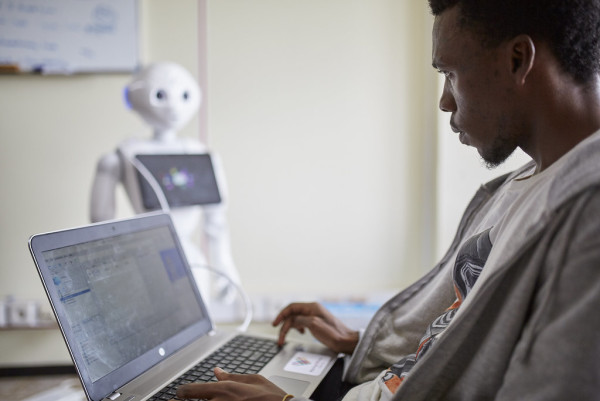
The African Development Bank (www.AfDB.org) has released a report establishing a strategic roadmap for unlocking the economic and social potential of artificial intelligence (AI) across Africa. Developed under the G20 Digital Transformation Working Group, Africa's AI Productivity Gain: Pathways to Labour Efficiency, Economic Growth and Inclusive Transformation gives an overview of the potential of A1 to foster development.
Download Report: https://apo-opa.co/4qrgJft
The study, carried out by consulting firm Bazara Tech, finds that inclusive AI deployment could generate up to $1 trillion in additional GDP by 2035- equivalent to nearly one-third of the continent's current economic output. This potential is underpinned by Africa's growing digital capacity, favorable demographics, and ongoing sectoral reforms, making it one of the most promising regions for AI-driven growth globally.
According to the report the AI dividend is expected to be concentrated in select high-impact sectors, rather than spread evenly across Africa's economy. Analysis identified five priority sectors—agriculture (20%), wholesale and retail (14%), manufacturing and Industry 4.0 (9%), finance and inclusion (8%), and health and life sciences (7%)—which together are projected to capture 58% of the total AI gains, or approximately $580 billion by 2035. These sectors combine economic size, readiness to adopt AI, and strong potential to deliver inclusive development outcomes.
“We have set out the key actions in this report, identifying the areas where initial implementation should be focused,” said Nicholas Williams, Manager of the ICT Operations Division at the Bank. “The Bank is ready to release investment to support these actions. We expect the private sector and the government to utilize this investment to ensure we achieve the identified productivity gains and create quality jobs”.
The report asserts that realising the potential of AI depends on five interlinked enablers: data, compute, skills, trust, and capital. Reliable and interoperable data forms the foundation for AI insights, while scalable compute infrastructure ensures solutions can be deployed efficiently across the continent. It notes that a skilled workforce is essential to develop, implement, and maintain AI systems, and trust—built through governance, and regulatory frameworks—underpins adoption. The report also notes that the enablers, together with adequate capital investment to de-risk innovation and accelerate deployment, would “foster a cycle of AI-driven growth.”
The report also outlines a three-phase roadmap toward Africa's AI readiness: ignition (2025-27), consolidation (2028-31) and scale (2032-35).
“Achieving early milestones by 2026 will set Africa's AI flywheel in motion,” said Ousmane Fall, Director of Industrial and Trade Development at the Bank. “Africa's challenge is no longer what to do — it is doing it on time.”
Distributed by APO Group on behalf of African Development Bank Group (AfDB).Contact:
Amba Mpoke-Bigg
Communication and External Relations Department
email: media@afdb.org
About the African Development Bank Group:
The African Development Bank Group is Africa's premier development finance institution. It comprises three distinct entities: the African Development Bank (AfDB), the African Development Fund (ADF) and the Nigeria Trust Fund (NTF). On the ground in 41 African countries with an external office in Japan, the Bank contributes to the economic development and the social progress of its 54 regional member states. For more information: www.AfDB.org