
Explore more Articles in
Industrial
African Development Bank Group-funded fisheries programme impacts two million people, drives economic transformation in 16 Southern African Development Community (SADC) countries
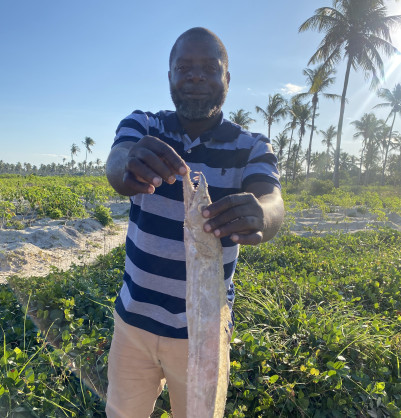

A regional initiative that has overhauled aquatic resource management and boosted cross-border fish trade is now improving the lives of nearly three million people across Southern Africa —raising fish production, consumption, and incomes.
The Program for Improving Fisheries Governance and Blue Economy Trade Corridors (PROFISHBLUE) (https://apo-opa.co/3Y8pOgL) has generated cross-border trade volumes exceeding 500,000 tonnes over the past four years, creating employment, strengthening food security, and building climate resilience across 16 SADC member states.
The initiative has built capacity for over 250,000 beneficiaries across seven African Development Fund (ADF) countries (Democratic Republic of Congo, Madagascar, Malawi, Mozambique, Tanzania, Zambia, and Zimbabwe) through various trainings, knowledge transfer programs, fish quality assurance equipment and tools, and refrigerated transport vehicles.
Training covered multiple areas, including fish value chain and post-harvest utilisation, business development and SME incubation, genetic improvement programs for endemic tilapia species, common standards and policy harmonization in collaboration with bureaus of standards and customs officers, nutrition and fish product development, and blue economy investment planning and financing mechanisms.
Further support was provided for fish stock assessments on transboundary lakes, vessel monitoring systems to deter illegal fishing, and training vessel inspection and fish catch statistics.
On World Fisheries Day on 21 November, the Southern African Development Community (SADC), the African Development Bank Group, and strategic partners gathered in Gaborone to celebrate these achievements and showcase how the project has transformed fish value chains and local consumer markets since its inception in 2022.
The $9.2 million grant initiative, funded through the African Development Bank's ADF 15, has successfully facilitated regional integration and economic development by improving fisheries governance and establishing sustainable blue economy trade corridors.
This year's World Fisheries Day aligned closely with PROFISHBLUE's multi-level governance and community-centered approach and measurable impact on fisheries communities throughout Southern Africa.
The gathering brought together government officials, development partners, private-sector representatives, and civil society stakeholders to chart a path forward for sustainable fisheries development in the region.
Transformative Impact Across the Region
"We are indebted to the African Development Bank Group for providing funding to implement this project within the Blue Economy space," said Director Domingos Gove on behalf of Angele Makombo Ntumba, SADC Deputy Secretary for Regional Integration. "This support has demonstrated our capacity to improve aquatic food systems for the benefit of over 380 million people in the region."
The project has successfully demonstrated that fishery resources can be managed sustainably, equitably, and resiliently in the face of climate change and external shocks.
"The PROFISHBLUE project has shown best practices in regional integration of blue economy trade corridors and cross-border fish trade," stated Neeraj Vij, African Development Bank's Regional Sector Manager for Feed Africa Operations for Southern Africa. "About 3 billion people rely on global supply chains for aquatic-sourced food, contributing $300 billion annually to the global economy. This project demonstrates how strategic investment in fisheries governance can create competitive value chains that provide jobs and livelihoods while eradicating extreme poverty, especially in rural areas."
Vij reaffirmed the African Development Bank Group's commitment to expanding support for blue economy initiatives across SADC Member States.
Key implementing partners include the Food and Agriculture Organization (FAO), the United Nations Industrial Development Organization (UNIDO), the Worldwide Fund for Nature (WWF), WorldFish, and the African Organization for Standardization (ARSO).
Director of Fisheries and Apiculture in Botswana's Ministry of Lands and Agriculture, Kagisanyo Bedi, commended the initiative for creating a crucial platform for learning and exchange of ideas among regional stakeholders in the region.
The celebration featured testimonials from women in fisheries who shared how the project has enhanced their livelihoods, underscoring the project's inclusive development approach.
"We embarked on an investment journey that few smallholder entrepreneurs would consider piloting technology in seaweed farming. We appreciate the opportunity..." said Hifadhi Hai, a project participant from Tanzania.
"This was echoed by a fish processor, Tamala Mtambo of the Twiyule Fish Cooperative, Malawi: "ProFishBlue supported us to turn fish processing into progress."
Distributed by APO Group on behalf of African Development Bank Group (AfDB).Media Contact:
Emeka Anuforo
Communication and External Relations Department
media@afdb.org
About the African Development Bank Group:
The African Development Bank Group is Africa's premier development finance institution. It comprises three distinct entities: the African Development Bank (AfDB), the African Development Fund (ADF) and the Nigeria Trust Fund (NTF). On the ground in 41 African countries with an external office in Japan, the Bank contributes to the economic development and the social progress of its 54 regional member states. For more information: www.AfDB.org
Building Africa’s Next Industrial Frontier: The Role of Sustainable Aviation Fuels (By Henok Teferra Shawl)

By Henok Teferra Shawl, Boeing managing director for Africa (www.Boeing.com).
Sustainable aviation fuel (SAF) presents a strategic opportunity not only to reduce lifecycle emissions but to retain value in African economies and create skilled jobs.
Today, Africa imports most of its jet fuel, sending billions of dollars off the continent each year and leaving airlines and governments vulnerable to volatility of oil prices and currency shocks. At the same time, Africa's diverse agricultural and renewable resources provide a strategic advantage for SAF production. Domestic SAF production could help address structural cost disadvantages facing African airlines — higher jet fuel prices, weak supplier competition, low procurement volumes, and higher taxes.
The World Bank (https://apo-opa.co/4pfameJ) projects Sub‑Saharan Africa will see a major working‑age population expansion by 2050 and capturing this demographic dividend depends on creating skilled jobs at scale. SAF value chains – from feedstock cultivation to refining and logistics – can drive employment and economic growth. Turning this potential into production requires coordinated action across three mutually reinforcing areas: feedstock, policy and finance.
Today, SAF carries a price premium due to limited production. Africa's abundant renewable energy resources and diverse feedstocks could make the continent a key contributor to bringing costs down – an industrial opportunity not to be missed.
From years of research in Africa and globally, including a 2019 study (https://apo-opa.co/4iCdXAY) with WWF South Africa and the International Institute for Applied Systems Analysis, and a 2023 study (https://apo-opa.co/4atc87s) in Ethiopia and South Africa with the Roundtable on Sustainable Biomaterials (RSB), Boeing has found that data‑driven local feedstock assessments are the essential first step.
Building on this experience, Boeing and RSB are engaging other African countries to assess sustainable feedstock potential and SAF production capacity to support creation of a regional SAF ecosystem and inform national policies. Convening governments, research bodies and airlines will help produce credible baselines for such work.
SAF can cut carbon emissions by up to 80% over the fuel's lifecycle compared to conventional jet fuel. However, in order to achieve the aviation industry's decarbonization goal, SAF production worldwide must grow from anticipated 2 million tons in 2025 (https://apo-opa.co/49XflfA) to roughly 500 million tons within 25 years (https://apo-opa.co/3Kf8X8Z), according to the International Air Transport Association (IATA).
SAF will not scale overnight, hence maximizing the impact of every liter of SAF must be paired with reducing fuel demand. Modern airplanes like the Boeing 737 MAX and 787 Dreamliner help airlines cut fuel burn and lower operating costs. In Africa, where about 70% of future deliveries are narrowbody airplanes and intraregional connectivity is a priority, efficient airplanes can expand routes and support trade and tourism while the industry is working to scale SAF supply.
Working together we can turn Africa's potential into local industries, jobs, connectivity and shared prosperity. Building sovereign SAF markets while accelerating fleet modernization and operational efficiency can power that transformation and unlock lasting economic benefits across the continent.
Distributed by APO Group on behalf of Boeing.Africa’s Green Economy Summit 2026 to unveil Africa’s premier pipeline of investment-ready green ventures making a difference toward net zero goals
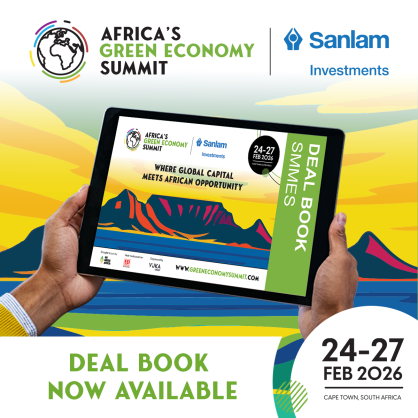
Africa's Green Economy Summit (AGES 2026) is set to host an unparalleled showcase of investment-ready green economy projects from across the continent. With over 100 applications meticulously vetted by its expert investors committee, nearly 30 pioneering Pan-African initiatives have been selected to present their transformative solutions. This curated pipeline, spanning crucial sectors from clean energy to climate-smart agriculture, underscores Africa's pivotal role in the global green transition and AGES 2026's commitment to connecting global capital with impactful African ventures.
Elodie Delagneau, Investment Project Lead at VUKA Group, emphasised the significance of this year's selection: "The overwhelming response and the exceptional quality of applications reaffirm Africa's immense potential in the green economy. AGES 2026 is not merely a conference; it is the definitive platform where serious capital meets serious impact. Our rigorous vetting process ensures that investors encounter thoroughly de-risked and scalable projects that are poised to deliver both significant financial returns and verifiable environmental and social benefits."
A curated pipeline of innovation
The Pitch Programme is the culmination of extensive market research and rigorous evaluation, designed to identify and elevate projects that are not only innovative but also strategically aligned with Africa's sustainable development goals. These initiatives represent the cutting edge of green and blue economy solutions, ready to drive tangible progress across the continent.
Our committee, comprised of leading investors and industry experts, has meticulously selected nearly 30 game-changing ventures. This sneak peek offers a glimpse into the future of Africa's green economy, featuring solutions that are ripe for investment and set to transform industries and communities alike.
Approaching Africa's critical green economy verticals
AGES 2026 will present a diverse portfolio of projects categorised into eight high-growth sectors, each offering compelling investment opportunities:
- Energy: Powering Africa's Green Transformation
The sector is fundamental for Africa's development, with over 600 million lacking electricity. Projects range from utility-scale solar and wind to mini-grids, energy storage, and green hydrogen initiatives. These ventures offer rapid emissions reductions, enhance energy security, and unlock new economic opportunities. Investors will find projects leveraging Africa's abundant renewable resources, supported by favourable policies and innovative financing.
- Transport & E-Mobility: Accelerating Sustainable Connectivity
Addressing urbanisation and emissions, this sector showcases projects focused on electrifying Africa's transport systems. Initiatives span electric buses, two/three-wheelers, and innovative logistics solutions. These projects aim to reduce fossil fuel consumption, improve urban air quality, and enhance economic productivity through modern, efficient, and clean mobility infrastructure.
- Waste & Circular Economy: Transforming Waste into Value
This critical sector tackles public health, urban resilience, and climate mitigation by converting waste into valuable resources. Projects include advanced recycling facilities, waste-to-energy solutions, organic waste composting, and innovative approaches to utilising invasive species. These ventures create jobs, reduce landfill reliance, and generate new revenue streams from what was once considered waste.
- Water & Resilience: Safeguarding Africa's Most Precious Resource
Water security is paramount for health, agriculture, and industrial activity, especially as climate change intensifies drought and flood risks. Projects in this sector focus on building resilient water infrastructure, developing decentralised water services, and implementing climate-resilient solutions such as groundwater monitoring and integrated catchment rehabilitation.
- Sustainable Agriculture & Food Systems: Cultivating Africa's Future
With agriculture central to livelihoods, this sector presents projects focused on sustainable practices that increase productivity, climate resilience, and food security. Initiatives range from vertical farming and biochar-based fertilisers to agri-tech platforms and cold chain solutions. These projects aim to reduce emissions, enhance soil health, boost yields, and empower smallholder farmers across the continent.
- Biodiversity & Nature Finance: Safeguarding Africa's Natural Capital
Africa's vast biodiversity underpins essential ecosystem services and climate regulation. Projects in this sector mobilise capital to protect, restore, and sustainably manage critical ecosystems like forests, wetlands, and coastal zones. Initiatives such as REDD+ programs and blue carbon projects offer high-impact conservation opportunities with significant co-benefits for local communities and tourism.
- Digitalisation & Climate Tech: Accelerating Green Innovation
Digital tools are proving to be powerful accelerators for climate solutions, optimising energy use, enhancing agricultural productivity, and improving resource management. This sector features projects leveraging IoT, AI, and blockchain for supply chain traceability, carbon accounting, and new green business models. These technologies reduce transaction costs and dramatically increase the scalability of green projects.
- Carbon Markets & Credits: Monetising Climate Action
Carbon markets are emerging as a powerful mechanism to mobilise private capital for climate mitigation and nature-based solutions. Projects here focus on generating high-integrity carbon credits through renewables, avoided deforestation, mangrove restoration, methane capture, and sustainable agriculture. These initiatives channel crucial finance to projects that deliver verifiable climate benefits alongside significant social outcomes.
Experience the power of connection
AGES 2026 stands as Africa's most influential gathering for green investment, innovation, and policy. The summit is meticulously designed to foster direct connections between global capital and the most promising green economy projects.
"The Pitch Programme offers an unparalleled opportunity for investors to engage directly with the innovators shaping Africa's green future," Delagneau added. "Beyond the pitches, attendees will benefit from purpose-built matchmaking sessions, networking opportunities with leading DFIs, corporate partners, and policymakers, and deep insights into the continent's evolving green economy landscape. Our goal is to significantly accelerate deal flow and ensure that every investor finds projects that align with their financial and impact mandates."
The summit also includes a robust mentorship program for pitching projects, ensuring they are investor-ready and equipped with compelling narratives. This holistic approach reinforces AGES 2026's commitment to not just showcasing projects but actively facilitating their success and growth.
AGES 2026 is poised to be a pivotal event in driving Africa's just transition, underscoring the continent's leadership in developing scalable, sustainable, and economically viable solutions to global challenges.
More information or registration: www.GreenEconomySummit.com
To download the event brochure, click here (https://apo-opa.co/4pRd1LN).
Distributed by APO Group on behalf of VUKA Group.Additional Link:
Download the Deal Book to explore all of the confirmed projects pitching at AGES 2026: https://apo-opa.co/48iElMV
Media enquiries and interview requests:
Nomsa Mdhluli
Nomsa@tishalacommunications.com
+27 71 628 6231
Elize Engle
Pr1@tishalacommunications.com
+27 82 762 4946
Tshepang Mokoena
Pr@tishalacommunications.com
+27 76 682 9608
Registration enquiries:
Mzamo Jika
mzamo.jika@wearevuka.com
Letlatsa Sekhele
letlatsa.sekhele@wearevuka.com
Prudence Chishimba
prudence.chishimba@wearevuka.com
MSGBC Oil, Gas & Power 2025 to Discuss Clean Energy and Industrial Development
Download logo
Mauritania has advanced its clean energy agenda with the August 2025 unveiling of a 160 MW solar plant, 60 MW wind farm and large-scale battery storage systems - all to be developed under a new public-private partnership framework. The announcement comes as the MSGBC basin undergoes rapid transformation in its energy sector, following the start of LNG production at the Greater Tortue Ahmeyim project earlier this year – a milestone set to reshape regional power generation, industrial expansion and export potential.
Amid this progress, the MSGBC Oil, Gas & Power 2025 conference and exhibition – taking place in Dakar from December 8-10 – will host a high-level session – Powering the MSGBC Region with Sustainable Technologies. Speakers include Katrin Puetz, Co-Founder of social business initiative BioGasUnite; a senior representative from Senegal's body for oil and gas projects COS Petrogaz; Jonathan Ambrogi, Business Development Officer at consultancy firm EnGreen; and Jason Yang, General Manager at industrial manufacturer Neway Valve. The panelists will examine how emerging technologies, expanded gas and renewable capacity, and improved regulatory frameworks can accelerate energy security, industrial growth and sustainable development across the MSGBC region.
Explore opportunities, foster partnerships and stay at the forefront of the MSGBC region's oil, gas and power sector. Visit www.MSGBCOilGasAndPower.com to secure your participation at the MSGBC Oil, Gas & Power 2025 conference. To sponsor or participate as a delegate, please contact sales@energycapitalpower.com.
Senegal continues to consolidate its position as a regional power hub through its upcoming Cap des Biches combined-cycle gas plant, which will add 300 MW to the national grid and support the country's 2025 target of 30% renewables in its electricity mix. The project follows the start of the Sangomar oil field in mid-2024 – which has strengthened government revenue streams intended to support diversified industrial development - and ahead of the anticipated final investment decision on the Yakaar-Teranga gas project. Yakaar-Teranga further anchors Senegal's strategy to deploy natural gas as a stabilizing bridge fuel.
The Gambia is similarly advancing its energy and regulatory landscape, with new petroleum exploration and production legislation under development and a fresh renewable energy partnership with Turkey aimed at expanding national infrastructure. These advancements align with the country's goal of achieving 90% electrification by the end of 2025.
Mauritania's position as a future global green hydrogen hub also forms a central part of the regional transition, marked by gigawatt-scale ventures such as the Aman project – which completed geological studies in March 2025 – and the Megaton Moon initiative, following its framework agreement signed in February 2025. Together, these projects aim to supply both domestic green industries such as green iron production and export markets in Europe.
Against this backdrop, the upcoming MSGBC Oil, Gas & Power conference will bring together industry leaders to examine how these emerging renewable, gas-to-power and hydrogen developments can accelerate sustainable growth across the region.
“Powering the MSGBC Region with sustainable Technologies will be a critical session that reflects the basin's rapid shift toward cleaner, more reliable energy systems. As new gas, renewable and hydrogen projects come online, this dialogue will help stakeholders chart a pathway to long-term energy security and industrial growth,” states Sandra Jeque, Events and Project Director, Energy Capital & Power.
Distributed by APO Group on behalf of Energy Capital & Power.MSGBC Conference to Spotlight Regional Infrastructure, Logistics Opportunities

Major milestones across the MSGBC basin are accelerating the region's rise as a leading African energy hub, with the Greater Tortue Ahmeyim (GTA) LNG project commencing commercial operations and Senegal's Sangomar oilfield coming online. These achievements mark a decisive shift in the basin's capabilities, positioning the MSGBC region as a growing exporter of both gas and liquids while attracting new waves of international investment. Yet as production scales upward, the region's long-term competitiveness will hinge not only on what is produced, but on how efficiently those resources can reach global markets.
The upcoming MSGBC Oil, Gas & Power 2025 conference and exhibition will feature a panel session titled Integrated Infrastructure & Logistics: Beyond the Port to Global Markets. The session will focus on investment needs and opportunities in integrated infrastructure and logistics to connect the region's expanding energy market and mineral resource production to regional and global markets. The panel will bring together senior representatives from key companies that play a significant role in the MSGBC region's infrastructure and logistics landscape, including speakers from private equity firm Actis, industrial manufacturer Neway Valve, management firm EPCM Holdings and logistics provider Africa Global Logistics.
Explore opportunities, foster partnerships and stay at the forefront of the MSGBC region's oil, gas and power sector. Visit www.MSGBCOilGasAndPower.com to secure your participation at the MSGBC Oil, Gas & Power 2025 conference. To sponsor or participate as a delegate, please contact sales@energycapitalpower.com.
The panel will highlight the importance of integrated infrastructure in enabling the development of the MSGBC region's energy and mineral resources. The discussion is expected to cover multimodal transport infrastructure, including pipelines, ports and rail, as well as the role of logistics and industrial suppliers in supporting energy and mining projects. Attendees will have the opportunity to hear directly from companies that are actively contributing to the region's growing energy and industrial sectors, including the GTA gas project, Mauritania's Energy Service Zone and other key initiatives.
The MSGBC region's energy and mineral sectors are increasingly drawing international attention, with investment focused on both export infrastructure and domestic industrialization. Integrated transport networks, including pipelines and regional rail connections, are critical to unlocking the economic potential of these resources. As such, the panel is set to provide insight into the companies, partnerships and infrastructure solutions that are shaping the MSGBC region's ability to connect its production to global markets, while also supporting regional economic growth and industrial development.
“This panel underscores the critical role of integrated infrastructure and logistics in connecting the MSGBC region's energy and mineral resources to regional and global markets. It will provide a platform for industry leaders to share insights on the partnerships and solutions driving economic growth and sustainable development across the basin,” states Sandra Jeque, Events and Project Director, Energy Capital & Power.
Distributed by APO Group on behalf of Energy Capital & Power.The Surge in Gas Production and Africa’s Path to Economic Transformation (By NJ Ayuk)
Download logo
By NJ Ayuk, Executive Chairman, African Energy Chamber (https://EnergyChamber.org).
Natural gas will be a pivotal component of Africa's energy future as it is uniquely poised for growth despite the move toward a surplus liquefied natural gas (LNG) supply in the global gas cycle.
As detailed in the African Energy Chamber's 2026 Outlook Report, “The State of African Energy,” African demand for gas is forecast to rise 60% by 2050. In fact, gas is the only fossil fuel expected to expand its share of primary energy demand globally. Furthermore, as North Africa's dominance in the sector diminishes, the report expects sub-Saharan Africa to drive this gas surge as the region holds over 70% of the continent's remaining recoverable resources.
Export revenues and domestic use are the two avenues down which Africa will find the transformative benefits that gas offers, but actually getting there depends on successfully navigating infrastructure gaps, pricing disputes, and the transition from associated to non-associated gas.
The Next Gas Epicenter
Two-thirds of gas production on the continent takes place in North Africa with Algeria, Egypt, and Libya holding the top spots as leading producers with high gas penetration in their own power mixes. However, we expect North Africa's share of total continental production to decrease to below 40% by 2035 as output from other regional producers accelerates. While sub-Saharan production currently accounts for the remaining third of current gross output, the region will dominate future growth.
With the 2021 launch of its “Decade of Gas,” a government initiative to develop gas resources and aid in the transition to cleaner energy, Nigeria will likely lead this expansion, as it already produces more than half of the region's commercialized gas. Emerging producers like Mozambique, Tanzania, Senegal, Mauritania, and Angola are set to follow. Notably, Mozambique's Coral Sul project, Senegal-Mauritania's Greater Tortue project, and Congo LNG have all added new export streams since 2022.
Our 2026 Outlook Report also forecasts that total African gross gas demand will have climbed steadily from roughly 55 billion cubic meters (Bcm) per year in 2020 to over 90 Bcm by 2050. Residential, industrial, and other power sectors are anticipated to drive the growth.
With sub-Saharan Africa holding more than 400 trillion cubic feet (Tcf) of recoverable gas resources, which amount to 70% of the continent's total reserves, the region is poised to meet that demand.
Also, unlike North Africa's mature, pipeline-linked markets, sub-Saharan gas is increasingly non-associated or “dry,” meaning it is not found alongside crude oil in reserves. While non-associated gas is more expensive per million British thermal unit (MMBtu), the fact that it is not cross-subsidized by oil essentially frees it from the operational and pricing constraints of oil-centric projects, making the gas available to new domestic, regional, or export pathways to monetization.
Transformative Avenues: Exports and Domestic Industrialization
As our report explains, gas development can transform host government economies through two primary channels: exports and in-country value creation.
Exports: Last year, Africa supplied 34.7 million metric tonnes (MMt) of LNG (8.5% of the global supply). Sub-Saharan volumes in 2024 reached 26.9 MMt, with 60% destined for Asia and 25% for Europe. Adding Tanzania to the export roster, the 2026 Outlook Report projects a quadrupling of the sub-Saharan supply by 2050.
Furthermore, as west and southwest African LNG producers are in proximity to both Atlantic and Indian Ocean markets, producers in these regions specifically can function as swing suppliers, taking advantage of fluctuations in European and Asian LNG spot prices or global supply disruptions.
Also, where gas export projects have domestic market obligations (DMOs), like in Nigeria, Senegal-Mauritania, Angola, and Cameroon, growth in exports grows the gas supply for domestic use. For example, Senegal has plans of achieving 3 gigawatts (GW) of gas-fired power by 2050, largely fed by DMOs from the Greater Tortue LNG project and the Yakaar-Teranga LNG project.
Domestic Monetization and Industrialization: In addition to the revenue collected from exports, gas can empower a producing nation by fueling transport, powering industry, and electrifying homes all within its borders.
Although only a few sub-Saharan countries currently have power mixes that include gas, generation from natural gas has shown a steady increase across the region over the last decade. As detailed in our report, Nigeria's gas-fired capacity is at 12.6 GW, and installations in Ghana and Mozambique are at 2.9 GW and 1.1 GW, respectively. Tanzania, Senegal, Angola, Côte d'Ivoire, and South Africa are also home to smaller gas power plants. In countries such as Senegal and Ghana, that have coastal demand centers, floating power ships operating on natural gas are in place to satisfy demand.
What's more, Nigeria, South Africa, Senegal, Angola, Ghana, Tanzania, and Mozambique all have stated ambitions of developing or furthering gas-to-power infrastructure. Our report also sees a coming increase in demand for gas-derived products such as fertilizers and petrochemicals, as well as for implementation in industrial applications like metals processing.
Angola's recently approved National Gas Plan targets these sectors with a focus on curbing import reliance, while Nigeria's push for compressed natural gas (CNG) vehicles under the 2020 National Gas Expansion Program officially commenced in March 2022. These are just two examples of how sub-Saharan Africa's gas sector is poised to deliver an economic one-two punch through exports and in-country monetization that would enable nations to cut down on imports, grow their revenues, and provide energy access to their people for decades to come.
Challenges to Realizing Africa's Gas Potential
Africa holds both abundant gas resources and significant unrealized potential. In fact, Africa ranks second in the world behind only Russia for discovered yet undeveloped gas resources. In two examples, the Rovuma basin, off the coasts of southern Tanzania and northern Mozambique, holds 129 Tcf, and the Niger Delta basin along the Nigerian coast holds 113 Tcf, but these basins remain largely untapped.
There are numerous obstacles between Africa's current position and the economic transformation that gas development could deliver. Our 2026 Outlook Report identifies four essential success factors that Africa must manage if it is to navigate those obstacles: upstream economics, market access and offtake, adequate infrastructure, and country risk/fiscal terms.
As international majors have been known to exit discoveries due to a lack of integration of these factors, support from governments and regulators is critical to finding alignment between them.
Upstream Economics: Currently, over 50% of sub-Saharan production is tied to associated gas, which carries very low production costs. This has contributed heavily to regional gas sector expansion as seen in Nigeria and Angola. By contrast, non-associated gas — though not constrained by oil production rates, enhanced oil recovery reinjection requirements, or oil price fluctuations — demands a competitive dollar-per-MMBtu price to justify future investment and infrastructure development.
Market Access and Offtake: To ensure transparent pricing, adequate returns, and reliable long-term demand all while maximizing domestic benefits, success with this factor will require long-term contracts with creditworthy offtakers (buyers held to specified purchase amounts through long-term agreements), predictable consumption patterns, and government-backed incentives that encourage producers to sell and consumers to buy.
Adequate Infrastructure: Linking supply hubs to demand centers requires LNG facilities and pipelines. With this factor, the “chicken-and-egg paradox” emerges: Investors who can provide the necessary infrastructure expect guaranteed demand, yet demand only grows once that infrastructure is in place. This dynamic is why governments must put in place predictable regulatory and pricing frameworks that attract investment while advancing national economic and energy priorities.
Country Risk and Fiscal Terms: To keep gas production projects attractive to investors, national governments must find the correct balance of royalties, production sharing terms, taxation, DMOs, and local content requirements. Governments must also align their export and domestic priorities to satisfy operator needs and achieve their own local supply or revenue ambitions. Maintaining overall political stability to ensure long-term investor confidence is another critical component of this success factor.
Seizing the Surplus
The 2026 Outlook frames gas as Africa's bridge fuel: cleaner than coal or oil, versatile for power generation and industrial applications, and increasingly competitive as global prices decrease in the coming years.
Sub-Saharan Africa's anticipated non-associated gas production surge can deliver energy security, export revenues, and new industrial jobs. Success in this effort will require a resolution of the infrastructure-demand paradox through reliable contracts, transparent pricing, and balanced fiscal policies.
If African nations can collectively support upstream scalability, midstream connectivity, and downstream certainty, gas production will not merely surge — it will transform the entire continent for the better.
"The State of African Energy: 2026 Outlook Report" is available for download. Visit https://apo-opa.co/48v4gzN to request your copy.
Distributed by APO Group on behalf of African Energy Chamber.