
Explore more Articles in
Industrial
Invest in African Energy (IAE) 2026 to Spotlight Africa’s Energy Growth Amid Low-Carbon Push


Africa's integrated energy companies face a dual mandate: expanding energy access while reducing carbon emissions. This challenge will be the focus of the panel, “The Dual Mandate: Navigating Growth and Decarbonization in an Integrated Energy Sector,” at the Invest in African Energy (IAE) Forum in Paris on April 22–23, 2026. The discussion will bring together energy executives, investors and policymakers to align strategy with the continent's rapidly rising power demand and industrial ambitions.
The first priority for many integrated energy firms is scaling low‑carbon power. Across Africa, utility-scale solar, wind and hybrid systems are advancing in 2025 as public and private capital flows in. South Africa's Renewable Energy Independent Power Producer Program continues to attract private investment into large-scale solar and wind projects, while Morocco's Noor Ouarzazate Solar Complex demonstrates how concentrated solar power can supply baseload electricity. Panelists will examine how integrated companies can replicate these models in markets with limited grid infrastructure.
Despite the low-carbon push, oil and gas remain central to Africa's energy mix and industrial growth. Integrated companies are adopting practices to reduce emissions while sustaining production. Nigeria's Gas Flare Commercialization Program, which issued permits in December 2025 to capture 250–300 million cubic feet of flared gas per day, is projected to attract $2 billion in investment, generate nearly 3 GW of electricity and cut about 6 million tons of CO₂ annually. Methane leak monitoring, enhanced oil recovery with CO₂ capture and flaring reduction are also being implemented across Nigeria, Angola and Ghana, extending field life while improving environmental performance. These measures show that responsible hydrocarbon development can support a transition strategy while maintaining investor appeal.
The panel will also explore hydrogen, carbon capture and storage (CCS), and bioenergy as tools to strengthen integrated energy portfolios. Green hydrogen projects in Morocco aim to supply clean fuels while anchoring industrial ecosystems, from green steel to sustainable aviation fuels, and positioning the region as a renewable export hub. In southern Africa, Namibia's HyIron Oshivela green hydrogen facility reached a milestone in 2025 by producing its first zero‑emission hydrogen using solar power and battery storage, and is now set to support low‑carbon iron production. These examples illustrate how hydrogen can drive industrial decarbonization beyond electricity generation.
The IAE 2026 Forum will allow financiers, energy executives and policymakers to assess investment-ready opportunities arising from these strategies. Hybrid systems that combine gas and renewables offer models for projects that deliver both financial returns and ESG outcomes. Speakers will also discuss how integrated companies can leverage Africa's abundant renewable resources, significant hydrocarbon reserves and growing power demand to promote economic development alongside emissions reductions. Decisions made today on technology deployment, asset management and investment prioritization will shape the sector for decades.
In short, the panel will demonstrate that Africa's energy transition is not a choice between growth and decarbonization. Integrated companies that scale low‑carbon electricity, manage hydrocarbons responsibly and deploy advanced technologies will create compelling investment opportunities, reduce energy costs and support industrial and manufacturing development across the continent. For investors attending the forum, the discussion offers a roadmap to commercially viable projects aligned with global climate goals.
IAE 2026 (https://apo-opa.co/45wnhRF) is an exclusive forum designed to connect African energy markets with global investors, serving as a key platform for deal-making in the lead-up to African Energy Week. Scheduled for April 22–23, 2026, in Paris, the event will provide delegates with two days of in-depth engagement with industry experts, project developers, investors and policymakers. For more information, visit www.Invest-Africa-Energy.com. To sponsor or register as a delegate, please contact sales@energycapitalpower.com
Distributed by APO Group on behalf of Energy Capital & Power.Egypt: Her Excellency (H.E.) Dr. Rania Al-Mashat, Minister of Planning, Economic Development and International Cooperation, Meets Military Attachés Designated for Overseas Assignments
Download logo
- Integrated coordination across government policies to stimulate investment, boost production, and empower the private sector.
- Growth expected to exceed 5% in the current fiscal year, with efforts underway to reach 7% to increase employment and deliver citizen-centered development.
- International institution reports confirm the success of government measures in enhancing economic stability and overcoming multiple challenges.
- Completion of the fifth and sixth IMF reviews and the continuation of reforms reinforce positive economic prospects for 2026.
- The government continues to implement incentives that strengthen the contribution of production, exports, investment, and industry to economic growth.
- Public investment governance successfully enforced in FY 2024/2025, adhering to the EGP 1 trillion ceiling to enable private sector expansion.
- Completion of 11 high-level and ministerial joint committees in 2025 with brotherly and friendly countries, and the signing of more than 65 cooperation agreements and protocols.
- Unified horizontal objectives and clear performance indicators across all ministries to ensure coordinated efforts and the achievement of ambitious growth, employment, and export targets.
- Macroeconomic stability and reform are mutually reinforcing paths—reforms enhance stability, and stability enables reform, laying solid foundations for sustainable economic development.
H.E. Dr. Rania Al-Mashat, Minister of Planning, Economic Development and International Cooperation, met with military attachés designated for overseas postings.
During the meeting, H.E. Dr. Al-Mashat noted that Egypt's economic growth rates have risen steadily since July 2024, explaining that growth is primarily driven by productive sectors—namely industry, tourism, and information and communications technology—sectors largely led by the private sector. She emphasized that 98% of the tourism sector is private, as is the industrial sector, including automotive manufacturing, chemicals, textiles and garments, household appliances, and broader manufacturing activities, reaffirming that Egypt's economy is driven by productive, private-sector-led sectors.
She explained that industrial production growth has translated into a significant increase in Egyptian exports. In tourism, Egypt is expected to approach nearly 19 million tourists this year, while tourism nights in the last quarter of the previous fiscal year reached record levels. She added that Suez Canal activity recorded positive performance in the quarter ending September and is recovering amid peace efforts sponsored by H.E. President Abdel Fattah El-Sisi and U.S. President Donald Trump. Despite Egypt being among the countries most affected by regional developments due to declining Suez Canal revenues, the economy has recovered and its indicators have improved. She noted that the Suez Canal accounts for around 12% of global trade, and any disruption has global inflationary implications.
H.E. Dr. Al-Mashat stressed that economic growth followed critical reforms implemented in March 2024, alongside measures to govern public investment and impose a fixed investment spending ceiling of EGP 1 trillion in the budget to create space for private sector expansion. This led to an increase in the private sector's share of total investment, with private enterprises now receiving the largest share of bank credit, particularly in the industrial sector.
She projected that Egypt's economy will achieve growth approaching 5% in the current fiscal year, supported by continued economic and structural reforms, with the government aiming to reach growth rates of 7% to boost employment and ensure development outcomes that positively impact citizens. She highlighted that international institution reports confirm the effectiveness of government measures in strengthening economic stability and overcoming challenges.
H.E. Dr. Al-Mashat affirmed that 2026 will represent a pivotal turning point for the Egyptian economy following fiscal and monetary reforms, the continuation of structural reforms, and efforts to open new economic horizons. The emerging economic model builds on infrastructure investments—particularly in ports and logistics zones—while focusing on higher-productivity sectors. She emphasized that Egypt's policy framework prioritizes industry, tourism, technology, and construction, noting that such reforms cannot be implemented without macroeconomic stability.
She highlighted the role of productive sectors in job creation, stressing that reforms drive employment through private-sector-led growth, particularly in industry, tourism, and ICT. She added that the completion of the fifth and sixth IMF reviews, alongside sustained reform policies, will further strengthen positive economic trends in 2026.
H.E. Dr. Al-Mashat underscored Egypt's Narrative for Economic Development: Reforms for Growth, Jobs & Resilience, which guides the transition toward a higher-productivity economic model.
She noted that the second edition includes a dedicated human development pillar, reaffirming that macroeconomic stability is a cornerstone of development through predictable fiscal and monetary policies, public investment governance, fiscal discipline, and domestic resource mobilization. Structural reforms, she added, reinforce macroeconomic stability, support the green transition, and unlock economic growth channels.
She explained that the national structural reform program follows a defined timeline and is implemented under the Ministry's supervision in coordination with more than 40 national entities. The program includes over 430 measures across sectors such as tax and trade reforms, public investment governance, social protection, private sector participation, labor market reforms, electricity and renewable energy, innovation and startups, and industrial competitiveness.
H.E. Dr. Al-Mashat further noted that the Ministry continues to strengthen partnerships with international institutions, UN organizations, and the private sector to mobilize resources and advance development finance solutions. Egypt's strong international relations, implementation capacity, and effective project design enhance access to concessional financing—lower-cost alternatives to market borrowing—without increasing debt burdens or shortening maturities.
In this context, she highlighted that concessional financing for budget support for 2023–2026 amounts to USD 9.5 billion, while the private sector has received USD 17 billion since 2020. Renewable energy was underscored as a critical alternative to reduce gas and fuel oil imports, with the government targeting 42% renewable energy by 2030.
She noted that through the NWFE Country Platform (Nexus of Water, Food and Energy), approximately USD 5 billion in concessional development financing has been mobilized for domestic and foreign private sector entities to implement renewable energy projects and support investments in the national electricity grid.
H.E. Dr. Al-Mashat emphasized that human development is a core pillar of economic development, with investment in human capital representing a direct investment in a more productive and equitable future. She noted that citizens are the (center of development), adding that 48% of public investments in the FY 2025/2026 plan are directed toward human development sectors.
She explained that the medium-term development plan, prepared in accordance with the State Planning Law, will be developed using the programs-and-performance methodology and will include shared horizontal objectives and clear performance indicators across ministries to ensure unified efforts and the achievement of ambitious targets for growth, employment, and exports.
Finally, H.E. Dr. Al-Mashat highlighted the importance of high-level and ministerial joint committees overseen by the Ministry, describing them as a key mechanism for strengthening Egypt's economic, trade, and investment relations, as well as cultural, scientific, and technical cooperation with partner countries. The Ministry oversees around 55 joint committees with countries across the globe. In 2025 alone, Egypt completed 11 high-level and ministerial committees and signed more than 65 cooperation agreements and protocols to enhance trade and investment relations.
Distributed by APO Group on behalf of Ministry of Planning, Economic Development, and International Cooperation - Egypt.Her Excellency (H.E.) Dr. Rania Al-Mashat and her Armenian counterpart chair the 6th session of the Egyptian-Armenian Joint Committee for Economic, Scientific, and Technical...
Download logo
H.E. Dr. Rania Al-Mashat, Minister of Planning, Economic Development and International Cooperation, and Mr. Gevorg Papoyan, Minister of Economy of the Republic of Armenia, co-chaired the 6th session of the Egyptian-Armenian Joint Committee for Economic, Scientific, and Technical Cooperation, held in Egypt's New Administrative Capital, with the participation of representatives from relevant entities on both sides.
The committee held extensive discussions with active participation from representatives of both sides to explore opportunities for enhancing joint cooperation, particularly in agriculture and food security, advanced technology and artificial intelligence, youth and sports, scientific research, and increasing trade exchange.
In her remarks during the session, H.E. Al-Mashat emphasized the importance of bilateral relations based on mutual respect and joint efforts to strengthen cooperation in economic, cultural, and social fields. These relations have gained momentum through ongoing high-level dialogue, as well as the historic visit of H.E. President Abdel Fattah El-Sisi to Yerevan in January 2023 — Egypt's first presidential visit to Armenia since its independence — which opened a new chapter in bilateral relations.
She stated that Egypt is committed to deepening cooperation with Armenia across all areas of mutual interest. The partnership extends beyond diplomatic frameworks to include economic development, scientific collaboration, cultural exchange, and strengthening people-to-people ties. Looking ahead, the potential to expand economic cooperation between the two countries is clear and promising, with significant untapped opportunities to diversify trade and investment flows.
H.E. Al-Mashat highlighted that agriculture, food industries, construction materials, pharmaceuticals, textiles, machinery, and light manufacturing represent promising areas for expanding joint cooperation. Meanwhile, Armenia's industrial capacity, skilled workforce, and access to regional markets offer important opportunities for Egyptian partners and investors.
She also addressed tourism as a key pillar of cooperation and explored partnership opportunities in ICT, digital transformation, capacity building, youth training, and cultural heritage digitization.
H.E. Al-Mashat concluded her remarks by emphasizing that the work of the Joint Committee provides an important platform to translate shared political will into practical initiatives, sustainable partnerships, and measurable outcomes — with both peoples rightfully expecting tangible results.
For his part, the Armenian Minister of Economy stressed that Egyptian-Armenian relations exemplify cooperation based on mutual respect and shared interests, rooted in historical and cultural ties. He highlighted a shared commitment to deepening economic and trade partnerships. Given ongoing reform and development efforts in both countries, he emphasized the importance of building on this foundation to enhance trade, diversify cooperation, and open new opportunities for the private sector, contributing to sustainable economic growth and integration into regional and global value chains.
He added that the Joint Governmental Committee plays a central role in organizing and developing economic relations between Egypt and Armenia, providing an institutional framework to coordinate relevant entities, monitor progress, and set clear sectoral priorities. The committee also serves as an effective platform to convert opportunities into concrete projects and support more sustainable and balanced trade and investment flows, reflecting the shared political will to elevate bilateral relations into a long-term economic partnership benefiting both peoples.
At the conclusion of the session, the ministers — co-chairs of the Joint Committee from Egypt and Armenia — signed the 6th session protocol for economic, scientific, and technical cooperation. The protocol includes multiple promising areas to expand bilateral relations, particularly in trade cooperation, increasing bilateral trade, leveraging competitive advantages, encouraging the private sector to develop new partnerships, and creating alliances to promote economic development and organize joint exhibitions.
The cooperation protocol also aims to promote investment partnerships, knowledge exchange, and invites the Armenian side to explore investment opportunities in the Suez Canal Economic Zone, especially in industry and logistics services, in addition to collaboration in SMEs, electricity and renewable energy, youth and sports, culture, and higher education.
From the Egyptian side, participants included representatives from the Ministries of Foreign Affairs, Investment and International Trade, Agriculture, Electricity and Renewable Energy, Culture, Higher Education, Youth and Sports, Health, Communications and Information Technology, the Public Business Sector, as well as the General Authority for Investment and Free Zones, the Small, Medium, and Micro Enterprise Development Agency, and the Suez Canal Economic Zone Authority.
From the Armenian side, participants included Mr. Armen Sarkissian, Ambassador of Armenia to Egypt, and representatives from the Ministries of Economy, Foreign Affairs, High-Tech Industry, Health, Education, Science and Culture, Youth, and other relevant entities.
Distributed by APO Group on behalf of Ministry of Planning, Economic Development, and International Cooperation - Egypt.European Union (EU)-funded Africa Trade Competitiveness and Market Access (ATCMA) Economic Community of West African States (ECOWAS) programme boosts journalists’ capacity to promote reporting...
Download logo
Under the framework of the EU-funded Africa Trade Competitiveness and Market Access (ATCMA) programme, the Economic Community of West African States (ECOWAS), in partnership with the United Nations Industrial Development Organization (UNIDO), held a regional media training in Abuja from 11 to 12 December 2025, aimed at strengthening journalists' capacity to effectively report on Quality Infrastructure across West Africa.
The ATCMA ECOWAS programme is funded by the European Union (EU) in the amount of €50 million and is jointly implemented by the United Nations Industrial Development Organization (UNIDO) and the International Trade Centre (ITC), with the overall objective to increase sustainable intra-African and EU-Africa trade by enhancing market access and export competitiveness for SMEs in selected value chains.
The two-day hybrid training brought together journalists and communication officers from ECOWAS Member States to deepen their understanding of standards, metrology, accreditation, and conformity assessment. Participants were equipped to translate these technical systems into accessible, people-centred narratives that reflect their tangible impact on citizens, enterprises, and regional integration.
Opening the training, the ECOWAS Commissioner for Economic Affairs and Agriculture, Dr. Kalilou Sylla, represented by Mr. Koissi Midaye, Principal Programme Officer, reaffirmed that quality is no longer optional, but a strategic necessity for accessing and sustaining presence in reference markets, strengthening regional value chains, and improving the quality of life of citizens across the Community. He underscored that Quality Infrastructure lies at the heart of economic transformation, public health, market confidence, and cross-border trade, in line with the aspirations of ECOWAS Vision 2050.
Representing the European Union, Mr. Massimo De Luca, Head of Cooperation at the European Union Delegation to Nigeria and ECOWAS, highlighted the importance of harmonised quality rules in safeguarding consumers while enabling manufacturers, traders, and investors to operate confidently across borders. He emphasised that clear and predictable standards, particularly in sensitive sectors such as pharmaceuticals and food fortification, are essential to ensure safety, effectiveness, and trust, and are central to the EU's Global Gateway strategy, which seeks to support catalytic, sustainable, and transformative investments in West Africa.
Mr. Bernard Bau, Project Manager of the ATCMA ECOWAS programme under the UNIDO, noted that the project presents a major opportunity for the region. “This is a great opportunity for the region, for consumers, manufacturers, producers, investors, and everybody to really make the most of this technical cooperation,” he said, reiterating the dire need for a strong quality culture in the ECOWAS region and emphasizing that the role of the media in this endeavour cannot be overemphasized.
Technical sessions led by Prof. Dr. Adalberto Vieira, UNIDO International Expert in Quality Infrastructure, provided participants with practical insights into how metrology, standardisation, and conformity assessment underpin consumer protection, fair trade, and industrial credibility.
A key feature of the training was a series of practical exercises and pitching sessions, during which participants applied the knowledge acquired to assess real-world scenarios. These exercises reinforced the role of the media not only in reporting events, but also in interrogating systems, clarifying responsibilities, and shaping informed public debate around quality, competitiveness, and accountability.
Throughout the engagement, emphasis was placed on the media as a critical bridge between technical institutions and society, ensuring that Quality Infrastructure is understood not as an abstract framework, but as a public good that directly affects livelihoods, safety, and economic opportunity.
The training was moderated by Mr. Saikou Suwareh Jabai, UNIDO Consultant, and convened in close coordination with the ECOWAS Communication Directorate, reflecting the Community's commitment to strategic communication as a driver of regional integration and development.
This media engagement forms part of ECOWAS' broader efforts to strengthen regional integration, enhance economic competitiveness, and advance the aspirations of Vision 2050. By reinforcing informed, responsible, and people-centred media coverage, ECOWAS and its partners aim to ensure that Quality Infrastructure becomes a shared culture that supports sustainable development and inclusive growth across West Africa.
Distributed by APO Group on behalf of Economic Community of West African States (ECOWAS).African Mining Week Returns to Cape Town, 14–16 October 2026

African Mining Week (AMW), Africa's premier mining forum, returns to the Cape Town International Convention Center from 14–16 October 2026, under the theme, “Mining the Future: Critical Resources, Sustainability and Community Development.” The event will convene mining companies, investors, policymakers and technology providers to discuss Africa's evolving mining landscape, from strategic mineral resources and digital innovation to local beneficiation and community development. AMW 2026 aims to connect international investors with Africa's most promising mining opportunities as the continent positions itself at the forefront of the global energy transition and critical minerals supply.
The 2026 edition will feature a multi-track program and exhibition space, including high-level panel discussions, technical workshops and exclusive networking sessions. Delegates will engage on investment opportunities across Africa's mining value chain, building on the success of AMW 2025, which attracted 1,500 delegates, over 85 speakers, 315 companies and representatives from 22 countries.
As African countries push for local value addition, mineral beneficiation and job creation, AMW 2026 will showcase national strategies and policies shaping investment flows. Mining ministers and government delegations from Ghana, South Africa, the Democratic Republic of Congo (DRC), Egypt, Zimbabwe, Sierra Leone, Nigeria and The Gambia are expected to update the industry on new regulations and mining codes, including Ghana's updated gold mining framework and South Africa's Mineral Resources Development Bill.
With Africa holding 30% of the world's critical minerals – essential for the clean energy transition – AMW 2026 will connect international investors with developers, owners and traders of lithium, cobalt, copper, rare earths and other strategic resources. Delegates will also explore how digital technologies are transforming mining operations, from accelerating mineral discovery to improving efficiency and sustainability. Building on DRC Minister of Mines Louis Watum Kabamba's remarks at AMW 2025 on shortening discovery timelines from years to months, AMW 2026 highlights digital innovation as a key driver of Africa's mining transformation.
The summit will also tackle crucial topics shaping Africa's mining sector, including the formalization of artisanal and small-scale mining, energy security, environmental sustainability, infrastructure development, women and youth empowerment, human capital development and the Fourth Industrial Revolution.
“African Mining Week 2026 is more than an event – it's a catalyst for Africa's mining transformation,” states Rachelle Kasongo, Project & Events Manager at Energy Capital & Power. “From critical minerals and sustainable practices to digital innovation and local beneficiation, AMW provides a platform for governments, investors and industry leaders to come together, accelerate projects and drive meaningful economic and community impact across the continent.”
African Mining Week serves as a premier platform for exploring the full spectrum of mining opportunities across Africa. The event is held alongside the African Energy Week: Invest in African Energies 2026 conference from October 12-16 in Cape Town. Sponsors, exhibitors and delegates can learn more by contacting sales@energycapitalpower.com.
Distributed by APO Group on behalf of Energy Capital & Power.KoçDigital expands its strategic Artificial Intelligence (AI) footprint across Middle East and North Africa (MENA)
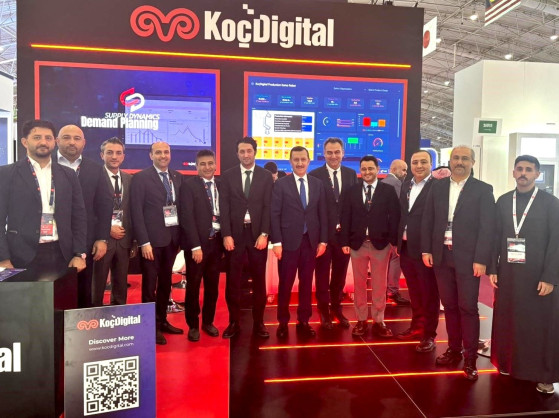
KoçDigital (http://www.KocDigital.com), Türkiye's pioneering technology company, continues to expand its vision of regional leadership by strengthening its presence across the MENA region. As part of this strategy, the company made a strong impact at Industrial Transformation Saudi Arabia | ITSA 2025, one of the region's most prominent technology and industrial transformation events.
During the exhibition, KoçDigital represented Türkiye while deepening its leadership in artificial intelligence (AI) across the Middle East, particularly in Saudi Arabia and the United Arab Emirates. As one of the 27 strategic technology partners of the Advanced Manufacturing and Production Center (AMPC) established under Saudi Arabia's Vision 2030, KoçDigital further accelerated its regional growth agenda.
Trusted industrial transformation partner in MENA
At ITSA 2025, the company showcased its advanced AI-driven solutions and participated in the official signing ceremony as one of the 27 strategic technology partners of the Advanced Manufacturing and Production Center (AMPC), supporting the Future Factories Program, which aims to accelerate the transformation of more than 4,000 factories across the Kingdom. The event brought together key stakeholders shaping the region's industrial future, positioning KoçDigital as a trusted transformation partner in MENA.
KoçDigital stated that MENA is a strategic priority for the company, not only in terms of market expansion but also as a region where they can create measurable industrial impact through artificial intelligence. The company added that its participation in ITSA 2025 reflects its commitment to supporting Vision 2030 and delivering scalable, end-to-end industrial transformation solutions that enhance productivity, resilience, and sustainability across the region.
High level visitors, strategic collaborations
As part of ITSA 2025, KoçDigital announced strategic collaborations with Zain KSA, one of the region's leading telecommunications operators, and Experts Vision Consulting (EVC) to accelerate regional digital transformation initiatives. These partnerships aim to combine advanced AI capabilities with local expertise to deliver high-impact industrial solutions across MENA.
KoçDigital's stand also welcomed high-level visits from Prof. Dr. Emrullah İşler, Ambassador of the Republic of Türkiye to the Kingdom of Saudi Arabia, and H.E. Ahmed Al-Zawawi, Assistant Deputy Minister of the Saudi Ministry of Industry and Mineral Resources, further underlining the company's strategic role in MENA's industrial transformation ecosystem.
Expanding growth potential in the region
KoçDigital also contributed to the “Industrial Transformation Journey” panel at ITSA 2025, where its AI-based operational models, scalable digital platforms, and Lighthouse-level manufacturing capabilities were discussed as key enablers of next-generation production and operational excellence.
The company's Platform360, an Industry 4.0 and AI-infused manufacturing platform, was demonstrated live throughout the event. The demo area hosted in-depth discussions with technology leaders and industry executives, highlighting the growing demand for KoçDigital's solutions and the company's expanding growth potential in the region.
Distributed by APO Group on behalf of KoçSistem.Contact:
Janset Akışık
jansetakisik@cpartner.com.tr
About KoçDigital:
KoçDigital empowers companies to maximize resilience, competitiveness, and sustainability through cutting-edge AI-integrated solutions in Data Technologies, Artificial Intelligence, Industrial IoT & Industry 4.0, and Supply Chain Transformation.
A subsidiary of Koç Holding— Türkiye's largest conglomerate—KoçDigital drives ‘Factories of the Future' initiatives by deploying AI-infused manufacturing analytics, operational excellence, digital-twin, and supply-chain planning at production sites across Türkiye, Saudi Arabia, and the wider Middle East.
With more than 300 experts and over 500 successful transformation projects across 14 countries and 150+ clients, KoçDigital develops solutions for competitive operations, benchmarked against global standards—cementing its reputation as the region's trusted digital-transformation partner.