
Explore more Articles in
Employment
Afreximbank Breaks Ground on its Iconic Trade Centre and New Headquarters in Egypt’s New Capital


African Export-Import Bank (Afreximbank) (www.Afreximbank.com), Africa's leading multilateral financial institution, today marked a historic milestone with the groundbreaking ceremony of the Afreximbank African Trade Centre (AATC) in Egypt's New Capital, which will also be the home of the Bank's new global headquarters.
Situated in the Diplomatic District of the New Capital, approximately 45 kilometres east of Cairo, the Afreximbank African Trade Centre will be located in a modern, strategically planned environment that brings together government ministries, foreign embassies, and international organisations. It will be the first facility of its kind in the North Africa region.
Speaking at the ceremony, Egypt's Prime Minister, His Excellency, Dr Mostafa Madbouly, said: “The establishment of the Afreximbank African Trade Centre (AATC) in Egypt's New Capital reflects Egypt's important role in driving continental economic integration and trade facilitation.
“As the host country of Afreximbank's global headquarter, Egypt is proud to deepen this collaboration through a landmark facility that will serve as a hub for trade intelligence, capacity building, innovation, and continental connectivity.”
Afreximbank's President and Chairman of its Board of Directors, Dr George Elombi, expressed appreciation to the Government of Egypt for its steadfast support since the Bank's establishment in 1993. He noted that Egypt has hosted the Bank's global headquarters for more than three decades, contributing significantly to the Afreximbank's strong growth, and that Egypt, represented by its Central Bank, is also the largest sovereign shareholder of Afreximbank.
Dr Elombi said: “This Afreximbank African Trade Centre in the New Capital is meant not simply to accommodate the expansion of the Bank, but provide a concrete solution designed to address the lack of trade and investment information among African businesses; a challenge that has confounded the growth of intra-African trade and investment for nearly seven decades.”
Describing the relationship between Afreximbank and the Government of Egypt as ‘truly symbiotic', Dr Elombi said the Bank has disbursed US$41 billion into the Egyptian economy to date, supporting increased investment in strategic sectors including energy, telecommunications, construction and manufacturing, while strengthening Egypt-Africa trade and investment.
“We have helped Egyptian entities capitalise on growing investment opportunities across Africa, helping them secure and execute projects in several countries.”
The Afreximbank African Trade Centre in the New Capital, Cairo, will position Egypt as a major trade hub, housing technology and SME incubation centres as well as a digital African trade gateway offering trade information, customer due diligence, payments, and other digital services.
The AATC in Cairo is part of Afreximbank's broader vision to develop a network of African Trade Centres in strategic commercial hubs across Africa and the Caribbean. These centres will provide trade information, market intelligence, financing, networking and collaboration opportunities, and essential support facilities to accelerate trade, strengthen economic cooperation, and drive intra-African growth.
Occupying a 48,888-square-metre site, the state-of-the-art Afreximbank development will feature two basement levels and six floors, with a total gross built-up area of 156,147 square metres.
Once completed, the AATC in Cairo will offer 57,298 square metres of office space to accommodate Afreximbank's rapidly expanding workforce. Additional office space will be made available for African and international agencies involved in trade, finance, and investment, as well as for some foreign African diplomatic missions.
The complex will host a full suite of modern trade-supporting facilities, including a trade information centre, a world-class library and knowledge hub, an innovation and SME incubation centre to support entrepreneurship, a business centre, a 110-room aparthotel, a 750-seater modern conference centre, an exhibition centre, retail and dinning outlets, shops, extensive back-of-house and support facilities and a 1,200-bay parking structure.
The architectural design integrates three interconnected blocks arranged around a landscaped internal street, creating the social and spatial heart of the complex. Green courtyards, shaded walkways, and collaborative spaces will encourage seamless interaction between work, learning, and leisure reflecting Afreximbank's commitment to innovation, sustainability, and staff wellbeing.
Designed to achieve Gold-level LEED certification or higher, the complex will feature smart energy-efficient systems, solar power integration, water-saving technologies, and climate-responsive design with comfortable shaded outdoor spaces.
This makes the new Afreximbank headquarters one of Africa's most advanced and environmentally conscious institutional developments.
Afreximbank has appointed Hassan Allam Construction, one of Egypt's leading engineering and construction companies, as the main contractor under a US$249.5 million contract. Architectural design and project supervision are being led by renowned engineering firm EHAF Consulting Engineers.
This project will generate significant employment throughout the construction phase and in ongoing operations. It will stimulate opportunities for local contractors, suppliers, SMEs, and a wide range of service providers.
Scheduled for completion in early 2029, the AATC in Cairo's groundbreaking follows the AATC- Barbados (https://apo-opa.co/48XmNFi) groundbreaking in March 2025 and the official opening of the AATC in Abuja (https://apo-opa.co/459NMw3) in April 2025. Construction is already underway for similar projects in Harare and Kampala.
The Afreximbank African Trade Centre network will include hubs in Abuja (Nigeria), Harare (Zimbabwe), Kampala (Uganda), Cairo (Egypt), Abidjan (Côte d'Ivoire), Yaoundé (Cameroon), Bridgetown (Barbados), Kigali (Rwanda) and Tunis (Tunisia).
Together, these Centres will connect buyers, sellers, suppliers, service providers, enterprises, governments, chambers of commerce, financial institutions, development organisations, and the wider African and global trade and investment community.
Distributed by APO Group on behalf of Afreximbank.Media Contact:
Vincent Musumba
Communications and Events Manager (Media Relations)
Email: press@afreximbank.com
Follow us on:
X: https://apo-opa.co/44qp7mG
Facebook: https://apo-opa.co/4agKevt#
LinkedIn: https://apo-opa.co/4q64NiN
Instagram: https://apo-opa.co/4q9fJfM
About Afreximbank:
African Export-Import Bank (Afreximbank) is a Pan-African multilateral financial institution mandated to finance and promote intra- and extra-African trade. For over 30 years, the Bank has been deploying innovative structures to deliver financing solutions that support the transformation of the structure of Africa's trade, accelerating industrialisation and intra-regional trade, thereby boosting economic expansion in Africa. A stalwart supporter of the African Continental Free Trade Agreement (AfCFTA), Afreximbank has launched a Pan-African Payment and Settlement System (PAPSS) that was adopted by the African Union (AU) as the payment and settlement platform to underpin the implementation of the AfCFTA. Working with the AfCFTA Secretariat and the AU, the Bank has set up a US$10 billion Adjustment Fund to support countries effectively participating in the AfCFTA. At the end of December 2024, Afreximbank's total assets and contingencies stood at over US$40.1 billion, and its shareholder funds amounted to US$7.2 billion. Afreximbank has investment grade ratings assigned by GCR (international scale) (A), Moody's (Baa2), China Chengxin International Credit Rating Co., Ltd (CCXI) (AAA), Japan Credit Rating Agency (JCR) (A-) and Fitch (BBB-). Afreximbank has evolved into a group entity comprising the Bank, its equity impact fund subsidiary called the Fund for Export Development Africa (FEDA), and its insurance management subsidiary, AfrexInsure (together, "the Group"). The Bank is headquartered in Cairo, Egypt.
For more information, visit: www.Afreximbank.com
The African Development Fund grants Guinea nearly $26 million in additional funding to develop an electricity interconnection with Mali

The Board of Directors of the African Development Fund approved additional financing of $25.79 million for Guinea for the 225 kV Guinea-Mali electricity interconnection project.
The financing, agreed in Abidjan on 10 December 2025, from the African Development Bank Group's concessional window includes a loan of approximately $22 million and a grant of $3.79 million to Guinea.
The project will contribute to the socioeconomic development of Guinea and Mali by providing inhabitants with better access to high-quality, low-cost energy.
The additional financing will support the continued implementation of the project, initially funded with approximately $41 million from the African Development Fund in December 2017. It will raise the total project cost in Guinea from $346 million to $372 million. Alongside the Fund's contribution, the project is co-financed by the European Union, the World Bank, the European Investment Bank and the ECOWAS Bank for Investment and Development (EBID). The implementation period will run from January 2026 to December 2028.
The new resources will enable the installation of 37,500 additional electricity connections. The project also includes the development of medium-voltage feeders at HV/LV substations to support rural electrification, as well as institutional assistance for key national bodies, including Électricité de Guinée (EDG) and the Electricity and Water Regulatory Authority (AREE). It will also cover the operating costs of the Management Unit and the consulting engineer. This intervention will help strengthen governance and increase electricity access—two persistent challenges for the sector. In 2024, national access stood at just 52 percent, with stark differences between urban areas (89 percent) and rural areas (21 percent).
The project will directly benefit households by improving living conditions, as well as essential socio-economic infrastructure such as schools, health centres, artisanal workshops and women's groups. Productive users will gain access to reliable electricity to expand their activities. Strengthening these structures will boost employment, reduce poverty and enhance social cohesion.
Distributed by APO Group on behalf of African Development Bank Group (AfDB).Media contact:
Aissatou Diallo
Communications and External Relations Department
media@afdb.org
About the African Development Bank Group:
The African Development Bank Group is Africa's leading development finance institution. It comprises three distinct entities: the African Development Bank (AfDB), the African Development Fund (ADF) and the Nigeria Trust Fund (NTF). Represented in 41 African countries, with a field office in Japan, the Bank contributes to the economic development and social progress of its 54 regional member states. For more information: www.AfDB.org
Afreximbank says Africa must raise factoring volumes to at least €240 billion to support Small and Medium Enterprises (SME)-led transformation
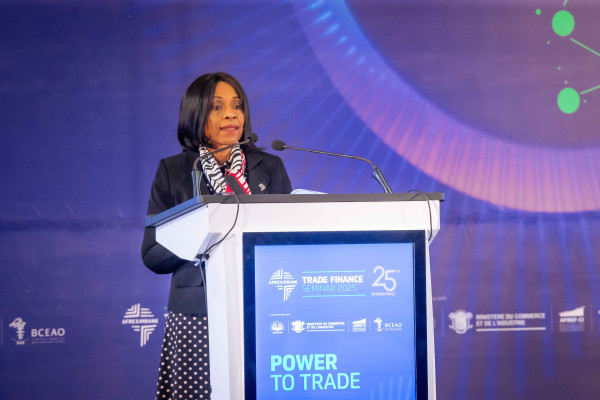
Afreximbank (www.Afreximbank.com) has highlighted the critical importance of factoring and supply chain finance (SCF) in narrowing Africa's Small and Medium Enterprises (SMEs) financing gap and building resilient value chains across the continent.
Speaking at Afreximbank's annual Factoring Workshop in Abidjan, Côte d'Ivoire, Mrs Kanayo Awani, Executive Vice President, Intra-African Trade and Export Development (IAED) at Afreximbank and Member of the FCI Executive Committee, noted that although Africa's factoring volumes have more than doubled in recent years, increasing from €21.6 billion in 2017 to €50 billion in 2024, and with nearly 200 factoring companies now operating across the continent, current activity still remains significantly below Africa's transformative potential.
She said: “Although SMEs account for more than 90% of Africa's businesses and over 60% of employment and GDP, they continue to face a financing gap estimated at US$300 billion annually.
“To catalyse SME-led growth, Africa must scale factoring volumes to at least €240 billion, equivalent to about 10% of the continent's GDP. Achieving this will require increased financing, deeper legal reforms, expanded training and strong industry partnerships.”
Also speaking at the workshop, Mr Neal Harm, Secretary General of FCI, said that factoring and supply chain finance are critical to unlocking SME growth in Africa, calling for practical solutions, strong partnerships, and collaborative action to turn the day's discussions into tomorrow's transactions.
Representing Dr Jean-Claude Kassi Brou, Governor of the Central Bank of West Afircan States (BCEAO), Mr. Charlie Dingui, Special Advisor to the National Director stressed the importance of SME financing for driving socio-economic development across UEMOA member states.
“By enabling businesses to convert their accounts receivable into immediate liquidity, factoring improves cash flow and stimulates growth, particularly in environments marked by long payment delays and collection challenges,” said Mr Dingui.
Côte d'Ivoire presents a significant opportunity to boost economic development by expanding its factoring market. The country's factoring and supply chain finance sector is estimated to have a potential of US$5 billion, a notable prospect in an economy where the cocoa sector alone supports millions of livelihoods. Yet, only 12% of SMEs currently seek working capital from formal financial institutions, relying instead on informal sources largely due to high financing costs, perceived SME risk, strict loan requirements, and slow approval processes.
The annual Factoring workshop is part of Afreximbank and FCI's long-standing commitment to expanding awareness and strengthening technical expertise on factoring and supply chain finance, key enablers essential to advancing the implementation of the African Continental Free Trade Area (AfCFTA).
To date, more than 5,000 delegates have been trained through over 25 capacity-building initiatives. Training is available through the Certificate of Trade Finance in Africa (COTFIA), the Afreximbank Academy (AFRACAD), FCI's online and bespoke factoring training programmes, and the FCI Mentoring Programme.
Distributed by APO Group on behalf of Afreximbank.Media Contact:
Vincent Musumba
Communications and Events Manager (Media Relations)
Email: press@afreximbank.com
Follow us on:
X: https://apo-opa.co/4q2reWm
Facebook: https://apo-opa.co/3YiPAyY#
LinkedIn: https://apo-opa.co/3XMOefM
Instagram: https://apo-opa.co/4oCyXJj
About Afreximbank:
African Export-Import Bank (Afreximbank) is a Pan-African multilateral financial institution mandated to finance and promote intra- and extra-African trade. For over 30 years, the Bank has been deploying innovative structures to deliver financing solutions that support the transformation of the structure of Africa's trade, accelerating industrialisation and intra-regional trade, thereby boosting economic expansion in Africa. A stalwart supporter of the African Continental Free Trade Agreement (AfCFTA), Afreximbank has launched a Pan-African Payment and Settlement System (PAPSS) that was adopted by the African Union (AU) as the payment and settlement platform to underpin the implementation of the AfCFTA. Working with the AfCFTA Secretariat and the AU, the Bank has set up a US$10 billion Adjustment Fund to support countries effectively participating in the AfCFTA. At the end of December 2024, Afreximbank's total assets and contingencies stood at over US$40.1 billion, and its shareholder funds amounted to US$7.2 billion. Afreximbank has investment grade ratings assigned by GCR (international scale) (A), Moody's (Baa2), China Chengxin International Credit Rating Co., Ltd (CCXI) (AAA), Japan Credit Rating Agency (JCR) (A-) and Fitch (BBB-). Afreximbank has evolved into a group entity comprising the Bank, its equity impact fund subsidiary called the Fund for Export Development Africa (FEDA), and its insurance management subsidiary, AfrexInsure (together, "the Group"). The Bank is headquartered in Cairo, Egypt.
For more information, visit: www.Afreximbank.com
Nigeria’s Smartgenix Crowned Grand Prize Winner of the 15th Junior Achievement (JA) Africa Company of the Year (COY) Competition in Abuja

Junior Achievement (JA) Africa (https://JA-Africa.org) successfully concluded the 15th edition of the JA Africa COY Competition, held from December 3–5, 2025, in Abuja, Nigeria, bringing together Africa's brightest young entrepreneurs to showcase innovative business solutions aligned with the theme “ACT! Action for Climate Transformation.” The continental finals convened student companies from across Africa who had progressed through national JA Company Program competitions to compete across six innovation tracks: Innovation & Technology, Artificial Intelligence (AI), Financial Technology (FinTech), Digital Media & Creation, Renewable Energy, and Circular Economy & Sustainability.
Following three days of dynamic pitching, mentorship engagement, exhibitions, and rigorous judging, Nigeria's Smartgenix was crowned the overall Company of the Year 2025 for demonstrating exceptional innovation, execution strength, and high-impact potential. Mauritius' Plantura claimed Second Place, while Uganda's Renewablock secured Third Place, rounding out the podium with solutions focused on sustainability and inclusive development. As the continental champion, Smartgenix will proceed to represent Africa at the global finals of the De La Vega Global Entrepreneurship Award, where it will compete against winning teams from other regions for a grand prize of US $15,000.
Additional recognitions were distributed among other deserving teams, thanks to the generous support of various sponsors, including FedEx, PMIEF, FirstBank Nigeria, Delta Air Lines, Bank of America, Kuda Microfinance Bank, Boeing, and Entrepreneurs' Organization.
Summary of Signature Award Winners:
- FedEx Global Possibilities Award: XeroLabs, Ghana
- PMIEF Best Application of Project Management Award: Kwakhanya PlantIQ, Eswatini
- FirstBank Nigeria CEO Entrepreneurship Award: Plantura, Mauritius
Summary of Branded Award Winners:
- Delta Air Lines Girls LEAD! Award: 16 girls awarded: Matse Takitsi, Fakudze Temantolo Siphesihle, Dlamini Gcinile Lenhle, Dhristi Gooroochurn, Ameydee Shalinee Chocken, Yezhilly Gopaulen, Lashna Gungabissoon, Ihimbazwe Niyikora Kevine, Uwayo Ange Kevine, Abarurema Hirwa Emma Reponse, Kendy Neilla Gisa, Atuhaire Gabriella Kusiima, Comfort Musukuma, Grace Chilinda, Ndanji Nanyangwe, and Wana Sanyikosa
- Bank of America Best Financial Performance Award: Renewablock, Uganda
- Kuda Young Entrepreneurs Award: Kwakhanya PlantIQ, Eswatini
- Boeing Sustainable Innovation Award: XeroLabs, Ghana
- Entrepreneurs' Organizations Rising Leader Award: Ameydee Chocken, CEO of Plantura, Mauritius
Reflecting on the success of COY 2025, Simi Nwogugu, President and CEO of JA Africa, said, “The creativity, courage, and solution-driven mindset we witnessed at COY 2025 remind us why Africa's youth are our greatest asset. Through entrepreneurship education, we are not just preparing young people for the future of work; we are empowering them to lead climate action, create jobs, and build resilient communities across the continent.”
The competition concluded with the JA Africa Stakeholder Convening held on December 5 in Abuja under the theme “Unlocking Africa's Youth Dividend: Radical Pathways for Inclusive Skills, Entrepreneurship, and Employment Systems.” The high-level gathering brought together policymakers, educators, private sector leaders, philanthropic institutions, and development partners to catalyze strategic collaborations aimed at strengthening entrepreneurship education, expanding skills pathways, and scaling youth employment systems across Africa.
COY is anchored in the JA Company Program, which equips young people aged 14–17 with hands-on experience in business creation, financial management, teamwork, leadership, and venture pitching. As youth unemployment continues to pose a major development challenge across the continent, programs such as COY remain essential in bridging education to enterprise creation, equipping young people not only to seek employment but to become job creators and innovators within their communities. Alumni of the program across Africa have gone on to establish registered businesses, secure international scholarships and fellowships, and lead social and technology ventures.
The 15th edition of the JA Africa COY was made possible through the generous support of its partners: Headline Sponsors – FedEx, Project Management Institute Educational Foundation (PMIEF), and FirstBank Nigeria; Platinum Sponsors – Delta Air Lines, Bank of America, and Kuda Microfinance Bank; Gold Sponsors – Boeing and the Entrepreneurs' Organization (EO); and Media Partner – What Media Group
Distributed by APO Group on behalf of Junior Achievement (JA) Africa.Media Contact:
Ellen Ukpi
Director, Marketing & Communications
Junior Achievement Africa
Email: ellen.ukpi@ja-africa.org
JA Africa:
Junior Achievement (JA) Africa is one of the largest and most impactful youth-serving NGOs on the continent, reaching over 1.5 million young people annually across 23 countries. Through hands-on learning experiences in entrepreneurship, work readiness, financial literacy, and STEM education, JA Africa equips young people with the skills and mindset to thrive in a rapidly evolving global economy. JA Africa's mission is to prepare and inspire Africa's youth to become ethical leaders, job creators, and agents of change who drive sustainable development across the continent.
FedEx Corp:
FedEx Corp. (NYSE: FDX) provides customers and businesses worldwide with a broad portfolio of transportation, e-commerce, and business services. With annual revenue of $89 billion, the company offers integrated business solutions utilizing its flexible, efficient, and intelligent global network. Consistently ranked among the world's most admired and trusted employers, FedEx inspires its more than 500,000 employees to remain focused on safety, the highest ethical and professional standards, and the needs of their customers and communities. FedEx is committed to connecting people and possibilities around the world responsibly and resourcefully, with a goal to achieve carbon-neutral operations by 2040. To learn more, please visit Fedex.com/about.
PMIEF (Project Management Institute Educational Foundation):
For 35 years, PMIEF has helped put youth on the path to success by incorporating project management skills into their daily lives. Our goal is to forge partnerships with nonprofit organizations that support and prepare youth for success by offering project management expertise, resources, and volunteers to aid them in making their dreams a reality. www. PMI. org/pmi-educational-foundation (http://apo-opa.co/3MOeLa7)
Delta Air Lines:
Delta Air Lines is a major United States airline headquartered in Atlanta, Georgia, operating nine hubs, with Hartsfield–Jackson Atlanta International Airport serving as its largest. Together with its regional subsidiaries under the Delta Connection brand, the airline operates more than 5,400 flights daily and serves 325 destinations in 52 countries across six continents. Delta is a founding member of the SkyTeam alliance, expanding its global network, and is the second‑oldest operating commercial airline in the U.S. The airline ranks first globally in revenue and brand value among major airlines and consistently leads industry performance rankings, including The Wall Street Journal's 2022–2024 airline rankings and Condé Nast Traveler's 2024 Readers' Choice Awards for Best Airlines in the U.S.
Delta Air Lines is committed to empowering young people around the world through education and global citizenship programs. Its long-standing partnership with JA Africa expands access to STEM learning, leadership development, and real-world career exposure for Africa's youth. https://www.Delta.com/MEA/en/about-delta/overview
First Bank Nigeria:
FirstBank of Nigeria Limited is the premier commercial bank in Nigeria, with a history of over 130 years of providing dependable and reliable financial services. As a leading financial services provider in Sub-Saharan Africa, FirstBank has consistently supported inclusive economic development by enabling individuals, businesses, and communities to achieve their financial goals. It offers a comprehensive range of retail and corporate banking services, backed by an extensive network of branches and digital channels that ensure seamless banking experiences for millions of customers across Africa and beyond. FirstBank is a member of the FBN Holdings Plc group. www.FirstBankNigeria.com/
Bank of America:
Bank of America is one of the world's leading financial institutions, serving individual consumers, small and middle-market businesses and large corporations with a full range of banking, investing, asset management and other financial and risk management products and services. Bank of America is a global leader in wealth management, corporate and investment banking and trading across a broad range of asset classes, serving corporations, governments, institutions and individuals around the world. The company serves clients through operations across the United States, its territories and more than 35 countries. Bank of America Corporation stock (NYSE: BAC) is listed on the New York Stock Exchange.
Visit BofA Fast Facts for more information about the company.
Kuda Microfinance Bank:
Kuda Microfinance Bank is a CBN-licensed subsidiary of Kuda Technologies, a fintech company on a mission to make financial services accessible, affordable, and rewarding for every African on the planet.
Founded in 2019 by Babs Ogundeyi and Musty Mustapha, Kuda offers a modern alternative to traditional finance by delivering free money transfers, instant credit, savings tools, and business banking through digital channels.
The company has raised over $90 million from institutional investors, including Valar Ventures and Target Global, and it serves more than 7 million customers across Nigeria. Kuda.com/
Boeing:
As a leading global aerospace company, Boeing develops, manufactures and services commercial airplanes, defense products and space systems for customers in more than 150 countries. As a top U.S. exporter, the company leverages the talents of a global supplier base to advance economic opportunity, sustainability and community impact. Boeing's diverse team is committed to innovating for the future and living the company's core values of safety, quality and integrity.
Boeing's relationship with the Middle East extends back to 1945. Since then, Boeing has established a number of offices across the region, first in Riyadh in 1982, then a dedicated Boeing Defense, Space and Security office in Abu Dhabi in 1999, a regional headquarters in Dubai in 2005, an office in Doha in 2010, and a new office in Kuwait City in 2021. In addition, Boeing has field service teams across the region and two distribution centers for airplane spare parts in Dubai. For further information, please visit: www.Boeing.com
Entrepreneurs' Organization (EO):
The Entrepreneurs' Organization (EO) is the world's largest membership network created by entrepreneurs, for entrepreneurs, everywhere. Since 1987, EO has been supporting the world's leading builders of business to realize more of their potential by fostering connection, strengthening leadership, and creating belonging across industries and borders. EO exists with a clear purpose: to move the world forward by unlocking the full potential of entrepreneurs.
Its mission is engaging entrepreneurs to learn and grow, and its vision is to build the world's most influential community of entrepreneurs.
Nearly 20,000 members across more than 220 chapters in 80 countries make up EO's global network. EO members are founders and owners of thriving businesses with a median revenue of over US $5 million, representing diverse industries and regions around the world. They connect through local and global experiences that go beyond business to holistically support the whole entrepreneur.
For more information or to get involved, please visit: EONetwork.org.
What Media Group:
What Media Group is a holding company focused on strategic investments in Africa's media and entertainment sectors. The group identifies high-growth opportunities across the continent's rapidly expanding media landscape and provides financial investment, strategic guidance,- and operational support to innovative companies. With a commitment to both commercial growth and social impact, What Media Group prioritizes brands that elevate local talent, strengthen cultural expression, and contribute to the sustainable development of Africa's creative industries. www.WhatMediaGroup.com/
Dr. Rania Al-Mashat reviews Egypt’s efforts in implementing the first and second phases of the Universal Health Insurance System
Download logo
H.E. Dr. Rania Al-Mashat, Minister of Planning, Economic Development, and International Cooperation, participated in the 2025 High-Level Forum on Universal Health Coverage, as head of the Egyptian delegation, which included Dr. Ahmed El-Sobky, Chairman of the Healthcare Authority, and Ms. Mai Farid, Executive Director of the General Authority for Universal Health Insurance. The forum is organized by the Government of Japan, in cooperation with the World Health Organization (WHO) and the World Bank Group, in Tokyo, Japan, with the participation of senior government officials and international institutions, including Mr. Ajay Banga, President of the World Bank; Ms. Sanae Takaichi, Prime Minister of Japan; Dr. Tedros Adhanom Ghebreyesus, Director-General of the World Health Organization; and Dr. Budi Gunadi Sadikin, Minister of Health of Indonesia.
The forum witnessed the launch of the Universal Health Coverage (UHC) Knowledge Hub, an innovative platform established by the Government of Japan, the World Bank, and the World Health Organization to strengthen the exchange of experience and knowledge and support national healthcare policies. It includes Egypt alongside Nigeria, the Philippines, Kenya, Indonesia, Ghana, Cambodia, and Ethiopia.
In her remarks, H.E. Dr. Rania Al-Mashat stated that this pivotal event renews global commitment to an issue that lies at the heart of human development, affirming that Egypt believes that healthcare is a right for every citizen as well as an economic necessity; it is the foundation upon which production, job creation, and achieving inclusive and sustainable growth. H.E. pointed out that the world committed in 2015 to achieving universal health coverage by 2030, and for Egypt, this was not merely a target but a national strategy for investing in human capital—the strongest driver of inclusive and sustainable development.
H.E. noted that Egypt translated this commitment into concrete steps. Over the past five years, we have worked to increase spending on the health sector by nearly fourfold, which is a pivotal development because it allows us to align health objectives with development requirements, enhances the efficiency of services provided to citizens, and strengthens efforts to improve quality of life for individuals.
H.E. emphasized that the strategic objective we are working to achieve is to provide full coverage under the Universal Health Insurance System for all citizens in Egypt by 2030—an ambitious target requiring advanced technical capabilities, effective operational systems, in addition to providing sustainable financing that ensures the system's continuity and efficiency and achieves full health coverage throughout the Republic.
H.E. added that achieving universal health coverage is not limited to expanding service provision; it also includes strengthening sustainability and achieving value. In this context, Egypt is implementing a strategic transformation in health financing to improve the efficiency of public resource use and expand equity in accessing services. This transformation extends to the governance framework through the Ministerial Group for Human Development, which ensures a unified national vision, policy coherence, evidence-based prioritization, targeted investment allocation for the most vulnerable groups, and accelerated decision-making. This comprehensive government approach makes universal health coverage a central pillar of the human capital development agenda and links health progress with education, skills development, and economic empowerment.
Al-Mashat affirmed that achieving long-term growth depends primarily on investing in people above all else; investing in human beings is what enhances productivity and enables individuals to advance and participate effectively in the economy. It also contributes directly to reducing future spending on services, particularly in the health sector.
The Minister reviewed the Egyptian experience, noting that the health sector is one of the State's essential national priorities, not only as part of the social protection system but also as a fundamental pillar for achieving comprehensive development. This approach has been linked to a diverse set of initiatives and programs, noting the implementation of the Universal Health Insurance System in cooperation with the World Bank and other development partners, as well as the launch of several presidential initiatives that have played a vital role in expanding access to healthcare services provided to citizens throughout the Republic.
H.E. explained that the first phase of the Universal Health Insurance System covers six governorates with 5.1 million beneficiaries, with investments amounting to EGP 28.5 billion from 2018 to 2025 for the implementation of this phase. The second phase covers five governorates with 12.4 million beneficiaries out of the total population, and investments worth EGP 20 billion were allocated to develop healthcare facilities in this phase, in addition to concessional financing of $880 million from the World Bank, the French Development Agency (AFD), and the Japan International Cooperation Agency (JICA) to support the Universal Health Insurance System.
She also praised the role of the International Finance Corporation (IFC) and the French Development Agency (AFD) in supporting private-sector engagement, policy reforms, and institutional capacity building, efforts that enhance the resilience and efficiency of the healthcare system.
She continued: “As for the presidential health initiatives, their impact has reached nearly 90 million citizens through the provision of more than 250 million health services, including early detection campaigns, screenings for non-communicable diseases, and follow-up and treatment programs.”
Regarding the “Decent Life” Initiative, more than 2,000 primary healthcare units have been established or upgraded, significantly improving the quality of healthcare services in rural areas and relieving pressure on central and general hospitals. This reflects not only the scale of the efforts undertaken but also the clear integration among the various initiatives operating under a unified vision.
H.E. also emphasized that when measuring public health expenditure, focus should not be limited to what is allocated to the Universal Health Insurance System, as spending on water, sanitation, infrastructure, and other social services constitutes an important component of the overall picture and contributes indirectly to improving public health and reducing disease rates.
The Minister highlighted Egypt's experience in eliminating Hepatitis C, noting that the World Health Organization declared Egypt free of the disease. This achievement resulted from extensive vaccination campaigns and the domestic production of the vaccine by private-sector companies, underscoring the essential role played by all parties in the system: government, private sector, and international partners.
H.E. affirmed that the government's role lies in facilitation and empowerment by ensuring optimal utilization of each partner's strengths while providing a common platform that enables all parties to work together effectively.
The Minister of Planning, Economic Development, and International Cooperation concluded her remarks by reaffirming that investing in citizens, protecting the most vulnerable families, empowering youth, strengthening the healthcare system, and expanding productive employment opportunities form the foundation for building a more resilient, capable, and competitive economy.
Distributed by APO Group on behalf of Ministry of Planning, Economic Development, and International Cooperation - Egypt.The International Confederation of the Society of Saint Vincent de Paul presented its 2024 Annual Report in Brazil: 30 million people served and 18,000...
- The 2024 Report declares a total of 18,000 social projects and a global investment of €1.65 billion.
- The year was marked by the growth in initiatives and the international organization's response to new social realities.
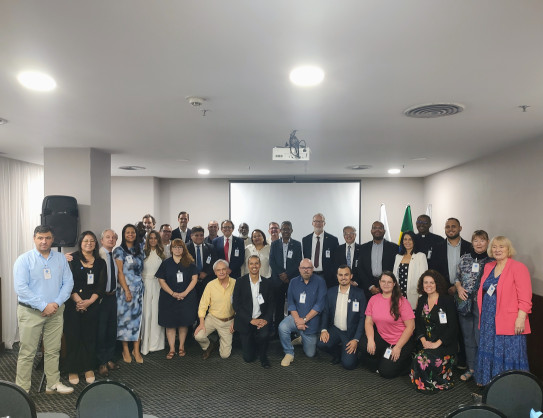
The International Confederation of the Society of Saint Vincent de Paul (SSVP) (www.SSVPGlobal.org) presented on 5 December in Rio de Janeiro its Annual Report, a document reflecting the global dimension of its social action in 155 countries. During the presentation, the impact of the 18,000 projects developed and 5,000 special programmes which have made it possible to serve 30 million people with a social investment of of €1.65 billion was highlighted.
The event began with a speech by Marcio Da Silva, President of the National Council of Brazil, who welcomed those in attendance and introduced a video on the organization's work in the country.
Next, Wellington Dias, Minister for Development and Social Assistance, Family and the Fight against Hunger, recalled his own experience with the Vincentians in his youth and emphasised that ‘lifting someone out of hunger is not the end, but the beginning of a journey that requires education, skills and real opportunities'. He stressed the importance of working together for this common cause and, on behalf of Brazilian President Luiz Inácio Lula da Silva, conveyed his gratitude to the SSVP ‘for every helping hand, every plate of food and every gesture that restores dignity in a world marked by inequality'.
After that, Juan Manuel Buergo Gómez, International President General, explained the main content of the 2024 Report, emphasizing the human value impregnating the Society's actions: “The Report reflects our social and economic activity, but does not quantify what's most important: brotherly, personal and friendly care for those in need, irrespective of their religion, ideas or origins. This support is at the heart of our mission.” He then announced the launch of the Global SSVP Foundation as a tool for raising funds for its cooperation projects, development aid and emergency actions.
After he spoke, a video was shown of the MAPFRE Foundation Social Awards, which recognized Society of Saint Vincent de Paul (SSVP) as the best international social organization for its entire history.
Presence and social action throughout the world
Representatives from every continent shared their perspective of the Society's work in their territories, all in line with the data provided in the report.
The International President General highlighted the main indicators from 2024: 155 countries benefited from SSVP's actions thanks to the commitment of 1,500,000 volunteers and 800,000 members. 18,000 social projects and 5,000 special initiatives were carried out throughout the year with €1.65 billion earmarked for social action, which made it possible to support 30 million people around the world.
The countries in the American regions were presented by Márcio da Silva, President of the National Council of Brazil, who underscored the scope of SSVP's work in 36 nations on the American continent. He underlined how home visits are complemented with a solid network of charitable dining rooms, food banks, shelters, education programs and socioeconomic reinsertion projects which help thousands of underprivileged families. Likewise, he highlighted the importance of tools between the countries with the most resources and those with the least.
Afterwards, Teresa Ryan, President of the National Council of Ireland, talked about the European reality where SSVP is present in 33 countries with projects meeting material as well as emotional, educational and community needs. She spotlighted the work being done in the area of mental health, fighting loneliness, individual support and programs dedicated to those most vulnerable.
From Hong Kong, Maurice Yeung, International Territorial Vice-President, presented the initiatives undertaken in 34 countries in Asia and the MENA region. He pointed out the importance of projects aimed at education and child and youth development, reinforcing community health and being able to immediately respond to natural disasters, along with training and employment programs which foster sustainable social development.
The presentation dedicated to the African continent was offered by Urbanus Kinuthia, Assistant Vice-President General, who talked about the daily support being provided for at-risk families and children, especially orphans, in the 42 countries where SSVP is present. He emphasized how, even in contexts with very limited resources, the Society's actions provide education for development, food, emotional support and hope for those most in need.
Finally, the representative of Oceania presented the work done in 10 countries where the Conferences alternate serving the homeless and distributing food with elderly care programs and the management of charity shops to fund community projects. He particularly focuses on the work in the islands and remote areas where the members' commitment compensates for the geographic difficulties.
Throughout the event, these testimonies offered a comprehensive view of the SSVP global mission which is based on local presence, closeness to those in need and the capacity to provide responses that adapt to each social reality.
Projects that make a difference
The presentation concluded with a selection of initiatives mentioned in the Report which illustrate how the organization adapts its actions to the realities in each territory. The network of charity pharmacies in the United States, for example, guarantees access to medication for thousands of people withour medical insurance, with more than 237,000 prescriptions filled each year thanks to the joint work of volunteers and pharmacy personnel.
As far as housing and homelessness, SSVP is a part of the Famvin Homeless Alliance and collaborates on the “13 Homes” Campaign, an international initiative that encourages social projects aimed at supporting the homeless. This campaign offers solutions involving social housing, temporary and permanent shelters, as well as rehabilitation and rebuilding projects following emergency situations. Thanks to this joint effort, the “13 Homes” Campaign has already reached more than 10,800 people and has made it possible to create more than 2,700 homes in different countries.
In Brazil, Solidarity Mobile Hygiene Units provide toilets and showers in addition to listening to and supporting people experiencing homelessness, creating places of trust and personal reconstruction.
The daily work done by the Conferences in Peru with the distribution of food and guidance and support for families in need is complemented with activities for children that reinforce community cohesion. Thousands of miles away, the construction and renovation of hygiene facilities in Sri Lanka has allowed several communities to tangibly improve living conditions.
The commitment to education is reflected in many different ways such as the floating school in Benin designed to guarantee continued schooling in neighborhoods that are isolated due to flooding, and training programs for university students driven by Vincentian young people in Syria, which open up the doors to job opportunities in a context of great social fragility.
Also standing out are deeply transformational initiatives in Oceania and Asia. The Home in Fiji offers food, housing and therapeutic care to people without family support, making it a place for dignity and safety. In the Philippines, the Mangyan Mission Centre accompanies isolated indigenous communities, providing them with a place to stay as well as showcase their culture and generate their own resources.
In Europe, national meetings were organized in France gathering volunteers and the people they serve, which reflects the importance of human bonding as the core of all Vincentian service.
These initiatives, along with thousands of projects developed around the world, prove the capacity of SSVP to offer specific, adapted and friendly solutions all while maintaining person-to-person support at the core of its global mission.
Distributed by APO Group on behalf of The International Confederation of the Society of Saint Vincent de Paul.More press information and interview management:
María Moreno
PR Manager
+34 680 383 665
maria@after-agency.com
Adriana Benito
PR Supervisor
+34 690 91 34 88
adriana@after-agency.com
About the Society of Saint Vincent de Paul:
The Society of Saint Vincent de Paul (SSVP) is a civil, international humanitarian and charity association which was formed by Catholic laymen and women. Founded in Paris in 1833, it is present in 155 countries and boasts 800,000 members and 1,500,000 volunteers. Its assistance reaches more than 30 million people every single day.
SSVP in Africa develops social projects aimed at families and children, especially orphans who receive education, food and care on a daily basis.
Recognized as a special charity association of public benefit, SSVP has earned UNE-EN ISO 9001:2015 quality certification for all of its locations. It is a founding member of the Volunteering Platform of Spain and is registered with the NGO for Development Register (ONGD-AECID).