Explore more Articles in
Employment
Youth Charter Launches “From Luanda to Legacy”: A Global Campus Campaign for Africa’s Youth – beyond the 4th African Youth Games

Download logo
The Youth Charter Community Campus (www.YouthCharter.org), the global movement using sport, culture and digital innovation for social development and peace, today announces the launch of its “From Luanda to Legacy” Global Campus Campaign, aligned with the 4th African Youth Games and extending far beyond the Closing Ceremony.
Hosted in Angola across Luanda and five additional cities, the 4th African Youth Games represent a defining moment for Africa's young people. Taking place in the year Angola marks 50 years of independence, the Games unite youth from across the continent in a powerful expression of solidarity, aspiration and African identity.
The Youth Charter calls on African institutions, governments, National Olympic Committees, corporate partners, development agencies and global allies to seize this moment, not just to celebrate sport, but to secure a lasting legacy for Africa's next generation.
From Games to Global Legacy
The “From Luanda to Legacy” campaign positions the African Youth Games as a launchpad for long-term youth and community development, embedding sport within education, health, culture, enterprise and digital inclusion.
“Africa's youth deserve more than moments of inspiration. They deserve systems, spaces and opportunities that endure,” said Geoff Thompson MBE FRSA DL, Founder and Chair of the Youth Charter.
“This campaign is about converting continental celebration into community impact — from Luanda to every village, township and city across Africa.”
The Youth Charter Global Campus Vision
At the heart of the campaign is the Youth Charter Global Community Campus model, a proven framework that transforms sporting moments into permanent community assets.
Key Legacy Commitments
1. African Youth Community Campuses
- Repurposing Games and training facilities into inclusive Community Campuses
- Integrated provision of sport, education, arts, health and enterprise
- Safe spaces for young people to learn, lead and innovate year-round
2. Youth Leadership & Pathways
- Leadership forums and mentorship programmes linked to the Games
- Clear pathways from African Youth Games → Dakar 2026 Youth Olympic Games → global opportunity
- Empowering athletes as community leaders and role models
3. Digital Africa Youth Platform
- Connecting young people across borders through digital learning, coaching and storytelling
- Pan-African youth dialogue rooted in Olympic values, peace and social cohesion
- Building a connected ecosystem of youth, educators and partners
4. Economic & Social Impact
- Youth employment and skills development in sport, media, technology and events
- Support for youth-led enterprises in sport, culture and tourism
- Health, wellbeing and inclusion programmes targeting the most marginalised communities.
A Call to African & Global Partners
The Youth Charter invites African and international partners to co-create this legacy through:
- Public–private partnerships
- CSR and ESG-aligned investment
- Education and skills collaboration
- Infrastructure and digital innovation
- Monitoring, evaluation and impact reporting aligned to the UN SDGs
This campaign aligns directly with:
- African Union Agenda 2063
- UN Sustainable Development Goals
- UN Youth 2030 Strategy
- IOC Olympism 365
- Sport for Development and Peace (SDP) frameworks
Beyond Luanda - A Continental Movement
“From Luanda to Legacy” is not confined to one host nation or one event. It is a pan-African and global movement, designed to:
- Strengthen youth ecosystems across Africa
- Build resilient communities through sport
- Position African youth at the heart of global development and peacebuilding
“Africa's greatest legacy will not be medals won, but lives transformed,” Thompson added. “Together, we can ensure the African Youth Games are remembered as the moment Africa chose legacy over spectacle.”
Distributed by APO Group on behalf of Youth Charter.For Partnership & Stakeholder Engagement:
Youth Charter – Community Campus
www.YouthCharter.org
contact@youthcharter.org
Follow the Campaign:
#FromLuandaToLegacy
#YouthCharter
#AfricaYouth
#SportForDevelopment
#Olympism365
#International Olympic Committee
#Olympism
#Fight4theStreets
#YoungLivesLost
#Call2Action
#LegacyOpportunity4All
#SportDevelopmentPeace
#Empowerthenextgeneration
#CommonwealthSecretariat
#UNSustainableDevelopmentGoals
About Youth Charter:
The Youth Charter is a UK registered charity and UN accredited non-governmental organisation. Launched in 1993 as part of the Manchester 2000 Olympic Bid and the 2002 Commonwealth Games, the Youth Charter has Campaigned and Promoted the role and value of sport, art, culture and digital technology in the lives of disaffected young people from disadvantaged communities nationally and internationally. The Youth Charter has a proven track record in the creation and delivery of social and human development programmes with the overall aim of providing young people with an opportunity to develop in life.
Specifically, The Youth Charter Tackles educational non-attainment, health inequality, anti-social behaviour and the negative effects of crime, drugs, gang related activity and racism by applying the ethics of sporting and artistic excellence. These can then be translated to provide social and economic benefits of citizenship, rights responsibilities, with improved education, health, social order, environment and college, university, employment and enterprise.
16 Days of Activism against gender-based violence: Five Bold Moves to end digital gender-based Violence — and unlock Africa’s digital promise (By Jemimah Njuki...
Download logo
By Jemimah Njuki , Director of the Women, Gender and Civil Society Department at the African Development Bank (www.AfDB.org) and Ndey Oley Cole, senior program manager.
The 16 Days of Activism against Gender-Based Violence campaign is an international campaign led by the United Nations to challenge violence against women and girls. From 25 November - 10 December, this year's 16 Days campaign targets how to end digital violence against women and girls. African Development Bank Director for Women, Gender and Civil Society Jemimah Njuki and Senior Programme Officer Ndey Oley Cole share five bold moves to end digital gender-based violence and unlock Africa's digital promise.
Every day, countless African women and girls face harassment, threats, and abuse online — acts that silence their voices and limit their participation in the digital economy. In sub-Saharan Africa, 34 percent of young people aged between 18 and 24 experience online bullying, and according to UN Women 28 percent of women in sub-Saharan Africa had experienced online violence. These figures underscore that digital Gender-Based Violence is not an abstract problem — it is a pervasive barrier to equality, opportunity, and empowerment.
As Africa accelerates its digital transformation, we must ensure that safety and inclusion travel together. Ending digital gender-based violence is central to achieving inclusive growth, human dignity, and the promise of Africa's digital future. Here are five bold moves we can take to make online spaces safer and more empowering for women and girls.
1 Enact Comprehensive, Gender-Responsive Cyber Laws
Many African countries still lack laws that clearly define and criminalise digital forms of gender-based violence. Where legislation exists enforcement often falls short - and survivors frequently face limited protection. African governments must develop and enforce laws that recognise digital gender-based violence as a crime, ensure survivor-centred protections, and foster cross-border cooperation to tackle transnational digital abuse. Development partners, including the African Development Bank, are ready to support legal reforms through technical assistance and policy dialogue.
2 Embed Online Safety into Digital and National Development Strategies
Despite investments in broadband infrastructure and digital skills, many information and communications technology strategies overlook online safety — especially for women. Rwanda's National Cyber Security Policy shows how online safety can be integrated into national development agendas. Governments must mandate “safety by design,” fund public education on digital rights, and include digital safety in school curricula. Aligning investments in technology with secure, inclusive policies ensures that the digital economy benefits everyone.
3 Hold Tech Platforms Accountable
Tech platforms profit from African users yet often provide minimal culturally adapted content moderation, limited grievance mechanisms, and inadequate protections for women. The South Africa's Film and Publication Board Amendment Act offer benchmarks for transparency, accountability, and timely content removal. Africa needs a regional framework to set minimum safety standards, enforce content regulation, and create real-time grievance redress systems. Platforms must prioritize user safety as they expand across the continent.
4 Invest in Survivor-Led Innovation and Gender-Sensitive Digital Solutions
African women are not just victims — they are innovators creating tech-enabled solutions. Organizations such as Pollicy in Uganda and the Center for Information Technology and Development in Nigeria develop digital safety tools, train communities, and advocate for online rights. Targeted funding can amplify these efforts. For example, the African Development Bank's Korea Africa Economic Cooperation Trust Fund, in partnership with UN Women, is supporting a project in Côte d'Ivoire that empowers disadvantaged women and girls through education and digital technology, improving access to decent employment and entrepreneurial opportunities. Investing in survivor-led initiatives not only protects women but strengthens the ecosystem for innovation and social change.
5 Build a Pan-African Data System on Digital Gender-Based Violence
We cannot solve what we cannot measure. Currently, there is no standardised, continent-wide data on digital gender-based violence, and little disaggregated national data. UN Women's Women Count initiative shows how rigorous, gender-responsive data can drive policy change. Africa needs a continental strategy backed by ethical data collection, gender-disaggregated indicators, and open civil society access. The African Development Bank's Gender Data Portal (https://apo-opa.co/4aluszz), the Africa Gender Index Analytical Report (https://apo-opa.co/496KBqp), and capacity-building for national statistics offices are already making progress. Expanding these efforts ensures that policymakers and communities can respond effectively to the scope and trends of digital gender-based violence.
A Call to Action
Ending digital gender-based violence is achievable - but only if governments, tech platforms, funders, and citizens act decisively. Governments must adopt and enforce laws, embed online safety in national strategies, and invest in survivor-led initiatives. Tech platforms must prioritize user protection and accountability. Donors and development partners must fund Gender-responsive innovations. And we all must recognize that a safer digital Africa is not just a moral imperative — it is an economic and social one.
Africa's digital promise depends on women and girls being able to participate safely, freely, and confidently. By taking bold, coordinated action now, we can ensure that the next generation of African innovators and leaders thrives in a digital space that protects, empowers, and uplifts them.
Distributed by APO Group on behalf of African Development Bank Group (AfDB).Guinea Presidential Election 2025: Africa24 Group Delivers Unprecedented Coverage
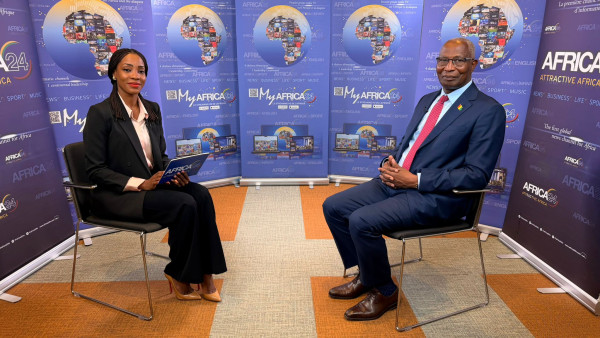
The Republic of Guinea will elect its President on 28 December 2025 for a new term of office. This presidential election represents a decisive milestone in the country's democratic consolidation, regional integration, and the strategic valorisation of its vast mineral resources in service of the people.
To mark this historic moment, Africa24 Group is deploying an exceptional bilingual editorial operation (French & English), enabling citizens, policymakers, and public opinion at national, regional, continental, and global levels to fully discover Guinea's diversity, wealth, and deep aspirations.
Discover Guinea here: https://apo-opa.co/4pCiwhw
Exclusive Interviews, Landmark Debates & Immersive Reporting
Through Africa24 and Africa24 English, audiences will benefit from an outstanding TV & Digital coverage, featuring exclusive programming dedicated to the 2025 presidential election.
INTERVIEWS
Candidates and political leaders present their programmes in exclusive interviews with:
- Amadou Bah Oury
- Abdoulaye Yéro Baldé
- Hadja Makalé Camara
- Abdoulaye Kourouma
- Ibrahima Abe Sylla
CAMPAIGN JOURNAL
Our reporters take viewers to the heart of the campaign, offering daily coverage of rallies, candidate proposals, political portraits, citizens' expectations, and immersive reports across Guinea's regions and emblematic sites.
AFRICA NEWSROOM (ANR) :
Five exclusive high-level debates featuring political leaders and experts on key national challenges:
- Women's Leadership and Representation
- Youth Employment & Human Development
- Good Governance and Anti-Corruption
- Mining & Natural Resource Management
- Guinea of Talents
Guinea Presidential 2025 – Interviews & Debates
Abdoulaye Yéro Baldé Presidential Candidate Thursday, 18 December – 23:15 GMT |
Amadou Bah Oury Campaign Director for Candidate Mamadi Doumbouya Friday, 19 December – 08:15 & 15:15 GMT |
Hadja Makalé Camara President, Front for the National Alliance (FAN) Thursday, 18 December – 19:45 & 22:15 GMT |
Abdoulaye Kourouma President, Rally for Renewal and Development (RRD) Saturday, 20 December – 19:45 & 22:15 GMT |
Ibrahima Abe Sylla President, New Generation for the Republic (NGR) Monday, 22 December – 19:45 & 22:15 GMT |
Africa News Room – 52-Minute Special Debates
In-depth debates and analyses featuring candidates or their representatives alongside Guinean and international experts:
- Women's Leadership & Political Representation
Wednesday, 17 December – 17:15 & 20:15 GMT
- Youth Employment & Human Capital Development
Friday, 19 December – 17:15 & 20:15 GMT
- Good Governance & Anti-Corruption
Saturday, 21 December – 17:15 & 20:15 GMT
- Mining, Environment & Sustainable Resource Management
Tuesday, 23 December – 17:15 & 20:15 GMT
- Guinea of Talents
Thursday, 25 December – 17:15 & 20:15 GMT
Africa24 Group – 360° Coverage & Global Reach
“Guinea Presidential Election 2025” will be available live, replay and on-demand across all platforms:
- AFRICA24 French (Channel 249) & AFRICA24 English (Channel 254) – Canal+ Afrique
- myafrica24, Africa's first HD streaming platform
- www.Africa24TV.com, providing full access to all programmes
Africa24 Group reaches over 120 million households worldwide.
Distributed by APO Group on behalf of AFRICA24 Group.Contact:
Communications Department – Africa24 Group
Gaëlle Stella Oyono
Email: onana@africa24tv.com
Tel. :+237 691 30 03 40
www.Africa24TV.com
Social Media:
@ africa24tv
About Africa24 Group:
Founded in 2009, Africa24 Group is the leading pan-African television and digital media group, operating four Full HD channels broadcast through the world's major TV platforms. A trusted reference among African decision-makers and executives, Africa24 French and Africa24 English are pioneers and leaders in African news broadcasting.
The Group has expanded its leadership through:
- Africa24 Sport – Africa's first 24/7 sports news and competition channel
- Africa24 Infinity – The first channel dedicated to Africa's creative industries, highlighting youth talent in art, culture, music, fashion, and design
Africa24 Channels
AFRICA24 TV – Leading African news channel in French
- AFRICA24 English – Leading African news channel in English
- AFRICA24 Infinity – Creative industries & cultural talents
- AFRICA24 Sport – Sports news & competitions
Africa24 Group also operates myafrica24, the first global HD streaming platform dedicated to Africa, available on all screens. The Group reaches over 120 million households through major operators including Canal+, Bouygues, Orange, Bell, and boasts over 8 million digital followers worldwide.
The Forest Stewardship Council (FSC) approves Interim Forest Stewardship Standard for Sierra Leone

The IFSS will help guide forest managers, businesses, and other stakeholders in managing forests responsibly and ensuring the sustainable sourcing of forest products within the country.
Complementing national and international commitments
This milestone comes at a time when Sierra Leone is intensifying its efforts to protect its vital forest resources. The IFSS is designed to complement the Protect Sierra Leone Programme (https://ProtectSierraLeone.com), a major government initiative under the Ministry of Environment and Climate Change. Launched in early 2025, this programme is designed to safeguard biodiversity and natural resources, including 30x30 targets set by the Global Biodiversity Framework (GBF) (https://apo-opa.co/4rZQq1p), which aim to protect 30% of the world's land and ocean by 2030. The programme also supports climate-resilient livelihoods, habitat restoration, community forests, and the growth of green economies.
The new IFSS will also help Sierra Leone meet its international commitments, including its AFR100 (the African Forest Landscape Restoration Initiative) commitment (https://apo-opa.co/4s2zgju) to restore 0.7 million hectares of land by 2030. It also supports Sierra Leone's climate change goals, including its commitment to reduce emissions by 10% by 2030 and 25% by 2050, compared to 2005 levels. With this new standard, Sierra Leone can strengthen its forest protection and help reverse the loss of 2.17 million hectares of tree cover between 2001 and 2024, a 39% decrease from 2000.
Opportunities for livelihoods and conservation
Beyond strengthening forest protection, the standard provides crucial opportunities for forest products to play a larger role in providing better employment for locals.
Currently, Sierra Leone has about 14.7% forest cover, with an additional 61.1% of its land classified as other wooded land. With the IFSS in place, the country is better equipped to increase protection for its diverse ecosystems, including evergreen and semi-deciduous rainforests, swamp forests, mangroves, and extensive regenerating forests. This enhanced protection will also enable the country to benefit from ecosystem services.
Finally, the standard provides independent evidence of responsible forest management. It promotes continuous improvement in addressing key issues, such as preserving the country's biodiversity and protecting the land rights of local communities.
Patrick Epie, FSC's coordinator for Congo Basin and West Africa, said:
" Sierra Leone's Interim Forest Stewardship Standard represents a significant milestone in advancing FSC's mission in West Africa. It provides a robust framework to promote responsible forest management, support national and international environmental commitments, and strengthen community livelihoods. This achievement reinforces Sierra Leone's commitment to sustainable forest governance and contributes to the broader regional effort to align forest management with global sustainability goals."
The official (English) version of the IFSS can be consulted in the FSC Document Centre (https://apo-opa.co/4pBXTlD). For more news, visit FSC Africa's website (https://Africa.FSC.org).
For questions about the standard or the approval process, please get in touch with the FSC Country Requirements Team at country_requirements@fsc.org.
Distributed by APO Group on behalf of Forest Stewardship Council.Media contacts:
Israel Bionyi
Senior Regional Communications Manager
FSC Africa
i.bionyi@fsc.org
FSC Africa
www.Africa.FSC.org
T: +49 (0) 228 367 66 0
F: +49 (0) 228 367 66 65
Visit FSC Africa website (https://Africa.FSC.org) for more related news.
The Next Decade of Inclusion: From Access to Acceleration (By Andris Kan̄eps)
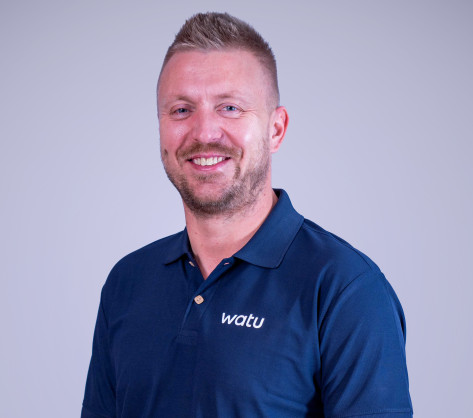
By Andris Kan̄eps, CEO – Watu (https://WatuAfrica.com).
Ten years ago in Mombasa, our work began with a simple but ambitious question: What would happen if more people in the informal economy had access to the tools they needed to earn a stable income? The answer, as we have learned over the past decade, is not merely individual benefit. It is an economic transformation.
Today, millions of people rely on motorcycles, tuk-tuks, and smartphones to participate in the fast-growing digital and service economies. These assets enable transportation of people and goods, facilitate payments and logistics, and connect entrepreneurs to customers, suppliers, and opportunities. Yet for a very long time, access to such assets was limited to those who could meet strict, formal credit requirements. These criteria excluded the majority of working people.
Over the past decade, Watu has expanded to eight African countries and two in Latin America, supporting more than 5 million customers whose livelihoods underpin urban movement and economic circulation. What we have learned from working so closely with this sector is that entrepreneurship in these markets is rarely optional. It is how families pay school fees, build houses, and support communities. It is work rooted not in risk, but in resilience.
The journey has not been straightforward. Our evolution from table banking to mobility financing, and later to digital connectivity, was not the result of a fixed strategy but of observation and adaptation. Customers demonstrated that owning an income-generating asset, particularly a motorcycle, provided a more powerful and immediate uplift in earnings compared to receiving a small loan. Later, as smartphones became essential infrastructure rather than luxury items, we expanded into device financing. In both mobility and connectivity, the principle remains the same: access to the right tools unlocks the ability to earn, to plan, and to progress.
But scale has also brought lessons. Financial inclusion is only meaningful when the outcomes are positive and enduring. We have witnessed economic shocks, income volatility, and regulatory transitions that tested both our customers and our model. These moments forced us to strengthen how we assess affordability, communicate obligations and risk, and support customers during periods of unexpected hardship. Responsible growth demands rigour and that we learn as fast as we expand.
The broader economic landscape is shifting, too. Across Africa and emerging markets globally, three transitions are redefining how people work and move.
First, the transportation sector is gradually electrifying. Electric two-wheelers and three-wheelers offer lower operating costs, more predictable margins, and environmental benefits, provided they are supported with the right infrastructure and financing models.
Second, payments are becoming increasingly digital. Mobile money ecosystems are not only facilitating transactions. They are generating valuable economic visibility and creating credit pathways where none existed before.
Third, informal work is gaining structure. Through technology, gig platforms, and digital identity, workers who were once invisible to financial systems are becoming legible and therefore financeable.
These transitions represent a fundamental shift in how economic participation operates. They come with a clear challenge: systems must keep pace with the speed of the people who rely on them.
Looking ahead to our next decade, the focus must therefore move from broadening access to accelerating upward mobility. A motorcycle or smartphone is no longer the endpoint of inclusion. It is the starting point. The questions we now ask ourselves include: How do we help customers advance from their first asset to their second, and eventually toward business expansion? How do we use data to help them anticipate income shocks before they occur? How do we collaborate with regulators, manufacturers, and development partners to ensure that new technologies, such as electric mobility, translate into real economic benefits?
These are not abstract concerns. They represent the next frontier of financial inclusion, where access is paired with long-term capability and where short-term opportunity evolves into sustainable progress.
Across every market we serve, we see individuals who are resourceful and determined, working hard to improve their lives and those around them. Their efforts generate employment, enable services, and keep cities moving. The question now is not whether they can build the future. It is whether the financial, regulatory, and technological infrastructure around them will be ready to keep pace.
Watu's role is to help ensure that the answer is yes. As we step into our second decade, our commitment is to scale responsibly, to innovate boldly, and to stay closely connected to the realities of the entrepreneurs who power our economies. Their success is not simply evidence of inclusion. It is evidence of acceleration.
If there is one lesson that stands above the rest, it is this: when you give hardworking people the tools to build opportunity, they do not stand still. Neither should we.
Distributed by APO Group on behalf of Watu.