
Explore more Articles in
Employment
African Development Bank Group-funded fisheries programme impacts two million people, drives economic transformation in 16 Southern African Development Community (SADC) countries
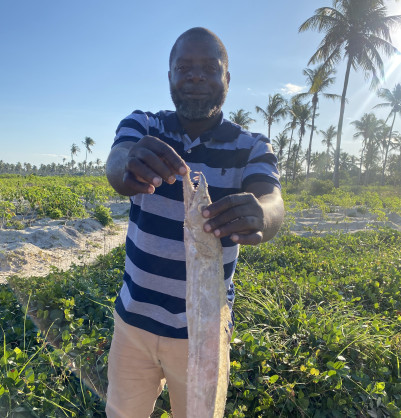

A regional initiative that has overhauled aquatic resource management and boosted cross-border fish trade is now improving the lives of nearly three million people across Southern Africa —raising fish production, consumption, and incomes.
The Program for Improving Fisheries Governance and Blue Economy Trade Corridors (PROFISHBLUE) (https://apo-opa.co/3Y8pOgL) has generated cross-border trade volumes exceeding 500,000 tonnes over the past four years, creating employment, strengthening food security, and building climate resilience across 16 SADC member states.
The initiative has built capacity for over 250,000 beneficiaries across seven African Development Fund (ADF) countries (Democratic Republic of Congo, Madagascar, Malawi, Mozambique, Tanzania, Zambia, and Zimbabwe) through various trainings, knowledge transfer programs, fish quality assurance equipment and tools, and refrigerated transport vehicles.
Training covered multiple areas, including fish value chain and post-harvest utilisation, business development and SME incubation, genetic improvement programs for endemic tilapia species, common standards and policy harmonization in collaboration with bureaus of standards and customs officers, nutrition and fish product development, and blue economy investment planning and financing mechanisms.
Further support was provided for fish stock assessments on transboundary lakes, vessel monitoring systems to deter illegal fishing, and training vessel inspection and fish catch statistics.
On World Fisheries Day on 21 November, the Southern African Development Community (SADC), the African Development Bank Group, and strategic partners gathered in Gaborone to celebrate these achievements and showcase how the project has transformed fish value chains and local consumer markets since its inception in 2022.
The $9.2 million grant initiative, funded through the African Development Bank's ADF 15, has successfully facilitated regional integration and economic development by improving fisheries governance and establishing sustainable blue economy trade corridors.
This year's World Fisheries Day aligned closely with PROFISHBLUE's multi-level governance and community-centered approach and measurable impact on fisheries communities throughout Southern Africa.
The gathering brought together government officials, development partners, private-sector representatives, and civil society stakeholders to chart a path forward for sustainable fisheries development in the region.
Transformative Impact Across the Region
"We are indebted to the African Development Bank Group for providing funding to implement this project within the Blue Economy space," said Director Domingos Gove on behalf of Angele Makombo Ntumba, SADC Deputy Secretary for Regional Integration. "This support has demonstrated our capacity to improve aquatic food systems for the benefit of over 380 million people in the region."
The project has successfully demonstrated that fishery resources can be managed sustainably, equitably, and resiliently in the face of climate change and external shocks.
"The PROFISHBLUE project has shown best practices in regional integration of blue economy trade corridors and cross-border fish trade," stated Neeraj Vij, African Development Bank's Regional Sector Manager for Feed Africa Operations for Southern Africa. "About 3 billion people rely on global supply chains for aquatic-sourced food, contributing $300 billion annually to the global economy. This project demonstrates how strategic investment in fisheries governance can create competitive value chains that provide jobs and livelihoods while eradicating extreme poverty, especially in rural areas."
Vij reaffirmed the African Development Bank Group's commitment to expanding support for blue economy initiatives across SADC Member States.
Key implementing partners include the Food and Agriculture Organization (FAO), the United Nations Industrial Development Organization (UNIDO), the Worldwide Fund for Nature (WWF), WorldFish, and the African Organization for Standardization (ARSO).
Director of Fisheries and Apiculture in Botswana's Ministry of Lands and Agriculture, Kagisanyo Bedi, commended the initiative for creating a crucial platform for learning and exchange of ideas among regional stakeholders in the region.
The celebration featured testimonials from women in fisheries who shared how the project has enhanced their livelihoods, underscoring the project's inclusive development approach.
"We embarked on an investment journey that few smallholder entrepreneurs would consider piloting technology in seaweed farming. We appreciate the opportunity..." said Hifadhi Hai, a project participant from Tanzania.
"This was echoed by a fish processor, Tamala Mtambo of the Twiyule Fish Cooperative, Malawi: "ProFishBlue supported us to turn fish processing into progress."
Distributed by APO Group on behalf of African Development Bank Group (AfDB).Media Contact:
Emeka Anuforo
Communication and External Relations Department
media@afdb.org
About the African Development Bank Group:
The African Development Bank Group is Africa's premier development finance institution. It comprises three distinct entities: the African Development Bank (AfDB), the African Development Fund (ADF) and the Nigeria Trust Fund (NTF). On the ground in 41 African countries with an external office in Japan, the Bank contributes to the economic development and the social progress of its 54 regional member states. For more information: www.AfDB.org
AfrInnovate Youth Challenge 3rd Edition Crowns Tanzania’s SkyVerse Solutions as Champion in Abuja, Nigeria
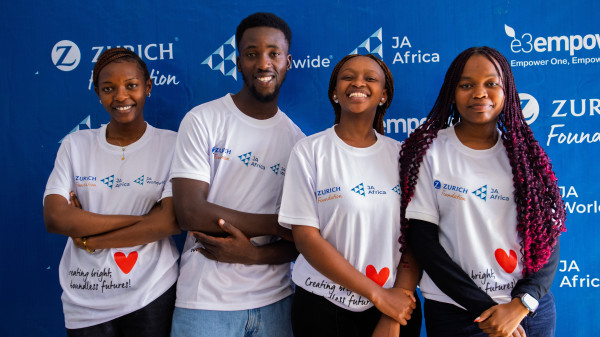
Junior Achievement (JA) Africa (https://JA-Africa.org), in partnership with the Z Zurich Foundation and JA Worldwide, proudly concludes the third edition of the AfrInnovate Youth Challenge (AYC), a platform showcasing the creativity and resilience of Africa's youth. This year's event celebrated young innovators who are redefining inclusion and sustainability through purpose-driven enterprises.
After an inspiring showcase of ingenuity and impact-driven pitches, SkyVerse Solutions from Tanzania emerged as 1st Place winner with their mechanized post-harvest groundnut processing solution designed to increase yields and farmer income.
AgriCool Solar Chamber from Uganda claimed 2nd Place, recognized for delivering affordable, solar-powered cold storage that reduces food spoilage and boosts farmers' profits.
In 3rd Place, CaliFem from Côte d'Ivoire and Ecobrick Togo tied for their outstanding innovations: CaliFem for transforming marine waste into sustainable calcium powder, creating jobs for women, and Ecobrick Togo for converting plastic waste into eco-friendly construction materials.
Special honors went to SolAir from Burkina Faso, which received the Innovation Award for its smart, solar-powered irrigation system, and Ecobricks Liberia, which earned the Impact Award for empowering rehabilitated youth through green employment.
“The AfrInnovate Youth Challenge is a powerful reminder that when marginalized young Africans are given access to knowledge, mentorship, and opportunity, they reinvent Africa's economy,” said Simi Nwogugu, President & CEO of JA Africa. “These young innovators are designing scalable solutions that address real-world challenges while proving that inclusion is the foundation of sustainable growth.”
“At the Z Zurich Foundation, we believe that empowering youth is one of the most meaningful ways to build resilience in societies,” added Gregory Renand, Head of the Z Zurich Foundation. “Through our partnership with JA Africa, we are investing in young entrepreneurs whose ideas are creating tangible, lasting impact.”
The JA Africa AYC event is the celebration of social entrepreneurship presented by the JA Social Equity Program, a cross-cutting entrepreneurship, financial literacy, and work-readiness program for underserved young people aged 16–25 who might not be in education, entrepreneurship, or training. This program provides hands-on experience and mentoring for starting and managing social enterprises or businesses that solve local community problems. The youth participating in this program collaborate to bring about change in themselves and their communities.
Since its inception, with the support of the Z Zurich Foundation, the program has reached over 150,000 youth across nine African countries, catalyzing more than 7,000 youth-led social enterprises that address local challenges in climate resilience, education access, gender equity, and sustainable development.
Distributed by APO Group on behalf of Junior Achievement (JA) Africa.Media Contact:
Ellen Ukpi
Director, Marketing and Communications
ellen.ukpi@ja-africa.org
JA Africa:
Junior Achievement (JA) Africa is one of the continent's largest youth-serving NGOs, reaching more than 1.5 million young people annually across 23 countries. The organization equips youth with the skills to thrive in the global economy through programs in entrepreneurship, work readiness, and financial health.
https://JA-Africa.org
About Z Zurich Foundation:
The Z Zurich Foundation is a charitable foundation that supports projects aimed at building community resilience and advancing social equity worldwide. Through initiatives such as the JA Social Equity Program, the Foundation helps marginalized youth gain the skills and confidence to drive inclusive and sustainable change.
African Development Bank approves landmark $1.78 billion strategy to support transformation of Namibia’s economy and create jobs
Download logo
The African Development Bank Group's (www.AfDB.org) Board of Directors has approved a Country Strategy Paper (CSP) for Namibia committing $1.78 billion to support economic transformation and inclusive growth in the 2025-2030 period.
The financing is expected to pave the way job for creation and economic diversification while also addressing key challenges facing of the world's most unequal countries: youth unemployment exceeds 40 percent, and per capita income has fallen from $5,942 in 2012 to $4,240 in 2024.
"This strategy marks a pivotal moment for Namibia's development," said Moono Mupotola, the Bank Group's Deputy Director General for Southern Africa and Country Manager for Namibia. "By focusing on strategic infrastructure and human capital development, we are laying the foundation for inclusive growth that will benefit all Namibians, particularly the young."
The strategy focuses on two priorities. The first is investment in transport, energy, and water infrastructure to reduce business costs, enhance productivity, and establish Namibia as a regional logistics hub. These investments will strengthen trade facilitation under the African Continental Free Trade Area, enhance energy security through renewables, and expand rural access to clean water and sanitation.
The second priority aims to boost human capital through market-relevant technical and vocational training that creates pathways from education to employment, providing support for the development of micro, small, and medium enterprises (MSMEs), and advancing women's economic empowerment.
Implementation is expected to diversify the economy beyond mining and agriculture, integrate MSMEs into regional value chains, and enhance manufacturing capabilities while creating thousands of direct and indirect jobs.
Infrastructure improvements will increase electricity access from 59.5 percent towards universal coverage, enhance trade connectivity with Angola and Zambia, and reduce logistics costs. The strategy also supports Namibia's climate commitments and positions the country as a leader in green hydrogen.
"Recent U.S. tariff impositions and official development assistance cuts have created additional pressures on Namibia's economy," said Mupotola. "Our strategy strengthens resilience by diversifying export markets, enhancing regional integration, and building domestic productive capacities."
The strategy builds on the Bank's decade-long track record in Namibia, where it has invested $658.1 million in projects including the expansion of Walvis Bay Port, railway upgrades, and 27 educational institutions across all 14 regions.
The Namibia CSP aligns with the Bank Group's Four Cardinal Points, Namibia's Vision 2030, and Africa's Agenda 2063. Implementation begins immediately, with the first operations expected in early 2026.
Distributed by APO Group on behalf of African Development Bank Group (AfDB).Media Contact:
Emeka Anuforo
Communication and External Relations Department
email: media@afdb.org
A Major Win for Namibia as ReconAfrica Delivers Kavango West 1X Hydrocarbon Discovery
Download logo
The African Energy Chamber (AEC) (https://EnergyChamber.org) strongly welcomes the announcement by Reconnaissance Energy Africa of a successful hydrocarbon encounter at the Kavango West 1X well on Petroleum Exploration Licence (PEL) 73, onshore Namibia. The results represent one of the most meaningful milestones yet for the country's onshore energy potential and reaffirm Namibia's position as one of the most attractive frontier markets for exploration in Africa and globally.
On December 3, ReconAfrica reported that the Kavango West 1X well was safely drilled to a depth of 4,200 meters, with results confirming a substantial section containing hydrocarbons. The well encountered a significant zone of oil- and gas-bearing rock, with more than 60 meters of confirmed hydrocarbon pay and additional hydrocarbon shows in deeper intervals. These results not only highlight the geological prospectivity of the Damara Fold Belt but also support ongoing modeling that suggests significant development potential across ReconAfrica's six-million-acre lease position. The Company has announced plans to production-test the well during the first quarter of 2026, an important next step in confirming deliverability and commerciality.
The AEC applauds the efficiency and technical excellence of the operation, which was completed safely, on schedule and on budget. For Namibia – one of the continent's fastest-emerging exploration hotspots – this progress reinforces the importance of sustained upstream investment, supportive regulatory frameworks and strong cooperation between operators, government and communities.
A Boost to Onshore Development and Local Jobs
Namibia's offshore discoveries in recent years have garnered significant global attention, but onshore exploration has long represented an equally important pillar for long-term energy security and economic diversification. ReconAfrica's latest results bring renewed confidence to the role onshore resources can play in creating employment, stimulating local supply chains and accelerating industrialization.
Every stage of the Kavango West 1X campaign – from seismic acquisition to drilling and upcoming testing – has generated local business opportunities and direct jobs for Namibians. Continued success in PEL 73 would unlock new rounds of contracting, infrastructure development and capacity building, particularly in logistics, field services, community development programs and environmental management.
Commitment to Community Partnerships
The AEC also recognizes ReconAfrica's ongoing engagement with communities in the Kavango regions, including local partnerships and capacity-building efforts carried out during its exploration activities. The company's proactive approach to stakeholder dialogue, transparency and collaboration sets a strong precedent for how frontier exploration should be conducted in Africa.
An expanding onshore industry offers the potential for long-term socioeconomic impact in northern Namibia, bringing new opportunities for young people, small businesses and local authorities, while supporting the country's broader development goals.
A Step Forward for Africa's Energy Future
With Africa seeking to balance energy security, economic growth and responsible resource development, Namibia continues to shine as a continental success story. The Kavango West 1X results strengthen Africa's case for sustained exploration, particularly at a time when global capital allocation is increasingly selective and competition for investment is fierce. By moving promptly toward production testing, ReconAfrica is demonstrating its long-term confidence in Namibia's potential. The AEC encourages continued collaboration with national regulators, environmental authorities, and community stakeholders to ensure timely and responsible progression toward appraisal and, ultimately, development.
“This discovery is a big win for Namibia and a big win for Africa. ReconAfrica's progress is proof that committed investors, supportive policies and strong community partnerships can unlock real energy opportunities onshore,” states NJ Ayuk, Executive Chairman of the AEC, adding that “These results strengthen confidence in the Damara Fold Belt and reaffirm Namibia as a global exploration hotspot. The Chamber fully supports this next phase of testing and encourages continued investment that creates jobs, builds capacity and drives long-term economic growth for Namibians.”
Distributed by APO Group on behalf of African Energy Chamber.Building Africa’s Next Industrial Frontier: The Role of Sustainable Aviation Fuels (By Henok Teferra Shawl)

By Henok Teferra Shawl, Boeing managing director for Africa (www.Boeing.com).
Sustainable aviation fuel (SAF) presents a strategic opportunity not only to reduce lifecycle emissions but to retain value in African economies and create skilled jobs.
Today, Africa imports most of its jet fuel, sending billions of dollars off the continent each year and leaving airlines and governments vulnerable to volatility of oil prices and currency shocks. At the same time, Africa's diverse agricultural and renewable resources provide a strategic advantage for SAF production. Domestic SAF production could help address structural cost disadvantages facing African airlines — higher jet fuel prices, weak supplier competition, low procurement volumes, and higher taxes.
The World Bank (https://apo-opa.co/4pfameJ) projects Sub‑Saharan Africa will see a major working‑age population expansion by 2050 and capturing this demographic dividend depends on creating skilled jobs at scale. SAF value chains – from feedstock cultivation to refining and logistics – can drive employment and economic growth. Turning this potential into production requires coordinated action across three mutually reinforcing areas: feedstock, policy and finance.
Today, SAF carries a price premium due to limited production. Africa's abundant renewable energy resources and diverse feedstocks could make the continent a key contributor to bringing costs down – an industrial opportunity not to be missed.
From years of research in Africa and globally, including a 2019 study (https://apo-opa.co/4iCdXAY) with WWF South Africa and the International Institute for Applied Systems Analysis, and a 2023 study (https://apo-opa.co/4atc87s) in Ethiopia and South Africa with the Roundtable on Sustainable Biomaterials (RSB), Boeing has found that data‑driven local feedstock assessments are the essential first step.
Building on this experience, Boeing and RSB are engaging other African countries to assess sustainable feedstock potential and SAF production capacity to support creation of a regional SAF ecosystem and inform national policies. Convening governments, research bodies and airlines will help produce credible baselines for such work.
SAF can cut carbon emissions by up to 80% over the fuel's lifecycle compared to conventional jet fuel. However, in order to achieve the aviation industry's decarbonization goal, SAF production worldwide must grow from anticipated 2 million tons in 2025 (https://apo-opa.co/49XflfA) to roughly 500 million tons within 25 years (https://apo-opa.co/3Kf8X8Z), according to the International Air Transport Association (IATA).
SAF will not scale overnight, hence maximizing the impact of every liter of SAF must be paired with reducing fuel demand. Modern airplanes like the Boeing 737 MAX and 787 Dreamliner help airlines cut fuel burn and lower operating costs. In Africa, where about 70% of future deliveries are narrowbody airplanes and intraregional connectivity is a priority, efficient airplanes can expand routes and support trade and tourism while the industry is working to scale SAF supply.
Working together we can turn Africa's potential into local industries, jobs, connectivity and shared prosperity. Building sovereign SAF markets while accelerating fleet modernization and operational efficiency can power that transformation and unlock lasting economic benefits across the continent.
Distributed by APO Group on behalf of Boeing.