
Explore more Articles in
economic growth
Sonatrach-Ghana National Petroleum Corporation (GNPC) Research and Development (R&D) Partnership Signals Africa’s Energy Future is Innovation-Led

Download logo
Algeria's state-owned oil company Sonatrach and the Ghana National Petroleum Corporation (GNPC) have signed a Memorandum of Understanding (MoU) under the auspices of the African Petroleum Producers Organization (APPO), formalizing plans for a strategic partnership focused on research, development and innovation (R&D) in the oil and gas sector. Signed in Brazzaville, the Republic of Congo - the headquarters of APPO - and in the presence of APPO's recently appointed Secretary General Farid Ghezali, the MoU establishes a framework for assessing joint opportunities, sharing expertise and creating structured working mechanisms to support the development of hydrocarbon resources for energy security and sustainable development across Africa.
The African Energy Chamber (AEC) welcomes the agreement and expresses its full support for Sonatrach and GNPC in advancing African-led R&D collaboration. The agreement signifies APPO as not only an instrumental part in facilitating the partnership but a central force in bringing all parties together to ratify this important deal. Under the leadership of Ghezali, APPO continues to showcase its commitment to unifying nations - as well as the broader industry - to reach decisive agreements such as this one. The partnership also reflects a growing recognition among national oil companies (NOC) that innovation, technology and knowledge-sharing are essential to unlocking value, reducing costs and ensuring Africa remains competitive in a rapidly evolving global energy market. The AEC believes that this collaboration is expected to move the entire industry into its next phase of development.
The scope of cooperation outlined in the MoU is both comprehensive and forward-looking. It includes advanced onshore and offshore seismic technologies such as high-definition processing and interpretation, artificial intelligence-enabled subsurface analysis, 4D seismic and real-time reservoir modeling. The agreement also covers digital wells and digital oilfields, enhanced and improved oil recovery, stratigraphic exploration objectives, integrity and corrosion management and oil and gas valorization - capabilities that directly improve recovery rates, extend the life of producing assets and maximize returns from existing infrastructure. The partnership also integrates energy transition and environmental priorities alongside core upstream development. Areas of cooperation include carbon footprint reduction, low-carbon industrial solutions, hydrogen and green technologies, as well as water and waste treatment and air pollution mitigation. This reflects a pragmatic African approach: developing hydrocarbons responsibly while embedding sustainability and emissions management into project design and operations from the outset.
The agreement comes at a critical time for both markets. For Ghana, the MoU signals a commitment to leveraging innovation to revitalize oil production as the nation looks to revive oilfields, diversify the industry through gas and support broader regional energy growth. With 17 oil and gas projects scheduled for development by 2027, Ghana is working to expand exploration, ramp up production and deepen private sector participation. Recent milestones point to a strong resurgence across the market. Just this month, Kosmos Energy announced that it successfully drilled and completed the J-74 well - part of the larger 2025-2026 Jubilee field development campaign. In partnership with the GNPC and Tullow, the company plans to drill 20 wells at Jubilee under a $2 billion upstream expansion plan, five of which are planned for 2026. Alongside oil Ghana is advancing gas developments under efforts to monetize its over 2.1 trillion cubic feet of available resources. Projects such as a planned second processing plant - with a capacity of 150 million standard cubic feet per day - are underway and will complement operational facilities such as the Atuabo Plant.
As one of Africa's biggest oil and gas producers, Algeria is well-positioned to support Ghana's hydrocarbon goals. The country is advancing its own ambitious hydrocarbon strategy, anchored by a five-year plan endorsed by Sonatrach that will mobilize up to $60 billion in investment. The program prioritizes sustained exploration and production to offset natural decline, alongside the modernization and expansion of downstream infrastructure to strengthen value addition, boost export capacity and enhance long-term energy security. Through this strategy, Algeria is reinforcing its role as a continental energy leader while generating technical expertise and operational know-how that can be leveraged through partnerships with peers such as GNPC. By prioritizing R&D, embracing technology and aligning hydrocarbons development with sustainability objectives, Sonatrach and GNPC are setting a strong precedent. The AEC commends both companies and APPO for advancing an African-led model that supports energy security, economic growth and sustainable development across the continent.
“APPO continues to showcase a commitment to advancing Africa's hydrocarbon development. This MoU shows that African NOCs are investing in innovation to secure the continent's energy future. Research and technology are critical to producing oil and gas more efficiently and sustainably, while supporting the broader energy transition. Africa needs oil and gas to develop, and partnerships like this ensure those resources deliver long-term value for our people,” stated NJ Ayuk, Executive Chairman, AEC.
Distributed by APO Group on behalf of African Energy Chamber.APO Group Congratulates Clients and Partners Named on New African’s 100 Most Influential Africans List
APO Group (www.APO-opa.com), the leading multi-award-winning, pan-African communications consultancy and press release distribution service, congratulates its clients and partners recognised by New African magazine on the 2025 “100 Most Influential Africans” list, including Afreximbank, the African Development Bank (AfDB), Africa Finance Corporation, the Roman Catholic Church, the Africa Centres for Disease Control and Prevention (Africa CDC), the African Energy Chamber, the Merck Foundation, and the UN Global Compact, as well as all honourees recognised for their leadership and impact on Africa's progress.
The New African list serves as a leading benchmark of influence across the continent, highlighting individuals and institutions whose work significantly contributes to Africa's economic growth, social development, and global standing.
APO Group celebrates the accomplishments of its clients and partners, whose leadership, innovation, and resilience continue to drive Africa's advancement across finance, energy, healthcare, public health, faith-based leadership, and international cooperation.
In finance and development, Dr. George Elombi, President and Chairman of Afreximbank, and Prof. Benedict Oramah, whose decade-long tenure concluded in October 2025, are recognised for their leadership in strengthening intra-African trade and economic resilience. Dr. Sidi Ould Tah, President of the African Development Bank (AfDB), is honoured for his role in financing development and promoting inclusive and sustainable growth across the continent. Samaila Zubairu, President and Chief Executive Officer of Africa Finance Corporation, is noted for his contribution to Africa's infrastructure development and economic transformation.
In the business category, NJ Ayuk, Executive Chairman of the African Energy Chamber, is recognised for advancing Africa's energy agenda and championing pragmatic, Africa-led energy solutions. Dr. Rasha Kelej, Chief Executive Officer of the Merck Foundation, is honoured for her transformative leadership in expanding healthcare access, education, and medical capacity building across Africa.
Faith-based leadership is also recognised, with the Head of the Roman Catholic Church in Africa, Cardinal Fridolin Ambongo Besungu, acknowledged through its institutional leadership for its long-standing contribution to education, healthcare delivery, peacebuilding, and community support across the continent.
In the public health category, Dr. Jean Kaseya, Director General and Chief Executive Officer of the Africa Centres for Disease Control and Prevention (Africa CDC), is recognised for his decisive leadership in strengthening Africa's health security architecture. Under his stewardship, Africa CDC has enhanced epidemic preparedness, coordinated continental responses to public health emergencies, and reinforced Africa's capacity to respond to an era increasingly shaped by complex and persistent health threats.
In the public and international cooperation category, Sanda Ojiambo, Assistant Secretary-General of the United Nations and Chief Executive Officer of the UN Global Compact, is recognised for advancing sustainable development, responsible business practices, and global partnerships aligned with the United Nations Sustainable Development Goals.
Nicolas Pompigne-Mognard (www.Pompigne-Mognard.com), Founder and Chairman of APO Group, who was himself named on the New African “100 Most Influential Africans” list in both 2024 and 2025, said:
“We are proud to see our clients and partners recognised for their impact across business, finance, healthcare, faith-based institutions, public health, and international cooperation. APO Group is honoured to serve as a communications partner to organisations and leaders driving meaningful change across the continent, ensuring their voices are heard and their contributions recognised worldwide.”
Distributed by APO Group on behalf of APO Group.Media contact:
marie@apo-opa.com
About APO Group:
Founded in 2007, APO Group (www.APO-opa.com) is the leading award-winning pan-African communications consultancy and press release distribution service. Renowned for our deep-rooted African expertise and expansive global perspective, we specialise in elevating the reputation and brand equity of private and public organisations across Africa. As a trusted partner, our mission is to harness the power of media, crafting bespoke strategies that drive tangible, measurable impact both on the continent and globally.
Our commitment to excellence and innovation has been recognised with multiple prestigious awards, including a PRovoke Media Global SABRE Award and multiple PRovoke Media Africa SABRE Awards. In 2023, we were named the Leading Public Relations Firm Africa and the Leading Pan-African Communications Consultancy Africa in the World Business Outlook Awards, and the Best Public Relations and Media Consultancy of the Year South Africa in 2024 in the same awards. In 2025, Brands Review Magazine acknowledged us as the Leading Communications Consultancy in Africa for the second consecutive year. They also named us the Best PR Agency and the Leading Press Release Distribution Platform in Africa in 2024. Additionally, in 2025, we were honoured with the Gold distinction for Best PR Campaign and Bronze in the Special Event category at the Davos Communications Awards.
APO Group's esteemed clientele, which includes global giants such as Canon, Nestlé, Western Union, the UNDP, Network International, African Energy Chamber, Mercy Ships, Marriott, Africa's Business Heroes, and Liquid Intelligent Technologies, reflects our unparalleled ability to navigate the complex African media landscape. With a multicultural team across Africa, we offer unmatched, truly pan-African insights, expertise, and reach across the continent. APO Group is dedicated to reshaping narratives about Africa, challenging stereotypes, and bringing inspiring African stories to global audiences, with our expertise in developing and supporting public relations campaigns worldwide uniquely positioning us to amplify brand messaging, enhance reputations, and connect effectively with target audiences.
MIR Holding: Mouhamad Dieng and President Adama Borrow lay the groundwork for collaboration
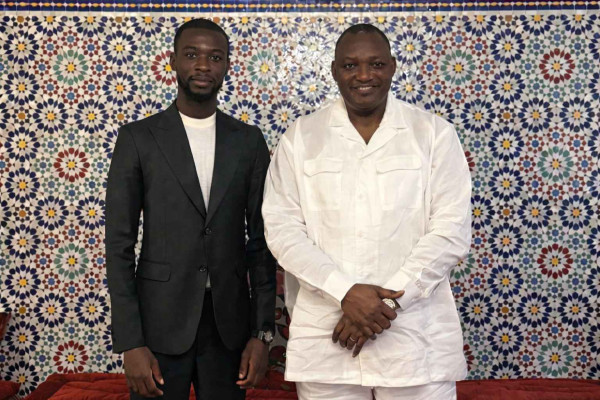
MIR Holding (https://MIRHolding.Odoo.com), a global investment group, is exploring potential investments in The Gambia after its Chief Executive Officer, Mouhamad Dieng, held talks with His Excellency President Adama Barrow.
The meeting focused on the role of private investment in supporting economic growth, improving infrastructure and strengthening key productive sectors, as the Gambian government seeks to attract long-term capital to diversify its economy.
MIR Holding identified several sectors of interest, including digital infrastructure and urban infrastructure, real estate and tourism. These sectors are central to The Gambia's development strategy, given their potential to boost productivity, employment and foreign investment.
According MIR Holding's guiding principles, any potential investment would be subject to due diligence and structured in close coordination with public authorities and local partners. The group emphasised governance, regulatory clarity and long-term project viability as key criteria in its investment decisions.
Digitalisation was discussed as a cross-cutting priority, with a focus on strengthening digital infrastructure and improving service delivery. Infrastructure development was also highlighted as a prerequisite for enhancing connectivity and supporting private sector growth.
Real estate and tourism were also identified as areas with significant upside potential, particularly projects aligned with global standards and sustainability principles, while responding to local market needs.
“Governance and policy predictability were central to the discussions. Investors require clear regulatory frameworks and institutional stability to commit long-term capital, MIR Holding's CEO Mouhamad Dieng noted.
“Public-private dialogue is critical to building investor confidence and this visit to The Gambia is part of MIR Holding's broader pan-African strategy to expand its footprint across the continent while aligning investments with national development agendas.” He added.
The group operates across investment, real estate, services and infrastructure, and positions itself as a long-term partner rather than a short-term financial investor.
MIR Holding and Gambian authorities are expected to continue technical discussions in the coming months to assess specific project opportunities and partnership structures, the sources said.
Distributed by APO Group on behalf of MIR Holding.Press contact :
Elisabeth TINE
Communication officer
contact@brainz-sn.com
Tel. 00 33 843 99 47
About MIR Holding:
MIR Holding is a global investment group with operations across several strategic sectors, including investment, real estate, services and infrastructure. The group focuses on long-term value creation, governance and sustainable impact, working in partnership with public and private stakeholders. MIR Holding aims to contribute to Africa's economic transformation by developing projects aligned with national priorities and international investment standards.
Africa Finance Corporation Acts as Co-Financial Adviser for Angola’s Lobito Atlantic Railway Concession

Africa Finance Corporation (AFC) (www.AfricaFC.org), the continent's leading infrastructure solutions provider, has announced the signing of key financing agreements for the Lobito Atlantic Railway Project in Angola. AFC alongside Eaglestone, acted as Co-Financial Adviser, to Lobito Atlantic Railway S.A. (LAR), the Borrower and Concessionaire of the 1,300-kilometre brownfield railway corridor.
This transformational transport infrastructure initiative is backed by leading sponsors including Mota-Engil, a multinational engineering and construction group with a strong presence across Africa; Trafigura, one of the world's leading independent commodities trading and logistics companies, and Vecturis, an international rail operator with extensive experience in freight rail concessions, mobilising world-class technical, operational and commercial expertise to ensure the long-term success of the corridor.
The signing of the US$753 million financing package- consisting of US$553 million from the U.S. International Development Finance Corporation (DFC) and US$200 million from the Development Bank of Southern Africa (DBSA), marks a major milestone for the Lobito Atlantic Railway, a flagship regional infrastructure project that will rehabilitate, upgrade and operate the 1,300-kilometer brownfield rail line connecting the Port of Lobito on Angola's Atlantic coast to the Democratic Republic of Congo (DRC) border, strengthening regional integration and improving access to global markets.
Beyond its trade and logistics benefits, the project is expected to deliver substantial development impact, including job creation during construction and operation, skills development, improved safety standards, and long-term economic opportunities for communities along the corridor. The financing package is expected to increase Lobito's transportation capacity ten-fold to approximately 4.6 million metric tonnes per annum and to reduce the cost of transporting critical minerals by an estimated 30 percent.
“The signing of the financing agreements for the Lobito Atlantic Railway demonstrates the strength of AFC's financial advisory expertise in structuring and advancing complex, cross-border infrastructure transactions of strategic significance. This initiative aligns with AFC's broader development efforts to deliver a transformational transport corridor linking Angola, the DRC, and the wider Southern Africa region, reinforcing the critical role of integrated rail and port infrastructure in unlocking regional trade, industrial growth and supply-chain resilience”, said Samaila Zubairu, President and CEO of Africa Finance Corporation. The Lobito Corridor is also of particular importance for Angola, one of AFC's valued member countries and shareholders, reaffirming our long-standing commitment to supporting the country's infrastructure development and economic priorities”, he added.
Nuno Gil, Founding Partner of Eaglestone, said: “We are delighted to have advised LAR in this landmark transport infrastructure transaction that is a key milestone to unlock regional trade and boost economic activity along the Lobito Corridor. The Eaglestone (http://apo-opa.co/49hIMqp) team can be proud in once again delivering world-class services within the project finance advisory industry in Southern Africa.”
Manuel Mota, Deputy CEO of Mota-Engil, said: “The signing with DFC, DBSA, and the Government of Angola marks the culmination of long-term collaboration, together with our partner, Trafigura, to advance the Lobito Corridor. This strategic agreement will expand transport capacity, reduce transit costs, and open access to the mineral-rich regions of the Democratic Republic of Congo and Zambia. Mota-Engil's participation underscores its commitment to deliver an infrastructure that supports Angola's national priorities, economic diversification, and regional connectivity. This strategic financing not only enables further investment in the project but also reinforces confidence in Angola's institutional capacity to attract interest for world-class infrastructure initiatives. We appreciate the expert advisory support from Eaglestone and AFC, whose guidance was instrumental in structuring this financing.”
Richard Holtum, CEO of Trafigura, said: “We are pleased that Lobito Atlantic Railway has secured financing from DFC and DBSA to further advance the rehabilitation and operation of the line in Angola. As a shareholder of LAR, we see the railway as a key domestic and regional asset that will drive economic development and support the movement of critical metals to global markets.”
AFC and Angola have forged a strong and mutually beneficial partnership over the years, strengthened by Angola's accession as an AFC member state in 2022 and its progression to shareholder status in 2025. Today, AFC is deepening its footprint in the country through a growing portfolio of advisory and investment engagements across infrastructure, energy and industrial sectors, including AFC's complementary greenfield railway project connecting to Angola.
Distributed by APO Group on behalf of Africa Finance Corporation (AFC).Media Enquires:
Yewande Thorpe
Communications
Africa Finance Corporation
Mobile: +234 1 279 9654
Email: yewande.thorpe@africafc.org
About AFC:
AFC was established in 2007 to be the catalyst for pragmatic infrastructure and industrial investments across Africa. AFC's approach combines specialist industry expertise with a focus on financial and technical advisory, project structuring, project development, and risk capital to address Africa's infrastructure development needs and drive sustainable economic growth.
Eighteen years on, AFC has developed a track record as the partner of choice in Africa for investing and delivering on instrumental, high-quality infrastructure assets that provide essential services in the core infrastructure sectors of power, natural resources, heavy industry, transport, and telecommunications. AFC has 47 member countries and has invested over US$17 billion in 36 African countries since its inception.
The Islamic Corporation for the Development of the Private Sector (ICD) extends USD 20 million Islamic financing to expand Jordan’s non-woven fabrics industry
Download logo
- USD 20 million medium-term Islamic finance facility to expand non-woven fabrics production capacity through advanced Spunlace equipment.
- API is Jordan's leading non-woven fabrics manufacturer, producing essential materials for personal hygiene products, healthcare PPE including gowns and face masks, and agricultural applications.
- The expansion aims to create substantial employment opportunities, strengthening Jordan's industrial competitiveness and economic diversification.
- Supports UN SDGs including Decent Work and Economic Growth, Industry and Innovation, and Partnerships for the Goals.
The Islamic Corporation for the Development of the Private Sector (ICD) (www.ICD-ps.org), the private sector arm of the Islamic Development Bank (IsDB) Group, has recently extended USD 20 million medium-term Islamic finance facility to Applied Plastic Industries Company (API), the leading manufacturer of non-woven fabrics in Jordan. The facility will finance capital expenditure for advanced Spunlace equipment, enabling API to establish a new production line and expand its manufacturing capacity.
The financing will enable API to acquire cutting-edge Spunlace technology, enhancing production efficiency and product diversification. This investment supports Jordan's manufacturing sector modernization while contributing to the country's broader economic development objectives through sustainable industrial growth.
Commenting on the financing, Dr. Khalid Khalafalla, Acting Chief Executive Officer of ICD, stated: "This financing facility exemplifies ICD's strategic commitment to advancing industrial development across our member countries. By partnering with Applied Plastic Industries, we are making a targeted investment in Jordan's manufacturing value chain that aligns with the nation's economic diversification objectives. This transaction demonstrates the powerful role of Shariah-compliant finance as a catalyst for private sector expansion, job creation, and inclusive economic development. The expansion of API's production capacity will strengthen Jordan's competitive position in regional non-woven fabrics markets while creating meaningful employment opportunities that directly contribute to sustainable development."
Mr. Radwan Khattab, General Manager of Applied Plastic Industries Company, said: "We are honored to partner with ICD, a globally respected development finance institution that shares our vision for sustainable industrial growth. This financing facility represents a transformational milestone for API, enabling us to acquire state-of-the-art Spunlace technology that will enhance our production capabilities and product quality. The investment will not only expand our market reach regionally but will also create substantial employment opportunities for Jordanian professionals and skilled workers. We are committed to contributing to Jordan's economic development agenda and are confident that this partnership with ICD will strengthen our position as a leading manufacturer in the Middle East's non-woven sector."
This initiative advances ICD's mission to foster sustainable economic development in its member countries. By channeling capital into Jordan's manufacturing sector, the project aims to create substantial employment opportunities, enhance industrial competitiveness, and support the United Nations Sustainable Development Goals, particularly SDG 8 (Decent Work and Economic Growth), SDG 9 (Industry, Innovation and Infrastructure), and SDG 17 (Partnerships for the Goals).
The expansion project aligns strategically with Jordan's national objectives of fostering economic growth, creating quality employment opportunities, and advancing the nation's vision of becoming a sustainable and competitive regional economy.
Distributed by APO Group on behalf of Islamic Corporation for the Development of the Private Sector (ICD).For Media Inquiries:
Nabil El-Alami
Communications & Corporate Marketing Division Manager
Email: nalami@isdb.org
Follow ICD on:
X (formerly Twitter) @ icd_ps
LinkedIn @ icdps
Facebook @ icdps
YouTube @ icdps
About Applied Plastic Industries Company (API):
Applied Plastic Industries Company (API), established in 2019, is a prominent manufacturing entity in Jordan and a significant player in the Middle East's non-woven sector. The company produces non-woven fabrics, calcium carbonate, masterbatch, disposable medical clothing, and non-woven reusable bags, leveraging its 540,000 tons annual capacity operated with state-of-the-art German machinery. Known for consistent growth and profitability, API employs 500 individuals and maintains a strong commitment to ongoing human resource development.
About the Islamic Corporation for the Development of the Private Sector (ICD):
The Islamic Corporation for the Development of the Private Sector (ICD) is a multilateral development finance institution and member of the Islamic Development Bank (IsDB) Group. Established in November 1999 and headquartered in Jeddah, Saudi Arabia, ICD supports economic development in its 56 member countries by providing financial assistance to private sector projects in accordance with Shariah principles.
With an authorized capital of USD 4.0 billion and more than 25 years of operational excellence, ICD complements IsDB's activities by promoting capital market development, best management practices, and enhancing the role of market economies. ICD holds strong credit ratings of A2 by Moody's, A+ by Fitch, and A by S&P, reflecting its solid financial standing and commitment to sustainable development.
For more information, visit www.ICD-ps.org
Turning Liquefied Natural Gas (LNG) Oversupply into Opportunity: Why Africa’s Gas Future Depends on Infrastructure
Download logo
Global LNG supply is set to surge from 2027, driven by new projects and expanded production in the U.S. and Qatar. Bloomberg's Global LNG Market Outlook 2030 forecasts global supply reaching 594 million tons by 2030 – a 42% increase from 2024 – with a projected 15-million-ton oversupply in international markets. While geopolitical risks and potential project delays could shift this balance, the prospect of sustained LNG surplus poses a critical question for Africa: how can the continent strengthen domestic gas value chains to shield itself from global market volatility?
Rising African Demand Constrained by Infrastructure
Africa's natural gas production is rising, with several new LNG projects coming online across the continent. North Africa currently produces two-thirds of the continent's gas, but the African Energy Chamber's (AEC) State of African Energy 2026 Outlook projects this share falling to 40% by 2035 as sub-Saharan output accelerates. By 2050, sub-Saharan LNG supply could quadruple, while African gas demand is expected to grow 60%, from 55 billion cubic meters (bcm) in 2020 to 90 bcm.
Despite this growing demand, most gas continues to be exported. The primary bottleneck is infrastructure: limited pipeline networks, underdeveloped transmission systems and insufficient processing and storage prevent gas from reaching domestic markets. As a result, LNG exports remain the most viable monetization route, backed by international offtake contracts and financing structures. Financing constraints further exacerbate the challenge, as domestic infrastructure projects require patient capital, government support and credit enhancements, which are often easier to secure for export-focused LNG developments. Addressing this imbalance will demand an infrastructure-led strategy that aligns production with domestic pipelines, power generation and regional interconnections.
New Projects Signal Momentum
Recent developments suggest positive momentum toward a more integrated African gas economy. In the LNG sector, countries are constructing terminals to support domestic and regional access, including projects at Richards Bay in South Africa and the Port of Nador in Morocco. Earlier this month, Ethiopia signed a landmark agreement to advance the Gas-by-Rail Economic Corridor Initiative, a 75,000-km freight railway system designed to carry LNG to more than 40 sub-Saharan nations, providing direct pathways to high-demand markets.
Cross-border and power generation infrastructure is also expanding. Several major pipeline projects are underway, including the $25 billion Nigeria-Morocco Gas Pipeline traversing 13 West African states, the Trans-Saharan Gas Pipeline connecting Nigeria to Algeria, and the $1.5 billion Mozambique-Zambia pipeline announced in 2025. Senegal is developing a multi-phase gas network linking offshore production to power plants, industrial zones and urban areas, while Ghana plans five multi-purpose petrochemical plants, each producing 90,000 barrels per day of chemicals such as fertilizers and lubricants to support industrial and agricultural sectors.
A continental push toward gas-to-power is increasingly evident, supported by policy reform and efforts to expand electricity access. The AEC outlook projects natural gas supplying 45% of Africa's power by 2050. Countries including Nigeria, South Africa, Angola, Senegal, Ghana and Mozambique have integrated gas-to-power goals into national strategies, aiming to translate rising gas production into reliable electricity, cleaner cooking solutions, and broad-based economic growth.
“Export projects alone will not secure Africa's energy future. Strategic investment in gas infrastructure is what will determine whether rising production translates into electricity access, industrial capacity, and economic resilience,” states NJ Ayuk, Executive Chairman, AEC.
With domestic gas demand rising, infrastructure projects underway and export markets becoming increasingly competitive, African Energy Week 2026 offers a strategic forum to reposition gas not merely as an export commodity, but as a foundation for long-term energy security, industrial development and inclusive growth across the continent.
Distributed by APO Group on behalf of African Energy Chamber.