
Making Universal Energy Access Africa’s Top Climate Priority (By Rolake Akinkugbe-Filani)
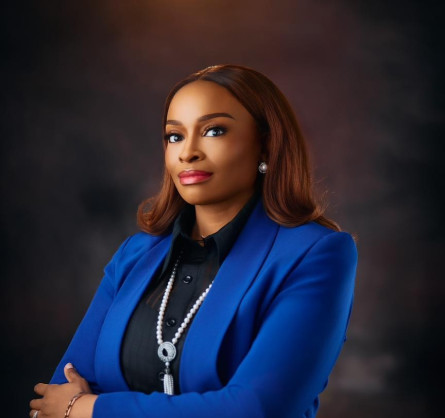
By Rolake Akinkugbe-Filani - CEO, EnergyInc Advisors (www.EnergyIncAdvisors.com) /Global Energy Finance and Strategy Leader
With COP30 underway in Belém, Brazil, the global community is once again confronted with the urgency of climate action. For Africa however, the conversation must begin with a more fundamental question: how do we power the continent so that climate ambition does not outpace development reality?
While advanced economies frame climate progress around how quickly they can retire fossil fuels, Africa's challenge is more foundational. Millions still lack reliable electricity. Without power, factories cannot operate, digital economies cannot thrive, and essential services - from hospitals to schools - remain constrained. Energy access is not merely a development aspiration. It is the bedrock upon which climate adaptation, resilience, and long-term economic transformation rest.
A transition that must be sequenced, not rushed
Africa's clean energy potential is undeniable; abundant solar irradiation, strong wind corridors, hydro resources and world-class geothermal prospects. But potential alone will not close the energy gap. Grid constraints, weak storage systems, and limited industrial-scale capacity mean the transition must be phased and sequenced.
Renewables cannot shoulder the entire burden today. Managed, time-bound use of transitional fuels, including natural gas, remains essential to stabilising grids, supporting industry, and powering cities. This is not a call for indefinite fossil fuel dependence, but for a pragmatic pathway that allows Africa to scale clean energy without undermining growth.
Africa's priorities at COP30: clarity and ambition
Africa produces less than 4 percent of global emissions but absorbs a disproportionate share of the climate fallout, droughts, floods, food insecurity, and displaced communities. Yet climate finance flows to the continent remain slow, fragmented, and heavily skewed toward mitigation rather than the adaptation Africa urgently needs.
At COP30, Africa's message is focused and uncompromising (https://apo-opa.co/4psssKd):
- A new global climate finance target: no less than $1.3 trillion annually by 2030, with a significantly higher share allocated to adaptation, resilience and concessional finance.
- A fully operationalised Loss and Damage Fund, designed to deliver predictable, timely support without adding to Africa's debt burdens.
- A just and inclusive energy transition, one that recognises Africa's right to industrialise, create jobs and expand access while lowering emissions in a responsible and realistic way.
- Recognition of Africa's natural ecosystems - forests, mangroves, peatlands - as global public goods, deserving of sustained financing and market mechanisms that reward their stewardship.
Universal energy access must be the anchor of Africa's climate roadmap
African governments and their partners must weave energy access into the heart of climate policy. This means scaling renewable energy investments, strengthening grids, reforming utilities, and designing transition pathways that reflect Africa's demographics, industrial goals, and financing constraints.
Transitional fuels will continue to play a bridging role, but with transparent timelines and a clear strategy for shifting to cleaner sources as infrastructure matures. What Africa needs is not a binary choice between fossil and renewable, but a plan that delivers power where it is needed most, reliably, affordably, and sustainably.
Because as the world races toward net zero, the continent cannot remain energy-poor. A climate strategy that does not lift African households, clinics and schools out of energy poverty is neither just nor durable.
At COP30, the message must be unmistakable, it is that Africa's development cannot be deferred, and energy access is central to that vision. A fair global climate future begins with a lit Africa, one where power enables productivity, resilience, and opportunity for all.
Driving Africa's energy future through homegrown solutions
Africa's transition will not be unlocked by ambition alone; it will be unlocked by sequencing and by capital. The continent cannot afford a transition model that demands synchronisation with wealthier economies while our grids remain weak and our capital systems under leveraged. With over $900 billion in pension, insurance, and sovereign assets, Africa holds significant pools of domestic capital that remain largely absent from energy infrastructure. The real opportunity now is to finance Africa's transition with Africa's money, in the right order: strengthen grids, scale renewables, and phase out transitional fuels as capacity deepens.
A transition that is both sequenced and self-financed is not only more realistic; it is the most sustainable path to universal energy access and long-term climate resilience.
Distributed by APO Group on behalf of EnergyInc Advisors.A Call for People-Centered Development and Reparatory Justice in African Union (AU)-European Union (EU) Engagements
Download logo
1. Introduction: Why the Church's Voice Matters
As the AU–EU Summit convenes in Luanda, the Catholic Church in Africa, represented by the Symposium of Episcopal Conferences of Africa and Madagascar (SECAM) (https://SECAM.org/), reaches out to all people of goodwill with a message of concern, truth, and hope. We speak as a Church deeply embedded in the daily lives of the African people, sharing in their joys and hopes, as well as their griefs and anxieties, particularly for the poor and afflicted (cf. Gaudium et Spes, n. 1). Our moral responsibility is informed by lived experiences throughout the continent, through our schools, universities, clinics, parishes, and communities.
2. The Significance of the Year 2025
The year 2025 holds particular significance, as the African Union has declared it the Year of “Justice for Africans and People of African Descent through Reparations” and will launch the Decade of Reparations (2026-2036). The Catholic Church's Jubilee Year calls for truth, renewal, and reparatory justice. Following COP30 in Belém, where voices from Churches in the Global South underscored the urgent need for ecological justice, climate finance, and respect for Indigenous and local communities, the AU–EU Summit must not only negotiate but also listen, remember, and address longstanding injustices.
3. Concerns Over Restricted Civil Society Participation
SECAM is compelled to highlight the restrictions imposed on civil society organizations in the official Summit process. Numerous African civil society organizations, including those willing to self-finance their participation, have been excluded. This includes faith-based organizations with a long-standing presence on the ground, humanitarian and justice networks linked to the Church, women's and youth associations, farmer and Indigenous organizations, local development movements, and peacebuilding and reconciliation bodies. This exclusion raises a critical moral question: How can a summit focused on Africa's future exclude those who support African communities daily?
4. The Parallel Peoples' Summit in Luanda
In response to the official Summit's inability to accommodate African civil society, a Parallel Peoples' Summit has been organized at the Catholic University of Angola in Luanda on 19–20 November. This is not an act of rebellion; it is a necessary response to insufficient participatory channels, a lack of transparency, technocratic top-down processes, and an imbalance of power between institutions and communities.
5. Historical Responsibility and the Call for Reparatory Justice
The Church in Africa expects the AU–EU Summit to demonstrate honesty about history and a genuine commitment to reparations, acknowledging the ongoing impact of the Transatlantic slave trade, slavery, colonialism, neocolonialism, economic domination, and resource extraction as matters of historical fact and moral responsibility. We are deeply concerned that the European Union has not fully committed to reparatory justice for Africans and people of African descent, despite the fact that key members benefited from the Transatlantic slave trade and colonization. The legacy of this exploitation persists today in an unfair trade system and the transgenerational trauma suffered by Africans and people of African descent.
6. People-Centered Development
Guided by the Church's social teaching principle of the primacy of the human person over systems, SECAM advocates for a people-centered development model. The joint SECAM–COMECE–Caritas–CIDSE statement warns that many AU–EU initiatives risk perpetuating extractive patterns; development must serve communities, not geopolitical interests. Reparatory justice is essential, encompassing both structural fairness and restorative healing.
7. Economic, Debt, and Ecological Justice
Economic and debt justice are crucial, as Africa's debt burden—rooted in historical injustice—requires serious reform as a matter of justice, not pity. Following COP30 in Belém, ecological responsibility must be upheld, recognizing that ecological justice cannot be separated from social justice. Africa's forests, water sources, mineral resources, biodiversity hotspots, and vulnerable communities must never again be sacrificed for profit, geopolitics, or external interests. Respect for African sovereignty and the sovereignty of its people is vital; African sovereignty belongs not only to governments but also to its citizens.
8. Conclusion: Toward a Strengthened AU–EU Partnership
The Church in Africa hopes for a renewed and strengthened AU–EU partnership. However, this requires inclusion rather than exclusion and transparency rather than opacity. A partnership that listens to the people will endure; a truly inclusive summit will foster trust, and a dialogue rooted in justice will have the power to heal historical wounds. The Church in Africa stands ready to accompany Africa and Europe toward a future of justice, peace, and human dignity.
Distributed by APO Group on behalf of Symposium of Episcopal Conferences of Africa and Madagascar (SECAM).Contact:
Rev. Fr. Uchechukwu Obodoechina
Director of SECAM - Justice, Peace and Development Commission
secamjpdcdirector@gmail.com
Tel: +233 55 733 7871
Rev. Fr. Louison Emerick Bissila Mbila, C.S.Sp.
SECAM Liaison Officer at the African Union
secamauliaisonoffice@gmail.com
Tel: +251 900 485 018
Senegal’s Minister of Energy, Petroleum and Mines Invites Energy Stakeholders to MSGBC 2025
Download logo
Birame Souleye Diop, Minister of Energy, Petroleum and Mines of Senegal, has invited all energy stakeholders to participate in the MSGBC Oil, Gas & Power 2025 Conference and Exhibition, taking place on December 8–10 in Dakar.
Speaking during a press conference on Thursday, he emphasized that the conference has become a cornerstone of African energy cooperation and called on institutions, companies and regional partners to join the dialogue shaping the next phase of the MSGBC basin's development.
Taking place under the theme Energy, Oil and Mining in Africa: Synergies for Inclusive Economic Development, MSGBC Oil, Gas & Power 2025 Conference and Exhibition will be held under the patronage of Bassirou Diomaye Faye, President of Senegal and in partnership with the Ministry of Energy, Petroleum and Mines, the national oil company Petrosen and state-owned COS Petrogaz.
“The MSGBC region–Mauritania, Senegal, The Gambia, Guinea-Bissau and Guinea-Conakry–is not just a geological basin. It is a community of shared destiny, united by one ambition: to transform our resources into drivers of inclusive and sustainable growth,” Minister Diop said, adding that the event is a platform for institutions, companies and international investors to explore new opportunities and forge partnerships across the region.
During his address, Minister Diop highlighted bp and Kosmos Energy's Greater Tortue Ahmeyim gas projects (GTA) as a key example of cross-border partnership.
“GTA is a symbol of successful cooperation and economic integration,” the Minister said. Phase 1 of the project began producing gas in December 2024, with 20–25% expected to supply domestic power and industrial needs. Plans for Phase 2 could raise production to around 5 million tons of LNG per year, while technical inspections have confirmed stable operations.
He noted Senegal's Gas-to-X strategy, saying, “Our goal is to transform gas into electricity, industrial inputs, fertilizers and cleaner fuels.” He explained that the strategy supports economic diversification while positioning gas as a complement to renewable energy in the country's energy transition.
Minister Diop also emphasized strengthening local content. “Every project must benefit our citizens first,” he said.
Recent initiatives in Senegal's energy sector align closely with this strategy. In November 2025, the Senegalese university INPG partnered with global energy company Woodside Energy (https://apo-opa.co/4rq3rB8) on the Sangomar project to expand local capacity, awarding contracts to Senegalese companies and providing skills development for engineers and technicians. Earlier in April 2025, the INPG (https://apo-opa.co/4rc4zIl) signed a tripartite agreement with the state-owned Vocational and Technical Training Fund and the National Committee for Monitoring Local Content to train and integrate 1,000 young professionals by 2026, with a long-term goal of 15,000 by 2029.
Sandra Jeque, Project Director at Energy Capital & Power, stated, “MSGBC 2025 will showcase how the region is developing talent, infrastructure and partnerships that place African capabilities at the center of Africa's energy future.”
Minister Diop concluded, “MSGBC 2025 is a unique opportunity to advance energy access, resource transformation and economic development across the African continent.”
Explore opportunities, foster partnerships and stay at the forefront of the MSGBC region's oil, gas and power sector. Visit www.MSGBCOilGasAndPower.com to secure your participation at the MSGBC Oil, Gas & Power 2025 conference. To sponsor or participate as a delegate, please contact sales@energycapitalpower.com.
Distributed by APO Group on behalf of Energy Capital & Power.Casablanca to Host the 4th OIC Business Intelligence Center (OBIC) Capacity-Building Programme, Strengthening Credit Information Systems Across Organization of Islamic Cooperation (OIC) Member States
Download logo
The Islamic Corporation for the Insurance of Investment and Export Credit (ICIEC) (https://ICIEC.IsDB.org), a Shariah-based multilateral insurer and member of the Islamic Development Bank (IsDB) Group, announced today that the 4th Capacity-Building Programme for Users of the OIC Business Intelligence Center (OBIC) will be held from 24 to 26 November 2025 in Casablanca.
The programme, sponsored by ICIEC, the Islamic Development Bank (IsDB), the Arab Bank for Economic Development in Africa (BADEA), the African Export–Import Bank (Afreximbank), and the Islamic Centre for Development of Trade (ICDT), represents a key milestone in advancing the quality, accessibility and integration of credit and business information across the Organization of Islamic Cooperation (OIC) Member States.
As ICIEC's flagship initiative, OBIC provides an essential platform that supports Member States in modernizing their credit-reporting ecosystems, strengthening business intelligence infrastructure and enabling informed trade and investment decisions that reduce risk and foster sustainable development.
The three-day programme will convene senior officials and experts to examine the role of business intelligence in strengthening economic decision-making, beginning with an opening session featuring partner institutions. Discussions will cover OBIC's contribution to national and cross-border credit ecosystems, the use of reliable credit information in banking, export operations and investment promotion, as well as the relevance of platforms such as the Africa Trade Gateway.
The agenda further includes practical case studies from Tunisia, insights into the AMAN Union shared credit database, and an overview of unique entity identifiers like MANSA and GLEIF. The programme will conclude with success stories on women's economic empowerment in Africa and a session on enhancing the use of statistical and business intelligence tools by investment promotion agencies, followed by a closing ceremony.
Dr. Khalid Khalafalla, Chief Executive Officer of ICIEC, stated: “Strengthening the quality, reliability and accessibility of credit information across our Member States is essential to unlocking sustainable trade and investment flows. Through the OBIC platform and this capacity-building programme, we are empowering institutions with the tools needed to make informed decisions, reduce risks, and accelerate economic opportunities across the OIC region. Our partnership with IsDB, BADEA, Afreximbank and ICDT reflects our shared commitment to building a more transparent, interconnected and resilient economic ecosystem for our Member States.”
Distributed by APO Group on behalf of Islamic Corporation for the Insurance of Investment and Export Credit (ICIEC).Email:
ICIEC-Communication@isdb.org
Follow us on:
X: https://apo-opa.co/44e28ep
Facebook: https://apo-opa.co/4oSoUkt
LinkedIn: https://apo-opa.co/4r9iPBH
YouTube: https://apo-opa.co/47SVFIh
Instagram: https://apo-opa.co/4o5zq6I
About The Islamic Corporation for the Insurance of Investment and Export Credit (ICIEC):
As a member of the Islamic Development Bank (IsDB) Group, ICIEC commenced operations in 1994 to strengthen economic relations between OIC Member States and promote intra-OIC trade and investments by providing risk mitigation tools and financial solutions. The Corporation is the only Islamic multilateral insurer in the world. It has led from the front to deliver a comprehensive suite of solutions to counterparts in its 51 Member States. ICIEC, for the 18th consecutive year, maintained an "Aa3" insurance financial strength credit rating from Moody's, ranking the Corporation among the top of the Credit and Political Risk Insurance (CPRI) industry. Additionally, S&P has reaffirmed 'ICIEC's "AA-"long-term Issuer Credit and Financial Strength Rating for the second year with a stable outlook. ICIEC's resilience is underpinned by its sound underwriting, global reinsurance network, and strong risk management policies. Cumulatively, ICIEC has insured more than USD 121 billion in trade and investment. ICIEC activities are directed to several sectors—energy, manufacturing, infrastructure, healthcare, and agriculture.
For more information, Visit https://ICIEC.IsDB.org
The AFRICA24 Group presents : Visa for Music 2025

From November 19 to 22, 2025, the AFRICA24 Group (https://Africa24TV.com) will offer exceptional coverage of the 12th edition of the Visa For Music Festival 2025, a major event celebrating the cultural richness of Africa, the Middle East and beyond, through a vibrant and eclectic programme.
This edition of Visa For Music, held in Rabat, Morocco, aims to be a vibrant cultural crossroads, bringing together artists, professionals and festival-goers around a rich and diverse programme.
Visa For Music 2025 : A major four-day event offering:
- Opening ceremony: Grand urban parade through the streets of Rabat.
- Showcases: Continuous cultural entertainment on the esplanade of the Mohammed V National Theatre.
- Conferences: Opportunities for discussion on the major challenges facing the music industry.
- Expostand: More than 50 exhibitors from around the world.
About Visa For Music :
Created in 2014, Visa For Music is the first music festival and market in Africa and the Middle East, held annually over four days in November in Rabat, Morocco, on the initiative of ANYA Culture, a Moroccan cultural engineering organisation, and Atlas Azawan, an association for the promotion of culture and heritage. This event, dedicated to promoting global musical diversity with a particular focus on Africa and the Middle East, is a crucial platform for artists, music professionals and actors in the creative and cultural industries (CCI). It provides a space for meeting, exchanging ideas and creating fruitful collaborations.
The AFRICA24 Group 360° coverage and global broadcasting to 120 million households
Watch ‘Visa For Music 2025' live, on replay and on demand on all your screens at :
- AFRICA24 in French (channel 249) et AFRICA24 English (channel 254) of the Canal+ Africa bundle
- On myafrica24 Africa's first HD streaming platform.
- On https://Africa24TV.com which offers you a full access to all our programmes.
AFRICA24 Group, Transforming Africa Together.
Distributed by APO Group on behalf of AFRICA24 Group.Contact:
Communication Department
AFRICA24 Group
Gaëlle Stella Oyono
Email: onana@africa24tv.com
Tél.: +237 691 30 03 40
Social Media:
@ africa24tv
https://Africa24TV.com
ABOUT THE AFRICA24 GROUP:
Launched in 2009, the AFRICA24 Group is the continent's leading TV and digital media publisher, with four full HD channels broadcast in the major cable packages. A leader among decision-makers and senior executives on the continent, AFRICA24 in French and AFRICA24 English, the Group is the pioneer and leader in African news channels. AFRICA24 has strengthened this leadership through sport with AFRICA24 Sport, Africa's leading channel dedicated to sports news and competitions, and AFRICA24 Infinity, the first channel dedicated to creative industries that showcase the creative genius of African youth in art, culture, music, fashion, design and more.…
The leading audiovisual brand on the continent, the AFRICA24 Group has four full HD television channels, each a leader in its segment :
- AFRICA24 TV : Leading French-language source for African news, published by AMedia
- AFRICA24 English : Leading African news source exclusively in English.
- AFRICA24 Infinity : The creative talent channel dedicated to music, art and culture.
- AFRICA24 Sport : Leading sports and competition news channel.
The AFRICA24 Group publishes myafrica24 (Google store and App Store), the world's first HD streaming platform in Africa available on all screens (television, tablet, smartphone, computers) ... More than 120 million households have access to Africa24 Group channels through major operators such as Canal+, Bouygues, Orange, Bell, etc., and more than 8 million subscribers on various digital platforms and social networks.