
Explore more Articles in
Mining
Central Bank of Egypt and Afreximbank Sign a Memorandum of Understanding for the Establishment of a Gold Bank programme in Egypt
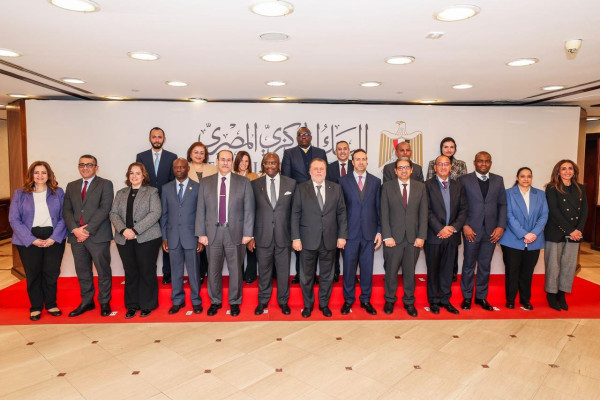

The Central Bank of Egypt (CBE) and African Export – Import Bank (Afreximbank) (www.Afreximbank.com) yesterday signed a Memorandum of Understanding (MoU) for the establishment of a pan African Gold Bank. This strategic initiative aims to formalise gold value chains, strengthen Central Bank reserves and reduce Africa's reliance on foreign refining and trading hubs.
This landmark MoU was signed by the Governor of the Central Bank of Egypt (CBE), H.E. Mr. Hassan Abdalla, and the President and Chairman of the Board of Directors of Afreximbank, Dr. George Elombi during a ceremony held at the Central Bank of Egypt.
The establishment of the Gold Bank programme is in line with Egypt's vision to expand strategic partnerships and strengthen mutual collaboration with African states across diverse fields, as well as Afreximbank's focus on promoting and accelerating value addition, and strategic mineral processing.
The partnership also builds on a shared vision between the CBE and Afreximbank to support domestic manufacturing, enhance sustainable development, and deepen regional financial and trade integration, fostering a robust and advanced African economic ecosystem.
Under this MoU, the two institutions will collaborate on commissioning a feasibility study to assess the technical, commercial, and regulatory requirements for developing an integrated Gold Bank ecosystem in a designated free zone in Egypt, with the participation of African countries. This includes the establishment of an internationally accredited refinery, secure vaulting facilities, and associated financial and trading services.
The initiative also targets the expansion of its scope across the continent, the engagement of governments, central banks, mining companies, and industry stakeholders to strengthen institutional collaboration, harmonize best practices, and facilitate the sustainable trade of gold and related services across Africa.
Commenting on the agreement, Mr. Hassan Abdalla emphasized that the initiative serves as a foundation that could progressively expand into a pan-African framework that would engage African governments, central banks, and market participants. He underscored Egypt's steadfast commitment to driving initiatives that promote economic integration across Africa, noting that the selection of Egypt as a potential hub - subject to the outcome of the study and subsequent approvals - reflects the African institutions' confidence in its readiness to foster continental mega projects. With its strategic geographic location at the crossroads of Africa, the Middle East, and Europe, Egypt is well positioned to serve as a natural hub for regional gold trade and financial innovation.
Speaking at the signing ceremony, Dr. George Elombi affirmed the joint commitment of both institutions to collaborating closely, aligning efforts and resources to promote financial stability, and contributing to sustainable economic prosperity across Africa.
Dr Elombi said: “Today's ceremony may appear simple, yet it has tremendous economic consequences for our continent. We make a bold declaration that Africa's gold must serve African people. This MoU, which is part of Afreximbank's vision to make Africa's resources benefit Africans, creates an African Gold Bank that will help us to begin to fundamentally alter the way we extract, refine, manage, value, store, and trade our gold resources, with the primary aim of retaining value on the continent. By effectively building up the gold stock, as other major economies have done, we enhance the continent's resilience, minimise vulnerability to external shocks, improve currency stability and convertibility, and create wealth within the continent.”
Afreximbank and the Central Bank of Egypt have enjoyed a long cordial relationship, with Egypt being the Bank's largest shareholder and its host.
Distributed by APO Group on behalf of Afreximbank.Media Contact:
Vincent Musumba
Communications and Events Manager (Media Relations)
Email: press@afreximbank.com
Follow us on:
X: https://apo-opa.co/4sgymQE
Facebook: https://apo-opa.co/48YDpxB#
LinkedIn: https://apo-opa.co/4pksBia
Instagram: https://apo-opa.co/4qimcFL
About Afreximbank:
African Export-Import Bank (Afreximbank) is a Pan-African multilateral financial institution mandated to finance and promote intra- and extra-African trade. For over 30 years, the Bank has been deploying innovative structures to deliver financing solutions that support the transformation of the structure of Africa's trade, accelerating industrialisation and intra-regional trade, thereby boosting economic expansion in Africa. A stalwart supporter of the African Continental Free Trade Agreement (AfCFTA), Afreximbank has launched a Pan-African Payment and Settlement System (PAPSS) that was adopted by the African Union (AU) as the payment and settlement platform to underpin the implementation of the AfCFTA. Working with the AfCFTA Secretariat and the AU, the Bank has set up a US$10 billion Adjustment Fund to support countries effectively participating in the AfCFTA. At the end of December 2024, Afreximbank's total assets and contingencies stood at over US$40.1 billion, and its shareholder funds amounted to US$7.2 billion. Afreximbank has investment grade ratings assigned by GCR (international scale) (A), Moody's (Baa2), China Chengxin International Credit Rating Co., Ltd (CCXI) (AAA), Japan Credit Rating Agency (JCR) (A-) and Fitch (BBB-). Afreximbank has evolved into a group entity comprising the Bank, its equity impact fund subsidiary called the Fund for Export Development Africa (FEDA), and its insurance management subsidiary, AfrexInsure (together, "the Group"). The Bank is headquartered in Cairo, Egypt.
For more information, visit: www.Afreximbank.com
Natural Gas and Liquefied Natural Gas (LNG): Building a Bridge to African Energy Security and Prosperity (By NJ Ayuk)
Download logo
By NJ Ayuk, Executive Chairman, African Energy Chamber (https://EnergyChamber.org).
Africa is awakening to the power of its natural gas reserves, recognizing that among its many resources, natural gas offers a reliable and expedient track to economic growth and energy independence.
In our “State of African Energy: 2026 Outlook Report," the African Energy Chamber (AEC) details how the energy matrices of several gas-producing nations are pivoting from holding gas back as mainly an export product to building gas-centric domestic markets.
We regard this crossover not as some hopeful economic gamble, but as an essential step that all gas-producing nations on the continent must take if Africa is to benefit fully from its fossil fuel reserves and build up true self-reliance — without apology — just as the developed nations of the world did when it was their time.
As our report makes clear, domestic gas demand in Africa is ready to surge in the coming years, driven primarily by rising power needs. At this pivotal juncture, several African nations serve as prime case studies on how forward-looking investments in gas production can power whole industries, create new jobs, and stabilize grids in places where such improvements are desperately needed. Additionally, their stories exemplify how, amid a global energy transition, natural gas will serve as a bridge fuel that will power Africa into its own sustainable future.
Angola's Gas Renaissance: From Exports to Domestic Growth
In Angola, the oil and gas sector has seen its economic footprint shrink over the last decade amid declining output. Regardless, Angolan policymakers are well aware of the vast untapped value in the country's gas reserves, and recent industry moves reflect a commitment to realizing their potential.
Angola's journey into the global gas arena began with the construction of the Angola LNG liquefied natural gas (LNG) facility in 2008. This transformed associated gas (gas found in wells alongside crude oil), which was previously flared or reinjected, into exportable LNG — slashing upstream emissions in the process.
The raw natural gas (or feedstock) that is processed and liquefied to produce LNG initially came from key offshore blocks operated by ExxonMobil, Total, and Eni/BP, and was augmented later with gas from other blocks operated by Eni/BP and Chevron. Though half of the associated gas produced in Angola today is still reinjected into wells to maintain pressure and enhance oil recovery, recent progress — like the December 2024 achievement of first gas from the Sanha Lean Gas project — aims to boost supply volumes to the Angola LNG plant.
Angola has also begun to pivot toward non-associated gas fields in areas like the Lower Congo basin. The New Gas Consortium, a joint venture headed up by Azule Energy, is targeting numerous developments on multiple blocks that are expected to ramp up LNG capacity by 2026.
Post 2010 exploration in the southern Kwanza Basin offshore led to giant non-associated gas discoveries. While exciting, we at AEC are frustrated that those finds remain stranded due to a lack of gas export infrastructure in the area and the high cost and difficulty of deepwater drilling where they're located.
The Kaminho project, which targets condensate-rich pre-salt discoveries in the Cameia and Golfinho fields, is the first operation under development in block 20 of the Kwanza basin. Condensate/light oil recovery is the current priority at the site, and the extent of development will depend on the completion of the Kaminho floating production, storage, and offloading (FPSO) unit expected in 2028. As our report speculates, the possibility of a network between Kaminho and the appraisal programs at the Lontra, Zalophus, and Bicuar fields in the same region could encourage development of gas transport infrastructure leading to Angola LNG at Soyo or central Angola.
The Angolan government seeks to expand its pipeline network, which may involve gas evacuation from Cameia-Golfinho to the coastal point of Caboledo and an onshore pipeline to Luanda and Soyo to satisfy local demand, but project costs and the necessary transportation tariffs are holding up investment. Funding for such developments could potentially come from upstream firms or international banks with added tax breaks to make them viable.
In the long term, gas blowdown operations at maturing oil fields in the Congo Fan could also supply Angola LNG, leveraging existing midstream infrastructure for extended production into the 2030s.
Domestically, Angola is allocating more gas to power generation, with supplies feeding the 750-megawatt (MW) Soyo combined-cycle gas turbine (CCGT) plant that has been balancing hydropower fluctuations since its start in 2018. But ambitions extend further: the Angola Gas Master Plan calls for fertilizer (ammonia) and methanol facilities by 2030, which would spur a massive increase in gas demand. The proposed ammonia plant, set for construction in 2025 and operations by 2027, could demand up to 80 million cubic feet per day (MMcf/d) by 2035. Power expansions and conversions from oil will also drive demand, while opportunities in petrochemicals, direct gas exports, or mining electrification could diversify use.
By integrating LNG exports with local needs, Angola exemplifies how Africa can benefit from its resources while encouraging economic diversification and reducing dependence on imports.
Emerging LNG Exporters: Mauritania and Senegal's Shared Success
Shifting north, Mauritania and Senegal have stepped into the LNG scene. They became exporters in 2025 with the Greater Tortue Ahmeyim (GTA) project, a shared deepwater startup. This cross-border venture, featuring subsea infrastructure, an FPSO, and a floating LNG (FLNG) unit, has already generated approximately 3,000 local jobs and engaged roughly 300 domestic companies.
In 2015, developers overcame unitization hurdles through discussion, arriving at equitable terms, including domestic gas obligations. The project reached a final investment decision (FID) and agreed to a FLNG model, inspired by proven tanker conversions that have kept costs competitive on previous projects despite deepwater challenges.
Future expansions could double output through low-cost vessel upgrades; however, our report cautions that market oversupply risks and pledges from Senegal's new nationalist government to audit contracts may introduce additional risks.
Domestically, each country claims about 35 million standard cubic feet per day (MMscf/d) from the project — with delivery of Senegal's portion going to the Saint-Louis CCGT for power generation expected in 2026. Infrastructure initiatives, like gas networks and a proposed 366 MW power plant in Cap de Biches, aim to electrify close to 500,000 homes. Beyond power, other uses in petrochemicals and fertilizers could broaden the economic impacts, demonstrating how LNG can facilitate other industries.
Country-level initiatives like these align with the broader continental trends also outlined in our 2026 Outlook report.
Harnessing Regional Power Pools for Continental Integration
As of 2025, Africa's gross natural gas production is set to hit 331 billion cubic meters (bcm), led by the major producers: Algeria, Nigeria, and Egypt. Natural gas already powers 40% of the continent's electricity, with North Africa's 32% share doing most of the heavy lifting.
By 2050, gas-fired capacity could swell by more than 77 GW, yet its share of the total energy mix should stay around 40%. This demonstrates how gas can fill in as a transitional fuel during the expected growth in renewables, as well as its flexibility in supporting solar and wind during downtime.
Numerous nations are phasing out coal and oil — implementing gas-to-power in their national strategies while looking toward LNG imports or domestic sources. For instance, Nigeria has made gas-to-power a centerpiece of its master plan. South Africa's plans emphasize converting gas to electricity during its coal retirement. Senegal aims to have 3 GW of gas-to-power in place by 2050, and Ghana and Tanzania have similar gas-powered ambitions.
Though challenges like infrastructure gaps, import vulnerabilities, and environmental concerns will surely arise, we at the AEC are confident that targeted investments can overcome them.
These efforts are amplified by regional power pools — collaborations that allow neighboring countries to connect to each other's power grids. Five pools cover the continent:
- Southern African Power Pool (SAPP) leads as the most mature and serves as a model for strong interconnections and competitive trading.
- West African Power Pool (WAPP) has advanced cross-border links but grapples with regulatory and financial issues.
- Eastern Africa Power Pool (EAPP) is also making progress on interconnections despite political hurdles.
- Central African Power Pool (CAPP) is the furthest behind due to instability, limited infrastructure, and a lack of investment.
- North African Power Pool (NAPP) has arguably the most advanced infrastructure but limited trade as it has more of a focus on integration with European markets.
The African Single Electricity Market, an effort to combine these five pools into a single continental power market, has sights on full integration by 2040. Although barriers like physical distances and technological and political compatibility issues are expected, finding ways around these barriers could further unlock the potential of gas by linking exporters to importers and boosting access and cooperation.
"The State of African Energy" spells it out: Natural gas is a catalyst for African prosperity, not merely a commodity on the market. By expanding LNG and domestic uses, nations can drive growth, cut emissions, and assert their energy independence. As a transitional fuel, it offers a comfortable route to an eventual conversion to renewables and can ensure that no African is left in the dark during the process.
Africa deserves to thrive on the wealth of its own resources, and the developments outlined in our latest report prove that outcome is possible.
"The State of African Energy: 2026 Outlook Report" is available for download. Visit https://apo-opa.co/3YH75ct to request your copy.
Distributed by APO Group on behalf of African Energy Chamber.African Energy Chamber, ccCASH Partner to Bring Climate Finance Directly to African Households
The African Energy Chamber (AEC) (https://EnergyChamber.org/) has signed a Memorandum of Understanding (MOU) with (B)energy, developer of the ccCASH initiative, to establish a continent-wide mechanism for clean cooking finance. The collaboration marks a major step toward making households active participants in Africa's energy transition.
Africa faces a critical energy challenge: over 200 million households still rely on polluting fuels such as firewood, charcoal and kerosene. Despite progress in clean cookstove programs, adoption has been constrained by weak incentives, limited access to climate finance and fragmented investment structures.
Under the MOU, the AEC and (B)energy will position ccCASH as a continent-wide clean cooking currency, rewarding households directly for verified climate, health and social outcomes from clean cooking technologies. By moving beyond project-based carbon certification, this model channels finance straight to users, creating tangible, immediate impact at household level.
The ccCASH platform provides a shared digital infrastructure for monitoring, reporting and verifying emissions reductions and social co-benefits across diverse technologies, including biogas, LPG, ethanol and electric cooking solutions. Its technology-neutral design ensures scale, inclusion and equitable access for households, small technology providers and service companies often excluded from traditional carbon markets.
Through this partnership, the AEC will champion ccCASH as a flagship initiative across its pan-African network, driving high-level advocacy, visibility and alignment with national energy transition, climate and clean cooking strategies. ccCASH will lead platform development, technical implementation and engagement with governments, development partners and the private sector.
“Clean cooking is not just a technology challenge – it is an income, incentives and financing challenge,” said NJ Ayuk, Executive Chairman of the AEC. “ccCASH delivers a scalable, African-driven pathway to mobilize climate finance while generating measurable social, economic and climate benefits. This partnership demonstrates our commitment to practical, high-impact solutions that improve livelihoods across the continent.”
"Partnering with the African Energy Chamber is a defining moment for ccCASH," said Katrin Puetz, CEO of (B)energy. "It gives us the platform to scale a new mindset in the clean cooking sector while bringing together energy and mining companies, governments and development partners.”
By aggregating verified household-level impact, ccCASH supports government climate commitments, including Nationally Determined Contributions, while unlocking new opportunities for private sector investment, ESG participation and high-integrity Article 6-aligned climate finance. The MOU represents a shared vision to establish ccCASH as a long-term, continent-wide mechanism, accelerating clean cooking adoption, strengthening service ecosystems and delivering inclusive economic and environmental benefits across Africa.
In early 2026, the AEC and (B)energy will convene a high-level webinar inviting corporates, investors, development partners and governments to actively engage with ccCASH. The session will outline concrete pathways to participate in pilots, co-investment and national rollouts, positioning ccCASH as a practical entry point for CSR, ESG and high-integrity climate finance linked directly to household impact across Africa.
Distributed by APO Group on behalf of African Energy Chamber.African Mining Week Returns to Cape Town, 14–16 October 2026
African Mining Week (AMW), Africa's premier mining forum, returns to the Cape Town International Convention Center from 14–16 October 2026, under the theme, “Mining the Future: Critical Resources, Sustainability and Community Development.” The event will convene mining companies, investors, policymakers and technology providers to discuss Africa's evolving mining landscape, from strategic mineral resources and digital innovation to local beneficiation and community development. AMW 2026 aims to connect international investors with Africa's most promising mining opportunities as the continent positions itself at the forefront of the global energy transition and critical minerals supply.
The 2026 edition will feature a multi-track program and exhibition space, including high-level panel discussions, technical workshops and exclusive networking sessions. Delegates will engage on investment opportunities across Africa's mining value chain, building on the success of AMW 2025, which attracted 1,500 delegates, over 85 speakers, 315 companies and representatives from 22 countries.
As African countries push for local value addition, mineral beneficiation and job creation, AMW 2026 will showcase national strategies and policies shaping investment flows. Mining ministers and government delegations from Ghana, South Africa, the Democratic Republic of Congo (DRC), Egypt, Zimbabwe, Sierra Leone, Nigeria and The Gambia are expected to update the industry on new regulations and mining codes, including Ghana's updated gold mining framework and South Africa's Mineral Resources Development Bill.
With Africa holding 30% of the world's critical minerals – essential for the clean energy transition – AMW 2026 will connect international investors with developers, owners and traders of lithium, cobalt, copper, rare earths and other strategic resources. Delegates will also explore how digital technologies are transforming mining operations, from accelerating mineral discovery to improving efficiency and sustainability. Building on DRC Minister of Mines Louis Watum Kabamba's remarks at AMW 2025 on shortening discovery timelines from years to months, AMW 2026 highlights digital innovation as a key driver of Africa's mining transformation.
The summit will also tackle crucial topics shaping Africa's mining sector, including the formalization of artisanal and small-scale mining, energy security, environmental sustainability, infrastructure development, women and youth empowerment, human capital development and the Fourth Industrial Revolution.
“African Mining Week 2026 is more than an event – it's a catalyst for Africa's mining transformation,” states Rachelle Kasongo, Project & Events Manager at Energy Capital & Power. “From critical minerals and sustainable practices to digital innovation and local beneficiation, AMW provides a platform for governments, investors and industry leaders to come together, accelerate projects and drive meaningful economic and community impact across the continent.”
African Mining Week serves as a premier platform for exploring the full spectrum of mining opportunities across Africa. The event is held alongside the African Energy Week: Invest in African Energies 2026 conference from October 12-16 in Cape Town. Sponsors, exhibitors and delegates can learn more by contacting sales@energycapitalpower.com.
Distributed by APO Group on behalf of Energy Capital & Power.