
Mental Health
Libyan youth engage on United Nations (UN) Youth, Peace and Security agenda in Amman
Download logo
Libyan youth are helping shape the next decade of the Youth Peace and Security agenda in the Middle East and North Africa, bringing national priorities into a regional effort to move youth participation from policy commitments to tangible action on the ground in Libya.
Three Libyan youth-led civil society organisations, alongside the Office of the Deputy Special Representative of the Secretary-General/Resident Coordinator of the United Nations Support Mission in Libya and the United Nations Population Fund (UNFPA) Libya, participated in the regional Youth Peace and Security workshop in Amman, Jordan, in December, which convened more than 70 young peacebuilders from across the region.
The event marked ten years since the adoption of UN Security Council Resolution 2250 (2015), which established the Youth Peace and Security agenda in response to evidence that young people were disproportionately affected by conflict but largely excluded from decision-making.
The workshop focused on reviewing progress, identifying persistent gaps, and setting priorities for the decade ahead, with a strong emphasis on translating regional learning into national strategies. Central to the discussions was the fundamental need to ensure that youth voices are not only present, but genuinely included, listened to and acted upon through structured and sustained dialogue with institutions and decision-makers.
“This was an important opportunity to assess the YPS agenda from its inception to today,” said Alia Gargoum, a Libyan civil activist. “While there have been clear positive steps over the past ten years, there is still a significant gap between policy and implementation.”
Participants highlighted regional challenges, including limited institutionalised youth engagement, uneven implementation of Youth, Peace and Security commitments, and the need for stronger coordination among governments, civil society and international partners. For young Libyan men and women, discussions also underscored how political and institutional fragmentation continues to constrain opportunities for meaningful engagement, making it difficult to translate youth initiatives into nationally anchored processes.
Another theme was the urgent need for safe and inclusive spaces for youth participation at all levels, particularly at the local level, where young people are most directly affected by conflict, service gaps and governance challenges. Many participants noted that fear of intimidation or harassment, both in person and online, continues to discourage youth engagement. This challenge is particularly acute for young women, though it affects young people across the board.
“One of the key takeaways for me is that peace and security must be approached regionally, not just locally,” said Alhassan Bakkar, Director of Programme Management at the Permanent Peace Foundation in Libya. “Listening to youth from different countries showed how interconnected our challenges are, and how much we can learn from each other's solutions.”
Participants reflected on the centrality of young people's mental health and psychosocial wellbeing as a foundation for peace, resilience, and civic engagement. They emphasized that without addressing the cumulative impacts of conflict, displacement, climate shocks, and economic uncertainty, youth participation risks remaining symbolic rather than transformative.
Discussions also reinforced the urgency of advancing government-led processes to implement the Youth, Peace and Security agenda and broader youth strategies that respond directly to the priorities and aspirations of Libyan young people.
The workshop concluded with participants identifying concrete next steps, including strengthening national Youth, Peace and Security coordination mechanisms, expanding youth-led peace initiatives, and building cross-border partnerships.
“As the Youth, Peace and Security agenda enters its second decade, Libyan youth are making it clear that they are not only beneficiaries of peace processes, but leaders shaping their country's future. Sustained recognition, investment, and partnership will be essential to turn commitments into impact on the ground,” said Deputy Special Representative of the Secretary-General and Resident Coordinator Ulrika Richardson. “Regional platforms such as the Amman workshop ensure that young Libyans return home equipped with ideas, networks and momentum, strengthening local initiatives and contributing to long-term peace.”
Distributed by APO Group on behalf of United Nations Support Mission in Libya (UNSMIL).The the Standards for Official Statistics on Climate – Health Interactions (SOSCHI) Conference Calls for Stronger Climate–Health Indicators to Guide Policy and Protect Communities
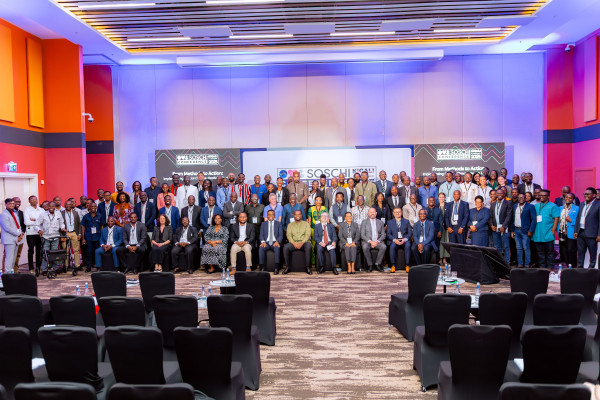
A Conference bringing together African government officials, scientific institutions, development partners and global organisations from 23 countries, issued a clear call to strengthen climate–health intelligence. It emphasised that countries will remain vulnerable to climate hazards unless they build and sustain systems that measure how climate change affects human health. The call followed three days of dialogue and technical exchange at the Standards for Official Statistics on Climate – Health Interactions (SOSCHI) Conference held in Kigali from 3 to 5 December 2025.
Climate change is already driving severe health impacts across Africa, yet most countries collect data in those fields in isolation. To effectively quantify risk of climate change impacts on health and protect vulnerable populations, comparable indicators are needed to guide preparedness, shape policy, or allocate resources for adaptation.
The joint communiqué adopted in Kigali emphasises that enhancing climate–health intelligence will strengthen existing national strategies and unlock new possibilities for targeted interventions, resilience building and the development of early warning. It highlights the “urgent need for more robust information on the health impacts of climate hazards to strengthen national policies and to guide target interventions.”
Delegates agreed that robust climate–health interactions indicators are essential to move from reactive responses to proactive, evidence-based planning. They emphasised that data alone is insufficient: decision-makers require harmonised indicators that reveal where climate hazards are affecting health, how disease patterns are shifting, and where adaptation efforts will have the greatest effect. Participants therefore committed to embedding the SOSCHI indicators into national statistical systems, with particular focus on extreme weather, water-related disease, vector-borne disease and mental health.
A major theme across the discussions was sustainability. Participants highlighted that climate–health interaction monitoring cannot depend on short-term projects, but must be rooted in long-term domestic financing, skilled personnel and systems that persist across political and funding cycles. Strengthening civil registration and vital statistics systems, improving the timeliness of health data, and enhancing environmental and meteorological monitoring were identified as critical foundations for sustainable climate–health intelligence. Collaborative data sharing and system interoperability were also deemed essential, given that climate–health indicators rely on multi-sectoral datasets that are rarely analysed together.
Technical demonstrations from Rwanda, Ghana and the UK showed how the SOSCHI indicators reveal emerging vulnerabilities and shifting disease burdens. Rwanda's results illustrated spatial changes in malaria risk linked to temperature and rainfall patterns, while Ghana's results highlighted how diarrhoeal disease, air pollution and heat-related mortality can be quantified and tracked over time. These findings underscore the value of harmonised methods for informing policy and supporting adaptation planning.
Participants left Kigali with a shared commitment to advance the scaling and institutionalisation of the SOSCHI framework. The communiqué invites national statistical offices, health ministries, research institutions and funders to join this effort, noting that together they can “deliver validated climate-health metrics that inform policy, strengthen resilience, and safeguard population health in the face of climate change.”
The Kigali meeting affirmed that Africa is not only experiencing the most immediate impacts of climate change but is also shaping the global standards required for effective climate–health action. The collective commitment expressed by participants represents a significant step towards building the climate–health intelligence necessary for a safer and more resilient future.
Distributed by APO Group on behalf of African Institute for Mathematical Sciences - Research and Innovation Centre.Media contact:
Joseph Ndiritu
Programs delivery and reporting
AIMS Research and Innovation Centre
Email: jndiritu@aimsric.org
Phone: +250 780 440 935
About the SOSCHI Partnership:
Standards for Official Statistics on Climate – Health Interactions (SOSCHI) is a collaboration between the UK's Office for National Statistics, the African Institute for Mathematical Sciences Research and Innovation Centre (AIMS-RIC) in Rwanda, and the Regional Institute for Population Studies (RIPS) at the University of Ghana, supported by global partners and funded by Wellcome Trust. The project provides a harmonised statistical framework and open-source platform enabling countries to generate actionable climate– health indicators.
The International Confederation of the Society of Saint Vincent de Paul presented its 2024 Annual Report in Brazil: 30 million people served and 18,000...
- The 2024 Report declares a total of 18,000 social projects and a global investment of €1.65 billion.
- The year was marked by the growth in initiatives and the international organization's response to new social realities.
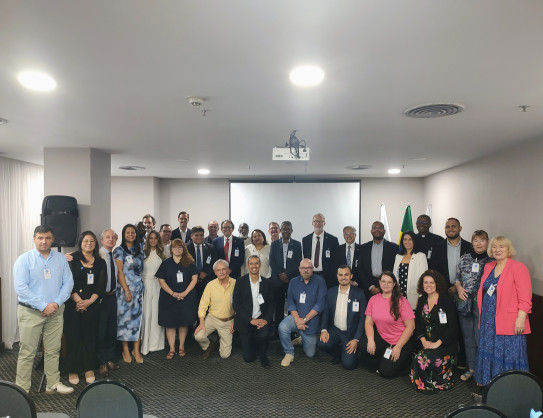
The International Confederation of the Society of Saint Vincent de Paul (SSVP) (www.SSVPGlobal.org) presented on 5 December in Rio de Janeiro its Annual Report, a document reflecting the global dimension of its social action in 155 countries. During the presentation, the impact of the 18,000 projects developed and 5,000 special programmes which have made it possible to serve 30 million people with a social investment of of €1.65 billion was highlighted.
The event began with a speech by Marcio Da Silva, President of the National Council of Brazil, who welcomed those in attendance and introduced a video on the organization's work in the country.
Next, Wellington Dias, Minister for Development and Social Assistance, Family and the Fight against Hunger, recalled his own experience with the Vincentians in his youth and emphasised that ‘lifting someone out of hunger is not the end, but the beginning of a journey that requires education, skills and real opportunities'. He stressed the importance of working together for this common cause and, on behalf of Brazilian President Luiz Inácio Lula da Silva, conveyed his gratitude to the SSVP ‘for every helping hand, every plate of food and every gesture that restores dignity in a world marked by inequality'.
After that, Juan Manuel Buergo Gómez, International President General, explained the main content of the 2024 Report, emphasizing the human value impregnating the Society's actions: “The Report reflects our social and economic activity, but does not quantify what's most important: brotherly, personal and friendly care for those in need, irrespective of their religion, ideas or origins. This support is at the heart of our mission.” He then announced the launch of the Global SSVP Foundation as a tool for raising funds for its cooperation projects, development aid and emergency actions.
After he spoke, a video was shown of the MAPFRE Foundation Social Awards, which recognized Society of Saint Vincent de Paul (SSVP) as the best international social organization for its entire history.
Presence and social action throughout the world
Representatives from every continent shared their perspective of the Society's work in their territories, all in line with the data provided in the report.
The International President General highlighted the main indicators from 2024: 155 countries benefited from SSVP's actions thanks to the commitment of 1,500,000 volunteers and 800,000 members. 18,000 social projects and 5,000 special initiatives were carried out throughout the year with €1.65 billion earmarked for social action, which made it possible to support 30 million people around the world.
The countries in the American regions were presented by Márcio da Silva, President of the National Council of Brazil, who underscored the scope of SSVP's work in 36 nations on the American continent. He underlined how home visits are complemented with a solid network of charitable dining rooms, food banks, shelters, education programs and socioeconomic reinsertion projects which help thousands of underprivileged families. Likewise, he highlighted the importance of tools between the countries with the most resources and those with the least.
Afterwards, Teresa Ryan, President of the National Council of Ireland, talked about the European reality where SSVP is present in 33 countries with projects meeting material as well as emotional, educational and community needs. She spotlighted the work being done in the area of mental health, fighting loneliness, individual support and programs dedicated to those most vulnerable.
From Hong Kong, Maurice Yeung, International Territorial Vice-President, presented the initiatives undertaken in 34 countries in Asia and the MENA region. He pointed out the importance of projects aimed at education and child and youth development, reinforcing community health and being able to immediately respond to natural disasters, along with training and employment programs which foster sustainable social development.
The presentation dedicated to the African continent was offered by Urbanus Kinuthia, Assistant Vice-President General, who talked about the daily support being provided for at-risk families and children, especially orphans, in the 42 countries where SSVP is present. He emphasized how, even in contexts with very limited resources, the Society's actions provide education for development, food, emotional support and hope for those most in need.
Finally, the representative of Oceania presented the work done in 10 countries where the Conferences alternate serving the homeless and distributing food with elderly care programs and the management of charity shops to fund community projects. He particularly focuses on the work in the islands and remote areas where the members' commitment compensates for the geographic difficulties.
Throughout the event, these testimonies offered a comprehensive view of the SSVP global mission which is based on local presence, closeness to those in need and the capacity to provide responses that adapt to each social reality.
Projects that make a difference
The presentation concluded with a selection of initiatives mentioned in the Report which illustrate how the organization adapts its actions to the realities in each territory. The network of charity pharmacies in the United States, for example, guarantees access to medication for thousands of people withour medical insurance, with more than 237,000 prescriptions filled each year thanks to the joint work of volunteers and pharmacy personnel.
As far as housing and homelessness, SSVP is a part of the Famvin Homeless Alliance and collaborates on the “13 Homes” Campaign, an international initiative that encourages social projects aimed at supporting the homeless. This campaign offers solutions involving social housing, temporary and permanent shelters, as well as rehabilitation and rebuilding projects following emergency situations. Thanks to this joint effort, the “13 Homes” Campaign has already reached more than 10,800 people and has made it possible to create more than 2,700 homes in different countries.
In Brazil, Solidarity Mobile Hygiene Units provide toilets and showers in addition to listening to and supporting people experiencing homelessness, creating places of trust and personal reconstruction.
The daily work done by the Conferences in Peru with the distribution of food and guidance and support for families in need is complemented with activities for children that reinforce community cohesion. Thousands of miles away, the construction and renovation of hygiene facilities in Sri Lanka has allowed several communities to tangibly improve living conditions.
The commitment to education is reflected in many different ways such as the floating school in Benin designed to guarantee continued schooling in neighborhoods that are isolated due to flooding, and training programs for university students driven by Vincentian young people in Syria, which open up the doors to job opportunities in a context of great social fragility.
Also standing out are deeply transformational initiatives in Oceania and Asia. The Home in Fiji offers food, housing and therapeutic care to people without family support, making it a place for dignity and safety. In the Philippines, the Mangyan Mission Centre accompanies isolated indigenous communities, providing them with a place to stay as well as showcase their culture and generate their own resources.
In Europe, national meetings were organized in France gathering volunteers and the people they serve, which reflects the importance of human bonding as the core of all Vincentian service.
These initiatives, along with thousands of projects developed around the world, prove the capacity of SSVP to offer specific, adapted and friendly solutions all while maintaining person-to-person support at the core of its global mission.
Distributed by APO Group on behalf of The International Confederation of the Society of Saint Vincent de Paul.More press information and interview management:
María Moreno
PR Manager
+34 680 383 665
maria@after-agency.com
Adriana Benito
PR Supervisor
+34 690 91 34 88
adriana@after-agency.com
About the Society of Saint Vincent de Paul:
The Society of Saint Vincent de Paul (SSVP) is a civil, international humanitarian and charity association which was formed by Catholic laymen and women. Founded in Paris in 1833, it is present in 155 countries and boasts 800,000 members and 1,500,000 volunteers. Its assistance reaches more than 30 million people every single day.
SSVP in Africa develops social projects aimed at families and children, especially orphans who receive education, food and care on a daily basis.
Recognized as a special charity association of public benefit, SSVP has earned UNE-EN ISO 9001:2015 quality certification for all of its locations. It is a founding member of the Volunteering Platform of Spain and is registered with the NGO for Development Register (ONGD-AECID).
Nigeria: Early health preparedness protects families during seasonal floods in Adamawa State
Download logo
In flood-prone Adamawa State, north-east Nigeria, early health preparedness helped protect thousands of vulnerable people from preventable disease outbreaks during the 2025 rainy season.
Through a government-led intervention coordinated by the Adamawa State Ministry of Health (SMOH) with technical support from the World Health Organization (WHO), health teams were deployed ahead of peak flooding in seven high-risk local government areas: Yola South, Yola North, Numan, Girei, Lamurde, Fufore and Demsa.
The actions were funded by the United Nations Central Emergency Response Fund (CERF) and the Government and People of Japan. The anticipatory response focused on preventing malaria, cholera and other flood-related diseases, while ensuring continuity of essential health services for displaced and vulnerable populations.
Reaching communities before the floods
In Fadde Gassol, Yola South, 25-year-old pregnant Aisha Bello received a long-lasting insecticidal net (LLIN), malaria prevention, and antenatal care from a WHO/CERF-supported mobile health team.
“The medical team came before the floods became worse,” she said. “This prepared me to stay healthy and deliver my baby safely.”
Her experience reflects the broader impact of early action across affected communities.
Life-saving results
As flooding disrupted access to several settlements, health teams delivered integrated services, including malaria and acute watery diarrhoea (AWD) management, maternal and child health care, routine immunisation, nutrition screening, mental health support, hygiene promotion and referrals for gender-based violence services.
With CERF and Government of Japan funding, and WHO technical support:
• 5000 LLINs were distributed to high-risk households to prevent malaria.
• 3000 pregnant women accessed antenatal care, with hundreds receiving intermittent preventive treatment for malaria.
• Three Oral Rehydration Points (ORPs) and three Cholera Treatment Centres (CTCs) were established to ensure rapid cholera response.
• 250 sanitation facilities were disinfected, and key water sources chlorinated to reduce cholera transmission.
• Thousands of people received cholera and hygiene prevention messages.
• Hundreds of displaced households received WASH dignity kits to support safe sanitation and hygiene practices.
“We crossed flooded paths to reach communities that had not seen a health worker in weeks,” said Fatima Musa, a frontline health worker. “Despite the difficulties, communities welcomed us and trusted our support.”
Strengthening local preparedness
WHO also supported state-level emergency preparedness, especially for cholera, through:
• Prepositioning of emergency medical supplies
• Training of frontline health workers
• Strengthening disease surveillance and early warning systems
• Supporting coordination through the Adamawa State Public Health Emergency Operations Centre (PHEOC)
“CERF and Japan's support enabled us to move before the crisis peaked,” said Dr Abdulhakeem Yusuf, WHO Adamawa State Coordinator. “This prevented outbreaks, reduced suffering and protected the most vulnerable, especially women and children.”
Strong coordination through PHEOC
Coordination for flood preparedness and response was conducted through the Adamawa State PHEOC, bringing together key partners including WHO, OCHA, UNFPA, SEMA, the Nigerian Red Cross Society, Médecins Sans Frontières (MSF), and local humanitarian organisations.
“Strong coordination helped us move early and reach more people before needs escalated,” said Momsiri Wesley Biyama, Head of OCHA Sub-Office in Adamawa.
Huzaifatu Mohammed, Adamawa Branch Secretary of the Nigerian Red Cross Society, added:
“Our volunteers worked alongside health teams in difficult terrain. Through the PHEOC coordination mechanism, services reached communities that would otherwise have been cut off.”
Sustaining the gains
Despite the progress, recurring floods driven by climate change continue to pose risks. Additional investments are needed to expand anticipatory action, strengthen surveillance, improve WASH infrastructure and reach more remote communities.
WHO, the Adamawa State Government and partners remain committed to sustaining and scaling these interventions ahead of future flood seasons to protect lives and strengthen community resilience.
Distributed by APO Group on behalf of World Health Organization (WHO) - Nigeria.