
local manufacturing
Africa sets course for affordable, quality medicines with new 10-year roadmap
Download logo
African leaders and global partners have agreed on a bold 10-year regional vision to redesign how essential health products are financed, produced, and delivered, marking a major step toward ensuring that everyone in the African Region can access affordable, quality-assured medicines and health technologies.
Meeting at the Blue-Sky Visioning and Think Tank Workshop in Johannesburg from 25 to 27 November 2025, policy-makers, technical experts, and development partners co-created the foundations of a Regional Strategy on Market Shaping and Supply Chain for Essential Health Products (2025–2035). This forward-looking strategy sets out 14 strategic pillars to renovate Africa's fragmented systems and build resilient, efficient supply chains that can withstand global shocks.
This strategy represents a paradigm shift from Africa's current fragmented and donor-dependent health product landscape to a coordinated, self-reliant system. Today, only 35% of essential medicines are available in public health facilities, and out-of-pocket spending can represent up to 90% of total health expenditures in some countries, leaving millions exposed to catastrophic costs. In several countries, such as Malawi, where external aid accounts for up to 65% of all health spending, the system remains highly vulnerable to sudden funding shocks. Donor investments are also heavily concentrated in a few vertical programmes: one-third of all health aid goes to HIV/STI control and 14% to malaria, while less than 1% supports noncommunicable diseases. A recent WHO assessment found that 56% of African countries are already facing shortages of essential products, including vaccines, tuberculosis medicines, neglected tropical disease treatments, and NCD supplies, with some facilities temporarily closing due to stock-outs.
The new regional strategy aims to revamp production and access by promoting local manufacturing, pooled procurement, and coordinated, shock-resistant supply chains. The 10-year roadmap prioritizes regional procurement platforms and strategic warehousing, mechanisms expected to reduce reliance on emergency imports, which proved inadequate during COVID-19 when 38 African countries urgently requested medical supplies.
The strategy also aligns with the African Medicines Agency (AMA) mandate and leverages the African Continental Free Trade Area (AfCFTA) to reduce or eliminate tariffs on locally manufactured health products. By fostering domestic resource mobilization and innovative financing tools such as debt-for-health swaps and health impact investment platforms, the strategy moves Africa away from donor-driven models toward sustainable, homegrown solutions.
“This meeting is about reimagining what is possible when African countries take the lead in designing resilient and self-reliant systems to deliver essential health products. We are building a future where no community is left behind due to stock-outs, inefficiencies, or unaffordable prices” said Dr Adelheid Werimo Onyango, Director for Health Systems and Services, WHO Regional Office for Africa.
Participants at the workshop applied a creative, “blue-sky thinking” methodology to tackle long-standing bottlenecks. Discussions explored innovative approaches to strengthen governance, improve financing, drive digital transformation, promote local production, modernize waste management, and enhance emergency preparedness, aying the foundations for a future-proof supply chain ecosystem.
The initiative aligns with major regional and global frameworks, including the African Union's Pharmaceutical Manufacturing Plan, the African Medicines Agency (AMA) mandate, the WHO Access to Medicines Roadmap, and Sustainable Development Goal 3.8 on universal access to essential medicines and vaccines.
“The European Union is committed to advancing equitable access to essential health products across Africa. By supporting this regional strategy, we are investing in resilient health systems, stronger supply chains, and sustainable solutions that safeguard health for all” said Bianca Baluta, Health Policy Expert, European Union.
Once finalized, the strategy will serve as a unified blueprint to strengthen market systems, expand access to affordable, high-quality health products, and reinforce Africa's health security for the decade ahead.
Distributed by APO Group on behalf of WHO Regional Office for Africa.Changan Unveils Full New Energy Lineup at Thailand International Motor Expo 2025
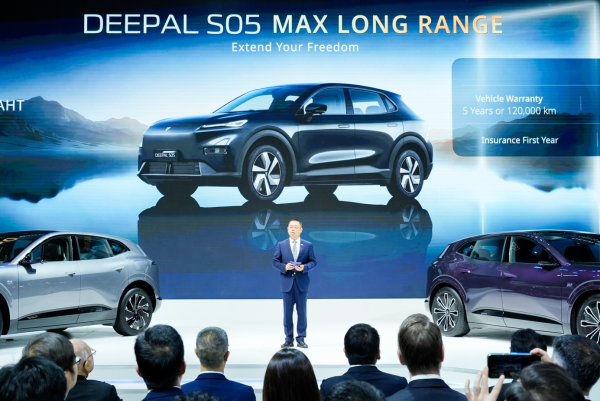
Changan Automobile (www.GlobalChangan.com) unveiled its latest lineup of new energy vehicles (NEVs) at the Thailand International Motor Expo 2025, presenting models across AVATR and CHANGAN DEEPAL. The showcase highlighted its leading technology and deep-rooted heritage in the automotive industry. Taking place from 29th November to 10th December at IMPACT Challenger Hall, Muang Thong Thani, CHANGAN's presence marks a bold step in delivering intelligent mobility to Thai customers.
AVATR, the brand that brings the concept of "Emotive Luxury," headlined the event with the debut of the first-class elegant luxury SUV -- AVATR 07. Lead by AVATR's European design team, the model has earned top international honors, including the IDA International Design Gold Award and the 2025 German iF Design Award. The cabin combines premium materials, multi-sensory enjoyment and exceptional quietness to create a deeply resonant and luxurious environment. The 3.9s 0-100km/h acceleration time and advanced CDC adaptive air suspension, powered by industry-leading ADAS, deliver a seamless, reliable and confident driving. Beautiful in design, luxurious in comfort, and intelligent in every sense, AVATR 07 bring Thai customers to a new journey of "Smart elegance, effortless luxury" .
CHANGAN DEEPAL, a key part of Changan's Thailand portfolio, continued its strong market momentum. The DEEPAL S05, first made-in-Thailand model, launched in March 2025, ranked No. 1 in EV SUV registrations for two consecutive months. Responding to growing consumer enthusiasm, Changan introduced the S05 Max Long Range, offering an all-black exterior and interior, a 68.82 kWh battery with 560 km NEDC range, and a 200 kW motor capable of 0–100 km/h in just 6.48 seconds.
As Thailand rapidly transitions toward electrification, it has become a strategic hub for Changan. Under its “In Thailand, For Thailand” strategy, Changan is advancing localization across local manufacturing, marketing, sales, and service.
In May 2025, Changan inaugurated its first overseas NEV plant in Rayong, Thailand—employing over 1,000 Thai workers, and achieving approximately 60 percent local contents. In August, Changan hosted its first Service Skills Competition in Bangkok reinforce its global after-sales standards.
Looking ahead, Changan plans to launch seven models in Thailand over the next three years. Over the next five years, Changan will introduce more than 50 NEVs globally, driving the momentum of AVATR and CHANGAN DEEPAL toward leadership in intelligent and new energy mobility.
Distributed by APO Group on behalf of Changan.Contact:
Xu Ruiyue
xury1@changan.com.cn