
Explore more Articles in
Industrial
Wider African Energy Summit Highlights Role of Service Companies in Boosting Local Content

Download logo
Global service companies were highlighted as a potential vehicle for local content development in Africa during the recent Wider African Energy Summit in Aberdeen, hosted in partnership with the African Energy Chamber (https://EnergyChamber.org).
The value of local content in driving economic growth was a key focus – emphasizing that as the continent's oil and gas value chain evolves, opportunities for service companies to strengthen local content become increasingly apparent. This was showcased in a presentation delivered by Ileana Ferber, CEO and Founder of Colibri Business Development LLC.
“Service companies can become a key enabler of local content in Africa. In addition to upstream opportunities in Africa, we have a lot of prospects in midstream infrastructure. As the sector grows, there are a lot of opportunities for service companies. Service companies are the bridge between operators and suppliers,” she said.
While Africa's oil and gas sector has been largely focused on upstream activities, a recent shift is being seen across the continent, with nations prioritizing mid- and downstream infrastructure under efforts to strengthen trade, fuel access and domestic market development. This has not only created business prospects for service companies but opened new doors for local content development – from job creation to supplier contracts to workforce training and technology transfer.
“There are different elements associated with local content. We want to train people – in both soft and hard skills -; we want to enhance supplier development, to ensure they have the capabilities to meet industry standards; and we want technology transfer, strengthening tacit knowledge and know-how as well as research and development,” Ferber shared.
Many countries across the continent are implementing local content regulations with the aim of generating economic opportunities for local populations. Ferber pointed to some of the challenges with local content requirements, highlighting the need for greater coordination between government and industry in the development of these policies.
“Local content requirements can be prescriptive, with minimum engagement with the industry. They can feature unrealistic targets that exceed local capability and skills. They can also be unfeasible in certain project phases,” she said. However, she also described the opportunities, stating that “local content requirements can develop infrastructure to strengthen the economy, create incentives to develop other industrial sectors and enable programs to develop SMEs as well as unrepresented groups.”
Distributed by APO Group on behalf of African Energy Chamber.Wider African Energy Summit (WAES): Africa’s Energy Transition is About Confidence, Not Charity
Download logo
With African energy demand projected to rise fourfold by 2040, Africa's energy transition must take a differentiated approach. Speakers during the Wider African Energy Summit (WAES) underscored the need to move beyond relying on financial aid to instilling investor confidence across the continent, highlighting the role bankable projects play in advancing an inclusive energy transition.
“It's all about building confidence and providing bankable projects. Everyone knows that Africa has the resources. Investors are looking for clear policies and investor-friendliness. The key is in a shift in mindset away from aid to investments, capabilities and opportunities. Africa does not need charity: it needs confidence,” stated Johann Jansen Rensburg, Director: Sub Saharan Africa at global energy services company NOV.
Africa's energy demand is expected to be driven by rapid population growth in tandem with heightened economic and industrial activity. As such, Rensburg highlighted that the energy transition in Africa “must balance three areas: accessibility to reliable energy, economic growth and sustainability. Unlike well-developed countries, Africa's challenge is not about over-consumption but about energy poverty. It should be about adding energy, smarter systems and not switching-off resources. The future of Africa is energy addition, rather than substitution.”
Echoing these remarks, Tanmay Sarkar, Global MWS Lead, Global Maritime, highlighted that, “There is no fit-for-all solution. We need to understand local requirements. Africa needs energy addition.”
Within this context, the speakers emphasized the role technology companies play in advancing the continent's energy addition goals. Building on their experience in the oil sector, technology companies are well-positioned to integrate low carbon solutions such as natural gas and renewable technologies, thereby boosting operational efficiency while supporting energy addition.
Rensburg explained that, “This is where technology companies like NOV have a role to play. We can form a bridge between hydrocarbon production and renewable energy systems. We have a lot of experience in this area. Africa needs more sustainable energy and smarter systems.”
Beyond energy development, Sarkar highlighted the role of incorporating local players in the sector. He said: “We need to include local companies as much as possible. Training local people, integrating them in our operations is key. Not everything can be copy-and-paste. Approaches need to be modified.”
Hosted in partnership with the African Energy Chamber, the WAES convenes UK and African stakeholders in Aberdeen this week.
Distributed by APO Group on behalf of African Energy Chamber.African Development Bank welcomes major Algerian development initiatives as two forge an even stronger partnership
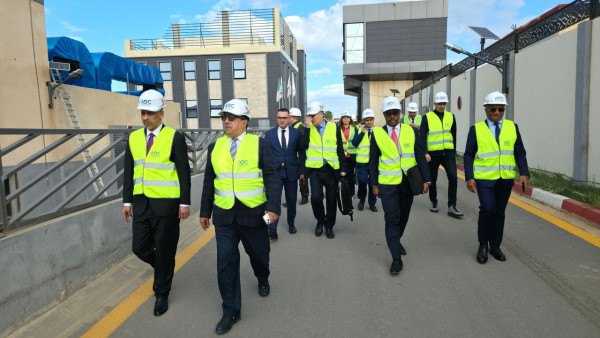
The African Development Bank (AfDB) (www.AfDB.org) has officially been earmarked as Algeria's international partner in the country's renewed efforts to engage with external financing, marking a key milestone in the ongoing partnership between Algeria and the Bank Group.
During his official visit to Algeria on 16-17 November, Dr Sidi Ould Tah, President of the African Development Bank, expressed his deep gratitude to Algerian President Abdelmadjid Tebboune for this significant decision. Ould Tah emphasised that the move represented a strategic step forward in Algeria's development and its relationship with the Bank Group.
As part of the 2025 Finance Law, Algeria has initiated its approach to external financing, focusing on large-scale projects of national importance. A central priority is the development of the Laghouat–Ghardaïa–El Meniaa railway line (495 km), with an estimated cost of $2.8 billion.
This rail line marks the first phase of a major Trans-Saharan Railway corridor, which will eventually stretch from the north of the country to Tamanrasset and beyond, connecting to Niger. This new logistics route will not only open up the southern regions of Algeria but will also provide a vital transport link for landlocked countries in the Sahel, facilitating access to essential resources and markets.
The project is part of Algeria's broader national railway expansion plan, which aims to double the country's railway network to 10,000 km by 2030, with a long-term goal of reaching 15,000 km. This expansion aligns with Algeria's broader goal of modernising its infrastructure to reduce transportation costs, integrate isolated regions, and increase the domestic processing of valuable natural resources, including critical and industrial minerals.
Minister of Hydrocarbons and Mines, Mohamed Arkab, underscored the government's commitment to adding value to the country's raw materials. “We can no longer accept exporting our raw materials in their unprocessed state,” said Arkab.
Algeria has set ambitious targets to increase the local transformation of hydrocarbons from 30 percent to 60 percent by 2035, supported by a $60 billion investment plan running from 2025 to 2029. The country also aims to expand its capacity in petrochemicals, hydrogen, and other gas derivative industries, with a focus on upgrading fertilizer, oil, tire, and mineral processing.
In the mining sector, Algeria is positioning itself as a leader in the extraction and processing of critical minerals such as iron, zinc, gold, and rare earths. Many of these resources are located in the Saharan region, often huge distances from existing infrastructure. The Trans-Saharan Railway will provide the necessary logistical support to unlock the potential of these remote deposits, enabling local processing and improving access to markets in Algeria and neighbouring countries.
Ould Tah expressed strong support for Algeria's ambitions, highlighting the alignment of the country's industrial transformation with the African Development Bank's strategic vision. “The localisation of value, industrialisation, and mineral sovereignty are key pillars of Africa's future,” Ould Tah said, referencing a recent study by BloombergNEF, which indicated that Africa has a clear competitive advantage in producing battery precursors. He called for a coordinated approach across African nations to protect and sustainably enhance the continent's critical mineral resources.
The visit also focused on Algeria's efforts to strengthen energy and water security. The Bank President visited the “Fouka 2” seawater desalination plant, which is part of Algeria's broader efforts to address water scarcity exacerbated by prolonged drought in the Mediterranean region.
The country currently operates 19 desalination plants. Five more units are set to come online by 2027, increasing desalination capacity to meet an impressive 60 percent of national water needs by 2030.
Algeria's years-long expertise in liquefied petroleum gas (LPG) distribution was also highlighted as a model for the continent. The country provides 75 percent of its households with LPG, including cities in the southern desert region, through locally designed and built infrastructure. This experience is seen as a valuable contribution to the African Union's clean energy transition efforts, with the African Development Bank supporting similar clean cooking initiatives across the continent.
Minister of the Interior, Local Authorities, and Transport, Saïd Sayoud, and Minister of Public Works and Basic Infrastructure, Abdelkader Djellaoui, highlighted Algeria's exceptional capacity to manage large infrastructure projects. The country recently completed 950 km of railway in just 24 months using entirely domestic resources and expertise. This execution capacity is critical for supporting the ongoing development of key North-South corridors and strategic mining lines.
President Ould Tah praised Algeria's ambitious vision and ability to execute high-quality projects, declaring: “The ambition of the Algerian government, the quality of its projects, and its national execution capacity make it a central partner for Africa's transformation.”
Distributed by APO Group on behalf of African Development Bank Group (AfDB).Additional Link:
https://apo-opa.co/47ZqARW
Contact:
Chawki Chahed
Communication and External Relations Department
email: media@afdb.org
About the African Development Bank Group:
The African Development Bank Group is Africa's premier development finance institution. It comprises three distinct entities: the African Development Bank (AfDB), the African Development Fund (ADF) and the Nigeria Trust Fund (NTF). On the ground in 41 African countries with an external office in Japan, the Bank contributes to the economic development and the social progress of its 54 regional member states. For more information: www.AfDB.org
Egypt: Her Excellency (H.E.) Minister of Planning, Economic Development, and International Cooperation Holds Extensive Talks with Her German Counterpart During the Joint Governmental Negotiations...
Download logo
- H.E. Dr. Rania Al-Mashat: The success of the Egyptian–German negotiations reflects the strength of economic relations between both countries.
- The Egypt–EU Strategic Partnership provides a broad framework for deeper cooperation with European nations.
- Egypt is discussing with Germany the expansion of the Debt Swap Program for Development and Climate Action.
- Germany is a key partner in supporting Egypt's green transition in the energy sector.
- Development cooperation has opened major avenues for increased foreign investment in renewable energy.
- Egyptian–German relations offer promising opportunities for joint cooperation across all sectors.
- Egypt looks forward to more German investments and stronger commercial partnerships.
- Germany is a principal partner for Egypt within the broader strategic relations with the European Union.
- Greater coordination is expected in the coming period to implement signed agreements and widen the scope of cooperation.
H.E. Dr. Rania Al-Mashat, Minister of Planning, Economic Development, and International Cooperation, held a bilateral meeting with H.E. Ms. Reem Alabali-Radovan, Germany's Federal Minister for Economic Cooperation and Development, on the sidelines of the Egyptian–German Governmental Negotiations held in Berlin. The meeting included extensive discussions on all aspects of bilateral partnership in development cooperation, as well as economic, trade, and investment relations.
At the outset of the meeting, H.E. Dr. Al-Mashat emphasized the depth and longstanding nature of the partnership between Egypt and Germany, noting that the Egyptian–German Governmental Negotiations are not only an important milestone in a decades-long relationship, but also a strategic dialogue shaping the next phase of development cooperation. She expressed Egypt's appreciation for Minister Alabali-Radovan's visit to Cairo in July 2025—her first bilateral visit following the formation of the new German government—reflecting Egypt's prominent position on Germany's development agenda.
The talks reviewed the latest developments in bilateral cooperation in areas including the green transition, renewable energy, industrial localization, education, and water, while exploring new opportunities within financial cooperation agreements and the Egyptian–German Debt Swap Program. The two sides also discussed progress in ongoing programs and joint projects in priority sectors aligned with Egypt's national development plans.
H.E. Dr. Al-Mashat commended the Debt Swap Program for Development between Egypt and Germany, which continues to witness the signing of new tranches, highlighting its pioneering role in promoting innovative financing mechanisms in Egypt and advancing the transition to renewable energy and a green economy. She noted that further discussions will take place with the German side to expand the program in the coming period.
The Minister explained that debt swaps have evolved into an increasingly important innovative financing tool globally due to their role in enhancing financial sustainability, stimulating investment, and redirecting part of external debt toward development projects with direct impact on key sectors—particularly the green transition, infrastructure, and efforts to ease fiscal pressures on the state budget.
She added that development cooperation with Germany has contributed significantly to attracting foreign direct investment, especially in the renewable energy sector. Given the promising opportunities across various fields, Egypt is looking forward to increased German investment and greater trade exchange. She affirmed that the coming period will witness intensified coordination to activate signed agreements and expand cooperation frameworks.
H.E. Dr. Al-Mashat emphasized that Egypt is working to broaden international partnerships beyond traditional development cooperation to include wider frameworks for investment, joint economic efforts, and shared development goals.
The Minister also reviewed the positive developments in Egypt's economic performance, noting that GDP growth reached approximately 5% in the fourth quarter of fiscal year 2024/2025—up from 2.4% in the same quarter of the previous year—marking the highest quarterly growth rate in three years. This improvement was driven by structural reforms and the shift to medium-term planning under the Unified Public Finance Law. She added that fiscal reforms under the IMF program helped reduce inflation, improve external financing inflows, and modernize the tax system and targeted social protection mechanisms.
During the meeting, she highlighted Egypt's Narrative for Economic Development: Reforms for Growth, Jobs & Resilience, which offers a comprehensive framework linking Egypt's Vision 2030 with economic and sectoral policies. The narrative provides greater clarity and transparency for development partners, enabling Germany to contribute more effectively to improving the investment climate, creating jobs, and achieving inclusive growth.
H.E. Dr. Al-Mashat also referenced the Egypt–EU Summit, co-chaired by H.E. President Abdel Fattah El-Sisi and the President of the European Commission, as an affirmation of the depth of Egypt–EU relations and the importance of the strategic partnership as a broad platform for enhanced cooperation with individual European states.
The two sides also discussed the current portfolio of Egyptian–German development cooperation, which exceeds €1.8 billion, in addition to progress in the NWFE Program and ongoing collaboration in green hydrogen, energy efficiency, and water.
Distributed by APO Group on behalf of Ministry of Planning, Economic Development, and International Cooperation - Egypt.