
Friday, January 16, 2026
Tag:

Energy Storage

Please provide the article text for me to create a headline.

A recent report highlights significant developments in the renewable energy sector, showcasing advancements in technology and investment trends. These changes are expected to have a profound impact on the global energy landscape. The renewable energy industry has been gaining momentum...

“Breaking News: Key Events and Updates You Can’t Miss – December 20, 2025”

Discover how the E-Education Group at the University of Pretoria earned the prestigious Anthology Catalyst Award for Training & Professional Development, showcasing their remarkable contributions to the field. Read more about this achievement from Africazine.

African Development Bank Approves $10 Million to catalyse Namibia’s Large Green Hydrogen Project

African Development Bank Group (AfDB)
Download logo

The African Development Bank's Board of Directors (www.AfDB.org) has approved a $10 million loan to Hyphen Hydrogen Energy, a Namibian green hydrogen development company,  to support a green ammonia project valued at more than $10 billion and with the potential to position Namibia as a pioneer in the global green hydrogen economy.

The loan, sourced from the Sustainable Energy Fund for Africa (SEFA), will support front-end engineering design studies for solar and wind generation, battery energy storage systems, and electrolyser capacity and desalination infrastructure, thereby de-risking the project and attracting the financing required for its realisation.

SEFA is a multi-donor Special Fund that provides catalytic finance to unlock private sector investments in renewable energy and energy efficiency. SEFA offers technical assistance and concessional finance instruments to remove market barriers, build a more robust pipeline of  projects, and improve the risk-return profile of individual investments.

The project is poised to leverage the country's world-class solar and wind energy resources, The first phase includes 3.75 GW of renewable energy generation, battery storage, 1.5 GW of electrolyser capacity, and supporting infrastructure such as desalination facilities, pipelines, transmission lines, and enhanced port facilities—all developed to the highest environmental and social standards.

Once completed, the project is projected to produce 2 million tons of green ammonia annually for export to key markets, while contributing to local economic development under a comprehensive socio economic development plan embedded in the project's 40-year concession agreement.

It will additionally avert annual emissions of  5 million tons of Co2—the equivalent of removing over one million cars from the road—while deploying 7.5 gigawatts of renewable energy generation capacity, more than 10 times Namibia's current installed capacity. Additionally, the project will supply 3 million liters of clean water through desalination daily to the water-scarce region of Lüderitz in Southern Namibia.

Moono Mupotola, African Development Bank Country Manager for Namibia and Deputy Director General for Southern Africa, said: "This is about far more than energy infrastructure," said. "This is about demonstrating Africa's capacity to lead the global energy transition, create quality jobs for our youth, and build prosperity while protecting our planet. Namibia is showing the world that Africa is not just participating in the green economy —we are defining it."

“The African Development Bank's approval of this pre-investment facility represents a strong vote of confidence in Hyphen's project and in the broad ambitions of Namibia to develop one of the world's most transformative green hydrogen  projects,” said Marco Raffinetti, CEO, Hyphen Hydrogen Energy. “We are deeply appreciative of the African Development Bank for partnering with us in the development of this transformative project. This facility, which will be utilised to partially fund the technical design phase of the project on our journey to the final investment decision.” 

"SEFA's intervention is catalytic," said Daniel Schroth, Director for Renewable Energy and Energy Efficiency at the African Development Bank. "By supporting these essential pre-investment activities, we are unlocking billions in project financing. This is a strategic, high-impact development project."

The project is expected to generate 15,000 construction jobs and 3,000 permanent positions, 90% of these  reserved for Namibian nationals and 20% specifically targeting youth in a country where youth unemployment exceeds 38%.

The Hyphen project is viewed as a flagship of the government's Southern Corridor Development Initiative. It is expected to have a demonstration effect across Africa, particularly in countries that have abundant renewable energy resources.

Distributed by APO Group on behalf of African Development Bank Group (AfDB).

Media Contact:
Emeka Anuforo
Communication and External Relations Department
email: media@afdb.org

About the African Development Bank Group:
The African Development Bank Group (AfDB) is Africa's premier development finance institution. It comprises three distinct entities: the African Development Bank (AfDB), the African Development Fund (ADF) and the Nigeria Trust Fund (NTF). On the ground in 34 African countries with an external office in Japan, the AfDB contributes to the economic development and the social progress of its fifty-four regional member states. For more information: www.AfDB.org

Cabo Verde Inaugurates Major Expansion of Cabeolica Wind Farm and Battery Storage, Enabled by Africa Finance Corporation’s (AFC) Catalytic Financing
Africa Finance Corporation (AFC)

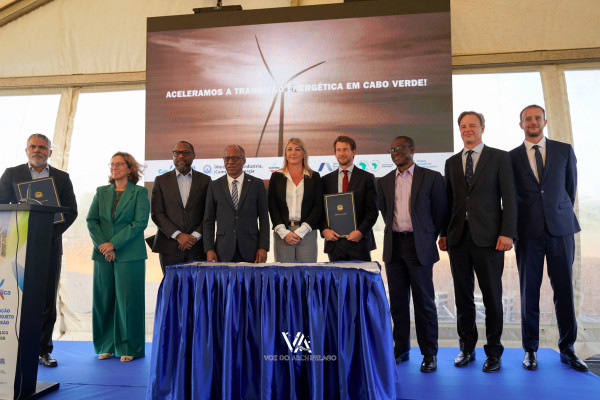
Africa Finance Corporation (AFC) (www.AfricaFC.org), the continent's leading infrastructure solutions provider, today announced the inauguration of the expanded Cabeolica Wind Farm and Battery Energy Storage System (BESS) in Cabo Verde- an achievement made possible through AFC's catalytic €55million bridge financing provided in 2024. The ceremony, officiated by Prime Minister Ulisses Correia e Silva, marks a major step forward in the country's renewable energy ambitions.

AFC's early financing enabled rapid implementation, bringing the expansion and BESS online sooner to enhance grid stability, support renewable integration, and advance Cabo Verde's emissions-reduction and energy-security objectives. The expansion delivers 13.5 MW of new wind capacity on Santiago alongside 26 MWh of battery storage across four islands, significantly enhancing the stability and resilience of Cabo Verde's national grid. The BESS is already contributing to improved frequency regulation and higher renewable penetration, reducing curtailment and strengthening energy security across the archipelago.

Since 2010, AFC has been a majority investor in Cabeolica S.A, supporting its evolution into one of Cabo Verde's strongest corporate institutions and the first commercial-scale renewable PPP in sub-Saharan Africa. Over the past decade, the company's 25.5MW wind farms across four islands have generated more than 800,000 MWh of affordable electricity, contributing approximately 25% of the country's total power generation while offsetting over 560,000 tonnes of CO₂ emissions. With this new phase, Cabeolica further consolidates its role as a cornerstone of the country's clean-energy system.

The newly inaugurated BESS, expected to reach nearly 30 MW of storage capacity upon final completion in January 2026, marks a significant advancement in stabilising Cabo Verde's grid, allowing greater integration of intermittent renewables and reducing dependency on imported fossil fuels. AFC's bridge financing was pivotal in fast-tracking construction activities and ensuring alignment with the Government's clean-energy delivery timelines, while long-term financing from senior lenders, including the African Development Bank and the European Investment Bank, is being finalised.

“From the early days of the Cabeolica project to this milestone inauguration, AFC's mission has remained unwavering: to catalyse renewable energy solutions that enhance the reliability and resilience of power systems across Africa,” said Samaila Zubairu, President & CEO of Africa Finance Corporation. “Our innovative financing accelerated this expansion, and the successful integration of new wind capacity with one of the continent's most advanced grid-stabilising battery storage systems stands as a clear testament to AFC's position as Africa's leading infrastructure solutions provider,” he added.

Ayotunde Anjorin, Chairman of Cabeólica and Chief Financial Officer of AFC said: “As the first renewable energy commercial scale PPP in sub-Saharan Africa, Cabeólica is again proud to partner with AFC to lead this transformative expansion project comprising additional wind capacity and battery energy storage. This project underscores the Cabeólica's deep commitment to delivering reliable, clean energy infrastructure in line with national goals and priorities and continues to set a replicable model for the region.”

AFC is committed to accelerating Africa's energy transition, by deploying capital, expertise, and innovative solutions that strengthen grids, enhance energy security, and drive climate-resilient growth across the continent. Most recently, the Corporation's portfolio company, Infinity Power, Africa's largest independent renewable energy provider, reached financial close on the 200MW Ras Ghareb Wind Farm in Egypt, which will power over 300,000 homes.

Distributed by APO Group on behalf of Africa Finance Corporation (AFC).

Media Enquiries:
Yewande Thorpe
Communications
Africa Finance Corporation
Mobile: +234 1 279 9654
Email: yewande.thorpe@africafc.org

About AFC:
AFC was established in 2007 to be the catalyst for pragmatic infrastructure and industrial investments across Africa. AFC's approach combines specialist industry expertise with a focus on financial and technical advisory, project structuring, project development, and risk capital to address Africa's infrastructure development needs and drive sustainable economic growth.

Eighteen years on, AFC has developed a track record as the partner of choice in Africa for investing and delivering on instrumental, high-quality infrastructure assets that provide essential services in the core infrastructure sectors of power, natural resources, heavy industry, transport, and telecommunications. AFC has 47 member countries and has invested over US$17 billion in 36 African countries since its inception.

www.AfricaFC.org


Media files
Africa Finance Corporation (AFC)
Download logo

Africa’s Green Economy Summit 2026 to unveil Africa’s premier pipeline of investment-ready green ventures making a difference toward net zero goals
VUKA Group

Africa's Green Economy Summit (AGES 2026) is set to host an unparalleled showcase of investment-ready green economy projects from across the continent. With over 100 applications meticulously vetted by its expert investors committee, nearly 30 pioneering Pan-African initiatives have been selected to present their transformative solutions. This curated pipeline, spanning crucial sectors from clean energy to climate-smart agriculture, underscores Africa's pivotal role in the global green transition and AGES 2026's commitment to connecting global capital with impactful African ventures.

Elodie Delagneau, Investment Project Lead at VUKA Group, emphasised the significance of this year's selection: "The overwhelming response and the exceptional quality of applications reaffirm Africa's immense potential in the green economy. AGES 2026 is not merely a conference; it is the definitive platform where serious capital meets serious impact. Our rigorous vetting process ensures that investors encounter thoroughly de-risked and scalable projects that are poised to deliver both significant financial returns and verifiable environmental and social benefits."

A curated pipeline of innovation

The Pitch Programme is the culmination of extensive market research and rigorous evaluation, designed to identify and elevate projects that are not only innovative but also strategically aligned with Africa's sustainable development goals. These initiatives represent the cutting edge of green and blue economy solutions, ready to drive tangible progress across the continent.

Our committee, comprised of leading investors and industry experts, has meticulously selected nearly 30 game-changing ventures. This sneak peek offers a glimpse into the future of Africa's green economy, featuring solutions that are ripe for investment and set to transform industries and communities alike.

Approaching Africa's critical green economy verticals

AGES 2026 will present a diverse portfolio of projects categorised into eight high-growth sectors, each offering compelling investment opportunities:

  • Energy: Powering Africa's Green Transformation

The sector is fundamental for Africa's development, with over 600 million lacking electricity. Projects range from utility-scale solar and wind to mini-grids, energy storage, and green hydrogen initiatives. These ventures offer rapid emissions reductions, enhance energy security, and unlock new economic opportunities. Investors will find projects leveraging Africa's abundant renewable resources, supported by favourable policies and innovative financing.

  • Transport & E-Mobility: Accelerating Sustainable Connectivity


Addressing urbanisation and emissions, this sector showcases projects focused on electrifying Africa's transport systems. Initiatives span electric buses, two/three-wheelers, and innovative logistics solutions. These projects aim to reduce fossil fuel consumption, improve urban air quality, and enhance economic productivity through modern, efficient, and clean mobility infrastructure.

  • Waste & Circular Economy: Transforming Waste into Value
     

This critical sector tackles public health, urban resilience, and climate mitigation by converting waste into valuable resources. Projects include advanced recycling facilities, waste-to-energy solutions, organic waste composting, and innovative approaches to utilising invasive species. These ventures create jobs, reduce landfill reliance, and generate new revenue streams from what was once considered waste.

  • Water & Resilience: Safeguarding Africa's Most Precious Resource
     

Water security is paramount for health, agriculture, and industrial activity, especially as climate change intensifies drought and flood risks. Projects in this sector focus on building resilient water infrastructure, developing decentralised water services, and implementing climate-resilient solutions such as groundwater monitoring and integrated catchment rehabilitation.

  • Sustainable Agriculture & Food Systems: Cultivating Africa's Future

With agriculture central to livelihoods, this sector presents projects focused on sustainable practices that increase productivity, climate resilience, and food security. Initiatives range from vertical farming and biochar-based fertilisers to agri-tech platforms and cold chain solutions. These projects aim to reduce emissions, enhance soil health, boost yields, and empower smallholder farmers across the continent.

  • Biodiversity & Nature Finance: Safeguarding Africa's Natural Capital
     

Africa's vast biodiversity underpins essential ecosystem services and climate regulation. Projects in this sector mobilise capital to protect, restore, and sustainably manage critical ecosystems like forests, wetlands, and coastal zones. Initiatives such as REDD+ programs and blue carbon projects offer high-impact conservation opportunities with significant co-benefits for local communities and tourism.

  • Digitalisation & Climate Tech: Accelerating Green Innovation

Digital tools are proving to be powerful accelerators for climate solutions, optimising energy use, enhancing agricultural productivity, and improving resource management. This sector features projects leveraging IoT, AI, and blockchain for supply chain traceability, carbon accounting, and new green business models. These technologies reduce transaction costs and dramatically increase the scalability of green projects.

  • Carbon Markets & Credits: Monetising Climate Action

Carbon markets are emerging as a powerful mechanism to mobilise private capital for climate mitigation and nature-based solutions. Projects here focus on generating high-integrity carbon credits through renewables, avoided deforestation, mangrove restoration, methane capture, and sustainable agriculture. These initiatives channel crucial finance to projects that deliver verifiable climate benefits alongside significant social outcomes.

Experience the power of connection

AGES 2026 stands as Africa's most influential gathering for green investment, innovation, and policy. The summit is meticulously designed to foster direct connections between global capital and the most promising green economy projects.

"The Pitch Programme offers an unparalleled opportunity for investors to engage directly with the innovators shaping Africa's green future," Delagneau added. "Beyond the pitches, attendees will benefit from purpose-built matchmaking sessions, networking opportunities with leading DFIs, corporate partners, and policymakers, and deep insights into the continent's evolving green economy landscape. Our goal is to significantly accelerate deal flow and ensure that every investor finds projects that align with their financial and impact mandates."

The summit also includes a robust mentorship program for pitching projects, ensuring they are investor-ready and equipped with compelling narratives. This holistic approach reinforces AGES 2026's commitment to not just showcasing projects but actively facilitating their success and growth.

AGES 2026 is poised to be a pivotal event in driving Africa's just transition, underscoring the continent's leadership in developing scalable, sustainable, and economically viable solutions to global challenges.

More information or registration: www.GreenEconomySummit.com

To download the event brochure, click here (https://apo-opa.co/4pRd1LN).

Distributed by APO Group on behalf of VUKA Group.

Additional Link:
Download the Deal Book to explore all of the confirmed projects pitching at AGES 2026: https://apo-opa.co/48iElMV

Media enquiries and interview requests:
Nomsa Mdhluli
Nomsa@tishalacommunications.com
+27 71 628 6231

Elize Engle
Pr1@tishalacommunications.com
+27 82 762 4946

Tshepang Mokoena
Pr@tishalacommunications.com
+27 76 682 9608

Registration enquiries:
Mzamo Jika
mzamo.jika@wearevuka.com

Letlatsa Sekhele
letlatsa.sekhele@wearevuka.com

Prudence Chishimba
prudence.chishimba@wearevuka.com


Media files
VUKA Group
Download logo

World Future Energy Summit 2026 to spotlight potential of Artificial Intelligence (AI) in Middle East’s clean energy sector

World Future Energy Summit

  • AI will be key enabler for countries to achieve national clean energy goals
  • AI technologies help companies reduce energy consumption by as much as 60%
  • Artificial Intelligence Conference to explore ways to tackle AI's energy footprint

As artificial intelligence emerges as a transformative force in the clean energy sector, the World Future Energy Summit 2026 (www.WorldFutureEnergySummit.com) will spotlight its vast potential to reshape energy production, transmission, and efficient, data-driven distribution. Running from January 13-15 at Abu Dhabi National Exhibition Centre (ADNEC), the three-day show is an integral part of Abu Dhabi Sustainability Week 2026.

With the theme of AI running across all seven conference tracks at this year's show, the 2026 edition will build on that momentum, raising the bar with the launch of the FUSE AI Zone, a dedicated platform where more than 40 companies will showcase cutting-edge AI solutions to drive clean energy, smart infrastructure, and climate resilience. The event will also incorporate the inaugural Artificial Intelligence Conference, a forum exploring how AI can be responsibly harnessed to accelerate progress across the energy, infrastructure, and smart cities sectors.

Gathering thought leaders, innovators, and policy influencers, the Summit will laser in on AI's predictive power and its ability to optimise the management of clean energy flows, providing a vital technical boost to help low-carbon systems scale effectively.

Using AI to Accelerate Technical Breakthroughs

In the Middle East and North Africa (MENA), AI adoption is accelerating across multiple areas, from grid and demand-response management to sector coupling and system maintenance. Advances in forecasting and energy storage are also enhancing performance, enabling companies to deliver renewable energy with greater efficiency and reliability. Yet important questions remain about how best to unlock AI's full potential to power the sustainable energy systems of the future.

For example, can AI make up for shortcomings in energy policy that hold back the transition to carbon-free energy? Can it accelerate innovation to enable researchers and entrepreneurs to more rapidly test and prove technologies that make a direct impact on decarbonisation? These pressing issues, plus the potential of AI to advance the exploration of mineralisation for carbon capture, will be addressed by leading experts at January's World Future Energy Summit, now globally recognised as the world's premier business event focused on future energy and sustainability.

The UAE's clean energy goals, driven by its Net Zero by 2050 Strategic Initiative, involve increasing clean energy to 50 per cent of the total energy mix by 2050, reducing carbon emissions by 70 per cent, and tripling renewable energy capacity by 2030. AI will be a key enabler for achieving these clean energy targets across the region.

The World Future Energy Summit and Abu Dhabi Sustainability Week's Advisory Committee's 2025 AI and Technology Insights Report supports this, stating that AI can significantly enhance the efficiency and reliability of clean energy and infrastructure networks both regionally and globally.

According to the report, smart grid algorithms can accurately predict and then balance electricity supply and demand in real time, integrate renewables, and reduce the need for constructing new power plants. Investment in digital infrastructure and skills is key, however, so that utilities can harness data for grid optimisation and predictive maintenance.

Driving Energy Efficiency in Homes and Businesses

The 2026 edition will also highlight the growing role of AI in enhancing energy efficiency within buildings. According to the World Economic Forum, AI technologies are already helping companies reduce energy consumption by up to 60 per cent in some cases.

While the industry has only just begun to tap into AI's full potential in this field, the opportunities for progress are vast. Through panel discussions and keynote sessions, a powerhouse of industry experts will explore the key challenges and opportunities surrounding energy efficiency in homes and businesses across the MENA region and beyond.

Speakers will discuss how new AI- and automation-powered design tools can help create spaces that are energy-, water- and people-efficient, all while staying within budget. They will also examine how smart software can rapidly test design options to identify solutions that cut costs and reduce environmental impact. Additional sessions will address how innovation, collaboration, and resilient supply chains can help build sustainable urban futures.

Shyam Parmar, the Summit's Event Director, added: “By bringing together some of the brightest minds from across the global energy landscape, the World Future Energy Summit plays a pivotal role in unlocking the vast potential of artificial intelligence, not only to drive greater energy efficiency in homes and businesses, but to accelerate progress across the entire clean energy and sustainability ecosystem.

“The new FUSE AI Zone and Artificial Intelligence Conference provide an unparalleled platform for knowledge exchange, collaboration, and lively debate on how AI can be deployed responsibly and effectively. These conversations are vital to advancing the AI agenda and ensuring companies can fully harness their capabilities to meet clean energy ambitions. By facilitating this dialogue, we're helping to translate innovation into action, and turning bold ideas into tangible outcomes that move the world closer to a sustainable energy future.”

Understanding AI's Energy Consumption

AI's transformative potential is undeniable, yet credible estimates project AI-related electricity consumption could grow by as much as 50 per cent each year from 2023 to 2030. The electricity demand of data centres is also projected to grow, from one per cent of global energy demand in 2022 to more than three per cent by 2030.

In January 2025, Masdar and Emirates Water and Electricity Company announced the launch of the world's first large-scale round-the-clock giga-scale project, combining solar power and battery storage in Abu Dhabi. Delivering up to one gigawatt of baseload power every day generated from renewable energy, it will be the largest combined solar and battery energy storage system in the world.

According to the 2025 AI and Technology Insights Report, such projects could redefine how critical AI systems are powered, eliminating the need for fossil fuel-backup. By connecting to clean energy sources, AI data centres could operate with near-zero carbon emissions, marking a major step towards a more sustainable digital future.

The Summit will explore ways to tackle AI's energy footprint with a dedicated panel session on actionable strategies to realign AI growth with climate goals, balance energy consumption, and drive sustainable innovation without sacrificing usability.

“AI's role in climate and environmental systems is expanding rapidly and understanding how to guide that growth is becoming just as important as advancing the technology itself,” said Mehdi Ajana, Head of Strategy at Nabat. “At the World Future Energy Summit, we'll look at practical, data-driven approaches, from improving habitat classification and health assessment model accuracy, to monitoring carbon and biodiversity metrics  that help align AI innovation with measurable climate outcomes”.

“It's a great opportunity for like-minded organisations to come together, listen, learn, and explore what's possible and to understand how AI can be deployed responsibly to accelerate real progress towards global sustainability goals.”

Paving the Way to a Sustainable Future

The 2026 edition of the World Future Energy Summit will also explore the role of AI in healthcare, food security, and weather modelling, with a keynote presentation on Earth Two Climate, G42, and NVIDIA's new AI-powered weather forecasting solution that accurately gauges weather conditions down to a single square-metre. This is invaluable to farmers and smart agriculture planners, who can make more informed decisions on crop choices, yield expectations, maintenance procedures, and more.

From cutting energy waste to improving health outcomes and driving farming efficiencies, AI is a powerful means to accelerate sustainability solutions. According to the 2025 AI and Technology Insights Report, however, it must be guided by clear human-defined goals: “Technology deployments should focus on solving real problems rather than adopting AI for AI's sake”. That means human oversight, strategic vision, and multidisciplinary collaboration should be seen as essential in order to convert AI's promise into tangible progress, paving the way to a cleaner, greener, and more sustainable future.

The World Future Energy Summit 2026, hosted by Masdar and part of Abu Dhabi Sustainability Week, will take place from January 13–15 at ADNEC Centre Abu Dhabi.

Distributed by APO Group on behalf of World Future Energy Summit.

For media inquiries, please contact:
press@masdar.ae 

Connect:
Facebook: https://apo-opa.co/4anqfLs
Twiiter/X: https://apo-opa.co/4oiQczi

World Future Energy Summit:
As the largest event during ADSW, the World Future Energy Summit continues to be a driving force for innovation, collaboration, and thought leadership in renewable energy and sustainability. Now entering its 18th edition, the Summit has established itself as a vital platform bridging policy with real-world action and business growth.

The 2026 edition, taking place from 13–15 January, will feature more than 800 global brands, the dynamic Greenhouse start-up zone, the Fuse AI cleantech pavilion, and the debut of the Greenpeace Cinema. Over three days, attendees will have the opportunity to join conferences led by 300+ industry experts, explore nine exhibition halls showcasing breakthrough products and solutions, and connect with more than 50,000 participants from across the globe.

About Abu Dhabi Sustainability Week:
Abu Dhabi Sustainability Week (ADSW) is a global platform supported by the UAE and its clean energy leader, Masdar, to address the world's most pressing sustainability challenges through crucial conversations accelerating responsible development and fostering inclusive economic, social and environmental progress.

For more than 15 years, ADSW has convened decision-makers from governments, the private sector and civil society to advance the global sustainability agenda through dialogue, cross-sector collaboration and impactful solutions. Throughout the year, ADSW conversations and initiatives facilitate knowledge sharing and collective action that will ensure a sustainable world for future generations.

About Masdar:
Established in 2006, Masdar (Abu Dhabi Future Energy Company) is a global clean energy leader, transforming how the world produces and consumes energy through bold innovation and commercial excellence.

Masdar is a clean energy investor, developer and operator, advancing renewable energy projects across key markets and technologies, with a global project portfolio capacity to date of over 51 gigawatts (GW).

Jointly owned by TAQA, ADNOC and Mubadala, Masdar is driving the scale-up of renewables worldwide, targeting a portfolio capacity of 100GW by 2030.

For more information, please visit: https://Masdar.ae/


Media files
World Future Energy Summit 2026 to spotlight potential of Artificial Intelligence (AI) in Middle East’s clean energy sector
Download logo

30th Conference of the Parties (COP30): African Development Bank Group’s (AfDB) Sustainable Energy Fund for Africa (SEFA) mobilises nearly EUR50 million in new commitments...

African Development Bank Group (AfDB)

The African Development Bank Group's Sustainable Energy Fund for Africa (SEFA) (www.AfDB.org), a multi-donor special fund managed by the Bank Group, has secured new investment commitments totalling nearly EUR 50 million, to strengthen the rollout of Mission 300 (https://apo-opa.co/48qxL74) and accelerate climate action across Africa's power sector.

The commitments, made by the governments of Germany and Italy, were announced at a COP30 side event held at the Africa Pavilion on 14 November. Germany committed EUR 14 million to support SEFA's universal energy access goal, and EUR 30 million for the new SEFA green hydrogen programme, reflecting the strategic importance of this emerging sector for Africa's decarbonisation and industrial development. Italy also announced a new contribution of five million euros to the fund.

Dr Katharina Stasch, Director-General for Climate Policy of the Federal Ministry for Economic Cooperation and Development (BMZ), said: “We see the Africa-owned and Africa-led African Development Bank as an excellent partner in unlocking the potential of a green hydrogen economy for African countries.

“By working together, we can create a ‘win–win': partner countries benefit from new energy resources, industrial development, technology transfer, and new jobs while Europe diversifies its future energy imports. Through our partnership with the African Development Bank and SEFA, we hope to create positive tipping points for the market ramp-up of green hydrogen.”

Roberto Amerise, Director for General Affairs, Financial Programmes, and International Cooperation at the Italian Ministry of the Environment and Energy Security (MASE), highlighted the strong commitment of the Italian Government towards Africa, considered a priority for national energy and climate policies. He stressed the importance of encouraging private investment to accelerate the continent's energy transition and sustainable development. Amerise also announced a new contribution of 5 million euros to the SEFA Special Fund for 2025.

"These resources," he said, "reaffirm our collective commitment to advancing SEFA's strategic objectives and accelerating the implementation of renewable energy and energy access projects in Africa that drive sustainable development."

Commenting on the new commitments, Dr Kevin Kariuki, Vice-President, Power, Energy, Climate Change and Green Growth, AfDB, said: "Today's deliberations and commitments at COP30 powerfully reaffirm the urgent need for a unified, bolder approach to Africa's energy transition, resilience and security.  The new commitments from Germany and Italy will constitute wind in the sails for Mission 300 goals and solidify SEFA's centrality in Africa's universal energy access journey".

The event, moderated by Dr Daniel Schroth, the Bank's Director for Renewable Energy and Energy Efficiency, also acknowledged the ongoing support from partners like Norway, with Hans Olav Ibrekk, Special Envoy for Climate, reiterating the country's commitment to mobilising private sector investments for the success of Mission 300.

A central theme of the event was the vital role of blended finance in de-risking investments and attracting commercial capital to achieve M300 goals. Attendees learned about projects such as the landmark Obelisk facility in Egypt – a 1 GW Solar PV and 200 MWh Battery Energy Storage System (BESS) co-financed by AfDB and SEFA – with insights shared by Terje Pilskog, CEO of Scatec.

The discussions also featured the impactful work of BURN, a successful African clean cooking company and SEFA grant recipient. Caroline Amollo, BURN's Director of Corporate Affairs, demonstrated through their proven market operations how innovative models are effectively driving affordability and widespread adoption.

Speakers highlighted the importance of predictable and attractive regulatory frameworks to attract private capital for a just and equitable energy transition, focusing on bankable, scalable, and human-centred projects, especially in clean cooking. They also stressed the need to leverage declining renewable energy costs through efficient deployment of development funding. The event reinforced collective commitment to integrating energy transition cooperation within broader climate diplomacy, demonstrating that with concerted effort, the goals of M300 and the broader climate ambitions articulated at COP30 are attainable.

Distributed by APO Group on behalf of African Development Bank Group (AfDB).

Media Contact:
Communication and External Relations
media@afdb.org 


Media files
African Development Bank Group (AfDB)
Download logo

Scatec Secures Game-Changing Solar and Battery Lease Agreements in Liberia and Sierra Leone, Unleashing 64 MW of Renewable Energy Potential!

Scatec has announced new lease agreements for solar and battery energy systems in Liberia and Sierra Leone, totaling 64 MW of solar power and supporting renewable energy growth in the region. Source: Africazine.