
Explore more Articles in
Climate Change
At the 30th United Nations Climate Change Conference (COP30), African Development Bank (AfDB), development partners call for major new financing to accelerate Africa’s Great...
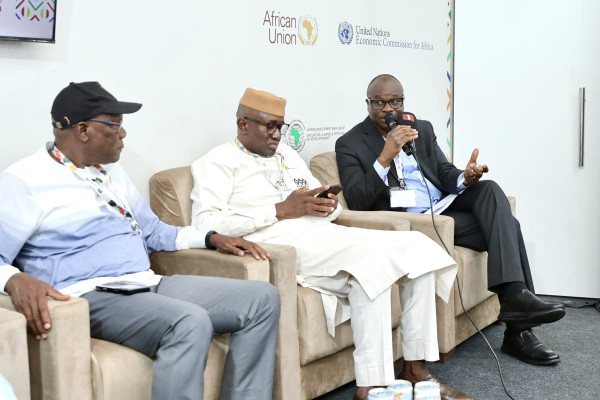

At the 30th United Nations Climate Change Conference (COP30) in Belém, Brazil, development partners including the African Development Bank (www.AfDB.org), urged for a scale up in financing to deliver the Great Green Wall's 2030 targets.
Currently funded by contributions from Member States and development partners, this African Union initiative aims to restore 100 million hectares of degraded land, sequester 250 million tonnes of carbon and create 10 million jobs in 11 countries in the Sahel region, stretching from Senegal in the west to Djibouti in the east of the continent.
“Despite the support of many countries and institutions, including multilateral development banks such as the African Development Bank and the World Bank, we are still far from meeting the financing needs of the Great Green Wall,” said Ibrahim Sow, special advisor to the Senegalese president on environmental issues.
Sow moderated a session during the climate conference titled ‘Scaling up finance for the Great Green Wall: from climate ambition to integrated action for Land, Nature and People'. The session was organised by the Pan-African Agency for the Great Green Wall, the African Development Bank Group and the World Food Programme, as a forum to discuss strategies for mobilising large-scale financing, including private and innovative resources. The Pan-African Agency for the Great Green Wall, based in Nouakchott, is the implementing body for the Great Green Wall Initiative.
In January 2021, €19 billion in contributions were announced for the Great Green Wall during a round table organised in Paris alongside the One Planet Summit on biodiversity. The African Development Bank, a leading partner in the initiative, indicated that it would contribute approximately $6.5 billion through its ongoing programmes.
“Fifteen years after its launch, the Great Green Wall is moving from vision to implementation. Millions of hectares have been restored, and thousands of green jobs have been created, but significant gaps in financing and capacity remain. To achieve its goals by 2030, enhanced collaboration between African governments, development partners and the private sector is essential,” argued Mr Garba, a former Minister of the Environment for Niger.
Sékou Koné, technical advisor to the Malian Ministry of the Environment, representing its minister, believed that political will, the development of a legal framework to protect investments in the Great Green Wall area and an attractive economic environment would encourage other partners and the private sector to invest. “Our countries must position themselves to access new funds. One example is the Tropical Forest Forever Facility (TFFF), which has just been launched by the Brazilian presidency of COP 30, to which 74 countries have said they will sign up,” he said, echoing support for South-South cooperation.
Participants stressed the importance of strengthening institutional capacities, human resources and the very structure of the agency, to ensure it has all the resources it needs to operate effectively.
Al-Hamndou Dorsouma, the African Development Bank's manager for Climate and Green Growth, affirmed the institution's very strong' support for the Great Green Wall.
“In addition to attracting concessional public resources, the Agency should develop a pipeline of bankable projects in land restoration and climate change adaptation, with a view to mobilising new and innovative financing, including blended finance, carbon markets, green bonds and climate funds, in order to bridge the Great Green Wall's financing gap,” Doursouma said.
He cited as an example the Climate Action Window created as part of the 16th replenishment of the African Development Fund (ADF-16) in 2023, which mobilised more than $450 million, enabling it to support 41 projects worth $322 million in its first year of operation, with beneficiaries including countries in the Great Green Wall. He called for enhanced coordination and synergy of action among the partners of the initiative to avoid duplication of actions.
Participants in the session emphasised the need for close involvement of local communities and local authorities, as well as strengthening national structures to enable them to access climate finance directly.
Distributed by APO Group on behalf of African Development Bank Group (AfDB).Benin: African Development Bank to invest €102 million to boost poultry meat production

The Board of Directors of the African Development Bank Group (http://AfDB.org) meeting in Abidjan today approved a €102.12 million loan to Benin to implement the first phase of the Agriculture Transformation Programme in the country's savannah region.
The programme aims to sustainably increase national poultry meat production in line with required standards by integrating maize, soybean and poultry value chains. Success will strengthen food sovereignty and security in Benin, create jobs and promote inclusive economic development.
Through this project, the African Development Bank Group is promoting the use of appropriate agricultural technologies with private sector involvement to improve productivity in the savannah zone, drawing inspiration from transformation of the Cerrado in Brazil, which has become a ‘food basket' for that country.
Robert Masumbuko, Country Manager for the African Development Bank Group in Benin said the programme would be implemented in several phases to support gradual growth of the poultry sector, particularly broiler production, which has high input requirements.
The project, which will run between 2026 and 2030, will see the cultivation of 120,000 hectares of maize and 80,000 hectares of soya, leading to annual production of around 41,000 tonnes of poultry. Beneficiaries will be provided with broiler chicken farming kits, certified seeds, fertilisers and plant protection products. Smallholder farmers will also receive portable equipment to improve sowing and crop management. The project aims to promote good agricultural practice, structured water management, resilience and adaptation to climate change, as well as pest control.
The programme will establish a multi-stakeholder platform for agricultural and environmental research on maize and soybean-based cropping systems. It will also promote climate-resilient and nutrient-rich seeds. Storage capacity will be strengthened through the construction of 1000-tonne barns (60 units), 500-tonne barns (90 units) and drying areas (150 units, each of 200 square metres).
Implementation of the Programme in Benin's savannah region will directly benefit some 50,000 people, with a further 500,000 benefiting indirectly, of which 30% of each target groups will be women.
Distributed by APO Group on behalf of African Development Bank Group (AfDB).Media contact:
Alexis Adélé
Communications and External Relations Department
media@afdb.org
About the African Development Bank Group:
The African Development Bank Group is Africa's premier development finance institution. It comprises three distinct entities: the African Development Bank (AfDB), the African Development Fund (ADF) and the Nigeria Trust Fund (NTF). Represented in 41 African countries, with an external office in Japan, the Bank contributes to the economic development and social progress of its 54 regional member states. For more information: www.AfDB.org
The the Standards for Official Statistics on Climate – Health Interactions (SOSCHI) Conference Calls for Stronger Climate–Health Indicators to Guide Policy and Protect Communities
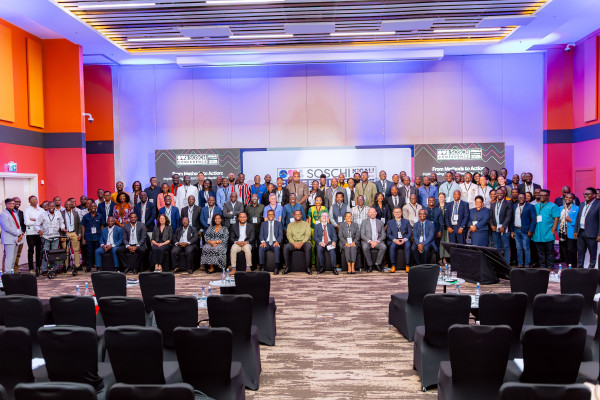
A Conference bringing together African government officials, scientific institutions, development partners and global organisations from 23 countries, issued a clear call to strengthen climate–health intelligence. It emphasised that countries will remain vulnerable to climate hazards unless they build and sustain systems that measure how climate change affects human health. The call followed three days of dialogue and technical exchange at the Standards for Official Statistics on Climate – Health Interactions (SOSCHI) Conference held in Kigali from 3 to 5 December 2025.
Climate change is already driving severe health impacts across Africa, yet most countries collect data in those fields in isolation. To effectively quantify risk of climate change impacts on health and protect vulnerable populations, comparable indicators are needed to guide preparedness, shape policy, or allocate resources for adaptation.
The joint communiqué adopted in Kigali emphasises that enhancing climate–health intelligence will strengthen existing national strategies and unlock new possibilities for targeted interventions, resilience building and the development of early warning. It highlights the “urgent need for more robust information on the health impacts of climate hazards to strengthen national policies and to guide target interventions.”
Delegates agreed that robust climate–health interactions indicators are essential to move from reactive responses to proactive, evidence-based planning. They emphasised that data alone is insufficient: decision-makers require harmonised indicators that reveal where climate hazards are affecting health, how disease patterns are shifting, and where adaptation efforts will have the greatest effect. Participants therefore committed to embedding the SOSCHI indicators into national statistical systems, with particular focus on extreme weather, water-related disease, vector-borne disease and mental health.
A major theme across the discussions was sustainability. Participants highlighted that climate–health interaction monitoring cannot depend on short-term projects, but must be rooted in long-term domestic financing, skilled personnel and systems that persist across political and funding cycles. Strengthening civil registration and vital statistics systems, improving the timeliness of health data, and enhancing environmental and meteorological monitoring were identified as critical foundations for sustainable climate–health intelligence. Collaborative data sharing and system interoperability were also deemed essential, given that climate–health indicators rely on multi-sectoral datasets that are rarely analysed together.
Technical demonstrations from Rwanda, Ghana and the UK showed how the SOSCHI indicators reveal emerging vulnerabilities and shifting disease burdens. Rwanda's results illustrated spatial changes in malaria risk linked to temperature and rainfall patterns, while Ghana's results highlighted how diarrhoeal disease, air pollution and heat-related mortality can be quantified and tracked over time. These findings underscore the value of harmonised methods for informing policy and supporting adaptation planning.
Participants left Kigali with a shared commitment to advance the scaling and institutionalisation of the SOSCHI framework. The communiqué invites national statistical offices, health ministries, research institutions and funders to join this effort, noting that together they can “deliver validated climate-health metrics that inform policy, strengthen resilience, and safeguard population health in the face of climate change.”
The Kigali meeting affirmed that Africa is not only experiencing the most immediate impacts of climate change but is also shaping the global standards required for effective climate–health action. The collective commitment expressed by participants represents a significant step towards building the climate–health intelligence necessary for a safer and more resilient future.
Distributed by APO Group on behalf of African Institute for Mathematical Sciences - Research and Innovation Centre.Media contact:
Joseph Ndiritu
Programs delivery and reporting
AIMS Research and Innovation Centre
Email: jndiritu@aimsric.org
Phone: +250 780 440 935
About the SOSCHI Partnership:
Standards for Official Statistics on Climate – Health Interactions (SOSCHI) is a collaboration between the UK's Office for National Statistics, the African Institute for Mathematical Sciences Research and Innovation Centre (AIMS-RIC) in Rwanda, and the Regional Institute for Population Studies (RIPS) at the University of Ghana, supported by global partners and funded by Wellcome Trust. The project provides a harmonised statistical framework and open-source platform enabling countries to generate actionable climate– health indicators.