
Explore more Articles in
Children
Training is crucial, but feeling safe enough to speak up is critical for cyber resilience
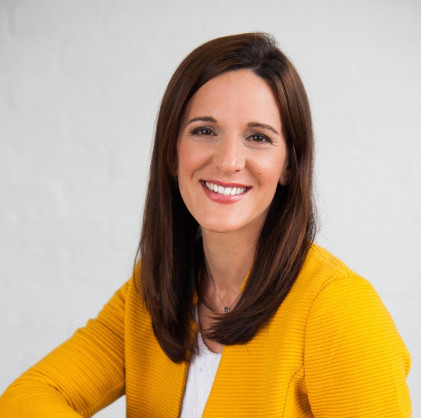

Cybersecurity training is vital, but it's not enough on its own if your workplace culture discourages people from speaking up. Good corporate security awareness includes empowering employees to think critically, voice concerns and admit mistakes, without fear of reprisal. The secret is something all parents who've gotten their children to admit when they've done something wrong already know.
Psychological safety is an underrated part of organisational cyber resilience and yet it's essential if companies want to strengthen their cyber defences from within. “Psychological safety refers to an organisational environment where employees feel confident they can slow down to question suspicious activities, report security concerns, admit mistakes, and challenge instructions without fear of blame, punishment or professional retaliation,” explains Anna Collard, SVP of Content Strategy at KnowBe4 Africa (www.KnowBe4.com).
Jonah Berger writes in his book, Invisible Influence: The Hidden Forces that Shape Behavior:
“Parents who react negatively when their children confess to something bad they've done are inadvertently training them to lie. If a child tells you they broke a vase and you get angry and punish them severely, they learn a simple lesson: admitting the truth leads to a bad outcome.”
The question organisations need to ask themselves, even when they have implemented industry-leading security awareness training (SAT) (https://apo-opa.co/4pFnoly), is this: “What happens to employees who admit their big cybersecurity mistakes (https://apo-opa.co/3KoMiXM)? What do they expect to happen, regardless?”
What happens if employees don't feel secure?
Collard believes there are several toxic dynamics in organisations that undermine security reporting. “The most notable is the blame-first culture,” she states. “Organisations that immediately ask: ‘Who did this?' instead of ‘How can we prevent this?' create defensive behaviours where employees hide incidents.” Instead of reporting concerns that could lead to early detection, employees become silent because they fear consequences.
Another unhealthy dynamic in workplaces is when managers suffer from perfectionism. “When security is presented as binary (perfect compliance versus failure), employees avoid admitting any uncertainties or mistakes,” asserts Collard.
Having a silo mentality can also be a stumbling block. “When security teams are seen as separate from business operations, employees view them as outsiders rather than partners,” she comments. This is especially true if IT personnel fail to take employees' concerns seriously or dismiss them altogether.
Another dangerous phenomenon is when employees are confused by inconsistent messaging. “Staff don't like it when leaders preach that security is everyone's responsibility, but then exclude non-technical staff from security discussions or break the rules themselves,” Collard says.
Overcoming barriers to psychological safety
Fortunately, there are many courses of action (https://apo-opa.co/3Y3OVBi) that organisations can take to correct these unfavourable dynamics. “It's really helpful when companies implement blameless post-mortems after security incidents,” she shares.
A good example is GitLab's 2017 incident (https://apo-opa.co/48JHc1t), when a systems administrator accidentally deleted a production database, resulting in six hours of lost data. The team responded transparently, live-blogging the recovery and treating it as a learning opportunity. “A culture of openness meant the issue was addressed immediately, with no blame or cover-ups – just quick action and prevention,” comments Collard.
Collard recommends integrating security champions across all departments and celebrating reporting and learning over perfection. “It also helps when leaders model vulnerability and continuous learning,” she emphasises.
Creating positive feedback loops
Instead of coming down hard on employees who mess up, managers should frame these incidents as valuable insights about attack sophistication rather than user failure. “This can be reinforced by creating positive feedback loops as a core part of human risk management,” Collard says (https://apo-opa.co/4rsf8Hm). “Establish systems where reporting suspicious emails or activities is rewarded and celebrated, making reporting feel like a contribution rather than a confession – or even just perceived compliance burdens with no purpose.”
Her final piece of advice is for leaders to adopt a zero-trust mindset approach. “Zero-trust principles require continuous verification and questioning,” she asserts. “But this only works when people feel psychologically safe to voice their concerns.”
Digital mindfulness is another essential tool for strengthening the human layer within an organisation. “Fostering a culture of pausing and seeking help rather than rushing through work is hard in a world that moves at a relentless pace,” Collard concedes. “But it's in those high-pressure moments that we need to be most grounded and focused to avoid mistakes.”
Ultimately, she believes the most secure organisations are not those that expect perfection, but those that enable people to speak up, learn and respond quickly when something goes wrong. “Psychological safety is a critical foundation for any organisation serious about cybersecurity resilience,” Collard concludes.
Distributed by APO Group on behalf of KnowBe4.Contact details:
KnowBe4
Anne Dolinschek
anned@knowbe4.com
Red Ribbon
TJ Coenraad
tayla@redribboncommunications.co.za
Curbing rising malaria rates in Bench Sheko, Southwest Ethiopia
Download logo
Bench Sheko in Southwest Ethiopia is a zone highly vulnerable to malaria. Heavy rains and limitations in accessing healthcare create conditions for recurrent outbreaks of the disease. Local health facilities have faced challenges often linked to shortages of essential malaria medicines, forcing patients to travel long distances or pay for costly private treatment if they can afford it.
In response to the rising malaria cases, Médecins Sans Frontières/Doctors Without Borders (MSF) in collaboration with the Zonal Health Bureau, the Regional Health Bureau and the Ministry of Health initiated an emergency response in Bench Sheko in mid-August 2025. Our teams established a dedicated 40-bed malaria ward at Mizan Tepi Teaching Hospital to provide treatment for severe malaria patients and launched outreach interventions across 12 hard-to-reach locations with limited access to healthcare.
Voice from the Communities
When he and his family are ill, Sokiam says, they usually turn to private clinics. "Three weeks ago, I was sick and went to one," he says. "It costs me 3,500 birr (around USD23) for two injections a day and 20 tablets. I recovered only partially. Here, I came with two of my children, and all three of us tested positive,” he explains, while getting treatment at MSF's mobile clinic in his neighborhood.
Brahane, a 30-year-old single mother of four, walked 45 minutes to reach MSF's mobile clinic. She has twin daughters who are six years old and twin boys who are just under one year. “All five of us tested positive for malaria," she says. "When my children are sick, I go to a private clinic. A month ago, one of my babies and I had malaria. I paid 1,500 birr (USD10) for myself and 1,000 (around USD6) for my baby. Then my baby was admitted to the hospital. The community helped me pay because I couldn't afford it.”
In Tatchu village, Mertalem, a 35-year-old mother of four, walked two hours to reach the Keberta Health Post to get treatment from MSF's mobile clinic. Both she and her 6-year-old daughter tested positive for malaria. “This year, my two-year-old daughter has already had malaria five times. She's been hospitalised twice for severe complications,” says Mertalem.
Shortage Struggles and Responding Rapidly
The rainy season in Southwest Ethiopia runs from June to September, with malaria cases peaking from August to November. Of the six zones that make up the region, Bench Sheko, home to over 697,400 people, has been one of the hardest hit.
Over the past three years, recurrent outbreaks have strained local health facilities, with shortages of essential malaria medications and high costs of care in private clinics limiting access to malaria treatment, especially in areas which are hard to reach.
Limited preventive measures at the community level, including low usage of insecticide-treated bed nets (ITNs), lack of environmental control of mosquito breeding sites, minimal community awareness and lack of means for early treatment have contributed to high malaria-related deaths, particularly from cerebral malaria and severe anemia.
“When we started the intervention, the malaria positivity rate was around 80 to 90%, and by the end of it, it had sunk below 50%,” says Samira Loulidi, MSF's emergency medical coordinator. “Over the 12 weeks, our team used to travel up to 75km to reach communities in remote areas and treated up to 120 patients per day in some locations via the mobile clinics.”
MSF teams screened around 13,000 suspected malaria cases across 12 sites. Of these, 8,597 people tested positive for malaria and received treatment. In addition, 772 severe malaria patients were admitted and treated in MSF's malaria ward in Mizan Tepi Teaching Hospital, where, in the first weeks of the intervention, the bed occupancy rate was around 80 to 95%.
“The level of complications and the types of patients we were treating show that malaria remains extremely severe," says MSF medical doctor Zelalem Tafese. "Many patients arrive with severe anemia, which poses serious health risks. We have also been regularly treating cerebral malaria, with around seven or eight cases per week, as well as acute kidney injury. These are serious conditions that require urgent, specialised care.”
In addition to providing treatment, community health promotion teams spread awareness on how to identify early malaria symptoms and promptly seek treatment, eliminate mosquito breeding sites, and use bed nets effectively.
At the same time, several health facilities across the area were supplied with diagnostic kits, malaria medicines, and training. This strengthened the local health system, helping reduce the dependency on private clinics and the financial burden on families. These efforts, combined with vector-control activities and bed-net distribution in high-transmission districts, led by the Ministry of Health, curbed the malaria outbreak.
By the time MSF handed over the malaria ward, the hospital had recorded a 41% decrease in daily admissions, declining from 15–25 to approximately 5–6 patients per day.
However, while new cases are declining, significant challenges remain. Timely access to malaria treatment and essential medicines is still limited, and community awareness of prevention practices needs to improve to sustain the recent progress.
Distributed by APO Group on behalf of Médecins sans frontières (MSF).South Sudan: United Nations (UN) Police Officer Shalemi Kumari urges communities in Jonglei to end conflict and choose peace
Download logo
“There is always a way forward if we seize the chance for change and choose peace.”
Working as a United Nations peacekeeper in Jonglei is a challenge at the best of times, but UN Police Officer, Shalemi Kumari, is relentlessly positive about the possibility of securing sustainable peace in the world's newest nation.
She works for the United Nations Mission in South Sudan in a region that is plagued by intercommunal conflict and severe climate shocks, including flooding which has affected 625,000 people this year.
Many of those displaced by the rising waters are sheltering in overcrowded public facilities or relocating to higher ground. Impassable roads are impacting humanitarian assistance, the already dire economic situation, and peacebuilding efforts.
Despite the challenges, Shalemi Kumari is committed to protecting vulnerable civilians by strengthening community policing and supporting preparations to ensure a secure environment for the country's first democratic elections.
“The context here is one in which vulnerable people are adversely affected by crime and conflict. Our role is to reach out to these communities, particularly to address gender-based violence and conflict-related sexual violence, to ensure that victims' rights are realized and perpetrators held accountable.”
Utilizing her 22 years of experience as a criminal investigator, community policing officer and police prosecutor in her home country of Fiji, Shalemi Kumari is particularly focused on supporting women and girls, who are disproportionately impacted by conflict and often excluded from participating in political and peacebuilding activities.
“We go out into the communities to hear their concerns, make them aware of their rights and how to report incidents of violations and abuses,” she says.
“We also conduct training for the South Sudan National Police Service officers, advising, mentoring and empowering them, to build their capacity to protect their own citizens.”
For Shalemi, her work is a professional duty but also a personal commitment given how far she is away from her home on the other side of the world.
“I maintain contact with my family back home through daily phone and video calls,” she says.
“But to be honest, I don't feel lonely here. I have bonded with my colleagues and friends from various countries and regions. I feel like I now also have a family here in South Sudan.”
While the separation is difficult, the appreciation of her three children for her service in the cause of peace also gives her strength.
In every step she takes, she carries, not only, her duty as a peacekeeper, but also the heart of a mother determined to make South Sudan a better place for the next generation.
Distributed by APO Group on behalf of United Nations Mission in South Sudan (UNMISS).