
Merck Foundation Conducted their Health Media Training during the 7th Edition of Merck Foundation First Ladies Initiative – MFFLI Summit to support girl education...

Merck Foundation (www.Merck-Foundation.com), the philanthropic arm of Merck KGaA Germany, conducted the 7th Edition of Merck Foundation First Ladies Initiative - MFFLI Summit 2025, in presence of Merck Foundation CEO, Dr. Rasha Kelej and African & Asian First Ladies, who are the Ambassadors of “Merck Foundation More Than a Mother”. During the Summit, Merck Foundation Health Media Training session was also conducted on Day 2, for African journalists, to emphasize on the important role the media plays to influence our society to create a cultural shift with the aim to Break Infertility Stigma, Support Girl Education, Stop Gender Based Violence, End Child Marriage, End FGM, and Empower Women at all levels. Moreover, to raise awareness about early detection & prevention of Diabetes & Hypertension.
Senator, Dr. Rasha Kelej, CEO of Merck Foundation, Chairperson of MFFLI Summit, and President of “More Than a Mother” campaign, emphasized, “I strongly believe that media has the power to shape mindsets and create a culture shift. Journalists can drive real change through their daily reporting by raising awareness about critical social and health issues—such as breaking the stigma of infertility, promoting girls' education, ending child marriage, stopping gender-based violence, and encouraging early detection and prevention of diabetes and hypertension.”
Watch the Merck Foundation Health Media Training session here: https://apo-opa.co/4afkSOr
The Merck Foundation Health Media Training is a part of ‘Merck Foundation More than a Mother' Community Awareness Program. Since 2017, Merck Foundation has provided their Health Media Training for more than 3,700 media representatives from 35 countries in Africa.
During the 7th Edition of Merck Foundation First Ladies Initiative -MFFLI Summit, two important occasions were marked; the 8th Anniversary of Merck Foundation and 13 years of Merck Foundation's development programs that started in 2012.
On the Day 1, the Plenary Session of the Merck Foundation First Ladies Initiative -MFFLI Summit took place, featuring a high-level panel discussion with the participating First Ladies of Africa and Asia. Moreover, a high-level panel discussion was held with African Ministers and top healthcare experts from across the globe.
During the Day 2 of the conference, two Medical and Scientific Sessions on Oncology and Diabetes & Hypertension also took place.
During the 7th Edition of MFFLI Summit, the Call for Applications for 8 annual Merck Foundation Awards in partnership with African and Asian First Ladies were announced for best Media, Musicians, Fashion Designers, Filmmakers, students, and emerging talents.
“I strongly believe that these awards encourage creative storytelling to raise awareness about critical social and health issues. Since 2017, we have been launching these awards together with my esteemed sisters, the African and Asian First Ladies, who are also the Ambassadors of the Merck Foundation More Than a Mother Campaign. I am looking forward to all the entries from young talents for these important awards,” Senator, Dr. Rasha Kelej added.
Details of the Awards:
- Merck Foundation Africa Media Recognition Awards “More Than a Mother” 2026: Media representatives and students are invited to showcase work raising awareness about Breaking Infertility Stigma, Supporting Girls' Education, Women Empowerment, Ending Child Marriage, Ending FGM, and/or Stopping GBV.
Submission deadline: 30th September 2026. - Merck Foundation Film Awards “More Than a Mother” 2026: African filmmakers, film students, and young talents are invited to create long or short films (drama, documentary, or docudrama) addressing Breaking Infertility Stigma, Supporting Girls' Education, Women Empowerment, Ending Child Marriage, Ending FGM, and/or Stopping GBV. Submission deadline: 30th September 2026.
- Merck Foundation Fashion Awards “More Than a Mother” 2026: African fashion students and designers are invited to create designs delivering impactful messages on Breaking Infertility Stigma, Supporting Girls' Education, Women Empowerment, Ending Child Marriage, Ending FGM, and/or Stopping GBV.
Submission deadline: 30th September 2026. - Merck Foundation Song Awards “More Than a Mother” 2026: African singers and musical artists are invited to create songs addressing Breaking Infertility Stigma, Supporting Girls' Education, Women Empowerment, Ending Child Marriage, Ending FGM, and/or Stopping GBV. Submission deadline: 30th September 2026.
- Merck Foundation Media Recognition Awards 2026 “Diabetes & Hypertension”: Media representatives are invited to showcase work promoting healthy lifestyles and raising awareness about the prevention and early detection of Diabetes and Hypertension. Submission deadline: 30th October 2026.
- Merck Foundation Film Awards 2026 “Diabetes & Hypertension”: African filmmakers, film students, and young talents are invited to create films promoting healthy lifestyles and raising awareness about the prevention and early detection of Diabetes and Hypertension. Submission deadline: 30th October 2026.
- Merck Foundation Fashion Awards 2026 “Diabetes & Hypertension”: African fashion students and designers are invited to create designs promoting healthy lifestyles and raising awareness about the prevention and early detection of Diabetes and Hypertension. Submission deadline: 30th October 2026.
- Merck Foundation Song Awards 2026 “Diabetes & Hypertension”: African singers and musical artists are invited to create songs promoting healthy lifestyles and raising awareness about the prevention and early detection of Diabetes and Hypertension. Submission deadline: 30th October 2026.
Entries for all awards are to be submitted via email to: submit@merck-foundation.com
For information on the awards, please visit our website: www.Merck-Foundation.com
Distributed by APO Group on behalf of Merck Foundation.Contact:
Mehak Handa
Community Awareness Program Manager
Phone: +91 9310087613/ +91 9319606669
Email: mehak.handa@external.merckgroup.com
Join the conversation on our social media platforms below and let your voice be heard!
Facebook: https://apo-opa.co/48kZrcf
X: https://apo-opa.co/4ir5Ozu
Instagram: https://apo-opa.co/3K3D9ns
YouTube: https://apo-opa.co/3XUDID7
Threads: https://apo-opa.co/4ook2T5
Flickr: https://apo-opa.co/48vfx3k
Website: www.Merck-Foundation.com
Download Merck Foundation App: https://apo-opa.co/3Xjf7b0
About Merck Foundation:
The Merck Foundation, established in 2017, is the philanthropic arm of Merck KGaA Germany, aims to improve the health and wellbeing of people and advance their lives through science and technology. Our efforts are primarily focused on improving access to quality & equitable healthcare solutions in underserved communities, building healthcare & scientific research capacity, empowering girls in education and empowering people in STEM (Science, Technology, Engineering, and Mathematics) with a special focus on women and youth. All Merck Foundation press releases are distributed by e-mail at the same time they become available on the Merck Foundation Website. Please visit www.Merck-Foundation.com to read more. Follow the social media of Merck Foundation: Facebook (https://apo-opa.co/48kZrcf), X (https://apo-opa.co/4ir5Ozu), Instagram (https://apo-opa.co/3K3D9ns), YouTube (https://apo-opa.co/3XUDID7), Threads (https://apo-opa.co/4ook2T5) and Flickr (https://apo-opa.co/48vfx3k).
The Merck Foundation is dedicated to improving social and health outcomes for communities in need. While it collaborates with various partners, including governments to achieve its humanitarian goals, the foundation remains strictly neutral in political matters. It does not engage in or support any political activities, elections, or regimes, focusing solely on its mission to elevate humanity and enhance well-being while maintaining a strict non-political stance in all of its endeavors.
Afreximbank successfully closed its second Samurai Bond transactions, raising JPY 81.8 billion (approx. USD 527 million)
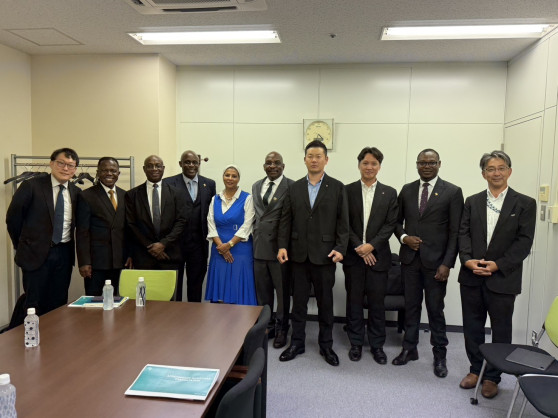
African Export-Import Bank (Afreximbank) (www.Afreximbank.com) has successfully closed its second Samurai bond transaction, securing a total of JPY 81.8 billion (approx. USD 527 million) through Regular and Retail Samurai Bonds offerings.
The execution surpasses the Bank's 2024 debut issuance size, attracting orders from more than 100 institutional and retail investors, marking a renewed demonstration of strong Japanese investor confidence in the Bank's credit and its growing presence in the yen capital markets.
On 18 November, Afreximbank priced a JPY 45.8 billion 3-year tranche in the Regular Samurai market following a comprehensive sequence of investor engagement activities leveraging Tokyo International Conference on African Development (TICAD9), including Non-Deal Roadshows (NDRs) in Tokyo, Kanazawa, Kyoto, Shiga and Osaka, a Global Investor Call, and a two-day soft-sounding process which tested investor appetite across 2.5-, 3-, 5-, 7-, and 10-year maturities. With market expectations of a Bank of Japan interest rate increase, investor demand concentrated in shorter tenors, resulting in a focused 3-year tranche during official marketing.
The tranche attracted strong participation from asset managers (22.3%), life insurers (15.3%), regional corporates, and high-net-worth investors (39.7%). Concurrently, Afreximbank priced its second Retail Samurai bond on 18 November, a JPY 36.0 billion 3-year tranche—more than double the inaugural JPY 14.1 billion Retail Samurai issuance completed in November 2024. The 2025 Retail Samurai bond also marks the first Retail Samurai bond issued in Japan in 2025.
Following the amendment to Afreximbank's shelf registration on 7 November 2025, SMBC Nikko conducted an extensive seven-business-day demand survey through its nationwide branch network, followed by a six-business-day bond offering period. The offering benefited from strong visibility supported by Afreximbank's investor engagement across the country, including the Bank's participation at TICAD9, where Afreximbank hosted the Africa Finance Seminar to introduce Multinational Development Bank's mandate in Africa and its credit profile to key Japanese institutional investors.
SMBC Nikko Securities Inc. acted as Sole Lead Manager and Bookrunner for both the Regular and Retail Samurai transactions.
Chandi Mwenebungu, Afreximbank's Managing Director, Treasury & Markets and Group Treasurer, commented:
“We are pleased with the successful completion of our second Samurai bond transactions, which marked a significant increase from our inaugural Retail Samurai bond in 2024, and which reflect the growing depth of our relationship with Japanese investors. The strong demand, both in the Regular and Retail offerings, demonstrates sustained confidence in Afreximbank's credit and mandate. We remain committed to deepening our engagement in the Samurai market through regular investor activities and continued collaboration with our Japanese partners.”
Distributed by APO Group on behalf of Afreximbank.Media Contact:
Vincent Musumba
Communications and Events Manager (Media Relations)
Email: press@afreximbank.com
Follow us on:
X: https://apo-opa.co/4p5maQG
Facebook: https://apo-opa.co/43XozVc
LinkedIn: https://apo-opa.co/43Uq5Yf
Instagram: https://apo-opa.co/4oisFi5
About Afreximbank:
African Export-Import Bank (Afreximbank) is a Pan-African multilateral financial institution mandated to finance and promote intra- and extra-African trade. For over 30 years, the Bank has been deploying innovative structures to deliver financing solutions that support the transformation of the structure of Africa's trade, accelerating industrialisation and intra-regional trade, thereby boosting economic expansion in Africa. A stalwart supporter of the African Continental Free Trade Agreement (AfCFTA), Afreximbank has launched a Pan-African Payment and Settlement System (PAPSS) that was adopted by the African Union (AU) as the payment and settlement platform to underpin the implementation of the AfCFTA. Working with the AfCFTA Secretariat and the AU, the Bank has set up a US$10 billion Adjustment Fund to support countries effectively participating in the AfCFTA. At the end of December 2024, Afreximbank's total assets and contingencies stood at over US$40.1 billion, and its shareholder funds amounted to US$7.2 billion. Afreximbank has investment grade ratings assigned by GCR (international scale) (A), Moody's (Baa1), China Chengxin International Credit Rating Co., Ltd (CCXI) (AAA), Japan Credit Rating Agency (JCR) (A-) and Fitch (BBB-). Afreximbank has evolved into a group entity comprising the Bank, its equity impact fund subsidiary called the Fund for Export Development Africa (FEDA), and its insurance management subsidiary, AfrexInsure (together, "the Group"). The Bank is headquartered in Cairo, Egypt.
For more information, visit: www.Afreximbank.com
Komo Ressources Group (KOREG) Makes History as First Gabonese Private Operator to Deliver First Oil at Autour Field
Download logo
Gabon has entered a new chapter in its energy evolution. For the first time ever, a private national oil company has opened a new field and delivered first oil. Komo Ressources Group (KOREG), a rising indigenous operator, has officially brought the Autour field onstream, producing its first barrels on November 27, 2025. The milestone marks a defining moment for Gabon's upstream sector, showcasing the strength of empowered local companies and reinforcing the country's commitment to revitalizing onshore production.
The African Energy Chamber (AEC) strongly welcomes this achievement. KOREG's success demonstrates what becomes possible when national companies are supported, trusted and encouraged to lead. It affirms the Chamber's long-standing message that African operators, when given the room to perform, can drive real production growth, deliver real value and anchor long-term energy security.
KOREG's road to first oil has been a story of determination, technical discipline and strategic execution. After signing an exploration and production sharing agreement with the Ministry of Petroleum in April 2024, the company moved swiftly to transform Autour into a producing asset. A development contract was awarded to international service provider China Oil HBP Group in July 2024, marking the official start of commercial exploitation. From there, KOREG delivered a fully new central processing facility (CPF), drilled two wells and advanced the project through the final stages of commissioning. Less than two years after the exploration and production sharing agreement signing, the company turned Autour into a producing field – a remarkable accomplishment for a first-time national operator.
This progress reflects a sector operating with clear policy direction and active government support. Under President Brice Oligui Nguema and Minister of Oil and Gas Sosthène Nguema Nguema, Gabon has implemented a pro-development agenda that prioritizes new investment, fresh exploration activity and stronger local participation. The government's ongoing reforms – from updating petroleum laws to introducing a dual legal framework and modernizing labor standards – are establishing a more competitive, more accountable and more investor-friendly upstream environment. KOREG's success is an early example of what these reforms are designed to unlock.
For the AEC, first oil at Autour is a powerful signal. It shows that Gabon's upstream future is not limited to the contributions of long-established international operators, strong as they remain, but will increasingly be shaped by domestic players stepping forward with capability and ambition. KOREG has proven that Gabonese companies can deliver the technical work, manage complex timelines and bring new barrels to market, even in a competitive global landscape. This is precisely the kind of indigenous leadership the Chamber has consistently advocated for across Africa.
“First oil from the Autour field is not just a win for KOREG; it is a win for Gabon,” states NJ Ayuk, Executive Chairman, AEC. “This achievement shows that when national companies are empowered, they rise to the challenge. KOREG's performance is a strong sign that Gabon's upstream future will be increasingly defined by the success of its own people, its own engineers and its own operators.”
With first oil now flowing, KOREG has positioned itself as a catalyst for Gabon's upstream renewal, demonstrating how local capability, clear regulation and investor confidence can work together to deliver new production. As Gabon pushes to unlock deepwater prospects, revitalize mature assets and expand onshore development, the Chamber expects more national companies to follow KOREG's lead. For now, Autour stands as a historic milestone – a field opened by a private Gabonese operator, developed at speed, executed with modern local capacity and now delivering new barrels for the country. The AEC congratulates KOREG on this landmark achievement and reaffirms its support for Gabon's drive to grow production, deepen local participation and build a resilient, competitive and proudly African energy sector.
Distributed by APO Group on behalf of African Energy Chamber.Central African Republic: Concerns Over Crucial Election
Download logo
Concerns about irregularities, political interference, and security pressures risk putting the credibility and inclusiveness of key elections in the Central African Republic into question, Human Rights Watch said today. The vote, scheduled for December 28, 2025, will include presidential and parliamentary elections, but also municipal elections for the first time in decades.
“The Central African Republic election will shape the country's political trajectory for years to come,” said Lewis Mudge, Central Africa director at Human Rights Watch. “Despite tangible progress to establish peace, obstructions to opposition participation, administrative dysfunction, and concerns about a return to repression could disenfranchise large segments of the population.
The elections come after the highly controversial 2023 constitutional referendum, which removed presidential term limits and effectively opened the door for President Faustin-Archange Touadéra to remain in power indefinitely. The official campaign period is slated to start on December 13.
Two of the country's most prominent political figures, former prime ministers Anicet Georges Dologuélé and Henri-Marie Dondra, were barred from entering the race until November 14, when the Constitutional Council decided to allow them to run as candidates for president. This aligned with an apparent pattern of administrative maneuvering that has disproportionately impeded opposition politicians while favoring the ruling United Hearts Party (known by its French acronym, MCU), Human Rights Watch said.
The two politicians are widely viewed as the only credible challengers to Touadéra. “We have effectively been delayed while the MCU has been mobilizing,” Dologuélé told Human Rights Watch. Their late admission to the race raises questions about whether voters have been given a genuine choice, Human Rights Watch said.
These developments come amid growing doubts about whether the National Election Authority is prepared to run the election. Supply-chain failures, incomplete voter lists, and insufficiently trained staff for polling places, particularly outside Bangui, the capital, are potential problems.
In Bangui, civil society activists have raised concerns over whether many of the estimated 6,700 polling places will be able to open on time, if at all. Rural voters, already hampered by insecurity and limited transportation, could find themselves effectively excluded. The lack of readiness not only undermines confidence in the process but also raises concerns that turnout figures may become deeply skewed toward the capital.
The government has sought to bolster confidence in elections by signing a series of peace accords with various armed groups. These accords, which skirt around accountability for human rights abuses and potential war crimes committed in the past, have nonetheless created conditions for stability not seen in years. However, several civil society activists, journalists, UN officials, and diplomats question the durability of these peace deals including an agreement signed on November 19 with the Patriotic Movement for the Central African Republic.
Over the past decade, numerous declarations of peace quickly fell apart amid unmet promises of disarmament, political inclusion, or resource sharing. One journalist told Human Rights Watch that, “Armed groups have been bought off to ensure the elections occur. Disarmament has become a racket…. [W]e will most likely see these groups resume attacks once the money runs out … [until] the next round of elections.”
Without genuine disarmament efforts, the current agreements will serve more as symbolic gestures reinforcing impunity than as mechanisms for lasting stability, Human Rights Watch said.
The unequal political environment has prompted many opposition parties to call for a full boycott of the elections. Leaders of Republican Bloc for the Defense of the Constitution, an opposition coalition, told Human Rights Watch that they are concerned about the obstruction of candidates, the election authority's administrative deficiencies, and the government monopoly over media and state resources.
This boycott, and the delays experienced by Dologuélé and Dondra, will most likely pave the way for a parliament dominated by the current governing party. A legislature without meaningful opposition oversight risks compromising already weak institutions, Human Rights Watch said. “We need checks on the executive,” one politician told Human Rights Watch. “My fear is that these elections, already skewed, are a test of the principles of democratic accountability.”
There are also concerns around online xenophobic rhetoric. Dologuélé had to give up his French nationality to run for the presidency as individuals in high offices are not allowed to hold citizenship of another country. Nonetheless, some groups associated with the governing party are circulating statements online about “who is a real Central African,” targeting the opposition. Online attacks against opponents of the 2023 constitutional referendum ramped up before that vote.
Dondra told Human Rights Watch that in addition to other constraints, two of his brothers were arrested, and one remains in custody without charge, allegedly for politically motivated reasons.
The elections comes amid a planned reduction of the UN Multidimensional Integrated Stabilization Mission in the Central African Republic (MINUSCA). The mission, which has a mandate to protect civilians and monitor human rights abuses, alongside supporting elections, is expected to scale down its presence partly due to the budget constraints across UN peacekeeping and a desire from some member states to see responsibility transferred to national authorities.
A diminished UN footprint could leave communities, particularly those in conflict-affected regions, exposed to militia coercion and retaliation if the peace accords do not hold. Some diplomats in Bangui told Human Rights Watch that the Economic and Monetary Community of Central Africa and the International Organization of the Francophonie, which may monitor elections, have not been confirmed one month before the vote and will most likely be unable to conduct any monitoring outside of Bangui.
Despite the concerns, civil society activists and journalists describe some improvements. “Things are better than they were a few years ago, the repression has let up,” one journalist told Human Rights Watch. “However, we must remain vigilant. Once it solidifies full control over the parliament and municipal offices, the MCU will control how we discuss government policy, security and development.” The authorities should ensure that journalists and activists can continue to do their work freely without fear of reprisals or repression, Human Rights Watch said.
One month out, the government should remove all barriers to opposition participation and guarantee equal access to campaigning and to the media. The authorities should release individuals detained without credible legal basis, including Dondra's brother. International partners should monitor the elections for conformity to international standards, and reductions in peacekeeping forces should be reconsidered if armed groups attack civilians again.
“The Central African Republic stands at crossroads, and credible elections cannot occur when legitimate concerns are unaddressed,” Mudge said. “The country's path toward stability depends on inclusive and competitive political processes that reflect the will of all communities, not only those with access to power.”
Distributed by APO Group on behalf of Human Rights Watch (HRW).Global One Health Day Celebration in Somali Region Ethiopia
Download logo
The 2025 Global One Health Day was celebrated in Jigjiga, Somali Region, Ethiopia under the theme “Strengthening One Health Collaboration for Resilient Communities.”
The event brought a wide range of partners into one forum, with over 100 participants, including high-level officials such as H.E. Mr. Ahmed Yasin Shek Ibrahim, delegate from the Somali Region President's Office; H.E. Dr. Mesay Hailu, Director General of the Ethiopian Public Health Institute (EPHI); and Mr. Mohammed Ayanle Hassan, Deputy Head of the Somali Region Health Bureau.
Participants represented a wide range of sectors, federal ministries, regional bureaus, academia, community representatives, UN agencies, donors, development partners, and civil society organizations.
In her remarks, Ms. Senait Tekeste, representing the World Health Organization (WHO) Ethiopia, forwarded three key calls to action:
- Strengthen multisectoral and interdisciplinary collaboration through sustained coordination, communication, and joint planning. She emphasized translating the national One Health Strategy into a regional action plan, and enhancing surveillance and analysis to improve capacity to prevent, detect, respond to, and recover from health emergencies.
- Invest in education and capacity building by fostering interdisciplinary training and curriculum revision across human, animal, and environmental health fields. She highlighted the importance of information sharing to prevent zoonotic disease spread and ensure optimal outcomes for communities and ecosystems.
- Leverage advanced tools and technologies to integrate data from human and animal health sectors and support modelling of zoonotic diseases for early detection of emerging and re-emerging threats.
In his keynote address, Dr. Mesay Hailu underscored the importance of partnership and coordination, stating:
“Health challenges such as zoonotic diseases, antimicrobial resistance, and climate-related health risks cannot be addressed in isolation. Strengthening collaboration among sectors — human, animal, and environmental health — is essential to build resilient communities and protect our collective health security.”
Echoing this call, H.E. Mr. Ahmed Yasin Shek Ibrahim reaffirmed the Somali Region's commitment to advancing the One Health agenda:
“Today's celebration is a reminder to renew our collective commitment to work together — across sectors and disciplines — to safeguard the health of our people, our animals, and our environment. The regional government stands ready to strengthen collaboration and translate the One Health approach into concrete action.”
The program featured keynote statements from government officials, donors, UN agencies, academia, and development partners, as well as progress reports from national and regional One Health platforms. Both federal and regional leaders reaffirmed their commitment to institutionalizing the One Health approach in the Somali Region. The event was co-sponsored by the WHO, with financial support from the Directorate-General for European Civil Protection and Humanitarian Aid Operations (ECHO).
Following the formal session, participants took part in interactive workshop presentations that showcased best practices and innovative approaches to implementing One Health at regional and community levels. The event also featured a gallery walk exhibition, where partners and local institutions displayed successful initiatives and collaborative models demonstrating the power of the One Health approach in action.
The celebration concluded with a panel discussion on operationalizing One Health in Ethiopia, complemented by technical presentations and open dialogue among experts from human, animal, and environmental health sectors.
Distributed by APO Group on behalf of World Health Organization (WHO) - Ethiopia.