
Africa targets $5 Billion Project Pipeline as Green Economy Summit Returns for Fourth Edition

The critical climate negotiations at COP30 in Belém, Brazil, are underscoring the urgent need to translate global ambition into tangible investment and action. This imperative resonates directly with the upcoming fourth edition of the Africa's Green Economy Summit (AGES), scheduled for 24–27 February 2026 at the Century City Conference Centre in Cape Town. Africa's transition to a climate-resilient, low-carbon future will take centre stage at the event—powered by lead partner Sanlam Investments. This year's edition underscores a shared commitment to accelerating investment into Africa's green and blue economies at a defining moment for global climate action.
Organised by the VUKA Group under the theme “From Ambition to Action: Scaling Investment in Africa's Green and Blue Solutions,” AGES 2026 will bring together institutional investors, development finance institutions, innovators, governments and sustainability leaders intent on unlocking climate-aligned capital for the continent's most pressing development priorities. With more than 580 delegates, over 150 investors, and 200 project developers expected, the Summit reflects a growing pipeline of investment opportunities estimated at USD 5 billion across renewable energy, sustainable infrastructure, climate-smart agriculture, digital climate intelligence, adaptation technologies and climate finance platforms.
“Africa stands at the frontier of both climate risk and innovation,” says Emmanuelle Nicholls, Portfolio Director for the Green Economy at VUKA Group. “AGES exists to bridge that gap by connecting scalable, investment-ready projects with partners who can finance measurable impact.”
The AGES 2026 agenda reflects COP30's heightened emphasis on scaling climate and nature finance, advancing system-wide reforms, and accelerating the operationalisation of country platforms that can turn national climate plans into bankable project pipelines. With growing global attention on biodiversity and emerging nature credit mechanisms, as well as COP30's clear push for digital MRV, AI-enabled climate intelligence, and greater transparency, the programme highlights the evolving tools reshaping the climate investment landscape.
Through sessions exploring Article 6 cooperation, nature and biodiversity finance, climate-resilient infrastructure, water and city systems, industrial decarbonisation, and the role of digitalisation in strengthening trust and integrity, AGES 2026 positions African stakeholders at the forefront of designing investment-ready pathways for a just and nature-positive transition.
Speakers across this year's edition reflect the depth of expertise shaping Africa's climate and finance landscape:
- Barbara Buchner, Global Managing Director, Climate Policy Initiative
- Catherine-Candice Koffman, Regional Director Africa, Green Climate Fund
- Dorah Modise, Executive Director, Presidential Climate Commission
- Andrew Johnstone, CEO, Climate Fund Managers
- David Obura, Chair, IPBES
- Matsi Modise, Africa Lead, World Climate Foundation
A central feature of AGES 2026, the Investment Pitch and Showcase Programme, returns with a curated pipeline of vetted projects presented directly to investors. These include proposals in renewable energy, battery storage, climate-resilient water systems, mobility electrification, waste-to-value innovation, circularity, climate-smart agriculture and resilience technologies. The 40 projects range from early-stage USD 1 million concepts to industrial-scale ventures exceeding USD 100 million, attracting participation from DFIs, venture capital firms, commercial banks, blended-finance platforms and corporate climate investment vehicles.
The Summit will also host technical site visits across Cape Town, showing how climate investments translate into jobs, competitiveness and long-term resilience.
AGES 2026 is anchored by a broad network of continental and global partners. Alongside Sanlam Investments, institutional partners include:
- The Global Green Growth Institute
- Climate Policy Initiative
- Convergence
- Wesgro
- The City of Cape Town
- Regional policymakers, municipal authorities and leading private-sector sustainability actors.
Their involvement ensures the Summit drives year-round capital mobilisation, not just dialogue.
As global competition for climate finance intensifies, AGES 2026 offers a platform for Africa to articulate its climate investment agenda with clarity and ambition, grounded in data, policy frameworks and the continent's vast natural and human capital. With five years remaining in the UN SDG decade of action, the Summit stands as both a milestone and a measure of Africa's readiness to translate climate ambition into investable, scalable action.
Distributed by APO Group on behalf of VUKA Group.Media enquiries and interview requests:
Nomsa Mdhluli
Nomsa@tishalacommunications.com
+27 71 628 6231
Elize Engle
Pr1@tishalacommunications.com
+27 82 762 4946
Tshepang Mokoena
Pr@tishalacommunications.com
+27 76 682 9608
Registration enquiries:
Mzamo Jika – mzamo.jika@wearevuka.com
More information or registration: www.GreenEconomySummit.com
To download the event brochure, click here (https://apo-opa.co/44nkUjs).
United Kingdom (UK) Offshore Expertise to Boost African Energy Projects, Sustainability
Download logo
Industry leaders highlighted how expertise developed in the UK Continental Shelf (UKCS) can be leveraged to support Africa's energy growth, extending beyond traditional oil and gas projects to include sustainability and technological innovation at the Wider African Energy Summit this week.
Speaking during the summit, Thomas Sommerstad, Sales Specialist Global at ABB, emphasized the importance of early engagement in projects, from optimizing design to ensuring fit-for-purpose solutions. “If we can join our partners – EPCs, operators and so on – at an early stage, then we can integrate sustainability measures early-on in the project. This is something we've done in the North Sea for a long time.”
Arthur Ename, VP for Business Development – Africa at NOV, highlighted the operational benefits of early collaboration. “If you don't engage early, your project might look cheaper to implement with a lower CapEx, but it may have very large OpEx. When you engage early with technology providers, you ensure that you don't have too much OpEx over the life of the asset.”
Stuart Hamilton, Positioning and Construction Support Service Line Director at Fugro, focused on developing the talent pipeline. “We have to work closely with universities, providing traineeships, and create that pipeline that supports global operations,” he said, emphasizing how UKCS-trained personnel can support African projects.
Martin Booth, Managing Director at Zenith Energy, highlighted the role of supply chain and local expertise. “When it comes to planning and drilling wells, in Aberdeen, the supply chain and the people are there. Different places in Africa are different, with varying levels of infrastructure. It then becomes more of a contracting phase and a logistical exercise.”
On Africa's growth potential, he added: “It's a less mature basin than the North Sea. The big companies are there, but you're also seeing smaller companies and investors moving in, and those are our traditional clients. I see a tremendous growth opportunity [in Africa] in terms of drilling wells and the expertise we're developing in the UK on the well abandonment side.”
The panel underscored a shared theme: leveraging UK offshore expertise early in African projects can optimize design, integrate sustainability measures, reduce long-term operating costs and support the growth of local talent. Applying lessons from the North Sea, companies can help African nations meet growing energy demand while positioning themselves for long-term opportunities in emerging markets.
Distributed by APO Group on behalf of African Energy Chamber.Italy-Libya Roundtable at Libya Energy & Economic Summit (LEES) 2026 to Drive Strategic Energy and Infrastructure Investment
Download logo
The Libya Energy & Economic Summit (LEES) 2026, taking place January 24–26 in Tripoli, will host a dedicated Italy-Libya Roundtable, underscoring Italy's long-standing and expanding engagement in Libya's energy, infrastructure and broader economic sectors. The session will provide a platform to explore strategic partnerships, investment pipelines and joint initiatives that strengthen Libya's energy security and infrastructure resilience – and cement Italy's role as a key partner in the country's long-term development.
Italian companies are already deeply involved across Libya's energy sector. Last month, Eni resumed exploration after a five-year hiatus, restarting drilling at the C1-16/4 well in Block 16/4 using Saipem's Scarabeo-9 rig. Through its 50-50 joint venture with the NOC, Mellitah Oil & Gas, Eni is advancing an €8 billion integrated gas development project targeting production from Structures A&E, expected to deliver 750 million cubic feet per day by 2026.
Italian geoscience and offshore construction firm Next Geosolutions and its subsidiary Rana Subsea were awarded €8.5 million and €62.5 million contracts, respectively, to provide survey, subsea and installation support for the Bouri Gas Utilization Project. These contracts support Saipem's $1 billion engineering, procurement, construction, installation and commissioning project – aimed at revamping offshore platforms, recovering associated gas and reducing CO₂ emissions. Saipem continues to be a central player in Libya's energy landscape through its partnership with the NOC and collaboration with Eni.
In the infrastructure sector, Italian construction company Todini Costruzioni Generali was recently awarded the contract for sub-lot 4.3 of the Emsaad-Ras Jedir coastal highway, a 160-km section connecting Al-Azizya to Ras Jedir near the Tunisian border. This project, part of Libya's 1,750-km coastal corridor established under the 2008 Italy-Libya Treaty, reflects Italy's $5 billion commitment to Libyan infrastructure development. Construction on this section is set to commence immediately, highlighting the broader scope of Italian participation beyond energy into economic development and connectivity.
“The Italy-Libya Roundtable at LEES 2026 will showcase the deepening collaboration across energy, infrastructure and economic development between the two countries,” said James Chester, CEO of Energy Capital & Power. “Italian companies are not just participating in Libya's recovery – they are helping shape its energy and infrastructure future. LEES 2026 provides a strategic platform to build on this momentum and expand investment pipelines.”
By convening Italian executives, Libyan policymakers and investors, the roundtable will highlight how Italy can double down on its strategic engagement – from accelerating energy projects and integrating advanced offshore technologies to expanding infrastructure contracts and supporting Libya's transition toward cleaner gas utilization and industrial development. For Italy, LEES 2026 represents a moment to translate decades of partnership into tangible, forward-looking investment that strengthens both countries' economic and energy futures.
Join industry leaders at the Libya Energy & Economic Summit 2026 in Tripoli and explore investment opportunities in one of North Africa's most dynamic energy markets. LEES 2026 offers a premier platform for partnerships, innovation and sector growth. Visit www.LibyaSummit.com to secure your participation. To sponsor or participate as a delegate, please contact sales@energycapitalpower.com.
Distributed by APO Group on behalf of Energy Capital & Power.Africans demand immediate climate action from rich nations and stronger measures from their own governments, new Afrobarometer Pan-Africa Profile reveals

Climate-change-literate Africans overwhelmingly want rich, developed countries to take immediate action and assist poorer nations to mitigate the impacts of climate change, a new Afrobarometer (www.Afrobarometer.org) Pan-Africa Profile report (https://apo-opa.co/3Xca63V) shows.
They also want their own governments to take proactive measures – such as investing in infrastructure and adopting mitigation policies – despite their potential costs.
The report, based on findings from Afrobarometer's Round 10 surveys across 38 African countries in 2024/2025, shows that more than four in 10 African adults are climate-change literate (meaning they are both aware of climate change and understand that it is driven by human activity), though climate-change literacy varies greatly by country and demographic group.
The impacts of climate change are widely felt across the continent, with drought and crop failure representing the most commonly reported effects. Most climate-change-literate citizens say climate change is making life in their countries worse. And a majority of Africans say their family has had to adapt to climate changes by changing their water or food consumption, their outdoor work patterns, their crop planting, their livestock rearing, and/or where they live.
While Africans most commonly assign primary responsibility for climate action to their national government, there has been a notable shift in recent years toward holding wealthy nations accountable for their contributions to the climate crisis.
Afrobarometer survey
Afrobarometer is a pan-African, non-partisan survey research network that provides reliable data on African experiences and evaluations of democracy, governance, and quality of life. Ten survey rounds in up to 45 countries have been completed since 1999. Round 10 surveys (2024/2025) cover 38 countries.
Afrobarometer's national partners conduct face-to-face interviews in the language of the respondent's choice. National samples of 1,200-2,400 yield country-level results with margins of error of +/-2 to +/-3 percentage points at a 95% confidence level.
Key findings
Awareness and understanding of climate change:
- On average across 38 countries, more than four in 10 Africans (43%) are “climate-change literate,” meaning they have both heard of climate change and recognise it as being at least partly caused by human activity.
- Climate-change literacy varies widely by country, from 19% in Nigeria to 73% in Seychelles (Figure 1).
- It is higher among men and urban residents and increases with wealth, education, and news consumption.
Experiencing climate change:
- Drought and crop failure are the most widely experienced climate threat, with half of respondents reporting that these events have become “somewhat more” or “much more” severe in their local area over the past decade (Figure 2).
- Reported increases in flooding severity are lower, at 35%.
- Eight in 10 climate-change-literate respondents (80%) say that climate change is making life “somewhat” or “much” worse in their country (Figure 3).
Support for climate mitigation and action:
- Climate-change-literate Africans assign primary responsibility for addressing climate change to their own governments (37%), wealthy or developed nations (26%), ordinary citizens (20%), and business/industry (11%) (Figure 4).
- Among climate-change-literate respondents, there is overwhelming demand for developed countries to take immediate action on climate change (83%) and to assist poorer nations (85%), alongside strong backing for their own governments to take proactive measures (73%) (Figure 5).
- Africans strongly support government climate action through infrastructure investment (81%) and pressure on wealthy nations for climate aid (78%), with moderate support for banning tree cutting for fuel (51%) and mandating the use of cleaner cookstoves (47%) (Figure 6).
For more information, please contact:
Josephine Appiah-Nyamekye Sanny
Director of Communications
Email: jappiah@afrobarometer.org
Telephone: +233 243240933
Social Media:
Facebook
X
LinkedIn
YouTube
Instagram
WhatsApp
Bluesky
Visit us online at www.Afrobarometer.org.
Follow our releases on #VoicesAfrica.
Cost savings the real power behind South Africa’s solar boom
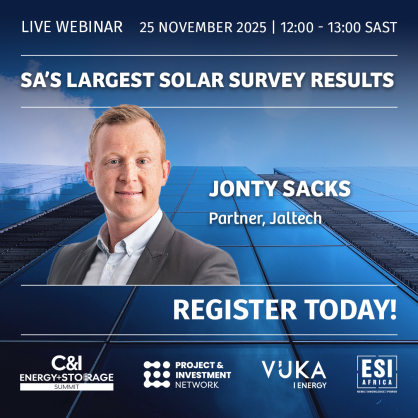
According to the recently released South Africa's Largest Solar Survey (https://apo-opa.co/487ALDZ), the South African solar market has changed, with the primary drivers for solar adoption being rising electricity tariffs and a desire for cost savings.
The findings mark a fundamental shift in how South Africans approach energy investment. While load shedding initially sparked the solar boom, the survey shows adoption momentum remains strong despite the easing of power cuts, with 82% of homeowners and 79% of businesses surveyed who don't have solar planning to install solar within the next 12 months.
Solar generation now costs between 30% to 50% less than grid electricity (around R1.20–R1.70/kWh equivalent after installation). The survey results reveal that 93% of homeowners and 79% of businesses surveyed with solar systems are already realising measurable savings on their electricity bills.
The research, conducted by Jaltech (https://Jaltech.co.za/) and based on over 2,000 South African solar users and potential adopters, represents the country's largest solar user survey to date.
Enlit Africa and Jaltech will present a webinar of the key insights from the report at 12pm on Tuesday, 25 November 2025. This session is tailored for solar installers/developers, commercial and industrial energy users, and landlords who are considering solar or want to understand current market trends and the impact of solar adoption. Register here: https://apo-opa.co/3MdCXT2
In the commercial and industrial market, the use of energy management systems (EMS) is rising, helping users optimise performance, monitor savings, and reduce wastage, an indication that South African businesses are becoming more energy savvy, driven by the high cost of power. For 54% of business users surveyed, solar now offsets the majority of their energy consumption.
"South Africa's solar market has matured rapidly," says Jonty Sacks, partner at Jaltech. "What began as a response to unreliable electricity supply has become a core financial decision. Solar now represents cost stability, resilience and long-term savings for South Africans from day one."
Respondents included homeowners and businesses across diverse sectors, from retail malls and commercial property to agriculture and manufacturing.
The full survey can be accessed here: https://apo-opa.co/487ALDZ
Distributed by APO Group on behalf of VUKA Group.About Enlit Africa:
Enlit Africa (https://apo-opa.co/4444Mnd) brings the top manufacturers, associations, institutions, and government leaders together to shape a sustainable, prosperous energy and water future for Africa. A leading power, energy and water conference and exhibition, Enlit Africa is designed to provide a unique platform to connect decision-makers and determine Africa's future direction of travel.
Enlit Africa takes place annually at the CTICC, Cape Town, South Africa. The event is CPD accredited by the SAIEE and SAICE, thereby contributing to the professional development of industry experts.
For more information, please visit the Enlit Africa website (https://apo-opa.co/4444Mnd).
About Jaltech:
Jaltech is a leading alternative investment and renewable energy fund manager, financing solar installations across South Africa. The firm has funded over R1 billion in commercial solar assets, helping businesses and homeowners reduce their electricity costs while supporting the country's transition to cleaner energy.
About VUKA Group:
VUKA Group (https://WeAreVUKA.com/) brings people and organisations together to connect with information and each other in meaningful conversations to reach the next level of growth in their industry ecosystem. With 20 years of experience in Africa, the group serves the Energy, Mining, Smart Mobility, Transport and Retail sectors, through a range of industry touchpoints across digital, print and in-person platforms. With a commitment to data at its core, the group is well-positioned to support industry stakeholders today and into the future. Operating from Cape Town, South Africa the group is actively involved in projects across continental Africa and boasts a diverse African team who take great pride in the work they do for the sectors and markets they serve.