
MODEC Senegal Executives to Speak at MSGBC Oil, Gas & Power 2025

Fatou Diop, Legal, Contracts and Local Content Manager, and Malcolm Watson, Managing Director of offshore oil and gas service company MODEC Senegal will participate as speakers at the upcoming MSGBC Oil, Gas & Power 2025 conference and exhibition.
Their participation at this year's edition – taking place in Dakar on December 8-10 – is set to provide insights into Senegal's first offshore oil development and the operational, technical and local content strategies underpinning the project.
Explore opportunities, foster partnerships and stay at the forefront of the MSGBC region's oil, gas and power sector. Visit www.MSGBCOilGasAndPower.com to secure your participation at the MSGBC Oil, Gas & Power 2025 conference. To sponsor or participate as a delegate, please contact sales@energycapitalpower.com.
MODEC Senegal plays a central role in the Sangomar field development – which achieved first oil in June 2024 – operated by global energy company Woodside Energy, with participation from Senegal's national oil company Petrosen. The field, located approximately 100km south of Dakar in water depths of around 780 meters, represents Senegal's entry into commercial oil production. The first development phase targets approximately 230 million barrels of crude oil.
MODEC Senegal's scope spans the full lifecycle of the FPSO unit FPSO Léopold Sédar Senghor, from engineering and construction support to long-term operations and maintenance. The FPSO, converted from a very large crude carrier, has a production capacity of 100,000 barrels of oil per day (bpd), gas production of 130 million standard cubic feet per day, water injection capacity of 145,000 bpd and storage capacity of 1.3 million barrels of crude oil. It is designed to accommodate future expansion, including gas export and tiebacks from nearby reservoirs.
MODEC contribution also includes the supply of a complex external turret mooring system through engineering consultant SOFEC, offshore commissioning and ongoing operations and maintenance managed locally by MODEC Senegal. The operation and maintenance operation has an initial duration of 10 years, with the potential for extension.
During this year's event, both executives will be well-positioned to discuss MODEC Senegal's local content initiatives, highlighting training programs, skills development and employment opportunities for Senegalese professionals. Partnerships with firms such as Axess Group are helping build local engineering capabilities to support the Sangomar project and future offshore developments in Senegal.
“MODEC Senegal's participation at MSGBC Oil, Gas & Power 2025 highlights the region's growing offshore oil sector and showcases world-class operational expertise. Attendees will gain valuable insights into Senegal's first offshore development, including technical, operational and local content strategies,” states Sandra Jeque, Events and Project Director, Energy Capital & Power.
Distributed by APO Group on behalf of Energy Capital & Power.The G20 Arrives in Africa
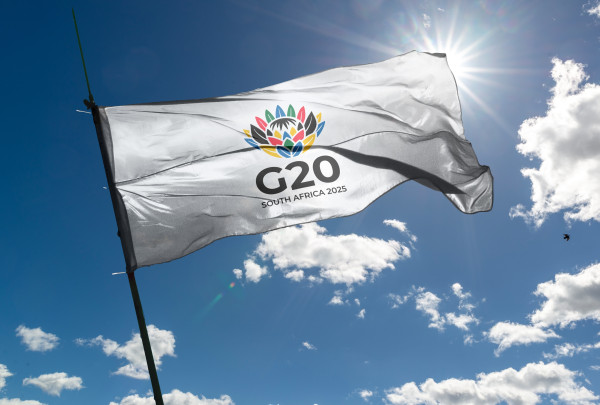
For the first time, the Group of 20 (G20) – the world's most influential economic forum – meets on African soil.
It's a moment that shifts Africa from the margins of global commentary to the centre of global agenda-setting. And when the world's most powerful governments, institutions, and investors look in this direction, one question becomes unavoidable:
Who is shaping what they see – and how do they interpret it?
In geopolitics, perception is never neutral. Narratives influence priorities. Priorities influence negotiations. Negotiations influence outcomes that last decades.
This G20 isn't just about visibility. It's about authorship.
Visibility Without Ownership is a Risk
Global attention is an opportunity – but also a vulnerability.
Africa has experienced this pattern before: headlines arrive before context, assumptions travel faster than evidence, and external voices frame internal realities.
Narrative leadership matters because it shapes the starting point of every conversation that follows.
As APO Group Founder and Chairman, Nicolas Pompigne–Mognard notes:
“As global attention turns toward Africa, controlling our narrative becomes a strategic imperative. If we don't define who we are and what we stand for, the world will do it for us – and not always accurately. Owning our narrative ensures that Africa's progress, priorities, and potential are communicated with clarity and intention.”
The G20 is a test of that ownership.
Three Reasons Why Narrative Power Matters at this G20
1. Africa deserves representation rooted in reality
The Africa driving fintech adoption, renewable innovation, cultural influence, and demographic momentum is not the Africa reflected in decades-old coverage. This G20 is a chance to replace outdated assumptions with evidence – but only if African storytellers lead.
2. Global decisions depend on the narratives leaders consume
Sherpa teams, ministers, and heads of state do not enter a vacuum; they enter a room shaped by what they have read, heard, and been briefed on.
Narrative cues influence how Africa is positioned:
- stable or volatile
- investable or risky
- strategic partner or peripheral actor
Control the narrative, and you influence the lens through which decisions are made.
3. Economic opportunity follows clarity, not noise
Capital, development finance, and long-term partnerships follow credible stories that land with precision and proximity. Africa cannot afford narratives framed by those who lack the context to interpret its complexity.
The G20 is Where Framing Becomes Policy
The public narrative often becomes the political narrative.
What dominates the news cycle filters into:
- briefing books
- Ministerial talking points
- Sherpa discussions
- stakeholder priorities
- final communique negotiations
A misframed story becomes a misaligned agenda. A well-framed one becomes leverage.
G20 Priorities Often Mirror the Stories that Rise to the Surface
Global trends reveal where African narrative agency is most urgently needed:
Climate finance
Africa produces less than 4% of global emissions yet only receives 3–4% of climate finance. This mismatch is fuelled by narratives that cast Africa primarily as a site of vulnerability rather than opportunity.
Digital public infrastructure
African markets are defining the frontier of mobile-first innovation, yet global reporting rarely reflects this leadership – shaping how DPI partnerships are prioritised.
Energy transition
Africa holds vast renewable potential, but international narratives often flatten the sector. This directly influences investor appetite.
Global supply chains
From critical minerals to pharmaceuticals to agriculture, Africa's role is structural – yet too often framed as supplementary. Narrative accuracy can alter how global supply chain resilience strategies are designed.
In a G20 year, these narratives don't just shape perception – they shape negotiation outcomes.
The G20 Spotlight Demands Strategic Media Distribution
This isn't a normal news cycle. This is a force multiplier moment.
Narrative ownership is about placing the story – with precision – where it shapes the right conversations. At APO Group, our model is built for this purpose: African stories delivered with regional nuance, cultural fluency, and continent-wide reach.
Effective media distribution means ensuring your message reaches:
- the right journalists
- in the right markets
- at the right moment
- backed by measurable impact
This is how influence is built before global leaders even land.
Africa Doesn't Need a New Story – It Needs the Microphone
Hosting the G20 is historic, but its significance depends on whether Africa owns the framing, not just the moment. The responsibility now is to ensure the world sees the continent as it is: dynamic, ambitious, complex, and central to the global future.
Because narrative power is strategic power.
And this is the moment to claim it.
The twentieth meeting of the G20 convenes in Johannesburg, South Africa, with leaders gathering from 22–23 November 2025.
Distributed by APO Group on behalf of APO Group.About APO Group:
Founded in 2007, APO Group (www.APO-opa.com) is the leading award-winning pan-African communications consultancy and press release distribution service. Renowned for our deep-rooted African expertise and expansive global perspective, we specialise in elevating the reputation and brand equity of private and public organisations across Africa. As a trusted partner, our mission is to harness the power of media, crafting bespoke strategies that drive tangible, measurable impact both on the continent and globally.
Our commitment to excellence and innovation has been recognised with multiple prestigious awards, including a PRovoke Media Global SABRE Award and multiple PRovoke Media Africa SABRE Awards. In 2023, we were named the Leading Public Relations Firm Africa and the Leading Pan-African Communications Consultancy Africa in the World Business Outlook Awards, and the Best Public Relations and Media Consultancy Agency of the Year South Africa in 2024 and again in 2025 in the same awards. In 2025, Brands Review Magazine acknowledged us as the Leading Communications Consultancy in Africa for the second consecutive year. They also named us the Best PR Agency and the Leading Press Release Distribution Platform in Africa in 2024. Additionally, in 2025, we were honoured with the Gold distinction for Best PR Campaign and Bronze in the Special Event category at the Davos Communications Awards.
APO Group's esteemed clientele, which includes global giants such as Canon, Nestlé, Western Union, the UNDP, Network International, African Energy Chamber, Mercy Ships, Marriott, Africa's Business Heroes, and Liquid Intelligent Technologies, reflects our unparalleled ability to navigate the complex African media landscape. With a multicultural team across Africa, we offer unmatched, truly pan-African insights, expertise, and reach across the continent. APO Group is dedicated to reshaping narratives about Africa, challenging stereotypes, and bringing inspiring African stories to global audiences, with our expertise in developing and supporting public relations campaigns worldwide uniquely positioning us to amplify brand messaging, enhance reputations, and connect effectively with target audiences.
South Africa to Fast-Track Gas Projects, Secure Energy Future, Minister Mantashe Says at G20 Forum

South Africa's Minister of Mineral and Petroleum Resources Gwede Mantashe announced that the country is fast-tracking domestic gas development and LNG import projects to mitigate a supply shortfall from Mozambique.
He made the announcement during the G20 Africa Energy Investment Forum – Hosted by the African Energy Chamber – in Johannesburg on November 21.
“We will continue to develop infrastructure to integrate new deposits and avail gas to South Africa,” Minister Mantashe stated, adding, “The biggest solution is us. Having access our own gas deposits.”
The country currently imports 90% of its natural gas via the 865km ROMPCO pipeline from Mozambique's Pande and Temane fields. With South African energy and chemical company Sasol planning to prioritize its internal volumes from mid-2026, the government is accelerating infrastructure and domestic exploration to secure new supplies and strengthen energy resilience.
To address the gap, the government is accelerating the Matola Floating Storage and Regasification Unit in Mozambique, expected online by mid-2026, and the Richards Bay LNG terminal in South Africa, scheduled for 2027. Plans are also underway for new pipelines to connect offshore discoveries in the Orange Basin to the national grid.
Minister Mantashe also emphasized that the country needs to spearhead regulatory reforms to unlock offshore exploration and lift moratoria in the Karoo and Orange Basins. The Orange Basin, site of major discoveries including Brulpadda and Luiperd, has the potential to drastically reduce imports, boost GDP and create jobs, the Minister stated, adding that successful development could unleash billions in investments across petrochemicals and energy sectors.
“Drill, baby, drill,” Minister Mantashe emphasized, adding, “We have no legal restriction on oil and gas exploration and exploitation in South Africa. If we make a breakthrough on oil and gas, our GDP will grow exponentially. Our people will never breathe fresh air in darkness.”
South Africa's move signals a decisive push toward energy self-sufficiency at a time when global LNG markets are volatile and domestic gas demand is set to rise.
Distributed by APO Group on behalf of African Energy Chamber.G20 Africa Energy Investment Forum: South Africa Accelerates Refinery Revival to Secure Energy Supply
South Africa's Minister of Mineral and Petroleum Resources Gwede Mantashe announced that the country is accelerating plans to rebuild domestic refining capacity and consolidate state-owned petroleum assets to strengthen energy security.
Speaking at the G20 Africa Energy Investment Forum, organized by the African Energy Chamber Mantashe said “We have sufficient storage capacity in South Africa that helps us support imports, but we can not only rely on stockpiles, but we also need to refine.”
South Africa's refining sector has been in decline following the closure of most of its aging facilities. Currently, operational sites include Natref in Sasolburg, Astron Energy in Cape Town and integrated energy and chemical company Sasol's Secunda CTL plant, which together cover roughly 30% of the nation's fuel needs.
Key closures include Sapref and Engen in Durban, while PetroSA's Mossel Bay GTL refinery remains offline due to feedstock constraints.
To reverse this trend, the government launched the South African National Petroleum Company (SANPC), merging PetroSA, the state-owned iGas and the Strategic Fuel Fund under one entity. SANPC is tasked with reviving idle refineries, consolidating state petroleum assets and reducing dependence on imports.
“We are working towards developing new refineries and ensuring SANPC leads our efforts to secure fuel supply for South Africa,” Minister Mantashe added.
South Africa's move signals a decisive push to restore refining capacity, strengthen domestic energy security and position SANPC as a central player in the country's energy transition.
Distributed by APO Group on behalf of African Energy Chamber.