
Visa Partners with Aquanow to Enable Faster Settlement Using Stablecoins
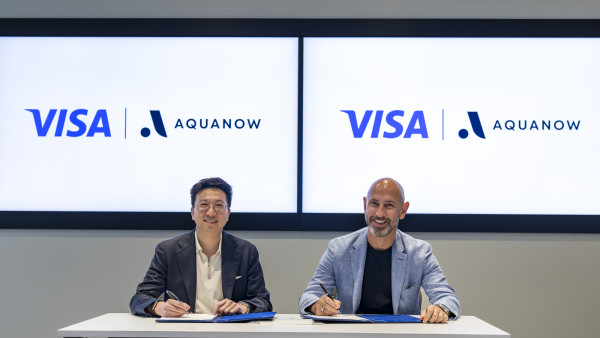
Visa (NYSE: V) (https://www.Visa.co.in/), a global leader in digital payments, today announced the expansion of its stablecoin settlement capabilities across the Central and Eastern Europe, Middle East and Africa region (CEMEA) through a partnership with Aquanow, a global digital assets platform expert in liquidity and infrastructure solutions.
The integration of Aquanow's digital asset infrastructure with Visa's world-class technology stack will enable Visa's network of issuers and acquirers to settle transactions using approved stablecoins such as USDC, reducing costs, operational friction, and settlement times.
With strong demand among financial institutions for faster and more cost-effective cross-border transactions, Visa is leveraging stablecoins to digitize the backend of money movement, supporting 365-day settlement. In 2023, Visa became one of the first major payments networks to settle transactions in stablecoin when it piloted enabling clients to fulfill their settlement obligations in USDC. To date, monthly volume has passed a $2.5 billion annualized run rate.
“By harnessing the power of stablecoins and pairing them with our trusted global technology, we are enabling financial institutions in CEMEA to experience faster and simpler settlements” said Godfrey Sullivan, Head of Product and Solutions for CEMEA at Visa. “Our partnership with Aquanow is another key step in modernizing the back-end rails of payments, reducing reliance on traditional systems with multiple intermediaries, and preparing institutions for the future of money movement.”
Phil Sham, CEO of Aquanow, said “Visa's reliable global network has long moved money securely and efficiently. Together, Visa and Aquanow are unlocking new ways for institutions to participate in the digital economy, leveraging stablecoin technology to settle with the speed and transparency of the internet”.
Distributed by APO Group on behalf of Visa Inc..Contact:
yguehi@visa.com
About Visa:
Visa (NYSE: V) is a world leader in digital payments, facilitating transactions between consumers, merchants, financial institutions and government entities across more than 200 countries and territories. Our mission is to connect the world through the most innovative, convenient, reliable and secure payments network, enabling individuals, businesses and economies to thrive. We believe that economies that include everyone everywhere, uplift everyone everywhere and see access as foundational to the future of money movement. Learn more at www.Visa.com.
About Aquanow:
Aquanow is a global institutional digital asset platform with deep expertise in liquidity and infrastructure, powering fast-growing banks, neobanks, brokerages, and payment companies. The company operates technology infrastructure and underwrites billions of dollars in monthly crypto brokerage and payment transactions. Established in 2018, Aquanow employs over 170 team members across offices worldwide. In 2024, for the second consecutive year, Aquanow was recognized on the Deloitte Technology Fast 500 list, achieving a four-year revenue growth rate of 3,022%. For further information on Aquanow, please visit www.Aquanow.com.
In the UAE, Aquanow operates via Aquanow ME FZE, which is incorporated in Dubai World Trade Centre, under license number L-2795 and regulated by Dubai's Virtual Assets Regulatory Authority with license (VL/24/01/001) activities including Broker-Dealer Services, Lending and Borrowing Services and Management and Investment Services. Virtual assets come with risks, including price fluctuations and the chance of losing your investment. They aren't covered by financial protection, so it's important to understand these risks fully.
Africa Investment Forum Hosts First ‘Mission 300’ Day, Accelerating Push for Universal Electricity Access
Download logo
The World Bank Group and the African Development Bank Group (https://www.AfDB.org), with support from The Rockefeller Foundation, the Global Energy Alliance for People and Planet, and Sustainable Energy for All (SEforALL), hosted the inaugural “Mission 300 Day” on the sidelines of the Africa Investment Forum (AIF) 2025 Market Days (http://apo-opa.co/4oeFycH) in Rabat, Morocco.
The event highlighted countries' National Energy Compacts showcased investment-ready opportunities, and galvanised action toward the shared goal of delivering electricity access to 300 million people across Africa by 2030.
The special Mission 300 Day convened African government ministers, investors, and development financiers to spotlight national commitments, present implementation roadmaps, and discuss progress on regulatory reforms essential for unlocking private-sector investment. Furthermore, the event served as a platform to strengthen investor-government dialogue, champion African private-sector leadership, and facilitate knowledge transfer on best practices for achieving expanded electricity access.
Mission 300 (https://apo-opa.co/4psuZUp) is a World Bank Group and African Development Bank-led initiative that brings together African governments, the private sector, and development partners to provide electricity to an additional 300 million Africans by 2030. Twenty-nine African countries have already developed National Energy Compacts (http://apo-opa.co/3KqI8yz) with time-bound targets to increase access, strengthen utilities, and attract private capital.
During the Mission 300 Day, ministers from Comoros, Guinea, Gambia, and Lesotho presented implementation roadmaps with specific deadlines for achieving universal electricity access by 2030, engaging directly with private-sector leaders and development partners on the regulatory reforms needed to unlock investment.
Since its inception in 2018, the Africa Investment Forum has attracted more than $225 billion in investment interest across critical sectors aligned with the Sustainable Development Goals, the African Union's Agenda 2063 (http://apo-opa.co/43MCVI0), and the African Development Bank's Four Cardinal Points (http://apo-opa.co/3Mp6hpJ) vision.
Erik Fernstrom, Regional Director for Infrastructure, East and Southern Africa, World Bank Group “Mission 300 is proving that Africa is open for business. With energy reforms underway, strong country leadership, and bankable projects ready to go, we've created real opportunities for private capital to scale solutions that will power Africa's transformation. Energy access is not just a target—it's about creating jobs, igniting economic growth, and giving millions the chance to build better lives.”
Kevin Kariuki, Vice President for Power, Energy, Climate & Green Growth, African Development Bank Group
“Mission 300 will be underpinned by massive and speedy investments in generation, transmission, distribution, as well as last-mile connectivity infrastructure, which, when complemented by necessary reforms, will ensure affordability of tariffs, financial sustainability of utilities and energy sectors, and engender enhanced private-sector investments. At the African Development Bank, we are committed to de-risking investments, mobilising institutional capital, and ensuring that Mission 300 delivers not just electricity, but millions of jobs, vibrant industries, and dignified livelihoods for our people.”
Carol Koech, VP Africa, Global Energy Alliance for People and Planet
“Mission 300 requires innovation—we cannot build the grid of the future using the tools of the past. That's why the Global Energy Alliance provides technical guidance, prepares bankable projects, and deploys catalytic capital to attract private investment. By breaking down siloes, we mobilise the blended finance needed to scale Distributed Renewable Energy (DRE) and other innovative solutions that reach underserved communities fast. The National Energy Compacts demonstrate African leadership in action, and we are proud to partner in delivering reliable, affordable, and clean energy to 300 million people by 2030.”
Damilola Ogunbiyi, CEO and Special Representative of the UN Secretary-General for Sustainable Energy for All:
“Energy access is a powerful driver of development. Through Mission 300, we're advancing an investor-ready energy transition for Africa. Sustainable Energy for All is working with partners to design innovative financing instruments that expand private sector participation in local-currency platforms, paving the way for a pan-African mechanism to unlock new capital for developers across the continent.”
William Asiko, Senior Vice President for The Rockefeller Foundation
“Mission 300 represents one of the most ambitious energy and vital energy access endeavours of our time - and what we saw at AIF today confirms this momentum is real. Governments are leading; partners are strategically aligning; and a credible pipeline is emerging that can bring clean, reliable power to hundreds of millions of Africans. Philanthropy helps spark progress, but it is the collective strength of partnerships that will deliver the final results.”
Distributed by APO Group on behalf of African Development Bank Group (AfDB).Media Contacts:
Roxanne Bauer,
World Bank
rbauer1@workldbankgroup.org
Gertrude Kitongo,
African Development Bank Group
media@afdb.org
Robert Magori,
Sustainable Energy for All (SEforALL)
robert.magori@seforall.org
Benson Kibiti,
Global Energy Alliance for People and Planet
benson.kibiti@energyalliance.org
Ashley Chang,
The Rockefeller Foundation
media@rockfound.org
About Mission 300:
Mission 300 is a partnership between the World Bank Group and the African Development Bank, with support from The Rockefeller Foundation, Global Energy Alliance for People and Planet, and Sustainable Energy for All (SEforAll), to connect 300 million people in Africa to electricity by 2030. The platform brings together African governments, the private sector, philanthropy, and development partners to deliver affordable, reliable power, expand access, attract private investment, and drive economic transformation.
For more information on Mission 300, visit https://apo-opa.co/4psuZUp
Islamic Development Bank Institute (IsDBI) Launches eBook Reader App Review Competition
Download logo
The Islamic Development Bank Institute (https://IsDBInstitute.org/) is pleased to announce the launch of a Competition of the IsDBI eBook Reader App Review. The Reader offers the access to the Institute's extensive collection of publications in Islamic economics and finance on its online bookstore (https://IsDBInstitute.org/publication).
We invite users to share their experiences and feedback as part of a major initiative to enhance the user experience and performance of the Reader.
Participants in the competition stand the opportunity to win generous cash awards:
- First Prize: US$1,500
- Second Prize: US$1,000
- Third Prize: US$700
The competition also offers an opportunity for participants to influence the future of digital access to knowledge in Islamic economics and finance, and gain recognition for their insights and contributions.
The IsDBI eBook Reader App was released in 2022, available for iOS and Android smart devices, and as a web-based cloud version for all supported browsers. This competition aims to promote user engagement and collect qualitative feedback for further enhancements of the Reader.
More information on the Reader and how to download/access it is available here: https://IsDBInstitute.org/ebook-reader-application/
Participants in this competition are expected to submit a written review essay (about 700-1,000 words) of their experience using the Reader, addressing the following aspects: ease of use; interface/navigation; speed; reading features (bookmarking, highlighting, etc.); and library.
We invite users to submit their reviews by email to isdbi-info@isdb.org (with copy to info@isdbinstitute.org) by 15 January 2026.
Full details on the competition are available on IsDBI website here: https://IsDBInstitute.org/ebook-reader-application/
Distributed by APO Group on behalf of Islamic Development Bank Institute (IsDBI).Social media handles:
X (Twitter): https://apo-opa.co/4rmrCQD
Facebook: https://apo-opa.co/4rvJOrp
LinkedIn: https://apo-opa.co/48CJ7oz
About the Islamic Development Bank Institute:
The Islamic Development Bank Institute (IsDBI) is the knowledge beacon of the Islamic Development Bank Group. Guided by the principles of Islamic economics and finance, the IsDB Institute leads the development of innovative knowledge-based solutions to support the sustainable economic advancement of IsDB Member Countries and various Muslim communities worldwide. The IsDB Institute enables economic development through pioneering research, human capital development, and knowledge creation, dissemination, and management. The Institute leads initiatives to enable Islamic finance ecosystems, ultimately helping Member Countries achieve their development objectives. More information about the IsDB Institute is available on https://IsDBInstitute.org/
At trade show, Moroccan textiles aim to boost exports
Download logo
At the Morocco in Mode 2025 trade show in Casablanca, Moroccan textile and clothing manufacturers reaffirmed their export ambitions, especially toward European markets. They are actively seeking financing solutions and aligning with evolving EU sustainability standards.
From 5 to 7 November 2025, Casablanca hosted the 2025 edition of the MIM trade fair, organised by the Moroccan Association of Textile and Clothing Industries (AMITH). Key players in textiles and clothing gathered to discuss how to improve regional and international cooperation.
The International Trade Centre (ITC) supported the initiatives of the Morocco Textile and Clothing programme, promoting sustainable development and competitiveness.
The trade fair featured two flagship conferences:
-
The impact of the European Green Deal and new EU regulations on ethical sourcing: Presented by Ms. Andry Razafindrakoto, Expert in Corporate Environmental and Social Transition. It highlighted the urgency for Moroccan companies to prepare for the new requirements, while calling for greater involvement from brands to ease the regulatory burden.
-
Financing guide for textiles and clothing: Co-hosted by Ms. Aicha Iraqi, Sustainability Specialist, and Mr. Marouane Mouafir, Financial Strategy Expert. it highlighted the financing tools available, particularly green financing. The issue of personal guarantees for managers in accessing loans and subsidies was particularly emphasised.
Business meetings and regional synergies
Business meetings let Moroccan companies speak directly with Spanish brands such as El Corte Inglés, SCALPERS and renatta&go, strengthening commercial opportunities across the Mediterranean.
On the sourcing side, the active participation of Egyptian companies (LIONTEX CO., FITEX, Nassertex) and Tunisian companies (Chimitex, mastex) enriched the range of materials and accessories on offer, consolidating ties across North Africa.
With this 2025 edition of the MIM trade show, the Moroccan textile and clothing sector has confirmed its ability to respond to international challenges, strengthen its regional partnerships and integrate the requirements of sustainability, innovation and competitiveness.
Distributed by APO Group on behalf of International Trade Centre.African Union International Centre for Girls and Women’s Education (AU CIEFFA) Continental Youth Workshop on Digital Innovation and Girls in Science, Technology, Engineering, Arts...
Download logo
A Continental Youth Capacity Building Workshop on Girls in STEAM (Science, Technology, Engineering, Arts and Mathematics) for Gender-Responsive Education has officially opened in Nairobi, Kenya. Running from 25th –28th November 2025, the workshop is held under the theme: “Empowering Girls in STEAM: Innovating for Inclusive and Gender-Responsive Education in Africa.”
Organised by the African Union International Centre for Girls and Women's Education (AU CIEFFA) in collaboration with UN Women, the convening seeks to empower young women leaders in STEAM fields and AU CIEFFA alumni with essential digital and financial literacy skills. The initiative aims to amplify advocacy for girls' STEAM education and the #AfricaEducatesHER Campaign, while showcasing grassroots efforts by young women advancing education in their communities.
The workshop also celebrates the achievements of women role models in STEAM, including projects led by the AU Go-Gal Top 10 innovators and AGCCI Alumni.
Representing Kenya's Ministry of Education, Dr. Elyas Abdi, Director General, emphasised the country's commitment to strengthening STEAM interventions: “Kenya's commitment to STEAM education is anchored in the national reforms guided by the government's Kenya Kwanza Education Charter and the Presidential Working Party on Education Reform (PWPER). These frameworks prioritise strengthening STEM and STEAM pathways, expanding digital learning, enhancing teacher professionalism, upgrading laboratories, and promoting gender equity across all levels of education.”
Despite progress, girls remain significantly underrepresented in STEAM education across Africa. Women account for only 35% of STEM graduates, a figure that has stagnated over the past decade.
“For far too long, science has been viewed as a domain reserved for boys and men. While this narrative is gradually shifting, the representation of girls and women in STEAM remains disproportionately low. Yet, young African girls possess the curiosity, creativity, and intellectual rigour required to drive innovation. What they have often lacked is not talent, but equitable access to technology, inspiring female role models, and an educational environment that nurtures and believes in their potential”, said Mrs. Simone Yankey, Coordinator of the AU CIEFFA.
The workshop convenes young people and STEAM professionals from 24 African Union Member States, the majority of whom are women.
Mr Joshua Musyimi, Programme Specialist at UN Women Kenya Office, underscored the importance of policy advocacy, “It is critical not only to equip girls with digital and leadership skills, but also to advocate for policies that guarantee their access to technology, and to push for national education systems to integrate gender, ICT, and coding-related skills. Only then can we ensure that digital inclusion is not a privilege, but a right — and that the achievements of AGCCI (African Girls Can Code) reach more girls, in more communities, for generations to come”.
Contributions from the World Bank Group, represented by Mr Saifeddine Ben Mhenni, and Dr Olubusayo Akinola, Head of Social Welfare, Drug Control and Crime Prevention from AUC's Department of Health, Humanitarian Affairs, and Social Development highlighted ongoing initiatives to promote STEAM across Africa.
The workshop is supported by the World Bank's East Africa Girls' Empowerment and Resilience (EAGER) program and aligns with AU CIEFFA's Strategic Axis 3 on STEAM and Skills Development. It further contributes to continental commitments, including AU Agenda 2063, CESA 16-25, and the recommendations from the 2024 Conference on Transforming STEM in Africa, co-organised by the AU and UNESCO in Addis Ababa.
Distributed by APO Group on behalf of African Union (AU).