
Petralon Energy Advances Dawes Island Drilling Activities Through Petroleum Industry Act (PIA)-Driven Development Strategy
Download logo
African exploration and production company Petralon Energy is advancing drilling activities at the Dawes Island field, situated at PPL 259 in Nigeria. The company brought the DI-2 well online while announcing the successful spudding of the DI-3 well. Both milestones reflect an ambitious drive to bolster production through continuous drilling activities in line with the country's Petroleum Industry Act (PIA), underscoring the central role independent companies play in driving Nigeria's production goals.
Following his inspection of operations at the Dawes Island field, Nigeria's Minister of State for Petroleum Resources (Oil) Sen. Heineken Lokpobiri issued a strong endorsement of Petralon Energy and its operational milestones. Minister Lokpobiri commended the company for supporting the country's production strategy, highlighting the impact of the PIA in not only delivering the country's oil and gas goals but cementing the role indigenous companies play in the country's production portfolio.
“After inspecting operations at the field operated by Petralon Energy Limited, I noted that we have always maintained that the era of holding licenses as souvenirs is over. Under the “Drill or Drop” provision of the PIA, operators must remain actively engage in drilling activities or be prepared to relinquish such assets,” Minister Lokpobiri stated. He further explained that Petralon Energy represents an example for other licensees to follow, highlighting the value of a ‘drill, baby drill' approach to meet Nigeria's production quota as the country targets 2.5 million barrels per day (bpd) in the coming years.
Representing the voice of the African energy sector, the African Energy Chamber (AEC) welcomes the strong endorsement of Petralon Energy by Minister Lokpobiri. His remarks underscore a critical message for Nigeria's upstream sector: that regulatory clarity, deliberate government support and operator accountability are now working hand-in-hand to deliver real barrels and real future. For the AEC, Petralon's performance is a compelling demonstration of what the PIA was designed to achieve – an environment where committed indigenous operators can thrive, production can grow and communities become active stakeholders in the success of energy projects.
Petralon Energy has become a key example of Nigeria's upstream momentum. Since taking over the Dawes Island field, the company has revived abandoned infrastructure, restarted the DI-2 well and launched a drilling campaign adding up to 2,500 bpd. These results reflect what Minister Lokpobiri called Petralon's “commendable capacity,” reinforcing the message that empowered indigenous operators can deliver real volumes that support national production goals. Other indigenous operators stand to learn from Petralon Energy's approach, positioning themselves at the forefront of PIA-led production growth in Nigeria.
Petralon Energy's work at PPL 259 shows what becomes possible when regulatory certainty, local capability and steady investment are working in sync. Its role in the Project One Million Barrels initiative further demonstrates how indigenous players are stepping into the space left as international major shift away from onshore and shallow-water assets. Petralon Energy has also moved early on community engagement, an area that has historically slowed progress in the Niger Delta. Through Petralon 54, the company has set up Host Community Development Trusts for the Ogoloma and Koniama communities – swift action that signals respect for the PIA and recognition that operations and social license must go hand-in-hand. This approach aligns strongly with the Chamber's push for development models that build long-term stability and trust.
“Petralon Energy has shown what happens when you give capable Nigerian companies the room to perform – they deliver. The company's progress at Dawes Island is proof that indigenous operators are essential to hitting national production targets,” states NJ Ayuk, Executive Chairman, AEC.
Nigeria remains the pillar of Africa's energy landscape, and strengthening local participation is essential to sustaining that role. Petralon Energy's progress, paired with active government engagement, offers a practical model for boosting production, deepening local ownership and ensuring that resource development is transparent and broadly beneficial.
Distributed by APO Group on behalf of African Energy Chamber.Merck Foundation congratulates Kenya First Lady, Mama Rachel Ruto and the Joyful Women Organisation as they mark 16 years of inspiring women economic empowerment

Merck Foundation (www.Merck-Foundation.com), the philanthropic arm of Merck KGaA Germany, extends heartfelt congratulations to H.E. Mama Rachel Ruto E.G.H., First Lady of Kenya, and the Joyful Women Organization (JOYWO) on marking 16 impactful years of inspiring women economic empowerment across Kenya.
Senator Dr. Rasha Kelej (Ret.), CEO of Merck Foundation shared, “Congratulations to Mama Rachel Ruto and Joyful Women Organization on this remarkable milestone, sixteen years of empowering women, strengthening communities, and driving real change is truly an achievement to be celebrated.”
Through the table-banking model and community-led initiatives, Joyful Women has opened pathways for women to start businesses, support their families and strengthen communities.
“We celebrate Mama Rachel's visionary leadership and partnership in building a more inclusive, prosperous Kenya.” Kelej added.
Merck Foundation is closely working with The First Lady of Kenya, and as a part of their joint efforts to strengthen healthcare capacity in Kenya, they have provided 295 scholarships for Kenyan healthcare providers in 44 critical and underserved specialties, helping to transform the patient care landscape across the country.
Moreover, Merck Foundation in partnership with Kenya First Lady will provide almost 100 scholarships of one-year postgraduate diploma of critical nutrition for Kenyan doctors across the 47 counties of Kenya over the next four years as part of her Feed One, End Hunger Program.
Additionally, through the “Educating Linda” program, Merck Foundation is providing annual scholarships to 47 deserving yet underprivileged Kenyan schoolgirls, helping them continue their education and enabling them to reach their full potential.
“Congratulations once again on 16 years of impact, here's to many more! #JoyfulAt16” added Dr. Rasha Kelej
Distributed by APO Group on behalf of Merck Foundation.Contact:
Mehak Handa
Community Awareness Program Manager
Phone: +91 9310087613/ +91 9319606669
Email: mehak.handa@external.merckgroup.com
Vodacom M-Pesa Tanzania Launches Cross-Border payments across the Globe

Vodacom Tanzania (www.Vodacom.com), the country's leading telco company, is revolutionizing cross-border trade and digital financial inclusion with the launch of M-Pesa Global Payment. In partnership with VISA, Alipay, Network International, Magnati, and MTN Uganda, customers can now make global Tap & Pay transactions using the M-Pesa Visa tokenized card, pay merchants in China via Alipay, enabled by Thunes, transact in Dubai through TerraPay-supported merchants, and pay merchants in Uganda directly into MTN MoMo wallets, powered by Thunes, all from the M-Pesa menu or the M-Pesa Super App
The process is secure, user-friendly, and eliminates the burden of traditional banking barriers for traders and businesses. Combined, these solutions position M-Pesa as one of the most advanced digital payment systems in Africa.
These innovations respond to the growing demand from Tanzanian customers and travelers who frequently transact across East Africa, the Middle East, Asia and globally, but often face challenges with costly, slow, or insecure payment processes. “Our partnerships with VISA, Alipay, Network Internal and MTN Uganda demonstrate our commitment to building a strong and interconnected digital payments ecosystem. Together, we are enabling people and businesses to transact across borders with the same ease as they transact locally, securely, instantly, and affordably. This is central to M-Pesa's Purpose deepening financial inclusion and ensuring that digital innovation benefits every micro, small and medium enterprise. Through this combined effort, we are opening new trade corridors, reducing the cost of doing business, and giving customers greater freedom to participate in the global digital economy” said Epimack Mbeteni, M-Pesa Director at Vodacom Tanzania
This launch introduces the new M-Pesa Tap & Pay Solution with Visa, the first of its kind in Africa, enabling customers to pay worldwide using their phones through the M-Pesa Visa card. Speaking on the M-Pesa Tap & Pay innovation, Victor Makere, Visa Country manager for Tanzania said: “Through our collaboration, we are enabling millions of M-Pesa customers to experience secure, seamless, contactless payments anywhere Visa is accepted. Tokenization brings an added layer of safety and convenience allowing customers to Tap & Pay globally using their mobile phones without exposing their card details. This innovation supports Tanzania's transition toward a fully digital payments ecosystem and empowers consumers and businesses with more modern ways to pay.”
Through Thunes' Direct Global Network, M-Pesa customers can now pay merchants in China within the Alipay ecosystem, supporting fast, secure international trade. Speaking on the role of Thunes in enabling payments to China, Andrew Stewart, Chief Revenue Officer at Thunes, added: “Digitizing cross-border payments is a game-changer for accessibility, and supports our mission to enable the next billion end users to take part in the global economy. Together with Vodacom, we are making it possible for Tanzanian businesses to pay Chinese merchants instantly through the Alipay network. This new level of interoperability and innovation strengthens trust in mobile financial ecosystems and opens new avenues for international trade.”
TerraPay powers international merchant payments, including the ability for M-Pesa users to transact with select merchants in Dubai through its global payment network. Speaking on the value of the Dubai payment corridor, Willie Kanyeki, Vice President of Sub-Saharan Africa at TerraPay, said, “At TerraPay, we believe in interoperability and enabling borderless payments. Our partnership with Vodacom expands secure digital commerce opportunities for Tanzanians doing business in Dubai, connecting African consumers to new global markets.”
As the enabling partner for merchant payments in Uganda through MTN MoMo, MTN plays a vital role in simplifying regional trade for SMEs across East Africa. Richard Yego, MTN Mobile Money Uganda Director, welcomed the collaboration saying, “This partnership marks a major stride toward seamless regional trade. Together with Vodacom, we are unlocking greater financial access for thousands of cross-border traders in Uganda and Tanzania, especially SMEs who are the backbone of our economies.”
With robust mobile money usage and mobile penetration in Tanzania, these solutions serve as strategic drivers for micro, small, and medium enterprises (MSMEs) and everyday consumers who need dependable, fast, and convenient financial tools.
As M-Pesa expands into a robust international payment platform, Vodacom Tanzania remains committed to building an inclusive digital economy and transforming lives through technology.
Distributed by APO Group on behalf of Vodacom Group.United Nations Climate Change Conference (COP30): African Development Bank strengthens investments in climate-peace-security nexus

Climate change, of which Africa has been the principal victim, is aggravating severe and rising security threats across the continent — including terrorism, armed confrontations, and inter-community conflicts — endangering stability and, ultimately, the very survival of its populations.
Nine of the 10 countries most vulnerable to climate change are in Africa. The continent also accounts for 12 of the 19 countries most affected by armed hostilities, and nine of the 20 experiencing institutional and social fragility.
To help address the climate–peace–security nexus, the United Nations Office to the African Union, the United Nations Economic Commission for Africa, and the African Union Commission convened a roundtable on 14 November 2025 in Belém, Brazil — host city of the United Nations Climate Change Conference (COP30). The discussion, held under the theme “Adapting for Stability – Scaling Partnerships for Peace and Climate Resilience in Africa,” explored how the continent can strengthen cooperation and reinforce resilience in the face of rising climate-related security risks.
The side event brought together representatives from international organisations, development finance institutions, civil society, and other development actors, creating a platform for shared analysis and collaboration.
“Climate change is amplifying conflict and fragility on the continent,” explained Dr Al Hamndou Dorsouma, Manager for Climate Change and Green Growth at the African Development Bank Group. “In 2024 alone, climate disasters caused 9.8 million new internal displacements in Africa, highlighting how deeply interconnected climate risks and forced mobility are.”
He added: “Declining and irregular rainfall, as well as water scarcity, have altered the seasonal migration patterns of African pastoral communities, increasing competition between pastoral groups and between pastoral and agricultural communities. This has led to recurring conflicts in almost every region of the continent, from Ethiopia to Darfur, from Kenya to Nigeria, and throughout the Sahel.”
“There can be no implementation of climate projects without peace; we cannot fight climate change without peace,” said Nazanine Moshiri, Senior Advisor on Climate, Peace and Strategic Partnerships at the Berghof Foundation.
“As the continent's leading development finance institution, the African Development Bank Group is fully committed to working with African countries and development partners to build climate resilience while addressing the root causes of conflict and fragility,” continued Dorsouma. “I invite our colleagues and partners here today, as well as those following online, to focus our efforts on financing: investing in early warning systems and adaptation measures is not only a humanitarian imperative, but also an economically rational and sustainable solution. Every dollar invested in climate adaptation and resilience generates an ROI of between two and 10 US dollars.”
According to Abdi Fidar, Director of the Climate Prediction and Applications Centre at the Intergovernmental Authority on Development (IGAD), it is now difficult to separate the security-climate nexus, as fragile areas do not benefit from climate finance.
Dorsouma went on to explain to those present that the African Development Bank's response to the climate-peace-security nexus is threefold. First, there is its Strategy for Addressing Fragility and Building Resilience and its Transition Support Facility (TSF), a concessional financing mechanism for 37 low-income African countries enduring fragile situations. The Bank has also established a Climate Change and Green Growth Strategic Framework for 2030, which has positioned the climate-peace-security nexus at the core of its priorities for climate change adaptation in Africa.
The pan-African development institution has recently introduced innovations in the design of its operations taking on board aspects such as fragility and climate vulnerability. Most importantly, it has also increased financial resources for adaptation and resilience. In 2023, the Bank Group launched the Climate Action Window (https://apo-opa.co/4roMgzN) under the auspices of the African Development Fund, with some $450 million in funding made available. In one year of operations, the Window has already supported 59 climate action projects in African countries experiencing fragility and climate vulnerability, including 41 focused on adaptation and 18 on mitigation, with a cumulative value of $386 million, according to Dorsouma, who cited other instruments that have been implemented to tackle climate and security issues.
“Building resilience while addressing fragility requires joint action across the spectrum, from humanitarian aid to peacebuilding, but most importantly with an emphasis on climate-resilient development efforts, which is the only guarantee for safeguarding the development gains already achieved and preventing climate change from continuing to amplify fragility and undermine efforts to achieve sustainable development,” said the Bank Group representative. “I call on each and every one of us to intensify our efforts to build a more climate-resilient and peaceful Africa.”
In conclusion, Charles Mwangi, Head of Programmes at the Pan-African Climate Justice Alliance, explained that civil society, often closest to the affected communities, must be included in discussions and in the definition of national, continental and global policies, and on climate, peace, and security in order to avert local risks and injustices that could lead to conflict.
Distributed by APO Group on behalf of African Development Bank Group (AfDB).Libya Energy & Economic Summit (LEES) 2026 to Spotlight United States (U.S.) Corporate Engagement as American Firms Recommit to Libya’s Energy Future
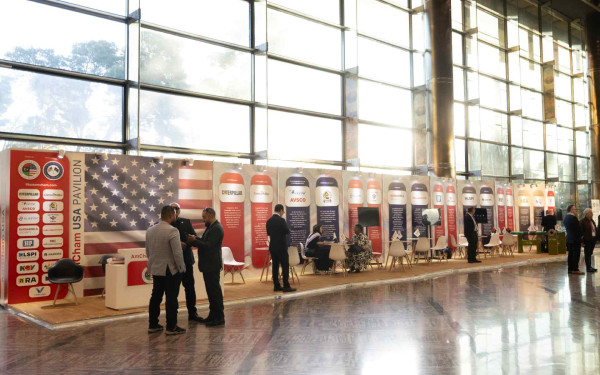
The Libya Energy & Economic Summit (LEES) 2026, taking place on January 24-26 in Tripoli, will showcase a renewed surge of U.S. participation as American companies re-engage with Libya's oil, gas and infrastructure sectors. This year marks a significant moment for U.S. investment momentum, reinforced through expanded commercial programming and strategic dialogues, signaling renewed confidence in Libya's oil, gas and infrastructure markets – and marking a strategic shift in the way American majors are approaching the region.
A major highlight of the Summit will be a dedicated U.S.-Libya Roundtable and a U.S. pavilion, underscoring growing institutional and corporate commitment to Libya's energy future. Discussions will explore collaboration in exploration, field redevelopment and energy services, highlighting areas where American firms can add unique value – from advanced technologies and workforce training to midstream and gas infrastructure innovation. Through these contributions, U.S. investment can accelerate technology transfer, strengthen local supply chains and support Libya's broader industrial development and energy transition objectives. Meanwhile, the pavilion will host a broad range of American firms, industry associations and technical service providers, offering a platform for partnerships across upstream, midstream, downstream and infrastructure development.
Industry leaders ConocoPhillips and SLB will feature prominently at LEES 2026, reflecting the resurgence of U.S.-linked investment interest. ConocoPhillips, a key partner in the Waha Oil Company, continues to support major redevelopment efforts aimed at boosting output at one of Libya's most strategic concessions. SLB, one of the most active technology and service providers in Libya, is deepening its collaboration with the NOC to enhance crude production, modernize operations and support the country's long-term sustainability goals. The company is deploying advanced drilling, well placement and production optimization technologies across priority fields, while expanding its footprint through new contracts – including a milestone agreement to drill three wells in the Nesr and Al-Waha fields. Hill International, meanwhile, recently secured a $235 million contract for the Structures A&E gas field project, forming part of a multi-billion-dollar program to strengthen Libya's natural gas capacity.
These players will be joined by Halliburton, Baker Hughes and ExxonMobil, all of which are deepening their engagement with Libya's National Oil Corporation (NOC) and assessing new commercial, technical and exploration opportunities. ExxonMobil recently signed an MoU with the NOC to undertake geological and geophysical studies covering four offshore blocks in the northwest and Sire Basin – reflecting analytical interest and preliminary evaluation of future partnership potential. The company is also expected to participate in Libya's current licensing round, which covers 22 onshore and offshore blocks.
Chevron has also re-emerged as a major talking point ahead of LEES 2026. Following high-level discussions in London, the NOC confirmed that Chevron is showing serious interest in returning to Libya after a 15-year hiatus. Talks have centered on cooperation in exploration, unconventional resources and undeveloped reservoirs, with Libyan officials emphasizing the country's significant untapped potential across oil and natural gas.
Technical programming will represent another major pillar of U.S. engagement. The Society of Petroleum Engineers Libya will host technical sessions on January 24, featuring discussions on enhanced oil recovery, field redevelopment, marginal field development strategies and digitalization in Libya's oilfields. On January 25 and 26, S&P Global Commodity Insights will lead specialized technical sessions covering market intelligence, production trends, resource monetization and global energy outlooks relevant to Libya's future planning. These sessions are designed to attract active exploration and support the NOC's ambitious target of 2 million barrels per day by 2030.
Institutional participation is set to complement private-sector involvement. The U.S. Embassy – expected to participate at LEES 2026 – supports expanded commercial cooperation between the two countries, encouraging transparent governance and reinforcing bilateral economic engagement. The American Chamber of Commerce (AmCham) in Libya – once again a strategic partner of the summit – continues to promote U.S. company participation following its Washington D.C. forum spotlighting opportunities across hydrocarbons, renewables and infrastructure.
“The U.S.-Libya Roundtable reflects a decisive turning point in commercial engagement,” says James Chester, CEO of Energy Capital & Power. “American companies are now investing in Libya in ways we haven't seen for decades – driving technology transfer, securing long-term production and helping the country realize its full energy potential.”
With exploration interest rising, redevelopment underway and several U.S. majors and service providers reassessing market entries, the U.S.-Libya Roundtable at LEES 2026 will serve as a critical platform to consolidate this momentum and shape a long-term roadmap for sustainable growth in one of the North Africa's most promising energy markets. With the previous edition of LEES featuring 18 U.S. companies in the national pavilion – momentum next year is expected to build significantly. Together, these developments mark a strategic pivot, with U.S. companies taking a leading role in shaping Libya's energy future by deploying capital, technology and expertise at an unprecedented scale.
Join industry leaders at the Libya Energy & Economic Summit 2026 in Tripoli and explore investment opportunities in one of North Africa's most dynamic energy markets. LEES 2026 offers a premier platform for partnerships, innovation and sector growth. Visit www.LibyaSummit.com to secure your participation. To sponsor or participate as a delegate, please contact sales@energycapitalpower.com.
Distributed by APO Group on behalf of Energy Capital & Power.World Future Energy Summit 2026 to spotlight potential of Artificial Intelligence (AI) in Middle East’s clean energy sector
- AI will be key enabler for countries to achieve national clean energy goals
- AI technologies help companies reduce energy consumption by as much as 60%
- Artificial Intelligence Conference to explore ways to tackle AI's energy footprint
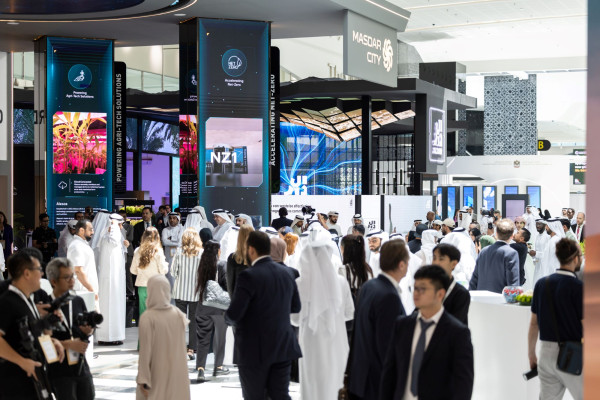
As artificial intelligence emerges as a transformative force in the clean energy sector, the World Future Energy Summit 2026 (www.WorldFutureEnergySummit.com) will spotlight its vast potential to reshape energy production, transmission, and efficient, data-driven distribution. Running from January 13-15 at Abu Dhabi National Exhibition Centre (ADNEC), the three-day show is an integral part of Abu Dhabi Sustainability Week 2026.
With the theme of AI running across all seven conference tracks at this year's show, the 2026 edition will build on that momentum, raising the bar with the launch of the FUSE AI Zone, a dedicated platform where more than 40 companies will showcase cutting-edge AI solutions to drive clean energy, smart infrastructure, and climate resilience. The event will also incorporate the inaugural Artificial Intelligence Conference, a forum exploring how AI can be responsibly harnessed to accelerate progress across the energy, infrastructure, and smart cities sectors.
Gathering thought leaders, innovators, and policy influencers, the Summit will laser in on AI's predictive power and its ability to optimise the management of clean energy flows, providing a vital technical boost to help low-carbon systems scale effectively.
Using AI to Accelerate Technical Breakthroughs
In the Middle East and North Africa (MENA), AI adoption is accelerating across multiple areas, from grid and demand-response management to sector coupling and system maintenance. Advances in forecasting and energy storage are also enhancing performance, enabling companies to deliver renewable energy with greater efficiency and reliability. Yet important questions remain about how best to unlock AI's full potential to power the sustainable energy systems of the future.
For example, can AI make up for shortcomings in energy policy that hold back the transition to carbon-free energy? Can it accelerate innovation to enable researchers and entrepreneurs to more rapidly test and prove technologies that make a direct impact on decarbonisation? These pressing issues, plus the potential of AI to advance the exploration of mineralisation for carbon capture, will be addressed by leading experts at January's World Future Energy Summit, now globally recognised as the world's premier business event focused on future energy and sustainability.
The UAE's clean energy goals, driven by its Net Zero by 2050 Strategic Initiative, involve increasing clean energy to 50 per cent of the total energy mix by 2050, reducing carbon emissions by 70 per cent, and tripling renewable energy capacity by 2030. AI will be a key enabler for achieving these clean energy targets across the region.
The World Future Energy Summit and Abu Dhabi Sustainability Week's Advisory Committee's 2025 AI and Technology Insights Report supports this, stating that AI can significantly enhance the efficiency and reliability of clean energy and infrastructure networks both regionally and globally.
According to the report, smart grid algorithms can accurately predict and then balance electricity supply and demand in real time, integrate renewables, and reduce the need for constructing new power plants. Investment in digital infrastructure and skills is key, however, so that utilities can harness data for grid optimisation and predictive maintenance.
Driving Energy Efficiency in Homes and Businesses
The 2026 edition will also highlight the growing role of AI in enhancing energy efficiency within buildings. According to the World Economic Forum, AI technologies are already helping companies reduce energy consumption by up to 60 per cent in some cases.
While the industry has only just begun to tap into AI's full potential in this field, the opportunities for progress are vast. Through panel discussions and keynote sessions, a powerhouse of industry experts will explore the key challenges and opportunities surrounding energy efficiency in homes and businesses across the MENA region and beyond.
Speakers will discuss how new AI- and automation-powered design tools can help create spaces that are energy-, water- and people-efficient, all while staying within budget. They will also examine how smart software can rapidly test design options to identify solutions that cut costs and reduce environmental impact. Additional sessions will address how innovation, collaboration, and resilient supply chains can help build sustainable urban futures.
Shyam Parmar, the Summit's Event Director, added: “By bringing together some of the brightest minds from across the global energy landscape, the World Future Energy Summit plays a pivotal role in unlocking the vast potential of artificial intelligence, not only to drive greater energy efficiency in homes and businesses, but to accelerate progress across the entire clean energy and sustainability ecosystem.
“The new FUSE AI Zone and Artificial Intelligence Conference provide an unparalleled platform for knowledge exchange, collaboration, and lively debate on how AI can be deployed responsibly and effectively. These conversations are vital to advancing the AI agenda and ensuring companies can fully harness their capabilities to meet clean energy ambitions. By facilitating this dialogue, we're helping to translate innovation into action, and turning bold ideas into tangible outcomes that move the world closer to a sustainable energy future.”
Understanding AI's Energy Consumption
AI's transformative potential is undeniable, yet credible estimates project AI-related electricity consumption could grow by as much as 50 per cent each year from 2023 to 2030. The electricity demand of data centres is also projected to grow, from one per cent of global energy demand in 2022 to more than three per cent by 2030.
In January 2025, Masdar and Emirates Water and Electricity Company announced the launch of the world's first large-scale round-the-clock giga-scale project, combining solar power and battery storage in Abu Dhabi. Delivering up to one gigawatt of baseload power every day generated from renewable energy, it will be the largest combined solar and battery energy storage system in the world.
According to the 2025 AI and Technology Insights Report, such projects could redefine how critical AI systems are powered, eliminating the need for fossil fuel-backup. By connecting to clean energy sources, AI data centres could operate with near-zero carbon emissions, marking a major step towards a more sustainable digital future.
The Summit will explore ways to tackle AI's energy footprint with a dedicated panel session on actionable strategies to realign AI growth with climate goals, balance energy consumption, and drive sustainable innovation without sacrificing usability.
“AI's role in climate and environmental systems is expanding rapidly and understanding how to guide that growth is becoming just as important as advancing the technology itself,” said Mehdi Ajana, Head of Strategy at Nabat. “At the World Future Energy Summit, we'll look at practical, data-driven approaches, from improving habitat classification and health assessment model accuracy, to monitoring carbon and biodiversity metrics that help align AI innovation with measurable climate outcomes”.
“It's a great opportunity for like-minded organisations to come together, listen, learn, and explore what's possible and to understand how AI can be deployed responsibly to accelerate real progress towards global sustainability goals.”
Paving the Way to a Sustainable Future
The 2026 edition of the World Future Energy Summit will also explore the role of AI in healthcare, food security, and weather modelling, with a keynote presentation on Earth Two Climate, G42, and NVIDIA's new AI-powered weather forecasting solution that accurately gauges weather conditions down to a single square-metre. This is invaluable to farmers and smart agriculture planners, who can make more informed decisions on crop choices, yield expectations, maintenance procedures, and more.
From cutting energy waste to improving health outcomes and driving farming efficiencies, AI is a powerful means to accelerate sustainability solutions. According to the 2025 AI and Technology Insights Report, however, it must be guided by clear human-defined goals: “Technology deployments should focus on solving real problems rather than adopting AI for AI's sake”. That means human oversight, strategic vision, and multidisciplinary collaboration should be seen as essential in order to convert AI's promise into tangible progress, paving the way to a cleaner, greener, and more sustainable future.
The World Future Energy Summit 2026, hosted by Masdar and part of Abu Dhabi Sustainability Week, will take place from January 13–15 at ADNEC Centre Abu Dhabi.
Distributed by APO Group on behalf of World Future Energy Summit.For media inquiries, please contact:
press@masdar.ae
Connect:
Facebook: https://apo-opa.co/4anqfLs
Twiiter/X: https://apo-opa.co/4oiQczi
World Future Energy Summit:
As the largest event during ADSW, the World Future Energy Summit continues to be a driving force for innovation, collaboration, and thought leadership in renewable energy and sustainability. Now entering its 18th edition, the Summit has established itself as a vital platform bridging policy with real-world action and business growth.
The 2026 edition, taking place from 13–15 January, will feature more than 800 global brands, the dynamic Greenhouse start-up zone, the Fuse AI cleantech pavilion, and the debut of the Greenpeace Cinema. Over three days, attendees will have the opportunity to join conferences led by 300+ industry experts, explore nine exhibition halls showcasing breakthrough products and solutions, and connect with more than 50,000 participants from across the globe.
About Abu Dhabi Sustainability Week:
Abu Dhabi Sustainability Week (ADSW) is a global platform supported by the UAE and its clean energy leader, Masdar, to address the world's most pressing sustainability challenges through crucial conversations accelerating responsible development and fostering inclusive economic, social and environmental progress.
For more than 15 years, ADSW has convened decision-makers from governments, the private sector and civil society to advance the global sustainability agenda through dialogue, cross-sector collaboration and impactful solutions. Throughout the year, ADSW conversations and initiatives facilitate knowledge sharing and collective action that will ensure a sustainable world for future generations.
About Masdar:
Established in 2006, Masdar (Abu Dhabi Future Energy Company) is a global clean energy leader, transforming how the world produces and consumes energy through bold innovation and commercial excellence.
Masdar is a clean energy investor, developer and operator, advancing renewable energy projects across key markets and technologies, with a global project portfolio capacity to date of over 51 gigawatts (GW).
Jointly owned by TAQA, ADNOC and Mubadala, Masdar is driving the scale-up of renewables worldwide, targeting a portfolio capacity of 100GW by 2030.
For more information, please visit: https://Masdar.ae/