
Scotland London Africa Week 2025 Celebrates Exceptional Engagement, Real Business and Strong Momentum for United Kingdom (UK)-Africa Trade
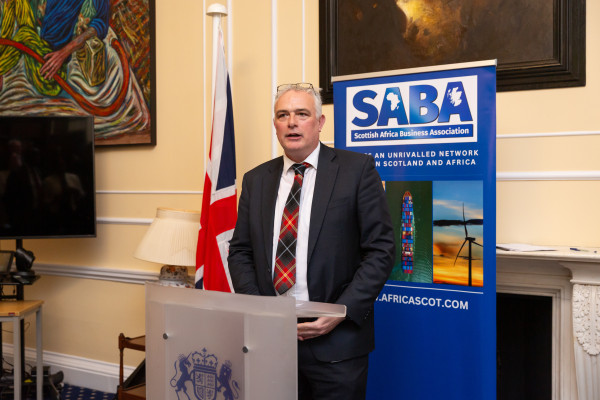
Scotland London Africa Week 2025 has concluded with outstanding feedback from delegates who described the programme as energising, insightful and productive. Across the week leaders from Scotland, London and Africa came together for high-level engagement, practical discussion and fresh opportunities for collaboration.
The week opened at Old Admiralty House with a strategic briefing from the Department for Business and Trade's Africa team. Delegates were introduced to the UK Government's 10-year industrial strategy and its eight growth sectors before the conversation explored the UK's approach to trade agreements in areas linked to skills and planning reform and how the department works with international partners while keeping a clear focus on priority opportunities.
Officials highlighted the 130 projects delivered through the Ricardo Fund and shared updates on the UK's Critical Minerals Strategy, the ETIP in Nigeria and the SACUM tariff review. Ben Ainsley delivered an in-depth overview of major African markets while noting that Africa, home to 30% of the world's population by 2050, is rapidly shaping global economic trends. His briefing covered Egypt, South Africa, Uganda, Ethiopia, Cote d'Ivoire, Senegal, Ghana, Kenya, Morocco and Nigeria.
A lively roundtable followed, with delegates raising questions on finance, clean energy, supply chain requirements and food security before continuing to Marlborough House for a meeting with the South African Chamber of Commerce UK and some of its members, kindly hosted by the Commonwealth Secretariat. Our delegates learned that South Africa remains the UK's largest trading partner in Africa with trade ties going beyond goods and aligning with many sectors Scottish businesses are active in. The day ended with an informal dinner that encouraged open conversation and new introductions between our own delegates.
The following day began at the Egyptian Bureau for Cultural & Educational Affairs where Minister Plenipotentiary Wael Abdelraheem and the Egyptian British Chamber of Commerce shared detailed insight on Egypt's trade and investment landscape. Delegates then received practical guidance on international trade documentation and visa requirements before being welcomed by the National Bank of Egypt UK for a networking lunch.
The afternoon moved to the Embassy of Ethiopia where the Ambassador hosted the group for an exceptional traditional Ethiopian coffee ceremony followed by a comprehensive briefing on opportunities across Ethiopia's rapidly developing economy. With a population of over 120 million people and a labour-rich workforce, Ethiopia is actively opening up multiple sectors for growth and foreign investment. Key opportunities highlighted include agribusiness and agro-processing, from large-scale crop production to value addition through processing of dairy, meat, cereals and packaging. The government's push to build integrated agro-industrial parks creates space for investment in machinery, processing equipment, cold-storage and supply-chain infrastructure.
The evening brought one of the week's highlights as delegates were welcomed to Dover House by kind permission of the Secretary of State for Scotland The Rt Hon Douglas Alexander MP. More than 60 dignitaries, industry leaders and businesses from Scotland, London and Africa attended. Anna Macmillan from the Scotland Office delivered the keynote, with Ebury and Diageo as generous event partners. Diageo served a selection of outstanding whisky cocktails and Ebury spoke about the importance of global trade to business resilience and growth.
The final day was held at Scotland House for the Scotland-Africa Women in Business event with speakers from across the globe and the Women in Trade Hub. Delegates and guests took part in an animated discussion on the Scottish Government's Gender Export Gap and shared ideas on how to accelerate women's international trade ambitions.
Frazer Lang, CEO of the Scottish Africa Business Association, said:
“This year's Scotland London Africa Week has delivered a real sense of purpose and progress. The depth of engagement from partners across government and industry has been outstanding and the enthusiasm from our delegates shows just how much potential there is for Scotland and Africa to grow together. We are proud to support that journey and delighted with the momentum created throughout the week.”
Seona Shand, COO of the Scottish Africa Business Association, added:
“The discussions this week were refreshing, honest and ambitious. From market insights to the inspiring energy of our Women in Business event, delegates left motivated and better connected. It is clear that Scotland's expertise aligns strongly with the priorities of many African markets and there is real appetite on all sides to build practical, long-term partnerships.”
Scotland London Africa Week 2025 demonstrated the powerful impact of direct engagement, shared knowledge and international collaboration. With enthusiastic participation from every sector, the week showcased Scotland's commitment to deepening its economic ties with African markets and highlighted the valuable role of SABA in driving these connections forward.
Distributed by APO Group on behalf of Scottish Africa Business Association (SABA).About the Scottish Africa Business Association (SABA):
SABA is the preeminent non-political, Africa focussed, members trade organisation with an unrivalled board of experienced directors which promotes trade, investment and knowledge sharing between Scotland's world class expertise and Africa's priority sectors including energy, agriculture, the blue economy, healthcare, skills training and education by leveraging extensive commercial, trade, political and government contacts across Scotland and Africa.
As part of this, our team organises private meetings, round tables, seminars, conferences, global trade missions and offers market research, intelligence sharing and consultancy services.
Training is crucial, but feeling safe enough to speak up is critical for cyber resilience
Cybersecurity training is vital, but it's not enough on its own if your workplace culture discourages people from speaking up. Good corporate security awareness includes empowering employees to think critically, voice concerns and admit mistakes, without fear of reprisal. The secret is something all parents who've gotten their children to admit when they've done something wrong already know.
Psychological safety is an underrated part of organisational cyber resilience and yet it's essential if companies want to strengthen their cyber defences from within. “Psychological safety refers to an organisational environment where employees feel confident they can slow down to question suspicious activities, report security concerns, admit mistakes, and challenge instructions without fear of blame, punishment or professional retaliation,” explains Anna Collard, SVP of Content Strategy at KnowBe4 Africa (www.KnowBe4.com).
Jonah Berger writes in his book, Invisible Influence: The Hidden Forces that Shape Behavior:
“Parents who react negatively when their children confess to something bad they've done are inadvertently training them to lie. If a child tells you they broke a vase and you get angry and punish them severely, they learn a simple lesson: admitting the truth leads to a bad outcome.”
The question organisations need to ask themselves, even when they have implemented industry-leading security awareness training (SAT) (https://apo-opa.co/4pFnoly), is this: “What happens to employees who admit their big cybersecurity mistakes (https://apo-opa.co/3KoMiXM)? What do they expect to happen, regardless?”
What happens if employees don't feel secure?
Collard believes there are several toxic dynamics in organisations that undermine security reporting. “The most notable is the blame-first culture,” she states. “Organisations that immediately ask: ‘Who did this?' instead of ‘How can we prevent this?' create defensive behaviours where employees hide incidents.” Instead of reporting concerns that could lead to early detection, employees become silent because they fear consequences.
Another unhealthy dynamic in workplaces is when managers suffer from perfectionism. “When security is presented as binary (perfect compliance versus failure), employees avoid admitting any uncertainties or mistakes,” asserts Collard.
Having a silo mentality can also be a stumbling block. “When security teams are seen as separate from business operations, employees view them as outsiders rather than partners,” she comments. This is especially true if IT personnel fail to take employees' concerns seriously or dismiss them altogether.
Another dangerous phenomenon is when employees are confused by inconsistent messaging. “Staff don't like it when leaders preach that security is everyone's responsibility, but then exclude non-technical staff from security discussions or break the rules themselves,” Collard says.
Overcoming barriers to psychological safety
Fortunately, there are many courses of action (https://apo-opa.co/3Y3OVBi) that organisations can take to correct these unfavourable dynamics. “It's really helpful when companies implement blameless post-mortems after security incidents,” she shares.
A good example is GitLab's 2017 incident (https://apo-opa.co/48JHc1t), when a systems administrator accidentally deleted a production database, resulting in six hours of lost data. The team responded transparently, live-blogging the recovery and treating it as a learning opportunity. “A culture of openness meant the issue was addressed immediately, with no blame or cover-ups – just quick action and prevention,” comments Collard.
Collard recommends integrating security champions across all departments and celebrating reporting and learning over perfection. “It also helps when leaders model vulnerability and continuous learning,” she emphasises.
Creating positive feedback loops
Instead of coming down hard on employees who mess up, managers should frame these incidents as valuable insights about attack sophistication rather than user failure. “This can be reinforced by creating positive feedback loops as a core part of human risk management,” Collard says (https://apo-opa.co/4rsf8Hm). “Establish systems where reporting suspicious emails or activities is rewarded and celebrated, making reporting feel like a contribution rather than a confession – or even just perceived compliance burdens with no purpose.”
Her final piece of advice is for leaders to adopt a zero-trust mindset approach. “Zero-trust principles require continuous verification and questioning,” she asserts. “But this only works when people feel psychologically safe to voice their concerns.”
Digital mindfulness is another essential tool for strengthening the human layer within an organisation. “Fostering a culture of pausing and seeking help rather than rushing through work is hard in a world that moves at a relentless pace,” Collard concedes. “But it's in those high-pressure moments that we need to be most grounded and focused to avoid mistakes.”
Ultimately, she believes the most secure organisations are not those that expect perfection, but those that enable people to speak up, learn and respond quickly when something goes wrong. “Psychological safety is a critical foundation for any organisation serious about cybersecurity resilience,” Collard concludes.
Distributed by APO Group on behalf of KnowBe4.Contact details:
KnowBe4
Anne Dolinschek
anned@knowbe4.com
Red Ribbon
TJ Coenraad
tayla@redribboncommunications.co.za
Society of Petroleum Engineers (SPE) Leaders to Deliver Keynotes at MSGBC Oil, Gas & Power 2025

Dr. Rose Ndong, Chair of the Society of Petroleum Engineers (SPE) Dakar Section; and Dr. Riverson Oppong, SPE Africa Director, will participate as keynote speakers at the MSGBC Oil, Gas & Power 2025 conference and exhibition. Both leaders will deliver keynote addresses during the official SPE Workshop, taking place on December 8 in Dakar as part of this year's program.
The SPE Dakar Section serves as a technical and professional hub for Senegal's emerging oil and gas industry. Under the leadership of Dr. Ndong, the section focuses on strengthening local expertise, advancing technical excellence and supporting the implementation of Senegal's 2021 Local Content Law. As Chair, Dr. Ndong oversees initiatives that promote workforce development, knowledge-sharing and the integration of national skills and services across the energy value chain.
Explore opportunities, foster partnerships and stay at the forefront of the MSGBC region's oil, gas and power sector. Visit www.MSGBCOilGasAndPower.com to secure your participation at the MSGBC Oil, Gas & Power 2025 conference. To sponsor or participate as a delegate, please contact sales@energycapitalpower.com.
Representing the wider continent, Dr. Oppong leads SPE Africa, a regional body connecting thousands of professionals to global technical resources, training, mentorship and professional development. Dr. Oppong is also CEO of the Chamber of Oil Marketing Companies in Ghana, an industry association that advocates downstream petroleum policy, legislation and regulation.
SPE Africa plays a central role in driving capacity building, promoting sustainable technologies and supporting regional collaboration through major events and specialized technical workshops.
The SPE Workshop at MSGBC Oil, Gas & Power 2025 will convene operators, investors, policymakers and technical experts for a focused discussion on Senegal's expanding petroleum landscape. The session will examine three priority areas: local content opportunities in gas infrastructure, gas field management challenges and development strategies for production optimization. Topics include opportunities in gas-to-power, floating LNG support services, pipeline extension, logistics and supply chain management – key components aligned with national local content requirements.
The workshop will further address the technical and commercial complexities associated with deepwater development, infrastructure limitations, market volatility and the balance between LNG export revenue and domestic energy demand. SPE will be positioned to outline approaches to enhance production efficiency through digitalization, capacity building and transparent governance, while integrating environmental, social and governance considerations.
With Senegal accelerating production from the Sangomar oil project and advancing output from the Greater Tortue Ahmeyim development, the participation of Dr. Ndong and Dr. Oppong underscores SPE's commitment to supporting the country's evolving energy sector. Their keynote remarks will provide stakeholders with high-level insights into local capacity development and the technical pathways shaping sustainable industry growth.
“SPE's participation brings unparalleled technical depth and industry insight to this year's program, supporting stakeholders as Senegal scales up its oil and gas operations. Their leadership in capacity building and knowledge transfer is essential to strengthening local capability and ensuring long-term value creation across the MSGBC sector,” states Sandra Jeque, Events and Project Director, Energy Capital & Power.
MSGBC Oil, Gas & Power 2025 takes place in Dakar from December 8-10 under the theme Energy, Petroleum and Mining in Africa: Synergy for Inclusive Economic Development.
Distributed by APO Group on behalf of Energy Capital & Power.FG Gold, Africa Finance Corporation (AFC), and Afreximbank Achieve Financial Close on US$330 Million Senior Debt Financing for Baomahun Gold Project
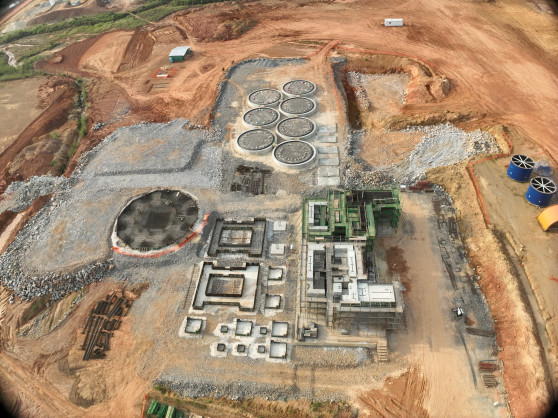
FG Gold Limited (“FG Gold”) (https://FGGoldMining.com/) is pleased to announce that it has achieved financial close and the first drawdown on its US$330 million Senior Debt Financing with Africa Finance Corporation (AFC) and the African Export-Import Bank (Afreximbank), for its Baomahun Gold Project, marking the development of Sierra Leone's flagship large-scale commercial gold mine. This milestone unlocks one of the most significant project financing deals in the country's history and supports Sierra Leone's ambition to responsibly harness its mineral resources for sustainable economic transformation. The transaction was further strengthened by capital mobilised through Trafigura Group.
The senior facility completes the financing package required to construct and develop the Baomahun Gold Project, complementing AFC's initial US$100 million investment in gold streaming and mezzanine commitments. This brings the total investment by leading African Development Finance Institutions (“DFIs”) to US$430 million, including Afreximbank's contribution of US$75 million. This landmark financing secures the full development pathway for Baomahun, enabling FG Gold to accelerate construction of core infrastructure and maintain its momentum toward first gold pour.
A transformational milestone for Sierra Leone and African mining
“This achievement marks a new chapter not only for FG Gold but for Sierra Leone,” said Oliver Tunde Andrews, Founder and Executive Chairman of FG Gold. “The Baomahun Project demonstrates that Africa has the capacity—not just in resources, but in financing sophistication, technical capability, and institutional collaboration—to develop large-scale, globally competitive mining assets. We are delighted with our constructive ongoing collaboration and partnership with the Government of Sierra Leone and the local community, as well as the backing of Africa's leading DFIs in bringing this transformative project to life.” According to Andrews, “The anchor investment provided by AFC was instrumental in crowding in additional financiers and establishing the confidence needed to mobilise further capital for the project.”
AFC and Afreximbank champion African resource development
Samaila Zubairu, President & CEO of Africa Finance Corporation (AFC), commented: “AFC is proud to have led and structured the Baomahun Gold Project, a development that embodies our mission to catalyse sustainable, African-led industrial growth. This transaction demonstrates what can be achieved when African institutions collaborate to unlock the value of our continent's resources. Baomahun will not only generate long-term economic benefits for Sierra Leone but also establish a benchmark for responsible, world-class mining development across Africa.”
Dr. George Elombi, President and Chairman of the Board of Directors, noted, “Afreximbank is delighted to partner on a project that has economic significance for Sierra Leone and the wider continent. Our financing reflects a commitment to supporting value creation within Africa by enabling sovereigns and private developers to harness their natural resources for domestic wealth creation and inclusive growth and development. The Baomahun Gold Project stands as a powerful example of African capability, innovation, and collaboration.”
Gonzalo De Olazaval, Global Head of Metals and Mineral at Trafigura added, “We are pleased to support Sierra Leone's first large-scale commercial gold mine in Partnership with AFC and Afreximbank. Our participation in this debt underscores our growing footprint in gold markets, complemented by the global reach and scale of our broader metals business.”
A project defined by African capability and global standards
The Baomahun Gold Project is being developed through the leadership of Boxmoor Au and the Africa Minerals and Metals Processing Platform (A2MP), supported by a predominantly African team and leading industry partners, including Lycopodium (EPCM), Knight Piésold, CrossBoundary Energy, and Komatsu/PanAfrican Equipment.
Recognised as one of Sierra Leone's most pioneering mining developments, Baomahun introduces multiple national “firsts” across financing, engineering, power solutions, and community partnership—establishing a scalable model for structuring and delivering high-impact mining projects across Africa.
Driving economic growth and shared prosperity
FG Gold is already a major local employer, with 90% of its workforce comprised of Sierra Leoneans. During operations, the mine is expected to support up to 900 direct and indirect jobs, contribute approximately 10% of national GDP, and stimulate substantial local supply chain growth.
According to the Minister of Mines and Mineral Resources, Sierra Leone, the Honourable Julius D. Mattai, “The Baomahun Gold Project represents a milestone for Sierra Leone's mining sector and a clear signal of the confidence that respected African institutions place in our investment environment. This financing marks a new era of responsible, community-oriented mineral development. We welcome FG Gold's commitment to local participation, skills development, and shared prosperity, and we look forward to the transformational impact Baomahun will deliver for generations to come.”
Community development already underway
FG Gold has committed 1% of gross revenues to a Community Development Fund supporting education, healthcare, agriculture, infrastructure, and social enterprise in project-affected communities. Early initiatives include the Baomahun Community Centre, St. Joseph Bakhita Primary School, the renovated Baomahun Health Centre, and upgrades to the 66 km Matotoka–Baomahun access road.
Distributed by APO Group on behalf of FG Gold Limited.Media Enquiries:
Nicola Asgill
Corporate Development, Sustainability & Investor Relations Director
FG Gold
Mobile: +232 99 503 506
Email: nicola.asgill@fg-gold.com
Yewande Thorpe
Communications
Africa Finance Corporation
Mobile: +234 1 279 9654
Email: yewande.thorpe@africafc.org
Vincent Musumba
Communications and Events Manager (Media Relations)
Afreximbank
Email: press@afreximbank.com
About FG Gold Limited:
FG Gold is a gold development company based focused on constructing and operating the Baomahun Gold Project located in Sierra Leone. Baomahun is one of the largest deposits under development in Africa and will become Sierra Leone's premier large scale commercial gold mine. Upon operations, the Project is expected to deliver an average annual gold production of ~150,000 ounces per year over a 12.5-year mine life peaking at 201,000 ounces.
About Africa Finance Corporation:
AFC was established in 2007 to be the catalyst for pragmatic infrastructure and industrial investments across Africa. AFC's approach combines specialist industry expertise with a focus on financial and technical advisory, project structuring, project development, and risk capital to address Africa's infrastructure development needs and drive sustainable economic growth.
Eighteen years on, AFC has developed a track record as the partner of choice in Africa for investing and delivering on instrumental, high-quality infrastructure assets that provide essential services in the core infrastructure sectors of power, natural resources, heavy industry, transport, and telecommunications. AFC has 47 member countries and has invested over US$15 billion in 36 African countries since its inception.
About African Export-Import Bank:
African Export-Import Bank (Afreximbank) is a Pan-African multilateral financial institution mandated to finance and promote intra- and extra-African trade. For over 30 years, the Bank has been deploying innovative structures to deliver financing solutions that support the transformation of the structure of Africa's trade, accelerating industrialisation and intra-regional trade, thereby boosting economic expansion in Africa. A stalwart supporter of the African Continental Free Trade Agreement (AfCFTA), Afreximbank has launched a Pan-African Payment and Settlement System (PAPSS) that was adopted by the African Union (AU) as the payment and settlement platform to underpin the implementation of the AfCFTA. Working with the AfCFTA Secretariat and the AU, the Bank has set up a US$10 billion Adjustment Fund to support countries effectively participating in the AfCFTA. At the end of December 2024, Afreximbank's total assets and contingencies stood at over US$40.1 billion, and its shareholder funds amounted to US$7.2 billion. Afreximbank has investment grade ratings assigned by GCR (international scale) (A), Afreximbank has investment grade ratings assigned by GCR (international scale) (A), Moody's (Baa2), China Chengxin International Credit Rating Co., Ltd (CCXI) (AAA), Japan Credit Rating Agency (JCR) (A-) and Fitch (BBB-). Afreximbank has evolved into a group entity comprising the Bank, its equity impact fund subsidiary called the Fund for Export Development Africa (FEDA), and its insurance management subsidiary, AfrexInsure (together, “the Group”). The Bank is headquartered in Cairo, Egypt.
About Fundo Soberano de Angola:
The Angola Sovereign Wealth Fund (FSDEA) is established to promote the sustainable social and economic development of Angola by generating long-term wealth for the Angolan people through prudent management of national resources, encompassing investments across a wide range of financial instruments and asset classes, both domestically and internationally, to secure competitive returns, preserve capital, and catalyse economic diversification within Angola's productive sectors.
About Boxmoor Au:
Boxmoor Au is an African-led precious metals company dedicated to building the next generation of high-performing, responsible mining operations across the continent. As a subsidiary of the Boxmoor Group, a project development and investment platform, founded in 2021 by Mr Oliver Tunde Andrews, Boxmoor Au leverages best-in-class technical, financial, and operational expertise to unlock Africa's mineral potential.
The Boxmoor Group brings together a powerful ecosystem, including an African-based financial advisory firm and civil engineering contractor enabling value creation from project origination through to delivery. This integrated capability strengthens the Group's mission to help reduce Africa's infrastructure deficit while driving localised benefaction.
Boxmoor Au's dedicated management team has 150+ years of combined experience in the natural resources and infrastructure sectors within Africa. The team is committed to creating long term value within the precious metals industry through strategic investments that maximise Africa's economic potential and promote sustainable resource development and operations.
Driven by its mission to become a leading intermediate African gold producer, Boxmoor Au is focused on developing and operating mines to deliver enduring benefits to local communities, nations and key stakeholders.
About A2MP Investments:
Africa Minerals and Metals Processing Platform (A2MP) is a pan-African industrial platform dedicated to responsible mining and value-added processing and transformation – unlocking the full potential of Africa's vast mineral wealth and driving a new era of industrial growth across the continent.
A2MP believes shifting from raw material exports to local processing and transformation will contribute to strengthening Africa's industrial base, reduce its dependence on imports, and drive economic growth to position Africa as a global leader.
A2MP's operations span 11 countries, including 9 in Africa, with a portfolio of 12 mineral assets and 4 state-of-the-art processing facilities. Our portfolio includes FG Gold, Canyon Resources, Nouvelle Gabon Mining, Alpha Centauri Mining, Fura Gems, among others. At the core of A2MP's mission is impact, with an aim to drive over US$5 billion in annual GDP impact and create more than 11,000 jobs.