
The African Airlines Association (AFRAA) Marks New Era of African Aviation as Free Route Airspace Takes Flight in West and Central Africa
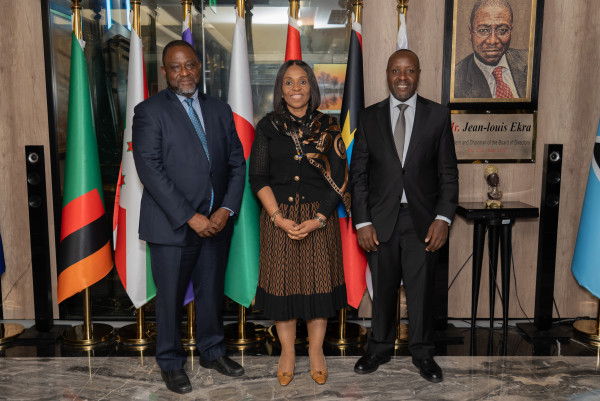
The African Airlines Association (AFRAA) heralds a transformative milestone in African aviation with the full operational deployment of Free Route Airspace (FRA) in the Western and Central Africa (WACAF) region, effective 30 October 2025.
This landmark achievement, transitioning from successful trials initiated in November 2023, will allow any airline to plan and fly more direct User Preferred Routes (UPRs), significantly enhancing the efficiency and sustainability of air travel across the continent.
UPRs allow airlines to fly the most fuel-efficient and timely paths based on current conditions, rather than having to follow fixed, conventional routes, giving the pilots more flexibility and enabling them to adjust to factors like weather and winds, leading to reduced fuel consumption, shorter flight times and lower carbon emissions.
African Export-Import Bank (Afreximbank) has supported the FRA initiative since the trials begun in 2023, in accordance with its Memorandum of Understanding with AFRAA and in line with the Global Air Navigation Plan of the International Civil Aviation Organisation and the conclusions of the Africa-India (AFI) FRA Planning and Implementation Regional Group.
The deployment of the FRA represents a decisive step resulting from a collaborative effort between air operators and air navigation service providers (ANSPs) who reached a consensus at a joint workshop in Dakar, Senegal to conclude the trial phase and move to full implementation.
"The implementation of Free Route Airspace in the WACAF region is a game-changer for African aviation," said Mr. Abdérahmane Berthé, AFRAA Secretary General. "This is a testament to what we can achieve through collaboration. By cutting flight times and fuel consumption, we are not only boosting the competitiveness and profitability of our airlines but also making a significant commitment to environmental sustainability. We extend our profound gratitude to Afreximbank and all stakeholders who have journeyed with us for their unwavering commitment to this vision: the Western and Central African Air Navigation Service Providers (ANSPs), Agence pour la Sécurité de la Navigation Aérienne en Afrique et à Madagascar (ASECNA), Ghana Civil Aviation Authority (GCAA), Nigerian Airspace Management Agency (NAMA), Régie des Voies Aériennes (RVA), Roberts Flight Information Region (Roberts FIR), The International Air Transport Association (IATA), the International Civil Aviation Organization (ICAO) and the Civil Air Navigation Services Organization (CANSO."
While commenting on the FRA initiative, Mrs. Kanayo Awani, Executive Vice President, Intra-African Trade and Export Development, Afreximbank, said: “Efficient, safe, and well-regulated air services are critical to facilitating intra-African trade, tourism and connectivity in line with the objectives of the Single African Air Transport Market (SAATM) and the African Continental Free Trade Area (AfCFTA). Afreximbank is fully committed to supporting the full implementation of SAATM and the establishment of an effective and efficient aviation industry through a range of financing instruments, including its aircraft leasing platform as well as trade facilitation interventions.
Substantial Benefits for Launch Airlines
In a powerful demonstration of the initiative's potential, six leading African airlines including Ethiopian Airlines, Kenya Airways, EGYPTAIR, Royal Air Maroc, RwandAir and ASKY Airlines were granted approval for UPRs, connecting 30 key city pairs. The shift to UPRs is expected to generate significant annual returns to participating airlines including over 1,393 hours of cumulative flight time saved, cutting 5,000 metric tonnesof fuel burn and therefore avoiding some 16,000 metric tonnes of CO2 emissions, and a reduction in annual fuel costs of about US$ 15 million.
A Free Route Airspace for all
Crucially, the WACAF airspace is now open for free routes. Starting 30 October 2025, any airline can plan and operate User Preferred Routes. The region's ANSPs have committed to approving newly requested UPR within 48 hours. Furthermore, following final administrative work by the 24 WACAF States, this process will be further streamlined, with approvals no longer required for new UPR requests from mid-2026.
A Continent-wide Vision for the Future
The success in WACAF paves the way for the next phase of continental integration. The focus for 2026 will shift to the Eastern and Southern Africa (ESAF) airspace to conclude trials and achieve a similar FRA implementation. The region is also committed to developing a web-based coordination platform to streamline operations for airlines and ANSPs.
Distributed by APO Group on behalf of Afreximbank.Contact:
For more information, please contact: AFRAA: afraa@afraa.org
Media Contact:
Vincent Musumba
Communications and Events Manager (Media Relations)
Email: press@afreximbank.com
Follow AFRAA on:
Facebook: https://apo-opa.co/44doXyZ
LinkedIn: https://apo-opa.co/4rEFUfT
Twitter: https://apo-opa.co/4rEFUfT
YouTube: https://apo-opa.co/4rKet4g
Follow us on:
X: https://apo-opa.co/4rFlt2t
Facebook: https://apo-opa.co/4ppChIY
LinkedIn: https://apo-opa.co/44fo6Op
Instagram: https://apo-opa.co/3KuSayP
About AFRAA:
The African Airlines Association, also known by its acronym AFRAA, is a trade association of airlines from the member states of the African Union (AU). Founded in Accra, Ghana, in April 1968, and headquartered in Nairobi, Kenya, AFRAA's mission is to promote, serve African Airlines and champion Africa's aviation industry. The Association envisions a sustainable, interconnected, and affordable Air Transport industry in Africa, where African Airlines become key players and drivers of African economic development. AFRAA membership cuts across the entire continent and includes all the major intercontinental African operators. The Association members represent over 85% of total international traffic carried by African airlines.
About Afreximbank:
African Export-Import Bank (Afreximbank) is a Pan-African multilateral financial institution mandated to finance and promote intra- and extra-African trade. For over 30 years, the Bank has been deploying innovative structures to deliver financing solutions that support the transformation of the structure of Africa's trade, accelerating industrialization and intra-regional trade, thereby boosting economic expansion in Africa. A stalwart supporter of the African Continental Free Trade Agreement (AfCFTA), Afreximbank has launched a Pan-African Payment and Settlement System (PAPSS) that was adopted by the African Union (AU) as the payment and settlement platform to underpin the implementation of the AfCFTA. Working with the AfCFTA Secretariat and the AU, the Bank has set up a US$10 billion Adjustment Fund to support countries effectively participating in the AfCFTA. At the end of December 2024, Afreximbank's total assets and contingencies stood at over US$40.1 billion, and its shareholder funds amounted to US$7.2 billion. Afreximbank has investment grade ratings assigned by GCR (international scale) (A), Moody's (Baa2), China Chengxin International Credit Rating Co., Ltd (CCXI) (AAA), Japan Credit Rating Agency (JCR) (A-) and Fitch (BBB-). Afreximbank has evolved into a group entity comprising the Bank, its equity impact fund subsidiary called the Fund for Export Development Africa (FEDA), and its insurance management subsidiary, AfrexInsure (together, "the Group"). The Bank is headquartered in Cairo, Egypt.
For more information, visit: www.Afreximbank.com
Sudan: United Nations (UN) chief condemns deadly strikes on children’s nursery, hospital
Download logo
As Sudan's civil war intensified on Monday, top UN officials condemned the killing of dozens of children in drone strikes in South Kordofan state – and the targeting of first responders trying to help the wounded.
In a statement issued by his Spokesperson, UN Secretary-General António Guterres said that he was appalled to learn that multiple drone strikes on 4 December had hit a children's nursery and a hospital in Kalogi, where the injured were being treated.
Echoing those concerns, the head of UN World Health Organization, Tedros Adhanom Ghebreyesus, said that Kalogi Rural Hospital had been targeted at least three times, killing 114 people including 63 children.
Blood bank call
Survivors from those strikes have been moved to Abu Jebaiha Hospital in South Kordofan for treatment “and urgent calls are being made for blood donations and other medical support”, Tedros noted in a statement posted on X.
“Disturbingly, paramedics and responders came under attack as they tried to move the injured from the kindergarten to the hospital,” Tedros added.
On the same day as those attacks, an aid convoy was also targeted in North Kordofan state. It had been transporting lifesaving supplies to North Darfur when it came under fire, seriously injuring the driver of a UN World Food Programme (WFP) truck.
“The Secretary-General deplores this further attack on humanitarian operations at a time of dire needs,” the statement continued.
Suffering on a huge scale
Aid agencies warn that the situation across Sudan remains catastrophic for millions of people caught up in heavy fighting between the Sudanese Armed Forces (SAF) and the paramilitary Rapid Support Forces (RSF).
In the central Kordofan region in particular, dire conditions are worsening still as life-saving supplies run low, while famine conditions have been confirmed in South Kordofan's state capital, Kadugli.
“As fighting intensifies, the horrific human rights violations and abuses reported in El Fasher in recent months, as well as reports of serious violations of international humanitarian law, must not be repeated in the Kordofan region,” the UN chief's Spokesperson insisted.
And amid reports of continued foreign involvement in the Sudan conflict, “the Secretary-General calls on all States with influence over the parties to take immediate action and use their leverage to compel an immediate halt to the fighting and stop the arms flows” that are fuelling it, his Spokesperson's statement added.
“The Secretary-General renews his call on the parties to agree on an immediate cessation of hostilities and to resume talks to reach a lasting ceasefire and a comprehensive, inclusive and Sudanese-owned political process. The United Nations stands ready to support genuine steps to end the fighting in Sudan and chart a path towards a durable peace.”
UN rights chief's plea
The development comes after the UN's human rights chief, Volker Türk, said that he feared “another wave of atrocities” in Sudan.
Since late October, hundreds of civilians have been killed and tens of thousands more have fled aerial strikes, shelling and summary executions, he said, amid mass civilian displacement involving more than 45,000 people fleeing violence and seeking safety in or near to Kordofan region.
“Safe passage for those fleeing the horror of famine, death and destruction is essential and a human rights imperative,” the High Commissioner's office said.
In an appeal for “urgent diplomatic action” the WFP's Deputy Executive Director Carl Skau insisted that greater attention was needed to prevent further atrocities and help reverse famine.
More than 30 million people in Sudan now need humanitarian assistance and more than nine million have been displaced inside the country since fighting erupted in April 2023 between the SAF and paramilitary RSF.
Distributed by APO Group on behalf of UN News.Egypt: President El-Sisi Meets Commander-in-Chief of the Libyan National Army Field Marshal Haftar
Download logo
Today, President Abdel Fattah El-Sisi received Commander-in-Chief of the Libyan National Army, Field Marshal Khalifa Haftar. The meeting was also attended by Director of the General Intelligence Service, Major General Hassan Rashad; Chief of the General Staff of the Libyan Army, General Khaled Khalifa; and Deputy Commander-in-Chief of the Armed Forces, General Saddam Khalifa.
Spokesman for the Presidency Ambassador Mohamed El-Shennawy said that during the meeting the profound and special characteristics of the Egyptian-Libyan relations were confirmed. President El-Sisi reiterated Egypt's full support for Libya's sovereignty, stability, unity and territorial integrity. The President valued the pivotal role of the General Command of the Libyan National Army in this context, stressing the vital necessity to confront any external interference and to work towards the withdrawal of all foreign forces and mercenaries from Libya.
Field Marshal Haftar expressed appreciation for the pivotal role played by Egypt and the President personally in restoring security and stability in Libya, as well as the persistent support provided to the Libyan people since the outbreak of the crisis. He affirmed his commitment to continuing coordination and exchanges of view with President El-Sisi with regard to developments on both the Libyan and regional arenas.
President El-Sisi underscored Egypt's support for all initiatives and efforts aimed at resolving the Libyan crisis, particularly those targeting the simultaneous conduct of Presidential and Parliamentary elections. The President affirmed Egypt's commitment to continue providing all forms of support and assistance to the Libyan National Army and national institutions, within the framework of the historical fraternal relations that unite the two brotherly countries and their peoples.
The two sides also discussed developments concerning the joint maritime border delimitation between the two countries. They agreed on the importance of continuing joint cooperation on this file in a manner that serves the interests of both countries without causing any harm, in accordance with the rules of international law.
The meeting also focused on the latest developments in in the region and the challenges facing the two countries, particularly the developments in Sudan. The two sides agreed on the critical importance of strengthening international and regional efforts to reach a peaceful settlement that preserves Sudan's stability, sovereignty, and territorial integrity. They affirmed that the stability of Sudan is firmly linked to the national security of both Egypt and Libya.
Distributed by APO Group on behalf of Presidency of the Arab Republic of Egypt.Uganda Parliament teams dominate opponents in volleyball, netball, basketball
Download logo
Parliament of Uganda teams delivered a dominant display at the ongoing EAC inter - Parliamentary Games, securing emphatic victories across volleyball, netball and basketball on Sunday, 7 December 2025.
At the MTN Arena Lugogo, Uganda's volleyball sides won their opening matches in straight sets.
The women's team, captained by Hon. Helen Nakimuli, cruised past Rwanda (25 - 15, 25 - 20 and 25 – 06), while the men, led by Hon. Gaffa Mbwatekamwa, overpowered EALA 25 - 07, 25 - 12 and 25 - 06. Both teams now prepare to face Kenya.
In netball, Uganda humbled Kenya 72 - 12 with standout performances from Hon. Juliet Kakande and captain Hon. Sarah Netalisire, whose sharp shooting and coordination kept Uganda firmly in control. The team meets Burundi next.
Uganda's women basketballers also outclassed Kenya 40 - 20 at Lugogo Indoor Arena, winning all four quarters through superior teamwork and defense. Team Captain, Hon. Suzan Amero, led with 16 points and 8 rebounds, supported by strong outings from Hon. Connie Galiwango, Hon. Hellen Nakimuli and Hon. Stella Atyang.
Galiwango credited the win to the team's dedication and the vibrant atmosphere in Lugogo.
“Our domination was not a coincidence. We have been training hard, and playing at home with our incredible fans behind us absolutely helped us control the game,” she said after the final buzzer.
With commanding wins across disciplines, Uganda's Parliament teams have made a powerful statement as they begin their title defenses in the regional tournament.
The 15th EAC inter - Parliamentary Games are being held at various venues for the next two weeks.
Distributed by APO Group on behalf of Parliament of the Republic of Uganda.Binance Becomes First Crypto Exchange to Secure a Global License Under Abu Dhabi Global Market (ADGM) Framework, Setting a New Standard in Digital-Asset Regulation

Binance (www.Binance.com), the world's largest cryptocurrency exchange by trading volume and users, today announced a landmark regulatory achievement: The Financial Services Regulatory Authority (FSRA) of ADGM, the international financial centre of Abu Dhabi, the Capital of the UAE, has formally approved the authorisation of Binance's global platform, www.Binance.com, under a comprehensive regulatory framework.
This global first is a major step in Binance's mission to create the most trusted and compliant digital-asset ecosystem in the world. A license granted by FSRA of ADGM offers Binance credibility and seamless access across multiple markets, extending well beyond the UAE, and cements Binance's position at the forefront of regulatory progress in digital finance.
This comprehensive regulatory approval covers Binance's global platform, www.Binance.com, via three separate regulated entities operating within ADGM. Each of the three entities (an Exchange, a Clearing House, and a Broker Dealer) holds distinct regulatory permissions to carry out specific financial services activities in line with ADGM's internationally recognised, gold-standard regulatory framework.
- Nest Services Limited (to be soon renamed “Nest Exchange Limited”) has been approved as a Recognised Investment Exchange “RIE”, with permission to operate a Multilateral Trading Facility. This entity is responsible for all “on-exchange” trading activities, including spot and derivatives products.
- Nest Clearing and Custody Limited has been approved as a Recognised Clearing House “RCH”, with additional permissions to provide custody and CSD services . It will manage the clearing, settlement, and secure custody of digital assets, ensuring robust operational resilience and asset protection.
- BCI Limited (to be soon renamed “Nest Trading Limited”) has been approved as a Broker-Dealer, with permissions to deal in investments, arrange deals in investments, manage assets, arrange custody and provide money services. This entity will deliver Binance's “off-exchange” offerings, including over the counter “OTC” trading, conversion services, and other principal-based activities.
Richard Teng, Co-CEO of Binance, commented: “Achieving regulatory status through ADGM's respected framework reflects our deep commitment to compliance, transparency, and user protection. ADGM is one of the most respected financial regulators globally, and holding an FSRA license under their gold standard framework shows that Binance meets the highest international standards for compliance, governance, risk management, and consumer protection.”
Teng added, “This license provides regulatory clarity and legitimacy, enabling Binance to support its global operations from ADGM. While our global operations remain distributed, leveraging talent and innovation worldwide, this regulatory foundation offers our users peace of mind knowing Binance operates under a globally recognised, gold standard framework. We are grateful for the FSRA's forward-thinking approach, which safeguards users while fostering innovation.”
His Excellency Ahmed Jasim Al Zaabi, Chairman of ADGM, said, “We are pleased to welcome Binance, a key global player in digital assets and financial innovation, to ADGM. Their presence underscores Abu Dhabi's standing as a leading international hub for innovation, sustainable growth, and the future of finance. We look forward to seeing them harness the strength of ADGM's progressive regulatory framework and dynamic ecosystem contributing to the evolution of a more innovative, inclusive, and future-ready global financial sector.”
With over 300 million registered users globally and more than $125 trillion in cumulative trading volume, Binance continues to lead the evolution of the digital asset ecosystem by building a secure, transparent, and fully compliant infrastructure. Operating under ADGM's robust financial services regime ensures all Binance users benefit from high standards of oversight and consumer protection as the platform scales into its next phase of institutional and retail adoption.
Subject to final operational preparation, www.Binance.com will start operating its ADGM regulated activities on Jan 5, 2026. This milestone cements Binance's position at the forefront of regulatory progress in digital finance. It also reinforces the UAE's emergence as a global hub for innovation in financial services, supported by clear regulatory pathways and a deep talent base.
Distributed by APO Group on behalf of Binance.About Binance:
Binance is a leading global blockchain ecosystem behind the world's largest cryptocurrency exchange by trading volume and registered users. Binance is trusted by more than 300 million people in 100+ countries for its industry-leading security, transparency, trading engine speed, protections for investors, and unmatched portfolio of digital asset products and offerings from trading and finance to education, research, social good, payments, institutional services, and Web3 features. Binance is devoted to building an inclusive crypto ecosystem to increase the freedom of money and financial access for people around the world with crypto as the fundamental means. For more information, visit: www.Binance.com.