
About the author
Eritrea: Livestock vaccination in Molqui sub-zone
Download logo
During a livestock vaccination program conducted in November, around 100 thousand livestock were vaccinated in the Molqui sub-zone, according to Mr. Leul Gaim, head of livestock resources in the sub-zone.
In the program, which was carried out in 19 administrative areas of the sub-zone, 65 thousand livestock were vaccinated against various animal diseases, while 2,000 dogs were vaccinated against rabies.
Mr. Leul, indicating the cooperation of livestock owners, said that thanks to their support, the program was successfully implemented.
Commending the efforts the Government is undertaking to ensure the health of their livestock, the farmers called for the sustainability of the program.
According to the report, similar vaccination programs were carried out in the sub-zone in the months of April and May.
Distributed by APO Group on behalf of Ministry of Information, Eritrea.Eritrea: Social science training to youth in Sawa
Download logo
Social science training organized by the National Union of Eritrean Youth and Students has been provided to 1,875 youth from the Warsai-Yikealo School in Sawa.
The training covered the National Charter, administration and leadership, types and objectives of government, foundations of Eritrean national culture and values, health and productivity of youth, the foothold and unity of the Eritrean people, nation-building and development, benefits and significance of organization, globalization and its influence, importance and influence of mass media, as well as the history of the armed struggle for independence and safeguarding national sovereignty.
Ms. Helen Amine, head of follow-up of regions at the National Union of Eritrean Youth and Students central office, noted that strong efforts are being exerted to expand and strengthen organization with a view to nurturing competent youth, and that the training program was part of that initiative.
Representative of the trainees expressed readiness to practically translate the knowledge they gained from the training into their daily activities.
Col. Debesay Ghide, Commander of the National Service Training Center, called on the trainees to apply the knowledge they gained in serving their society and influencing their peer groups.
In related news, the Amberbeb Share Company provided training on material management to 50 workers from seven Government institutions.
The training covered scientific methods of material management, materials and workshop handling, as well as spare-parts management.
Indicating that the training was unique in its type, Mr. Solomon Negash, head of material management at the company, commended the interest the trainees demonstrated during the program.
Mr. Girmay Berhe, manager of the company, for his part, indicating that the program was a continuation of efforts to enhance the capacity of members of the company and partner institutions, called on the trainees to apply the knowledge they gained in their daily activities at their respective workplaces.
Distributed by APO Group on behalf of Ministry of Information, Eritrea.Eritrea: International Day of Persons with Disabilities observed
Download logo
International Day of Persons with Disabilities, 3 December, has been observed today in Asmara at the national level under the theme “Holistic Participation of Persons with Disabilities for Development.”
Mr. Mihreteab Fesehaye, Director General of Social Welfare at the Ministry of Labor and Social Welfare, said that before the International Day of Persons with Disabilities came into effect at international level, in Eritrea there had been customary laws in place for a long time that respected the equitable rights and human values of citizens with disabilities. He also said that the day serves as a reminder to acknowledge the situation and challenges of persons with disabilities and to conduct coordinated efforts for prevention and support.
Mr. Abdullahi Mohammed Yussuf, UNICEF Representative in Eritrea, for his part, said that across the world, persons with disabilities are not passive recipients of assistance; they are innovators, leaders, and agents of change, and that efforts should be made to ensure that children with disabilities have equal access to education, health care, protection, and participation.
Mr. Abdullahi also commended Eritrea's strides to ensure that nationals with disabilities have inclusive access to education and community-based rehabilitation services.
The International Day of Persons with Disabilities is being observed for the 30th time at the national level.
The event featured exhibition of paintings, ceramics, and other artifacts produced by citizens with disabilities.
Distributed by APO Group on behalf of Ministry of Information, Eritrea.Binance Launches ‘Binance Junior’ Crypto Savings Account for Kids and Teens
Download logo
Binance (www.Binance.com) today announced the launch of Binance Junior (https://apo-opa.co/49UWuBE), a new parent-controlled app and sub-account for kids and teens, ages 6-17, that offers parents a family-centric platform to build crypto wealth and savings, helping prepare their children for a digital financial future. Binance Junior allows parents to open and manage crypto savings accounts on behalf of their children, enabling young users to save and earn crypto in the account through Binance Flexible Simple Earn, while restricting trading activities to ensure safety.
Parents can fund the Binance Junior account via their master account or through on-chain transfers. By offering controlled early exposure to savings and digital assets, Binance Junior empowers parents to invest in their children's financial future and nurture positive saving habits. As crypto becomes increasingly integrated with mainstream finance, this new product aims to provide young users with a strong foundation in personal finance and digital asset education, promoting long-term financial literacy and readiness for the evolving economic landscape.
“As parents who love our children, we not only nurture them in their early development but long-term growth with responsibility and wisdom—helping their ability to face real life challenges independently where financial health and literacy are key to preparing them for the future, especially as money is evolving,” said Binance co-CEO Yi He. “Today, parents can take the first steps to prepare for their children's financial future and equip them for the future financial landscape. Binance Junior is a family finance initiative that helps parents build crypto wealth and savings for their children and encourages them to teach and practice healthy financial habits for the next generation into adulthood.”
Designed for both crypto-native parents and those new to digital assets, Binance Junior helps them begin their digital finance journey as a family in a secure environment with parental control and monitoring via a simplified interface, with safety measures in place. Binance Junior users aged 13 and above can initiate transfers on their app, with a higher age criteria where required by local regulations, and with daily limits applied. Trading is not permitted and transfers to non-parental adult users are also restricted. Parents will be notified of every transaction from their Junior account and have the ability to disable their child's Junior account at any time, immediately halting all transfers.
As part of Binance's continued mission to educate people about the world of digital assets, while preparing the next generation for financial health and wealth under its broader family finance initiative, it has released a self-published book, “ABC's of Crypto.”
The “ABC's of Crypto” is an educational book designed as a children's book for anyone who is interested in learning about crypto and illustrating how crypto can be “as easy as ABC.” The book breaks down fundamental terms in crypto, from security and blockchain technology to types of coins, in a fun and easy-to-understand way—encouraging families to learn together in their digital finance journey.
Binance Junior will be available in select countries via the Apple App Store and Google Play Store. For more information on features and how to get started, visit: https://apo-opa.co/49UWuBE.
Distributed by APO Group on behalf of Binance.About Binance:
Binance is a leading global blockchain ecosystem behind the world's largest cryptocurrency exchange by trading volume and registered users. Binance is trusted by more than 290 million people in 100+ countries for its industry-leading security, transparency, trading engine speed, protections for investors, and unmatched portfolio of digital asset products and offerings from trading and finance to education, research, social good, payments, institutional services, and Web3 features. Binance is devoted to building an inclusive crypto ecosystem to increase the freedom of money and financial access for people around the world with crypto as the fundamental means.
For more information, visit: www.Binance.com
Africa Investment Forum: Major Boost for African Private Sector as Caisse de Dépôt et de Gestion (CDG) Invest Joins Growth and Resilience Platform for...

Cassa Depositi e Prestiti (CDP), the African Development Bank (www.AfDB.org) , and CDG Invest, part of the Caisse de Dépôt et de Gestion (CDG) Group, have signed a landmark agreement formalising CDG Invest's entry into the Growth and Resilience Platform for Africa (GRAf). The agreement was announced in Rabat during the 2025 Market Days, the three-day centerpiece event of the Africa Investment Forum.
GRAf is a co-investment platform promoted by CDP and the African Development Bank Group as part of the implementation of Italy's Mattei Plan for Africa. CDP is Italy's flagship development finance institution. Under the Mattei Plan for Africa, Italy aims to foster economic and strategic partnerships with African nations and institutions. The African Development Bank Group is Italy's main strategic financial partner for implementation of the plan.
GRAf seeks to create an ecosystem of investors committed to sharing opportunities and expertise in Africa's private sector, generating tangible impacts on the real economy—from job creation to improving essential products and services. The platform supports the African private sector through indirect investments deployed via investment funds, with a goal of mobilising up to €750 million over five years. Target sectors include food security, SME development, and sustainable infrastructure.
Aligning with the objectives of the Mattei Plan, CDP leverages its resources and expertise to foster mutual growth, supporting international investment opportunities and the global reach of Italian enterprises. As a key champion of the Mattei Plan, a CDP delegation participated in Market Days 2025 to further these collaborations and showcase activities including promoting the crucial role of the private sector in advancing sustainable development across Africa and promoting financial instruments available to support private enterprise.
CDP also attended an event organised by the International Development Finance Club (IDFC) to launch the Cooperation 4 Development Investment Forum—a platform designed to strengthen cooperation among development banks to promote co-financing and joint projects. IDFC brings together 27 institutions, including CDP, with the aim of consolidating global financial architecture and accelerating sustainable investments.
Distributed by APO Group on behalf of African Development Bank Group (AfDB).Media Contacts:
Olufemi Terry,
African Development Bank Group,
media@afdb.org
CDG Invest
Salma Benjalloun
Mail: Salma.benjalloun@cdginvest.ma
Cassa Depositi e Prestiti
CDP Media Relations Contact:
Mail: ufficio.stampa@cdp.it
Tel: 06 42213990
www.CDP.it
Social Media:
LinkedIn: https://apo-opa.co/4auOw2h
X: https://apo-opa.co/440N9og
Facebook: https://apo-opa.co/48yrXYb
Instagram: https://apo-opa.co/48k2VgA
YouTube: https://apo-opa.co/4pGwn64
The Surge in Gas Production and Africa’s Path to Economic Transformation (By NJ Ayuk)
Download logo
By NJ Ayuk, Executive Chairman, African Energy Chamber (https://EnergyChamber.org).
Natural gas will be a pivotal component of Africa's energy future as it is uniquely poised for growth despite the move toward a surplus liquefied natural gas (LNG) supply in the global gas cycle.
As detailed in the African Energy Chamber's 2026 Outlook Report, “The State of African Energy,” African demand for gas is forecast to rise 60% by 2050. In fact, gas is the only fossil fuel expected to expand its share of primary energy demand globally. Furthermore, as North Africa's dominance in the sector diminishes, the report expects sub-Saharan Africa to drive this gas surge as the region holds over 70% of the continent's remaining recoverable resources.
Export revenues and domestic use are the two avenues down which Africa will find the transformative benefits that gas offers, but actually getting there depends on successfully navigating infrastructure gaps, pricing disputes, and the transition from associated to non-associated gas.
The Next Gas Epicenter
Two-thirds of gas production on the continent takes place in North Africa with Algeria, Egypt, and Libya holding the top spots as leading producers with high gas penetration in their own power mixes. However, we expect North Africa's share of total continental production to decrease to below 40% by 2035 as output from other regional producers accelerates. While sub-Saharan production currently accounts for the remaining third of current gross output, the region will dominate future growth.
With the 2021 launch of its “Decade of Gas,” a government initiative to develop gas resources and aid in the transition to cleaner energy, Nigeria will likely lead this expansion, as it already produces more than half of the region's commercialized gas. Emerging producers like Mozambique, Tanzania, Senegal, Mauritania, and Angola are set to follow. Notably, Mozambique's Coral Sul project, Senegal-Mauritania's Greater Tortue project, and Congo LNG have all added new export streams since 2022.
Our 2026 Outlook Report also forecasts that total African gross gas demand will have climbed steadily from roughly 55 billion cubic meters (Bcm) per year in 2020 to over 90 Bcm by 2050. Residential, industrial, and other power sectors are anticipated to drive the growth.
With sub-Saharan Africa holding more than 400 trillion cubic feet (Tcf) of recoverable gas resources, which amount to 70% of the continent's total reserves, the region is poised to meet that demand.
Also, unlike North Africa's mature, pipeline-linked markets, sub-Saharan gas is increasingly non-associated or “dry,” meaning it is not found alongside crude oil in reserves. While non-associated gas is more expensive per million British thermal unit (MMBtu), the fact that it is not cross-subsidized by oil essentially frees it from the operational and pricing constraints of oil-centric projects, making the gas available to new domestic, regional, or export pathways to monetization.
Transformative Avenues: Exports and Domestic Industrialization
As our report explains, gas development can transform host government economies through two primary channels: exports and in-country value creation.
Exports: Last year, Africa supplied 34.7 million metric tonnes (MMt) of LNG (8.5% of the global supply). Sub-Saharan volumes in 2024 reached 26.9 MMt, with 60% destined for Asia and 25% for Europe. Adding Tanzania to the export roster, the 2026 Outlook Report projects a quadrupling of the sub-Saharan supply by 2050.
Furthermore, as west and southwest African LNG producers are in proximity to both Atlantic and Indian Ocean markets, producers in these regions specifically can function as swing suppliers, taking advantage of fluctuations in European and Asian LNG spot prices or global supply disruptions.
Also, where gas export projects have domestic market obligations (DMOs), like in Nigeria, Senegal-Mauritania, Angola, and Cameroon, growth in exports grows the gas supply for domestic use. For example, Senegal has plans of achieving 3 gigawatts (GW) of gas-fired power by 2050, largely fed by DMOs from the Greater Tortue LNG project and the Yakaar-Teranga LNG project.
Domestic Monetization and Industrialization: In addition to the revenue collected from exports, gas can empower a producing nation by fueling transport, powering industry, and electrifying homes all within its borders.
Although only a few sub-Saharan countries currently have power mixes that include gas, generation from natural gas has shown a steady increase across the region over the last decade. As detailed in our report, Nigeria's gas-fired capacity is at 12.6 GW, and installations in Ghana and Mozambique are at 2.9 GW and 1.1 GW, respectively. Tanzania, Senegal, Angola, Côte d'Ivoire, and South Africa are also home to smaller gas power plants. In countries such as Senegal and Ghana, that have coastal demand centers, floating power ships operating on natural gas are in place to satisfy demand.
What's more, Nigeria, South Africa, Senegal, Angola, Ghana, Tanzania, and Mozambique all have stated ambitions of developing or furthering gas-to-power infrastructure. Our report also sees a coming increase in demand for gas-derived products such as fertilizers and petrochemicals, as well as for implementation in industrial applications like metals processing.
Angola's recently approved National Gas Plan targets these sectors with a focus on curbing import reliance, while Nigeria's push for compressed natural gas (CNG) vehicles under the 2020 National Gas Expansion Program officially commenced in March 2022. These are just two examples of how sub-Saharan Africa's gas sector is poised to deliver an economic one-two punch through exports and in-country monetization that would enable nations to cut down on imports, grow their revenues, and provide energy access to their people for decades to come.
Challenges to Realizing Africa's Gas Potential
Africa holds both abundant gas resources and significant unrealized potential. In fact, Africa ranks second in the world behind only Russia for discovered yet undeveloped gas resources. In two examples, the Rovuma basin, off the coasts of southern Tanzania and northern Mozambique, holds 129 Tcf, and the Niger Delta basin along the Nigerian coast holds 113 Tcf, but these basins remain largely untapped.
There are numerous obstacles between Africa's current position and the economic transformation that gas development could deliver. Our 2026 Outlook Report identifies four essential success factors that Africa must manage if it is to navigate those obstacles: upstream economics, market access and offtake, adequate infrastructure, and country risk/fiscal terms.
As international majors have been known to exit discoveries due to a lack of integration of these factors, support from governments and regulators is critical to finding alignment between them.
Upstream Economics: Currently, over 50% of sub-Saharan production is tied to associated gas, which carries very low production costs. This has contributed heavily to regional gas sector expansion as seen in Nigeria and Angola. By contrast, non-associated gas — though not constrained by oil production rates, enhanced oil recovery reinjection requirements, or oil price fluctuations — demands a competitive dollar-per-MMBtu price to justify future investment and infrastructure development.
Market Access and Offtake: To ensure transparent pricing, adequate returns, and reliable long-term demand all while maximizing domestic benefits, success with this factor will require long-term contracts with creditworthy offtakers (buyers held to specified purchase amounts through long-term agreements), predictable consumption patterns, and government-backed incentives that encourage producers to sell and consumers to buy.
Adequate Infrastructure: Linking supply hubs to demand centers requires LNG facilities and pipelines. With this factor, the “chicken-and-egg paradox” emerges: Investors who can provide the necessary infrastructure expect guaranteed demand, yet demand only grows once that infrastructure is in place. This dynamic is why governments must put in place predictable regulatory and pricing frameworks that attract investment while advancing national economic and energy priorities.
Country Risk and Fiscal Terms: To keep gas production projects attractive to investors, national governments must find the correct balance of royalties, production sharing terms, taxation, DMOs, and local content requirements. Governments must also align their export and domestic priorities to satisfy operator needs and achieve their own local supply or revenue ambitions. Maintaining overall political stability to ensure long-term investor confidence is another critical component of this success factor.
Seizing the Surplus
The 2026 Outlook frames gas as Africa's bridge fuel: cleaner than coal or oil, versatile for power generation and industrial applications, and increasingly competitive as global prices decrease in the coming years.
Sub-Saharan Africa's anticipated non-associated gas production surge can deliver energy security, export revenues, and new industrial jobs. Success in this effort will require a resolution of the infrastructure-demand paradox through reliable contracts, transparent pricing, and balanced fiscal policies.
If African nations can collectively support upstream scalability, midstream connectivity, and downstream certainty, gas production will not merely surge — it will transform the entire continent for the better.
"The State of African Energy: 2026 Outlook Report" is available for download. Visit https://apo-opa.co/48v4gzN to request your copy.
Distributed by APO Group on behalf of African Energy Chamber.The Islamic Development Bank Institute (IsDBI) and Arab Monetary Fund (AMF) Deliver Training on Using Artificial Intelligence to Foster the Islamic Financial Industry

The Islamic Development Bank Institute (IsDBI) (https://IsDBInstitute.org/) and the Arab Monetary Fund (AMF) jointly organized a specialized training program titled “The Role of Artificial Intelligence in Fostering the Islamic Financial Industry.” The program took place from 24–28 November 2025, at the AMF headquarters in Abu Dhabi, United Arab Emirates.
This initiative is part of a strategic collaboration between the two institutions, aimed at strengthening the stability and advancement of the Islamic finance industry across their 22 shared member countries.
The program was the first of its kind in the region to integrate artificial intelligence and Islamic finance in a comprehensive manner. The objective was to build the capacity of specialists by deepening their understanding of both the theoretical foundations and practical applications of AI. This is expected to enhance efficiency and innovation within the Islamic financial landscape, while upholding Shari'ah principles and governance requirements.
A total of 32 professionals from central banks and financial institutions across Arab countries participated in the program. The sessions were delivered by professional trainers from IsDBI, Dr. Hilal Houssain and Dr. Mohammed Ayyash.
The agenda covered a range of topics, including the concepts of artificial intelligence, machine learning, neural networks, and big data. Practical applications in Islamic banks were explored, such as risk analysis, financing application evaluation, and fraud detection, with a strong emphasis on aligning these technologies with Shari'ah rulings and governance mechanisms.
Participants also learned about the experience of the first AI Hackathon in Islamic Finance, organized by IsDBI. A key objective of the hackathon was to transform Accounting and Auditing Organization for Islamic Financial Institutions (AAOIFI) accounting standards from specialized texts into smart digital solutions, thereby supporting Shari'ah compliance and accounting in Islamic financial institutions more efficiently and transparently.
The program further addressed challenges related to data quality, bias, transparency, and interpretability, linking AI ethics to the objectives of Shari'ah and promoting the development of responsible governance frameworks for these technologies. Interactive sessions enabled participants to work in groups to develop real-world cases and examples. They designed six virtual companies in the financial services sector, which were later integrated into two strategic ecosystems. These ecosystems served as practical testing grounds for the proposed ideas and models.
The program concluded by emphasizing the growing role of artificial intelligence in central banks, regulatory bodies, and the broader Islamic financial sector. Participants engaged in interactive activities to outline an initial roadmap for adopting AI in financial and regulatory institutions, promoting innovation and establishing a culture of responsible use in line with regulatory requirements and Shari'ah controls. Certificates of attendance were awarded to all participants at the end of the program.
Distributed by APO Group on behalf of Islamic Development Bank Institute (IsDBI).Social media:
X (Twitter): https://apo-opa.co/4pErkTM
Facebook: https://apo-opa.co/44DMf13
LinkedIn: https://apo-opa.co/48ByvoN
About the Islamic Development Bank Institute:
The Islamic Development Bank Institute (IsDBI) is the knowledge beacon of the Islamic Development Bank Group. Guided by the principles of Islamic economics and finance, the IsDB Institute leads the development of innovative knowledge-based solutions to support the sustainable economic advancement of IsDB Member Countries and Muslim communities worldwide. The IsDB Institute enables economic development through pioneering research, human capital development, and knowledge creation, dissemination, and management. The Institute leads initiatives to enable Islamic finance ecosystems, ultimately helping Member Countries achieve their development objectives. More information about the IsDB Institute is available on https://IsDBInstitute.org/
Changan Unveils Full New Energy Lineup at Thailand International Motor Expo 2025
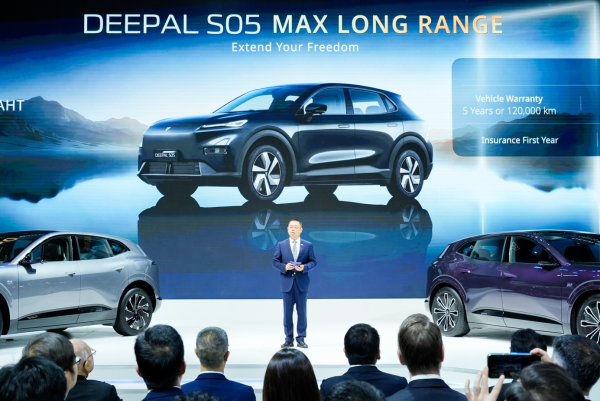
Changan Automobile (www.GlobalChangan.com) unveiled its latest lineup of new energy vehicles (NEVs) at the Thailand International Motor Expo 2025, presenting models across AVATR and CHANGAN DEEPAL. The showcase highlighted its leading technology and deep-rooted heritage in the automotive industry. Taking place from 29th November to 10th December at IMPACT Challenger Hall, Muang Thong Thani, CHANGAN's presence marks a bold step in delivering intelligent mobility to Thai customers.
AVATR, the brand that brings the concept of "Emotive Luxury," headlined the event with the debut of the first-class elegant luxury SUV -- AVATR 07. Lead by AVATR's European design team, the model has earned top international honors, including the IDA International Design Gold Award and the 2025 German iF Design Award. The cabin combines premium materials, multi-sensory enjoyment and exceptional quietness to create a deeply resonant and luxurious environment. The 3.9s 0-100km/h acceleration time and advanced CDC adaptive air suspension, powered by industry-leading ADAS, deliver a seamless, reliable and confident driving. Beautiful in design, luxurious in comfort, and intelligent in every sense, AVATR 07 bring Thai customers to a new journey of "Smart elegance, effortless luxury" .
CHANGAN DEEPAL, a key part of Changan's Thailand portfolio, continued its strong market momentum. The DEEPAL S05, first made-in-Thailand model, launched in March 2025, ranked No. 1 in EV SUV registrations for two consecutive months. Responding to growing consumer enthusiasm, Changan introduced the S05 Max Long Range, offering an all-black exterior and interior, a 68.82 kWh battery with 560 km NEDC range, and a 200 kW motor capable of 0–100 km/h in just 6.48 seconds.
As Thailand rapidly transitions toward electrification, it has become a strategic hub for Changan. Under its “In Thailand, For Thailand” strategy, Changan is advancing localization across local manufacturing, marketing, sales, and service.
In May 2025, Changan inaugurated its first overseas NEV plant in Rayong, Thailand—employing over 1,000 Thai workers, and achieving approximately 60 percent local contents. In August, Changan hosted its first Service Skills Competition in Bangkok reinforce its global after-sales standards.
Looking ahead, Changan plans to launch seven models in Thailand over the next three years. Over the next five years, Changan will introduce more than 50 NEVs globally, driving the momentum of AVATR and CHANGAN DEEPAL toward leadership in intelligent and new energy mobility.
Distributed by APO Group on behalf of Changan.Contact:
Xu Ruiyue
xury1@changan.com.cn