
Explore more Articles in
Sustainability
Big 5 Global opens in Dubai as industry hails defining era of innovation in construction and urban development


- ‘We have strengthened the readiness of the construction sector by updating regulatory frameworks, enabling the use of environmentally friendly building materials and expanding the adoption of smart technologies,' MoEI tells Big 5 Global Leaders' Summit
- During a panel discussion focused on unlocking the power of geospatial data at the GeoWorld Summit, delegates hear that in Dubai the focus is always on balancing governance with quality of life
- Day one product showcases include agentic AI ecosystems and a graphene-reinforced luxury concrete block with 24-karat gold finish
The 46th edition of Big 5 Global opened its doors today at Dubai World Trade Centre, bringing together international exhibitors, buyers and industry leaders for four days of product showcases, knowledge sharing and on-site collaboration, catering to the region's $9.18 trillion construction projects pipeline (Source: Ventures Onsite). Day one set the pace with active halls, packed sessions and strong participation across all features.
UAE Ministry of Energy and Infrastructure delivers opening keynote
Industry leaders, economists and policymakers converged at the Big 5 Global Leaders' Summit to examine how markets are shifting and what it will take to keep construction supply chains resilient.
Delivering the opening keynote for the summit was His Excellency Eng Yousif Abdalla, Assistant Undersecretary for Federal Infrastructure Projects Sector at UAE Ministry of Energy and Infrastructure, who highlighted how cooperation between public and private sectors remains essential to delivering projects that support economic diversification and national resilience.
“In the United Arab Emirates, we are committed to promoting the adoption of modern technologies in the construction sector and enabling a regulatory and economic environment that keeps pace with this progress,” he said. “We also encourage the use of environmentally friendly building materials, smart construction technologies and advanced data analytics in project management.
“Big 5 Global comes at a critical moment, as countries and institutions move towards smarter cities, more resilient infrastructure and projects that are more efficient in their use of resources and energy. Here, Big 5 Global plays a vital role as a global meeting point that brings together experts, innovators and companies to showcase advanced engineering solutions, exchange expertise and develop partnerships that support the transition toward a more sustainable and adaptable built environment."
‘A defining era of industrial innovation'
In the opening executive dialogue, Asam Hussain, CEO of Arabian Gulf Steel Industries, joined Dr Nicholas Fearnley, Global Head of Construction Forecasting at Oxford Economics, for a candid assessment of the steel industry's outlook. Their conversation addressed global demand trends, the shift towards low-carbon production models, and how locally sourced materials help reduce exposure to geopolitical and economic risks.
“Verified Net Zero steel gives developers' clarity on material choices,” Hussain said. “AGSI's traceable, locally sourced production offers among the lowest-carbon performance globally and supports reliable supply as regional construction needs grow.”
Angela Pernsteiner, Visionary Founder of Würth Professional Solutions, highlighted how transformational leadership and multi-generational business models are shaping new approaches to process efficiency, market positioning and strategic partnerships.
"The Middle East is entering a defining era of industrial innovation, and both the UAE and Würth Professional Solutions share a bold vision for its future,” said Pernsteiner. “With Würth Professional Solutions, we are not just expanding our footprint, we are investing in the region's long-term success.
“The UAE offers a dynamic growth environment, and we bring heritage, global expertise, and applied solutions to unlock its full potential. Our family believes in building solutions that empower industries with precision, reliability, and future-ready engineering. Big 5 Global marks an important milestone in this journey, demonstrating how shared vision and strategic collaboration can drive innovation and lasting impact."
Additional contributions throughout the day came from senior representatives of the Ministry of Public Works and Infrastructure South Africa, King Abdullah Financial District (KAFD), the Italian Trade Agency and Abu Dhabi's DMT and ADPIC, highlighting themes of diversification and long-term planning.
GeoWorld Summit discuss data governance
At the GeoWorld Summit, experts examined governance frameworks for geospatial data and the standards required for responsible use over the next decade. Key topics included data privacy, accuracy, interoperability, regulatory alignment and how AI and machine learning can support better decision-making.
Speaking on a panel session entitled Unlocking the Power of Geospatial Data: A Governance Framework for the Next Decade, Eng Maitha Al Nuaimi, Director of GIS Centre at Dubai Municipality, directly addressed the attending delegates, making it clear that the goal is always to improve the quality of life in the emirate while ensuring data security. Governance, she said, should never negatively affect quality of life, but rather enhance it regardless of whether that is for employees, residents, or visitors.
Eng Heba Matar Khalifa Alnofeli, Head of Asset Registry and Governance Section at Abu Dhabi's Department of Municipalities and Transport (DMT), added that data is fuel and the quality and safety of that data is key.
Product launches and exhibitor highlights
Day one also showcased a range of new products across building materials, smart technologies, tools, HVACR systems and finishing solutions. Exhibitors reported strong engagement from buyers seeking practical solutions that support cost efficiency, sustainability and project delivery.
GIM Black & Gold, exhibiting for the first time, is displaying their graphene-reinforced luxury concrete block with 24-karat gold finish this week. Designed for architectural icons and exclusive projects, Dr Vivek Koncherry, CEO, Graphene Innovations Manchester Ltd, called the launch of GIM Black & Gold Flooring at Big 5 Global “a milestone” for the luxury materials market.
“This patented 24k gold legacy surface delivers true uniqueness, scientific depth, and material excellence, perfectly aligned with the Middle East's drive for innovation and iconic design. To preserve exclusivity, access will be limited.”
Another new-to-market launch comes from Verosoft, a global provider of Enterprise Asset Management (EAM) solutions built on Microsoft Dynamics 365 Business Central. EAM is showcasing its latest innovation, mobiMentor AI, which is an agentic AI ecosystem designed to autonomously execute maintenance tasks, automate workflows, and support technicians with real-time, context-aware insights.
Rounding off the day one product showcases was PlanRadar, a digital platform helping transform construction and real estate workflows by combining task management, reporting, and AI-powered insights. At Big 5 Global 2025, the company is showcasing SiteView 360°, its AI Assistant for automated reporting, reality capture and visual documentation and instant audit-ready reports designed for QA/QC, inspections, and regulatory compliance.
“The opening day of Big 5 Global has certainly set the tone for the 2025 edition, spotlighting how industry transformation and the increasing adoption of technology and artificial intelligence is reshaping the way cities across the world are conceptualized, designed and built,” said Josine Heijmans, Senior Vice President, dmg events.
Big 5 Global runs until Thursday, 27 November, at Dubai World Trade Centre, welcoming industry professionals daily from 10am to 6pm. Registration remains open on-site.
Distributed by APO Group on behalf of dmg events.For media inquiries, please contact:
Deepra Ahluwalia, Action PR
deepra.a@actionprgroup.com
971 56 477 0995
Nour Ibrahim, Action PR
nour.i@actionprgroup.com
971 54 425 0187
Khushie Mallya, PR Executive
Construction, dmg events
khushiemallya@dmgevents.com
Ranju Warrier, Head of PR & Communications
Construction, dmg events
ranjuwarrier@dmgevents.com
About Big 5 Global:
With a 45-year legacy, Big 5 Global is the largest and most influential building and construction event in the Middle East, Africa and South Asia and the annual meeting hub for the global construction industry. Taking place from 24 – 27 November 2025, at the Dubai World Trade Centre, Big 5 Global attracts more than 85,000 global attendees from over 165 countries and 2,800 exhibitors to UAE covering the full construction and urban development cycle across dedicated sectors and nine specialized events enabling industry professionals to source worldwide building solutions for every stage of construction: Heavy, Totally Concrete, Marble & Stone World, Urban Design & Landscape, Windows, Doors & Facades, HVACR World, LiveableCitiesX, GeoWorld and Future FM.
For more information and to register, visit: www.Big5Global.com
Combating antimicrobial resistance in the poultry value chain through the farmer field schools approach
Download logo
Antimicrobial resistance (AMR) is a natural phenomenon in which micro-organisms such as bacteria, viruses, fungi and parasites develop the ability to survive exposure to antimicrobial agents, rendering medications less effective or ineffective for treating infections. As the world grapples with AMR, the Food and Agriculture Organization of the United Nations (FAO), with support from the Fleming fund grant, and in collaboration with the Government of Zimbabwe, has been implementing Broiler Farmer Field Schools (FFS), an approach aimed at equipping local poultry farmers with knowledge and skills on biosecurity and responsible use of antimicrobials to improve health, productivity and food security.
Last week, FAO in support to the Government of Zimbabwe, facilitated graduation ceremonies for 106 FFS farmers and facilitators in Matabeleland South province. This milestone marks the completion of a two-year programme designed to transform poultry farming practices at community level. The journey began in February 2024, when government and community facilitators underwent a three-week Training of Trainers (ToT) workshop. Following the training, implementation plans were set in motion, starting with farmer identification at ward level, development of locally adapted curricula, and finally, three full cycles of broiler production per FFS.
“The graduation ceremonies are testimony of how broiler FFS specifically serve as participatory hubs of knowledge transfer, equipping farmers with the necessary skills to navigate production while promoting the prudent use of antimicrobials to combat AMR,” said Patrice Talla, FAO Subregional Coordinator for Southern Africa and Representative to Zimbabwe.
The FFS approach emphasizes participatory learning, hands-on demonstrations, and behaviour change, making it a powerful tool for tackling AMR in the poultry value chain. Farmers learn to improve biosecurity, reduce disease risks, and minimize reliance on antibiotics; all aligned with the FAO's Reduce the Need for Antimicrobials on Farms for Sustainable Agrifood Systems Transformation (RENOFARM) initiative, which promotes resilient, sustainable farming systems through innovation and responsible practices.
“For the past two years, this method has helped farmers boost productivity and food security while reducing antimicrobial misuse,” said Tinashe Hodobo, Animal health focal point in the One health secretariat of the government, highlighting the relevance of the FFS approach in curbing AMR.
“For the most part, farmers have learnt how to improve productivity, reduce losses, and enhance food security,” added Hodobo.
Between 2020 and 2022, FAO piloted the FFS approach in broiler production across eight districts in Zimbabwe. In 2023, selected Veterinary Services officers from across Africa, including Zimbabwe, went through the standard FFS master training programme in Kenya, strengthening regional expertise in farmer-led learning.
Following the pilot, FAO established a network of Broiler FFS in four new districts, each serving as a hub for practical training. The rollout included provision of basic Personal Protective Equipment (PPE) for facilitators and farmers during practical sessions, provision of inputs such as feeders, waterers, chicks, feeds and disinfectants and implementation of a structured training programme. Notably, some initial FFS have led to the development of daughter FFS, expanding the reach and impact of the programme.
“When we heard about the Broiler Farmer Field School, we decided to leave our pride and gather wisdom. We've learned how to rear poultry responsibly without relying on antibiotics, and this knowledge is transforming the way we farm,” said Edward Muleya, Vice Chairperson, Fit-Broilers FFS Group in Luthumba Beitbridge.
To ensure sustainability and scalability of the programme, FAO is working with the Community Facilitators and government Veterinary Services and agricultural production specialists who work in the communities, enrolling more participants to the FFS.
“We waited for the practical sessions with hope, and it paid off. Now we have graduated! Today, we're using biosecurity and good management instead of drugs, and the system is working in our villages,” said Nokukanya Jiyane, Government FFS Facilitator in Mangwe district, Matabeleland South Province.
Beyond farmer training, the programme adopts a multi-sectoral approach, strengthening AMR surveillance under the One Health framework. Laboratories across Zimbabwe have been upgraded to improve diagnostic capacity, ensuring early detection and monitoring of antimicrobial resistance.
“Beyond these certificates, what farmers have learned must become a way of life. Scaling up the FFS approach will be key to tackling AMR and building healthier, more productive livestock and agrifood systems,” said Kudzaishe Vhoko-Tapesana, National AMR Coordinator at FAO.
Going forward, FAO plans to build on the success of Broiler FFS by integrating lessons learned into broader agrifood systems initiatives. This will include scaling up FFS to more districts, strengthening linkages with RENOFARM for climate-resilient and sustainable agrifood practices, and deepening AMR surveillance through upgraded laboratories and data-sharing platforms. The aim is to ensure continuity and sustainability, embedding responsible antimicrobial use and biosecurity as pillars of Zimbabwe's agrifood systems transformation.
Distributed by APO Group on behalf of Food and Agriculture Organization of the United Nations (FAO): Regional Office for Africa.South Africa’s South African National Petroleum Company (SANPC) Enters Stabilization Phase, Targets Full Operations by 2027
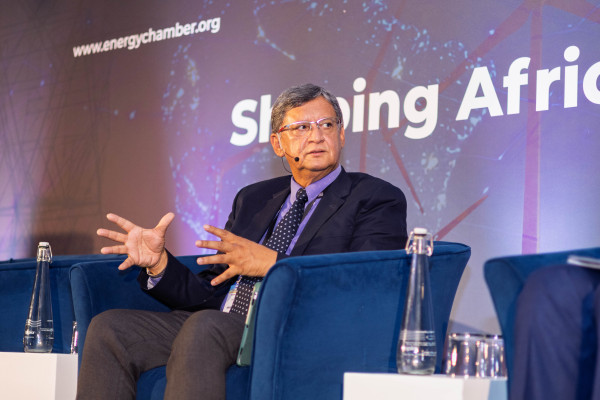
The South African National Petroleum Company (SANPC) has entered into the second stage in its establishment process as it progresses toward becoming fully operational, according to Nazeem Braaf, Executive in the Office of the CEO of SANPC.
Speaking during a fireside chat at the G20 Africa Energy Investment Forum, organized by the African Energy Chamber, Braaf said SANPC aims to reach its operational phase between 2026 and 2027.
“The formation phase is complete, with the project team going live in May 2025. We now have several assets under our management, and we are optimizing them. We have transferred 400 employees, and our focus is on generating short-term value while managing the transition effectively,” he noted.
Outlining SANPC's priorities, he stated that the company seeks to increase the oil and gas sector's contribution to South Africa's GDP from the current 1% to 4% in the short to medium term.
“Our mandate goes beyond energy security. We see ourselves as a catalyst for national economic growth. With unemployment around 30%, skills development, economic inclusion and job creation are central to our mission,” he noted.
Braaf added that SANPC is prioritizing technology adoption to secure South Africa's energy future while ensuring environmental sustainability, particularly as 600 million Africans still face energy poverty and demand is expected to grow as the population approaches two billion by 2050.
“We are engaging with universities across South Africa to enhance technology and skills development because we cannot afford to fall behind. Supporting local enterprise will be key as we lay the foundation for long-term growth,” he said.
SANPC is also drawing lessons from Trinidad and Tobago and Guyana's use of investor-friendly oil and gas policies to expedite development and projects such as the Morocco – Nigeria Gas Pipeline to attract investment and position South Africa as a regional energy hub.
Distributed by APO Group on behalf of African Energy Chamber.