
Explore more Articles in
Sustainability
Libya Energy & Economic Summit (LEES) 2026 to Spotlight United States (U.S.) Corporate Engagement as American Firms Recommit to Libya’s Energy Future
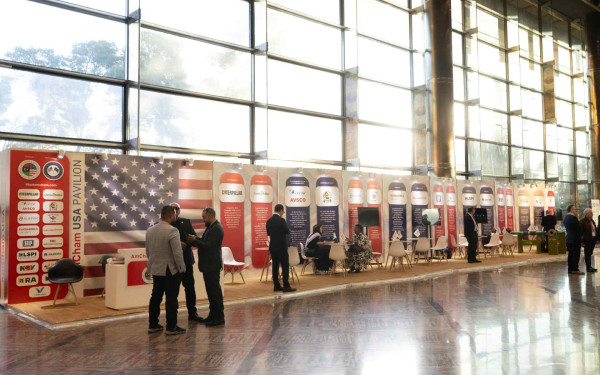

The Libya Energy & Economic Summit (LEES) 2026, taking place on January 24-26 in Tripoli, will showcase a renewed surge of U.S. participation as American companies re-engage with Libya's oil, gas and infrastructure sectors. This year marks a significant moment for U.S. investment momentum, reinforced through expanded commercial programming and strategic dialogues, signaling renewed confidence in Libya's oil, gas and infrastructure markets – and marking a strategic shift in the way American majors are approaching the region.
A major highlight of the Summit will be a dedicated U.S.-Libya Roundtable and a U.S. pavilion, underscoring growing institutional and corporate commitment to Libya's energy future. Discussions will explore collaboration in exploration, field redevelopment and energy services, highlighting areas where American firms can add unique value – from advanced technologies and workforce training to midstream and gas infrastructure innovation. Through these contributions, U.S. investment can accelerate technology transfer, strengthen local supply chains and support Libya's broader industrial development and energy transition objectives. Meanwhile, the pavilion will host a broad range of American firms, industry associations and technical service providers, offering a platform for partnerships across upstream, midstream, downstream and infrastructure development.
Industry leaders ConocoPhillips and SLB will feature prominently at LEES 2026, reflecting the resurgence of U.S.-linked investment interest. ConocoPhillips, a key partner in the Waha Oil Company, continues to support major redevelopment efforts aimed at boosting output at one of Libya's most strategic concessions. SLB, one of the most active technology and service providers in Libya, is deepening its collaboration with the NOC to enhance crude production, modernize operations and support the country's long-term sustainability goals. The company is deploying advanced drilling, well placement and production optimization technologies across priority fields, while expanding its footprint through new contracts – including a milestone agreement to drill three wells in the Nesr and Al-Waha fields. Hill International, meanwhile, recently secured a $235 million contract for the Structures A&E gas field project, forming part of a multi-billion-dollar program to strengthen Libya's natural gas capacity.
These players will be joined by Halliburton, Baker Hughes and ExxonMobil, all of which are deepening their engagement with Libya's National Oil Corporation (NOC) and assessing new commercial, technical and exploration opportunities. ExxonMobil recently signed an MoU with the NOC to undertake geological and geophysical studies covering four offshore blocks in the northwest and Sire Basin – reflecting analytical interest and preliminary evaluation of future partnership potential. The company is also expected to participate in Libya's current licensing round, which covers 22 onshore and offshore blocks.
Chevron has also re-emerged as a major talking point ahead of LEES 2026. Following high-level discussions in London, the NOC confirmed that Chevron is showing serious interest in returning to Libya after a 15-year hiatus. Talks have centered on cooperation in exploration, unconventional resources and undeveloped reservoirs, with Libyan officials emphasizing the country's significant untapped potential across oil and natural gas.
Technical programming will represent another major pillar of U.S. engagement. The Society of Petroleum Engineers Libya will host technical sessions on January 24, featuring discussions on enhanced oil recovery, field redevelopment, marginal field development strategies and digitalization in Libya's oilfields. On January 25 and 26, S&P Global Commodity Insights will lead specialized technical sessions covering market intelligence, production trends, resource monetization and global energy outlooks relevant to Libya's future planning. These sessions are designed to attract active exploration and support the NOC's ambitious target of 2 million barrels per day by 2030.
Institutional participation is set to complement private-sector involvement. The U.S. Embassy – expected to participate at LEES 2026 – supports expanded commercial cooperation between the two countries, encouraging transparent governance and reinforcing bilateral economic engagement. The American Chamber of Commerce (AmCham) in Libya – once again a strategic partner of the summit – continues to promote U.S. company participation following its Washington D.C. forum spotlighting opportunities across hydrocarbons, renewables and infrastructure.
“The U.S.-Libya Roundtable reflects a decisive turning point in commercial engagement,” says James Chester, CEO of Energy Capital & Power. “American companies are now investing in Libya in ways we haven't seen for decades – driving technology transfer, securing long-term production and helping the country realize its full energy potential.”
With exploration interest rising, redevelopment underway and several U.S. majors and service providers reassessing market entries, the U.S.-Libya Roundtable at LEES 2026 will serve as a critical platform to consolidate this momentum and shape a long-term roadmap for sustainable growth in one of the North Africa's most promising energy markets. With the previous edition of LEES featuring 18 U.S. companies in the national pavilion – momentum next year is expected to build significantly. Together, these developments mark a strategic pivot, with U.S. companies taking a leading role in shaping Libya's energy future by deploying capital, technology and expertise at an unprecedented scale.
Join industry leaders at the Libya Energy & Economic Summit 2026 in Tripoli and explore investment opportunities in one of North Africa's most dynamic energy markets. LEES 2026 offers a premier platform for partnerships, innovation and sector growth. Visit www.LibyaSummit.com to secure your participation. To sponsor or participate as a delegate, please contact sales@energycapitalpower.com.
Distributed by APO Group on behalf of Energy Capital & Power.World Future Energy Summit 2026 to spotlight potential of Artificial Intelligence (AI) in Middle East’s clean energy sector
- AI will be key enabler for countries to achieve national clean energy goals
- AI technologies help companies reduce energy consumption by as much as 60%
- Artificial Intelligence Conference to explore ways to tackle AI's energy footprint
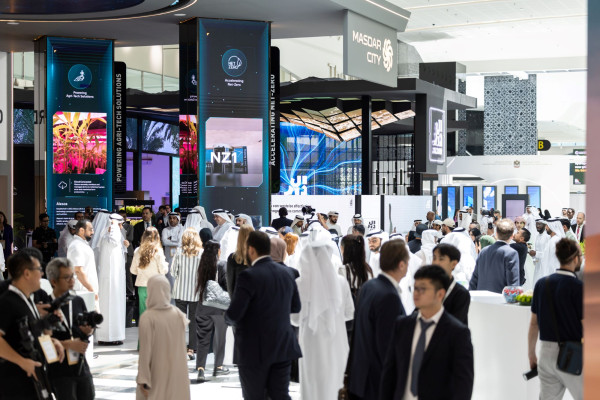
As artificial intelligence emerges as a transformative force in the clean energy sector, the World Future Energy Summit 2026 (www.WorldFutureEnergySummit.com) will spotlight its vast potential to reshape energy production, transmission, and efficient, data-driven distribution. Running from January 13-15 at Abu Dhabi National Exhibition Centre (ADNEC), the three-day show is an integral part of Abu Dhabi Sustainability Week 2026.
With the theme of AI running across all seven conference tracks at this year's show, the 2026 edition will build on that momentum, raising the bar with the launch of the FUSE AI Zone, a dedicated platform where more than 40 companies will showcase cutting-edge AI solutions to drive clean energy, smart infrastructure, and climate resilience. The event will also incorporate the inaugural Artificial Intelligence Conference, a forum exploring how AI can be responsibly harnessed to accelerate progress across the energy, infrastructure, and smart cities sectors.
Gathering thought leaders, innovators, and policy influencers, the Summit will laser in on AI's predictive power and its ability to optimise the management of clean energy flows, providing a vital technical boost to help low-carbon systems scale effectively.
Using AI to Accelerate Technical Breakthroughs
In the Middle East and North Africa (MENA), AI adoption is accelerating across multiple areas, from grid and demand-response management to sector coupling and system maintenance. Advances in forecasting and energy storage are also enhancing performance, enabling companies to deliver renewable energy with greater efficiency and reliability. Yet important questions remain about how best to unlock AI's full potential to power the sustainable energy systems of the future.
For example, can AI make up for shortcomings in energy policy that hold back the transition to carbon-free energy? Can it accelerate innovation to enable researchers and entrepreneurs to more rapidly test and prove technologies that make a direct impact on decarbonisation? These pressing issues, plus the potential of AI to advance the exploration of mineralisation for carbon capture, will be addressed by leading experts at January's World Future Energy Summit, now globally recognised as the world's premier business event focused on future energy and sustainability.
The UAE's clean energy goals, driven by its Net Zero by 2050 Strategic Initiative, involve increasing clean energy to 50 per cent of the total energy mix by 2050, reducing carbon emissions by 70 per cent, and tripling renewable energy capacity by 2030. AI will be a key enabler for achieving these clean energy targets across the region.
The World Future Energy Summit and Abu Dhabi Sustainability Week's Advisory Committee's 2025 AI and Technology Insights Report supports this, stating that AI can significantly enhance the efficiency and reliability of clean energy and infrastructure networks both regionally and globally.
According to the report, smart grid algorithms can accurately predict and then balance electricity supply and demand in real time, integrate renewables, and reduce the need for constructing new power plants. Investment in digital infrastructure and skills is key, however, so that utilities can harness data for grid optimisation and predictive maintenance.
Driving Energy Efficiency in Homes and Businesses
The 2026 edition will also highlight the growing role of AI in enhancing energy efficiency within buildings. According to the World Economic Forum, AI technologies are already helping companies reduce energy consumption by up to 60 per cent in some cases.
While the industry has only just begun to tap into AI's full potential in this field, the opportunities for progress are vast. Through panel discussions and keynote sessions, a powerhouse of industry experts will explore the key challenges and opportunities surrounding energy efficiency in homes and businesses across the MENA region and beyond.
Speakers will discuss how new AI- and automation-powered design tools can help create spaces that are energy-, water- and people-efficient, all while staying within budget. They will also examine how smart software can rapidly test design options to identify solutions that cut costs and reduce environmental impact. Additional sessions will address how innovation, collaboration, and resilient supply chains can help build sustainable urban futures.
Shyam Parmar, the Summit's Event Director, added: “By bringing together some of the brightest minds from across the global energy landscape, the World Future Energy Summit plays a pivotal role in unlocking the vast potential of artificial intelligence, not only to drive greater energy efficiency in homes and businesses, but to accelerate progress across the entire clean energy and sustainability ecosystem.
“The new FUSE AI Zone and Artificial Intelligence Conference provide an unparalleled platform for knowledge exchange, collaboration, and lively debate on how AI can be deployed responsibly and effectively. These conversations are vital to advancing the AI agenda and ensuring companies can fully harness their capabilities to meet clean energy ambitions. By facilitating this dialogue, we're helping to translate innovation into action, and turning bold ideas into tangible outcomes that move the world closer to a sustainable energy future.”
Understanding AI's Energy Consumption
AI's transformative potential is undeniable, yet credible estimates project AI-related electricity consumption could grow by as much as 50 per cent each year from 2023 to 2030. The electricity demand of data centres is also projected to grow, from one per cent of global energy demand in 2022 to more than three per cent by 2030.
In January 2025, Masdar and Emirates Water and Electricity Company announced the launch of the world's first large-scale round-the-clock giga-scale project, combining solar power and battery storage in Abu Dhabi. Delivering up to one gigawatt of baseload power every day generated from renewable energy, it will be the largest combined solar and battery energy storage system in the world.
According to the 2025 AI and Technology Insights Report, such projects could redefine how critical AI systems are powered, eliminating the need for fossil fuel-backup. By connecting to clean energy sources, AI data centres could operate with near-zero carbon emissions, marking a major step towards a more sustainable digital future.
The Summit will explore ways to tackle AI's energy footprint with a dedicated panel session on actionable strategies to realign AI growth with climate goals, balance energy consumption, and drive sustainable innovation without sacrificing usability.
“AI's role in climate and environmental systems is expanding rapidly and understanding how to guide that growth is becoming just as important as advancing the technology itself,” said Mehdi Ajana, Head of Strategy at Nabat. “At the World Future Energy Summit, we'll look at practical, data-driven approaches, from improving habitat classification and health assessment model accuracy, to monitoring carbon and biodiversity metrics that help align AI innovation with measurable climate outcomes”.
“It's a great opportunity for like-minded organisations to come together, listen, learn, and explore what's possible and to understand how AI can be deployed responsibly to accelerate real progress towards global sustainability goals.”
Paving the Way to a Sustainable Future
The 2026 edition of the World Future Energy Summit will also explore the role of AI in healthcare, food security, and weather modelling, with a keynote presentation on Earth Two Climate, G42, and NVIDIA's new AI-powered weather forecasting solution that accurately gauges weather conditions down to a single square-metre. This is invaluable to farmers and smart agriculture planners, who can make more informed decisions on crop choices, yield expectations, maintenance procedures, and more.
From cutting energy waste to improving health outcomes and driving farming efficiencies, AI is a powerful means to accelerate sustainability solutions. According to the 2025 AI and Technology Insights Report, however, it must be guided by clear human-defined goals: “Technology deployments should focus on solving real problems rather than adopting AI for AI's sake”. That means human oversight, strategic vision, and multidisciplinary collaboration should be seen as essential in order to convert AI's promise into tangible progress, paving the way to a cleaner, greener, and more sustainable future.
The World Future Energy Summit 2026, hosted by Masdar and part of Abu Dhabi Sustainability Week, will take place from January 13–15 at ADNEC Centre Abu Dhabi.
Distributed by APO Group on behalf of World Future Energy Summit.For media inquiries, please contact:
press@masdar.ae
Connect:
Facebook: https://apo-opa.co/4anqfLs
Twiiter/X: https://apo-opa.co/4oiQczi
World Future Energy Summit:
As the largest event during ADSW, the World Future Energy Summit continues to be a driving force for innovation, collaboration, and thought leadership in renewable energy and sustainability. Now entering its 18th edition, the Summit has established itself as a vital platform bridging policy with real-world action and business growth.
The 2026 edition, taking place from 13–15 January, will feature more than 800 global brands, the dynamic Greenhouse start-up zone, the Fuse AI cleantech pavilion, and the debut of the Greenpeace Cinema. Over three days, attendees will have the opportunity to join conferences led by 300+ industry experts, explore nine exhibition halls showcasing breakthrough products and solutions, and connect with more than 50,000 participants from across the globe.
About Abu Dhabi Sustainability Week:
Abu Dhabi Sustainability Week (ADSW) is a global platform supported by the UAE and its clean energy leader, Masdar, to address the world's most pressing sustainability challenges through crucial conversations accelerating responsible development and fostering inclusive economic, social and environmental progress.
For more than 15 years, ADSW has convened decision-makers from governments, the private sector and civil society to advance the global sustainability agenda through dialogue, cross-sector collaboration and impactful solutions. Throughout the year, ADSW conversations and initiatives facilitate knowledge sharing and collective action that will ensure a sustainable world for future generations.
About Masdar:
Established in 2006, Masdar (Abu Dhabi Future Energy Company) is a global clean energy leader, transforming how the world produces and consumes energy through bold innovation and commercial excellence.
Masdar is a clean energy investor, developer and operator, advancing renewable energy projects across key markets and technologies, with a global project portfolio capacity to date of over 51 gigawatts (GW).
Jointly owned by TAQA, ADNOC and Mubadala, Masdar is driving the scale-up of renewables worldwide, targeting a portfolio capacity of 100GW by 2030.
For more information, please visit: https://Masdar.ae/
Africa Investment Forum Hosts First ‘Mission 300’ Day, Accelerating Push for Universal Electricity Access
Download logo
The World Bank Group and the African Development Bank Group (https://www.AfDB.org), with support from The Rockefeller Foundation, the Global Energy Alliance for People and Planet, and Sustainable Energy for All (SEforALL), hosted the inaugural “Mission 300 Day” on the sidelines of the Africa Investment Forum (AIF) 2025 Market Days (http://apo-opa.co/4oeFycH) in Rabat, Morocco.
The event highlighted countries' National Energy Compacts showcased investment-ready opportunities, and galvanised action toward the shared goal of delivering electricity access to 300 million people across Africa by 2030.
The special Mission 300 Day convened African government ministers, investors, and development financiers to spotlight national commitments, present implementation roadmaps, and discuss progress on regulatory reforms essential for unlocking private-sector investment. Furthermore, the event served as a platform to strengthen investor-government dialogue, champion African private-sector leadership, and facilitate knowledge transfer on best practices for achieving expanded electricity access.
Mission 300 (https://apo-opa.co/4psuZUp) is a World Bank Group and African Development Bank-led initiative that brings together African governments, the private sector, and development partners to provide electricity to an additional 300 million Africans by 2030. Twenty-nine African countries have already developed National Energy Compacts (http://apo-opa.co/3KqI8yz) with time-bound targets to increase access, strengthen utilities, and attract private capital.
During the Mission 300 Day, ministers from Comoros, Guinea, Gambia, and Lesotho presented implementation roadmaps with specific deadlines for achieving universal electricity access by 2030, engaging directly with private-sector leaders and development partners on the regulatory reforms needed to unlock investment.
Since its inception in 2018, the Africa Investment Forum has attracted more than $225 billion in investment interest across critical sectors aligned with the Sustainable Development Goals, the African Union's Agenda 2063 (http://apo-opa.co/43MCVI0), and the African Development Bank's Four Cardinal Points (http://apo-opa.co/3Mp6hpJ) vision.
Erik Fernstrom, Regional Director for Infrastructure, East and Southern Africa, World Bank Group “Mission 300 is proving that Africa is open for business. With energy reforms underway, strong country leadership, and bankable projects ready to go, we've created real opportunities for private capital to scale solutions that will power Africa's transformation. Energy access is not just a target—it's about creating jobs, igniting economic growth, and giving millions the chance to build better lives.”
Kevin Kariuki, Vice President for Power, Energy, Climate & Green Growth, African Development Bank Group
“Mission 300 will be underpinned by massive and speedy investments in generation, transmission, distribution, as well as last-mile connectivity infrastructure, which, when complemented by necessary reforms, will ensure affordability of tariffs, financial sustainability of utilities and energy sectors, and engender enhanced private-sector investments. At the African Development Bank, we are committed to de-risking investments, mobilising institutional capital, and ensuring that Mission 300 delivers not just electricity, but millions of jobs, vibrant industries, and dignified livelihoods for our people.”
Carol Koech, VP Africa, Global Energy Alliance for People and Planet
“Mission 300 requires innovation—we cannot build the grid of the future using the tools of the past. That's why the Global Energy Alliance provides technical guidance, prepares bankable projects, and deploys catalytic capital to attract private investment. By breaking down siloes, we mobilise the blended finance needed to scale Distributed Renewable Energy (DRE) and other innovative solutions that reach underserved communities fast. The National Energy Compacts demonstrate African leadership in action, and we are proud to partner in delivering reliable, affordable, and clean energy to 300 million people by 2030.”
Damilola Ogunbiyi, CEO and Special Representative of the UN Secretary-General for Sustainable Energy for All:
“Energy access is a powerful driver of development. Through Mission 300, we're advancing an investor-ready energy transition for Africa. Sustainable Energy for All is working with partners to design innovative financing instruments that expand private sector participation in local-currency platforms, paving the way for a pan-African mechanism to unlock new capital for developers across the continent.”
William Asiko, Senior Vice President for The Rockefeller Foundation
“Mission 300 represents one of the most ambitious energy and vital energy access endeavours of our time - and what we saw at AIF today confirms this momentum is real. Governments are leading; partners are strategically aligning; and a credible pipeline is emerging that can bring clean, reliable power to hundreds of millions of Africans. Philanthropy helps spark progress, but it is the collective strength of partnerships that will deliver the final results.”
Distributed by APO Group on behalf of African Development Bank Group (AfDB).Media Contacts:
Roxanne Bauer,
World Bank
rbauer1@workldbankgroup.org
Gertrude Kitongo,
African Development Bank Group
media@afdb.org
Robert Magori,
Sustainable Energy for All (SEforALL)
robert.magori@seforall.org
Benson Kibiti,
Global Energy Alliance for People and Planet
benson.kibiti@energyalliance.org
Ashley Chang,
The Rockefeller Foundation
media@rockfound.org
About Mission 300:
Mission 300 is a partnership between the World Bank Group and the African Development Bank, with support from The Rockefeller Foundation, Global Energy Alliance for People and Planet, and Sustainable Energy for All (SEforAll), to connect 300 million people in Africa to electricity by 2030. The platform brings together African governments, the private sector, philanthropy, and development partners to deliver affordable, reliable power, expand access, attract private investment, and drive economic transformation.
For more information on Mission 300, visit https://apo-opa.co/4psuZUp