
Explore more Articles in
Sustainability
A New Era, New Icons: TikTok Honours Africa’s Biggest Creators of 2025


The TikTok (www.TikTok.com) community has spoken, and Africa has crowned its newest icons. The 2025 TikTok Awards Sub-Saharan Africa lit up Johannesburg on 6 December, marking a powerful moment in the continent's rapidly evolving creator landscape. Under the bold theme “New Era, New Icons,” TikTok honoured the creators who are reshaping culture, storytelling, and digital influence across the region.
Guests were treated to an electrifying night of glitz, glamour, and unforgettable performances from top African talents, including Ciza, Lord Kez, Thuli P, DJ Fif_Laa and Thabsie. Popular creator and entertainer Bontle Modiselle-Moloi commanded the stage as host, bringing unstoppable energy to the awards, while Red Carpet presenters Keegan Gordon and Zayaan Noorani captured every moment of fashion and flair. South African favourite Mihlali Ndamase made a surprise appearance to present the Video of the year award, while famous sports athlete Akani Simbine presented the Sport Creator of the Year Award.
Supported by partner brands like NIVEA, inDrive, Coca-Cola, PEP and Dis-chem, the event highlighted the diversity of the region's creator landscape. Winners crowned hailed from Nigeria, South Africa, Kenya, Ghana, and Tanzania, reflecting TikTok's commitment to elevating the voices shaping entertainment, education, and social impact across the continent.
Reflecting on the evening's festivities, Boniswa Sidwaba, TikTok's Head of Content Operations for Sub-Saharan Africa said, “Tonight's ceremony was a gathering of the trailblazers who have redefined what it means to be a creator in Africa. From Sokoto to Nairobi, and Accra to Pretoria, we honoured the creators who turned 60-second clips into cultural movements. We are honoured to celebrate them as they amplify their voices and take their stories from Africa to the world.”
Audiences across Africa will get another chance to experience the glamour, performances, and emotional acceptance moments when the ceremony is rebroadcast exclusively on TikTok LIVE on 11 December at 20:00 SAST on the @ tiktok.africa (http://apo-opa.co/49Xn8tI) account.
And the 2025 Winners are:
Creator of the Year (Sponsored by NIVEA)
Winner: Raja'atu Muhammed Ibrahim @ diaryofanortherncook (https://apo-opa.co/48nHsTU) (Nigeria)
Taking the night's most prestigious title, @ diaryofanortherncook (https://apo-opa.co/48nHsTU) was recognised for her mastery of visual storytelling through food with the rich sounds of northern music. Based in Sokoto, the creator has captivated a global audience by documenting Northern Nigerian cuisine with that kind of cinematic flair that draws global attention to Nigerian food.
Storyteller of the Year (Sponsored by inDrive)
Winner: Brian Nwana @ briannwana (https://apo-opa.co/4poE4hp) (Nigeria)
Based in Abuja, @ briannwana (https://apo-opa.co/4poE4hp) claimed the Storyteller of the Year award through his food content. From street interviews to compelling personal narratives woven into his food adventures, Brian has a rare gift for capturing the human experience bite by bite. His content keeps audiences hooked from the first second to the last. His Guinness World Record (https://apo-opa.co/4pUqBxI) for the most fast-food restaurants visited in 24 hours is just the latest example of his bold, inventive approach to content.
Speaking while receiving his award, Brian Nwana said, “Every single creator is a storyteller. We all tell stories that help drive the local communities, our cities, and our countries, and when we do that we change the perception that the world has about us”.
Video of the Year
Winner: Fanuel John Masamaki @ zerobrainer0 (https://apo-opa.co/4oEfLuE) (Tanzania)
Tanzanian sports creator @ zerobrainer0 (https://apo-opa.co/4oEfLuE) makes a triumphant return, winning Video of the Year after securing Sports Creator of the Year in 2024. He has become a continent-wide fan favourite thanks to his signature beige blazer and his unique, silent comedy spin on football moments.
I am truly grateful to my fans and the love I have received from Tanzanians. Thank you so much . This win was for all of us." Said John Masamaki while receiving his award.
Rising Star of the Year
Winner: @ tunero_animations (http://apo-opa.co/4oEfMic) (Kenya)
The future of African storytelling is animated. Celebrating the next generation of talent, the Rising Star award went to Nairobi-based @ tunero_animations (http://apo-opa.co/4oEfMic), who has carved out a niche with animated characters like Bob Kichwa Ngumu, whose clever, sarcastic and stubborn traits resonate with Kenyans and the world.
- Runner-up: Esther Francis @ estherfrancisbackup (https://apo-opa.co/49Ze2N7) (Nigeria), adds a creative and relatable flair to health information that empowers users on the platform with credible information.
Social Impact Creator of the Year (Sponsored by Dis-chem)
Winner: Dejoke Ogunbiyi @ noositiwantiwa_ (https://apo-opa.co/4oEfNTi) (Nigeria)
Using the platform for good, @ Noositiwantiwa_ (https://apo-opa.co/4oEfNTi) is driving conversations that matter. From Ibadan, she tackles social issues with grace and impact, mobilising her community for positive change.
- Runner-up: Sinethemba Masinga @ ufarm_julia (https://apo-opa.co/3XGQ5CN) (South Africa) – A champion for agriculture and sustainability, proving that farming is the future.
Food Creator of the Year (Sponsored by Coca-Cola)
Winner: @ malumfoodie (https://apo-opa.co/3XCGNrz) (South Africa)
Pretoria's self-taught cook, @ malumfoodie (https://apo-opa.co/3XCGNrz) took home the trophy thanks to the flavour and fun his videos bring to the kitchen. His approachable recipes and charismatic delivery using South African street language called Spitori and native South African languages bring a fresh, entertaining twist to his recipes and meals.
“From my humble beginnings of Haamanskraal, to Soshanguve and to all of South Africa, now we are in Africa!”, says Malume Foodie, reflecting on the significance of the award.”
- Runner-up: Abena Amoakoaa Sintim-Aboagye @ chefabbys (https://apo-opa.co/4iMKnsM) (Ghana) – Showcasing the best of Ghanaian cuisine to the world with style. She was recently named amongst Time Magazine's 2025 list of the 1000 most influential creators in the World
Sports Creator of the Year
Winner: John Maingi Mbugua @ zozasportscast (https://apo-opa.co/4ayvs3d) (Kenya)
From Nairobi to the world, the @ zozasportscast (https://apo-opa.co/4ayvs3d) team delivers football analysis with passion and precision. They represent a new wave of sports journalism, which is fan-led, authentic, and always on the ball.
“Winning isn't the finish line, it's fuel for the next chapter. Every piece of content, every discussion, every moment captured was driven by passion, and receiving this recognition means that passion is resonating far beyond my expectations.” Said John Mbugua as he received his award
- Runner-up: Victor Ademola @ ademolavictortv (https://apo-opa.co/3KEQrqv) (Nigeria) has kept the Super Eagles and global football conversation alive with energetic commentary.
Entertainment Creator of the Year (Sponsored by PEP)
Winner: Belove Olocha @ beloveolocha (https://apo-opa.co/493iAjx) (Nigeria)
A dominant force in content creation, Lagos-based @ beloveolocha (https://apo-opa.co/493iAjx) was awarded for her consistent ability to entertain and engage audiences with relatable movie content. She also stands out for incorporating her love for movies, sharing film moments and recommendations that resonate with her community.
- Runner-up: Jabulani Macdonald @ jabu_macdonald (https://apo-opa.co/44VGig1) (South Africa) is a staple of South Africa's entertainment scene, known for his quick wit and engaging presence.
Education Creator of the Year
Winner: Izzi Boye @ izziboye (https://apo-opa.co/4oRKXHi) (Nigeria)
Making tech accessible to the masses, @ izziboye (https://apo-opa.co/4oRKXHi) is the go-to guy for gadget reviews, hacks, and digital tips. He proves that TikTok is a powerful classroom for the digital age.
- Runner-up: @ michelle_expert (https://apo-opa.co/3KDvY5A) (South Africa) empowers her audience with expert advice and actionable insights from career development and financial literacy to personal growth and everyday decision-making.
Artist of the Year
Winner: Crown Uzama @ theycallmeshallipopipp (https://apo-opa.co/4pwc1gm) (Nigeria)
2025 was the year of the "Plutomania". Shallipopi (https://apo-opa.co/4pwc1gm), popularly referred to as "Pluto Presido” by his fans, “plutomanians”, dominated the soundwaves and the platform, with tracks that sparked viral challenges and became the soundtrack of the year across the continent.
The platform has also played a significant role in spreading culture through music in 2025. “Thank you, TikTok, for supporting all upcoming artists and giving them a spotlight to shine. “said 2025 Artist of the Year and “Laho” hit-maker, Shallipopi (https://apo-opa.co/4pwc1gm).
Distributed by APO Group on behalf of TikTok.Additional Images: https://apo-opa.co/3MKll1k
About TikTok Awards:
The TikTok Awards are our annual celebration of the most impactful and inspiring creators across Sub-Saharan Africa. This year's event will highlight the extraordinary ways our creators have engaged, inspired, and connected communities on and off TikTok.
About inDrive:
inDrive is a global mobility and urban services platform. The inDrive app has been downloaded over 360 million times, and has been named the second most downloaded mobility app for the third consecutive year. In addition to ride-hailing, inDrive provides an expanding list of services, including intercity transportation, delivery, and financial services. In 2023, inDrive launched New Ventures, a venture and M&A arm.
inDrive operates in 982 cities in 48 countries. Driven by its mission of challenging injustice, the company is committed to having a positive impact on the lives of one billion people by 2030. It pursues this goal both through its core business, which supports local communities via a fair pricing model; and through the work of its impact programs.
For more information visit http://inDrive.com
About Coca-Cola:
The Coca-Cola Company (NYSE: KO) is a total beverage company with products sold in more than 200 countries and territories. Our company's purpose is to refresh the world and make a difference. We sell multiple billion-dollar brands across several beverage categories worldwide. Our portfolio of sparkling soft drink brands includes Coca Cola, Sprite and Fanta. Our water, sports, coffee and tea brands include Dasani, smartwater, vitaminwater, Topo Chico, BODYARMOR, Powerade, Costa, Georgia, Gold Peak and Ayataka. Our juice, value-added dairy and plant-based beverage brands include Minute Maid, Simply, innocent, Del Valle, fairlife and AdeS. We're constantly transforming our portfolio, from reducing sugar in our drinks to bringing innovative new products to market. We seek to positively impact people's lives, communities and the planet through water replenishment, packaging recycling, sustainable sourcing practices and carbon emissions reductions across our value chain. Together with our bottling partners, we employ more than 700,000 people, helping bring economic opportunity to local communities worldwide.
Learn more at www.Coca-ColaCompany.com and follow us on Instagram, Facebook and LinkedIn.
About PEP:
PEP is the largest single retail brand in Southern Africa, with over 2,700 stores. Providing families with clothing, footwear, home, cellular and financial services at the lowest prices.
For more information, please visit www.PEPStores.com
The the Standards for Official Statistics on Climate – Health Interactions (SOSCHI) Conference Calls for Stronger Climate–Health Indicators to Guide Policy and Protect Communities
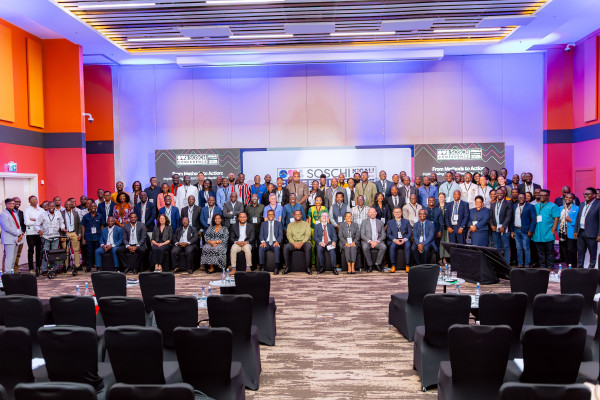
A Conference bringing together African government officials, scientific institutions, development partners and global organisations from 23 countries, issued a clear call to strengthen climate–health intelligence. It emphasised that countries will remain vulnerable to climate hazards unless they build and sustain systems that measure how climate change affects human health. The call followed three days of dialogue and technical exchange at the Standards for Official Statistics on Climate – Health Interactions (SOSCHI) Conference held in Kigali from 3 to 5 December 2025.
Climate change is already driving severe health impacts across Africa, yet most countries collect data in those fields in isolation. To effectively quantify risk of climate change impacts on health and protect vulnerable populations, comparable indicators are needed to guide preparedness, shape policy, or allocate resources for adaptation.
The joint communiqué adopted in Kigali emphasises that enhancing climate–health intelligence will strengthen existing national strategies and unlock new possibilities for targeted interventions, resilience building and the development of early warning. It highlights the “urgent need for more robust information on the health impacts of climate hazards to strengthen national policies and to guide target interventions.”
Delegates agreed that robust climate–health interactions indicators are essential to move from reactive responses to proactive, evidence-based planning. They emphasised that data alone is insufficient: decision-makers require harmonised indicators that reveal where climate hazards are affecting health, how disease patterns are shifting, and where adaptation efforts will have the greatest effect. Participants therefore committed to embedding the SOSCHI indicators into national statistical systems, with particular focus on extreme weather, water-related disease, vector-borne disease and mental health.
A major theme across the discussions was sustainability. Participants highlighted that climate–health interaction monitoring cannot depend on short-term projects, but must be rooted in long-term domestic financing, skilled personnel and systems that persist across political and funding cycles. Strengthening civil registration and vital statistics systems, improving the timeliness of health data, and enhancing environmental and meteorological monitoring were identified as critical foundations for sustainable climate–health intelligence. Collaborative data sharing and system interoperability were also deemed essential, given that climate–health indicators rely on multi-sectoral datasets that are rarely analysed together.
Technical demonstrations from Rwanda, Ghana and the UK showed how the SOSCHI indicators reveal emerging vulnerabilities and shifting disease burdens. Rwanda's results illustrated spatial changes in malaria risk linked to temperature and rainfall patterns, while Ghana's results highlighted how diarrhoeal disease, air pollution and heat-related mortality can be quantified and tracked over time. These findings underscore the value of harmonised methods for informing policy and supporting adaptation planning.
Participants left Kigali with a shared commitment to advance the scaling and institutionalisation of the SOSCHI framework. The communiqué invites national statistical offices, health ministries, research institutions and funders to join this effort, noting that together they can “deliver validated climate-health metrics that inform policy, strengthen resilience, and safeguard population health in the face of climate change.”
The Kigali meeting affirmed that Africa is not only experiencing the most immediate impacts of climate change but is also shaping the global standards required for effective climate–health action. The collective commitment expressed by participants represents a significant step towards building the climate–health intelligence necessary for a safer and more resilient future.
Distributed by APO Group on behalf of African Institute for Mathematical Sciences - Research and Innovation Centre.Media contact:
Joseph Ndiritu
Programs delivery and reporting
AIMS Research and Innovation Centre
Email: jndiritu@aimsric.org
Phone: +250 780 440 935
About the SOSCHI Partnership:
Standards for Official Statistics on Climate – Health Interactions (SOSCHI) is a collaboration between the UK's Office for National Statistics, the African Institute for Mathematical Sciences Research and Innovation Centre (AIMS-RIC) in Rwanda, and the Regional Institute for Population Studies (RIPS) at the University of Ghana, supported by global partners and funded by Wellcome Trust. The project provides a harmonised statistical framework and open-source platform enabling countries to generate actionable climate– health indicators.
The African Airlines Association (AFRAA) Marks New Era of African Aviation as Free Route Airspace Takes Flight in West and Central Africa
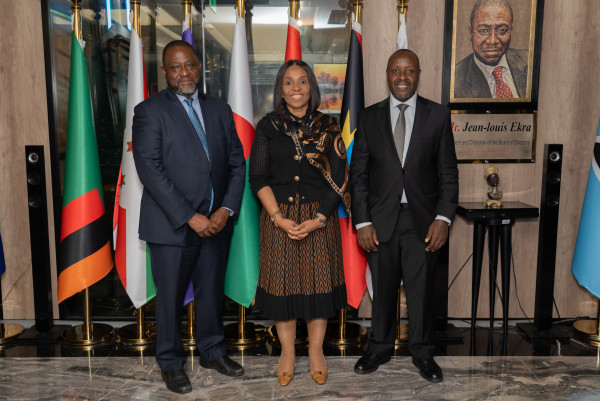
The African Airlines Association (AFRAA) heralds a transformative milestone in African aviation with the full operational deployment of Free Route Airspace (FRA) in the Western and Central Africa (WACAF) region, effective 30 October 2025.
This landmark achievement, transitioning from successful trials initiated in November 2023, will allow any airline to plan and fly more direct User Preferred Routes (UPRs), significantly enhancing the efficiency and sustainability of air travel across the continent.
UPRs allow airlines to fly the most fuel-efficient and timely paths based on current conditions, rather than having to follow fixed, conventional routes, giving the pilots more flexibility and enabling them to adjust to factors like weather and winds, leading to reduced fuel consumption, shorter flight times and lower carbon emissions.
African Export-Import Bank (Afreximbank) has supported the FRA initiative since the trials begun in 2023, in accordance with its Memorandum of Understanding with AFRAA and in line with the Global Air Navigation Plan of the International Civil Aviation Organisation and the conclusions of the Africa-India (AFI) FRA Planning and Implementation Regional Group.
The deployment of the FRA represents a decisive step resulting from a collaborative effort between air operators and air navigation service providers (ANSPs) who reached a consensus at a joint workshop in Dakar, Senegal to conclude the trial phase and move to full implementation.
"The implementation of Free Route Airspace in the WACAF region is a game-changer for African aviation," said Mr. Abdérahmane Berthé, AFRAA Secretary General. "This is a testament to what we can achieve through collaboration. By cutting flight times and fuel consumption, we are not only boosting the competitiveness and profitability of our airlines but also making a significant commitment to environmental sustainability. We extend our profound gratitude to Afreximbank and all stakeholders who have journeyed with us for their unwavering commitment to this vision: the Western and Central African Air Navigation Service Providers (ANSPs), Agence pour la Sécurité de la Navigation Aérienne en Afrique et à Madagascar (ASECNA), Ghana Civil Aviation Authority (GCAA), Nigerian Airspace Management Agency (NAMA), Régie des Voies Aériennes (RVA), Roberts Flight Information Region (Roberts FIR), The International Air Transport Association (IATA), the International Civil Aviation Organization (ICAO) and the Civil Air Navigation Services Organization (CANSO."
While commenting on the FRA initiative, Mrs. Kanayo Awani, Executive Vice President, Intra-African Trade and Export Development, Afreximbank, said: “Efficient, safe, and well-regulated air services are critical to facilitating intra-African trade, tourism and connectivity in line with the objectives of the Single African Air Transport Market (SAATM) and the African Continental Free Trade Area (AfCFTA). Afreximbank is fully committed to supporting the full implementation of SAATM and the establishment of an effective and efficient aviation industry through a range of financing instruments, including its aircraft leasing platform as well as trade facilitation interventions.
Substantial Benefits for Launch Airlines
In a powerful demonstration of the initiative's potential, six leading African airlines including Ethiopian Airlines, Kenya Airways, EGYPTAIR, Royal Air Maroc, RwandAir and ASKY Airlines were granted approval for UPRs, connecting 30 key city pairs. The shift to UPRs is expected to generate significant annual returns to participating airlines including over 1,393 hours of cumulative flight time saved, cutting 5,000 metric tonnesof fuel burn and therefore avoiding some 16,000 metric tonnes of CO2 emissions, and a reduction in annual fuel costs of about US$ 15 million.
A Free Route Airspace for all
Crucially, the WACAF airspace is now open for free routes. Starting 30 October 2025, any airline can plan and operate User Preferred Routes. The region's ANSPs have committed to approving newly requested UPR within 48 hours. Furthermore, following final administrative work by the 24 WACAF States, this process will be further streamlined, with approvals no longer required for new UPR requests from mid-2026.
A Continent-wide Vision for the Future
The success in WACAF paves the way for the next phase of continental integration. The focus for 2026 will shift to the Eastern and Southern Africa (ESAF) airspace to conclude trials and achieve a similar FRA implementation. The region is also committed to developing a web-based coordination platform to streamline operations for airlines and ANSPs.
Distributed by APO Group on behalf of Afreximbank.Contact:
For more information, please contact: AFRAA: afraa@afraa.org
Media Contact:
Vincent Musumba
Communications and Events Manager (Media Relations)
Email: press@afreximbank.com
Follow AFRAA on:
Facebook: https://apo-opa.co/44doXyZ
LinkedIn: https://apo-opa.co/4rEFUfT
Twitter: https://apo-opa.co/4rEFUfT
YouTube: https://apo-opa.co/4rKet4g
Follow us on:
X: https://apo-opa.co/4rFlt2t
Facebook: https://apo-opa.co/4ppChIY
LinkedIn: https://apo-opa.co/44fo6Op
Instagram: https://apo-opa.co/3KuSayP
About AFRAA:
The African Airlines Association, also known by its acronym AFRAA, is a trade association of airlines from the member states of the African Union (AU). Founded in Accra, Ghana, in April 1968, and headquartered in Nairobi, Kenya, AFRAA's mission is to promote, serve African Airlines and champion Africa's aviation industry. The Association envisions a sustainable, interconnected, and affordable Air Transport industry in Africa, where African Airlines become key players and drivers of African economic development. AFRAA membership cuts across the entire continent and includes all the major intercontinental African operators. The Association members represent over 85% of total international traffic carried by African airlines.
About Afreximbank:
African Export-Import Bank (Afreximbank) is a Pan-African multilateral financial institution mandated to finance and promote intra- and extra-African trade. For over 30 years, the Bank has been deploying innovative structures to deliver financing solutions that support the transformation of the structure of Africa's trade, accelerating industrialization and intra-regional trade, thereby boosting economic expansion in Africa. A stalwart supporter of the African Continental Free Trade Agreement (AfCFTA), Afreximbank has launched a Pan-African Payment and Settlement System (PAPSS) that was adopted by the African Union (AU) as the payment and settlement platform to underpin the implementation of the AfCFTA. Working with the AfCFTA Secretariat and the AU, the Bank has set up a US$10 billion Adjustment Fund to support countries effectively participating in the AfCFTA. At the end of December 2024, Afreximbank's total assets and contingencies stood at over US$40.1 billion, and its shareholder funds amounted to US$7.2 billion. Afreximbank has investment grade ratings assigned by GCR (international scale) (A), Moody's (Baa2), China Chengxin International Credit Rating Co., Ltd (CCXI) (AAA), Japan Credit Rating Agency (JCR) (A-) and Fitch (BBB-). Afreximbank has evolved into a group entity comprising the Bank, its equity impact fund subsidiary called the Fund for Export Development Africa (FEDA), and its insurance management subsidiary, AfrexInsure (together, "the Group"). The Bank is headquartered in Cairo, Egypt.
For more information, visit: www.Afreximbank.com
Dr. Rania Al-Mashat reviews Egypt’s efforts in implementing the first and second phases of the Universal Health Insurance System
Download logo
H.E. Dr. Rania Al-Mashat, Minister of Planning, Economic Development, and International Cooperation, participated in the 2025 High-Level Forum on Universal Health Coverage, as head of the Egyptian delegation, which included Dr. Ahmed El-Sobky, Chairman of the Healthcare Authority, and Ms. Mai Farid, Executive Director of the General Authority for Universal Health Insurance. The forum is organized by the Government of Japan, in cooperation with the World Health Organization (WHO) and the World Bank Group, in Tokyo, Japan, with the participation of senior government officials and international institutions, including Mr. Ajay Banga, President of the World Bank; Ms. Sanae Takaichi, Prime Minister of Japan; Dr. Tedros Adhanom Ghebreyesus, Director-General of the World Health Organization; and Dr. Budi Gunadi Sadikin, Minister of Health of Indonesia.
The forum witnessed the launch of the Universal Health Coverage (UHC) Knowledge Hub, an innovative platform established by the Government of Japan, the World Bank, and the World Health Organization to strengthen the exchange of experience and knowledge and support national healthcare policies. It includes Egypt alongside Nigeria, the Philippines, Kenya, Indonesia, Ghana, Cambodia, and Ethiopia.
In her remarks, H.E. Dr. Rania Al-Mashat stated that this pivotal event renews global commitment to an issue that lies at the heart of human development, affirming that Egypt believes that healthcare is a right for every citizen as well as an economic necessity; it is the foundation upon which production, job creation, and achieving inclusive and sustainable growth. H.E. pointed out that the world committed in 2015 to achieving universal health coverage by 2030, and for Egypt, this was not merely a target but a national strategy for investing in human capital—the strongest driver of inclusive and sustainable development.
H.E. noted that Egypt translated this commitment into concrete steps. Over the past five years, we have worked to increase spending on the health sector by nearly fourfold, which is a pivotal development because it allows us to align health objectives with development requirements, enhances the efficiency of services provided to citizens, and strengthens efforts to improve quality of life for individuals.
H.E. emphasized that the strategic objective we are working to achieve is to provide full coverage under the Universal Health Insurance System for all citizens in Egypt by 2030—an ambitious target requiring advanced technical capabilities, effective operational systems, in addition to providing sustainable financing that ensures the system's continuity and efficiency and achieves full health coverage throughout the Republic.
H.E. added that achieving universal health coverage is not limited to expanding service provision; it also includes strengthening sustainability and achieving value. In this context, Egypt is implementing a strategic transformation in health financing to improve the efficiency of public resource use and expand equity in accessing services. This transformation extends to the governance framework through the Ministerial Group for Human Development, which ensures a unified national vision, policy coherence, evidence-based prioritization, targeted investment allocation for the most vulnerable groups, and accelerated decision-making. This comprehensive government approach makes universal health coverage a central pillar of the human capital development agenda and links health progress with education, skills development, and economic empowerment.
Al-Mashat affirmed that achieving long-term growth depends primarily on investing in people above all else; investing in human beings is what enhances productivity and enables individuals to advance and participate effectively in the economy. It also contributes directly to reducing future spending on services, particularly in the health sector.
The Minister reviewed the Egyptian experience, noting that the health sector is one of the State's essential national priorities, not only as part of the social protection system but also as a fundamental pillar for achieving comprehensive development. This approach has been linked to a diverse set of initiatives and programs, noting the implementation of the Universal Health Insurance System in cooperation with the World Bank and other development partners, as well as the launch of several presidential initiatives that have played a vital role in expanding access to healthcare services provided to citizens throughout the Republic.
H.E. explained that the first phase of the Universal Health Insurance System covers six governorates with 5.1 million beneficiaries, with investments amounting to EGP 28.5 billion from 2018 to 2025 for the implementation of this phase. The second phase covers five governorates with 12.4 million beneficiaries out of the total population, and investments worth EGP 20 billion were allocated to develop healthcare facilities in this phase, in addition to concessional financing of $880 million from the World Bank, the French Development Agency (AFD), and the Japan International Cooperation Agency (JICA) to support the Universal Health Insurance System.
She also praised the role of the International Finance Corporation (IFC) and the French Development Agency (AFD) in supporting private-sector engagement, policy reforms, and institutional capacity building, efforts that enhance the resilience and efficiency of the healthcare system.
She continued: “As for the presidential health initiatives, their impact has reached nearly 90 million citizens through the provision of more than 250 million health services, including early detection campaigns, screenings for non-communicable diseases, and follow-up and treatment programs.”
Regarding the “Decent Life” Initiative, more than 2,000 primary healthcare units have been established or upgraded, significantly improving the quality of healthcare services in rural areas and relieving pressure on central and general hospitals. This reflects not only the scale of the efforts undertaken but also the clear integration among the various initiatives operating under a unified vision.
H.E. also emphasized that when measuring public health expenditure, focus should not be limited to what is allocated to the Universal Health Insurance System, as spending on water, sanitation, infrastructure, and other social services constitutes an important component of the overall picture and contributes indirectly to improving public health and reducing disease rates.
The Minister highlighted Egypt's experience in eliminating Hepatitis C, noting that the World Health Organization declared Egypt free of the disease. This achievement resulted from extensive vaccination campaigns and the domestic production of the vaccine by private-sector companies, underscoring the essential role played by all parties in the system: government, private sector, and international partners.
H.E. affirmed that the government's role lies in facilitation and empowerment by ensuring optimal utilization of each partner's strengths while providing a common platform that enables all parties to work together effectively.
The Minister of Planning, Economic Development, and International Cooperation concluded her remarks by reaffirming that investing in citizens, protecting the most vulnerable families, empowering youth, strengthening the healthcare system, and expanding productive employment opportunities form the foundation for building a more resilient, capable, and competitive economy.
Distributed by APO Group on behalf of Ministry of Planning, Economic Development, and International Cooperation - Egypt.