
Explore more Articles in
Sustainability
Shaping Africa’s Mining Future: Community Engagement, Local Content, Skills Transfer and Shared Infrastructure at African Mining Week (AMW) 2026
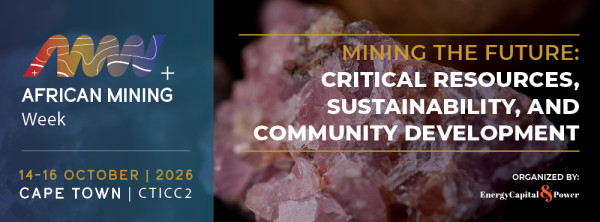

The 2026 edition of African Mining Week (AMW) – officially launched last week – will bring together global mining companies, investors, policymakers and industry stakeholders to explore emerging opportunities across Africa's minerals sector. The event will examine how Africa – the world's largest producer of key energy-transition metals including platinum group metals, cobalt, chromium and manganese – is shaping global supply chains and attracting increasing investment from markets such as the U.S., China and Europe.
AMW 2026 will take place under the theme, “Mining the Future: Critical Resources, Sustainability, and Community Development,” aiming to showcase Africa's strategic role in the global critical minerals market, highlight innovative approaches to sustainable and responsible mining and foster collaboration between governments and industry. Building on the success of the 2025 edition, the event will provide a platform to discuss sustainable market growth, environmental stewardship and socioeconomic development across the continent.
Panels and discussions will highlight Africa's role as a global hub for critical energy-transition minerals, with countries such as Zimbabwe, Mali, Namibia and Malawi advancing local value-addition mandates and strategically managing raw mineral exports to maximize domestic economic benefits. AMW 2026 will explore opportunities across the continent's critical minerals sector, from mining and exploration to processing and industrialization, providing insights into how investors and governments can collaborate to strengthen supply chains and unlock the full potential of Africa's mineral wealth.
Environmental stewardship and responsible mining practices will also be a core focus. Financiers including the Africa Finance Corporation, World Bank, IFC and Afreximbank increasingly tie funding to ESG performance, and panels will examine how renewable energy solutions – from Power Purchase Agreements and Independent Power Producer arrangements to energy wheeling and onsite generation – can reduce emissions, improve energy security and enhance project bankability. The event will also highlight innovative strategies for sustainable resource development that balance commercial returns with ecological and social responsibility.
Community engagement, local content, skills transfer and shared infrastructure remain central to Africa's mining policies. AMW 2026 will showcase projects that deliver tangible socioeconomic benefits, from job creation and supplier development to gender empowerment and improved community infrastructure. Discussions will also unpack tax regimes, community-benefit frameworks and ESG obligations that shape project implementation, emphasizing how mining can serve as a catalyst for inclusive growth across the continent.
"African Mining Week 2026 will be a showcase of Africa's potential to power the future," states Rachelle Kasongo, Events & Project Director at Energy Capital & Power. "The event will highlight how the continent's critical resources can be responsibly developed, how innovative practices are shaping a more sustainable mining sector and how investments can create meaningful benefits for local communities. It's a space for leaders to exchange ideas, forge partnerships and explore solutions that drive long-term impact for both industry and society."
African Mining Week serves as a premier platform for exploring the full spectrum of mining opportunities across Africa. The event is held alongside the African Energy Week: Invest in African Energies 2026 conference from October 12-16 in Cape Town. Sponsors, exhibitors and delegates can learn more by contacting sales@energycapitalpower.com.
Distributed by APO Group on behalf of Energy Capital & Power.Data Centers Could Be the Spark Africa’s Power Sector Needs (By NJ Ayuk)
Download logo
By NJ Ayuk, Executive Chairman, African Energy Chamber (https://EnergyChamber.org/).
A quarter of the way into the 21st century, digital technology has infiltrated the daily lives of billions of people to an incredible degree across the globe — but not everywhere… yet. As digital penetration rapidly nears 100% in many parts of the world, the fastest-growing markets are in developing countries where even simple electricity is hardly an assured thing. Perhaps the greatest potential is in the African market, where penetration remains shallow and demand is skyrocketing. Simply put, there's nowhere to go but up.
Although electrification has been stubbornly slow to spread across the continent thus far, internet usage is expanding at extraordinary rates. The Global System Operators and Manufacturers Association's (GSMA) Mobile Economy Report 2023 estimated that smartphone adoption in sub-Saharan Africa would rise from 51% in 2022 to 87% in 2030, driven by rising youth populations and more competitive mobile pricing. The same report predicted a near-quadrupling of data usage per mobile by 2028, from 4.6 GB per user per month to 18 GB. Every one of those phones that loads a search engine, a shopping site, or a business app these days is adding to that computing load, and that's just the mobile sector. Advances in financial technology are creating new opportunities for African businesses to thrive, and artificial intelligence is fast invading every facet of the internet. Generative AI and machine learning applications consume up to 10 times more energy than traditional searches, making all that growth orders of magnitude more expensive.
So far, data centers in Europe have mostly been able to handle Africa's needs. As African businesses and consumers increasingly demand faster speeds and lower latency, however, the need is quickly growing for more localized computing infrastructure. As of mid-2025, Africa has 223 data centers spread across 38 countries — less than 0.02% of the world's total of more than 11,800. South Africa has the most with 56, followed by Kenya with 19 and Nigeria with 17, meaning 41% of Africa's data center infrastructure is currently concentrated in these three countries.
In “The State of African Energy: 2026 Outlook Report,” the African Energy Chamber (AEC) posits that development of cloud infrastructure in these key markets could serve as nuclei to accelerate growth across the continent. Growing concerns over data sovereignty are also spurring some nations to require that certain sensitive data stays in-country, further driving demand for local data centers. The African data center market was valued at USD3.49 billion in 2024 and is projected to reach USD6.81 billion by 2030, rising at a Compounded Annual Growth Rate (CAGR) of 11.79%.
As a rule, data centers require a substantial and reliable supply of electricity — something Africa is not currently known for, with many countries facing frequent outages. Nigeria is a prime example. The country's 17 data centers — the third most in Africa — collectively require around 137 MW of power capacity in 2025. Nigeria's power grid is notorious for providing only around four hours of power per day, forcing data center operators to make up the difference with diesel generators that raise costs and pollution levels. Even around the capital city of Lagos, where internet connectivity is highest and 14 of the data centers are concentrated, the grid is a constant source of uncertainty.
Overall, the AEC report states, Africa's data center power demand capacity is forecast to achieve a CAGR of 9% between 2024 and 2030 and hit 2 GW by 2030. The total data center capacity globally, by comparison, is forecast to log a CAGR of 11% between 2024 and 2030, reaching 249 GW by year-end 2030. Adding in the power needed for cooling and other ancillary loads, the global total installed capacity is estimated at 374 GW by 2030.
The relentless demand of data centers, however, functions as a great stabilizer for attracting socially responsible capital investment in the power infrastructure. Predictably growing demand assures investors that money spent on expanding grids and developing new power generation centers will both improve lives and pay off economically. The growth of data centers also often brings with it a push for innovative power solutions, including the integration of renewable energy sources and advanced grid management technologies. Upgraded grids improve sustainability, bolster resilience, and expand the residential and commercial customer base, spreading out fixed costs and thereby reducing end users' electricity prices over time.
In northern Africa, growing hubs such as Egypt and Morocco benefit from strategic positioning that connects Europe, Africa, and the Middle East to major internet backbone lines. Egypt offers affordable land and electricity prices, while Morocco is rapidly modernizing its infrastructure and fostering a favorable legal environment for data center growth.
Sub-Saharan Africa faces more challenges, but even here, many nations are stepping up efforts to meet the insatiable demand. In South Africa, the largest market, there is particularly strong demand for facilities around Johannesburg and Cape Town. Johannesburg benefits from a diversified mix of wholesale and retail demand and both international and local providers. South Africa is leading the continent in solar integration, with public-private projects like the 12 MW solar farm being developed by Africa Data Centres and Distributed Power Africa.
Kenya's grid is already over 60% renewable, including geothermal, solar, wind, and hydroelectric sources. The Naivasha geothermal zone, which supplies nearly half of the country's power, will host a planned 100 MW green data center, backed by a USD1 billion investment by Microsoft and G42. Such clean, non-intermittent power solutions give Kenya the ability to support data centers with both lower emissions and greater stability. The Kenyan government also offers tax incentives for investments in special economic zones, including a 10% corporate tax exemption for the first 10 years, and over 15% after 10 years.
Smaller countries are getting in on the game as well. Côte d'Ivoire (currently home to six data centers) launched its largest solar power plant in Boundiali in June 2023, delivering 37.5 MWp of capacity toward its national goal of sourcing 45% of its electricity from renewable energy by 2030. West Africa's largest wind project is the Taiba N'Diaye Wind Farm in Senegal (seven data centers), while Gabon (one data center) is actively developing hydropower and attracting investment in solar hybrid systems.
Not every country will be able to confront the growing digital demand equally. Data centers are notoriously water-hungry due to the need to cool off huge banks of closely packed computers. Nations with vast areas of desert and savannah can ill afford to have data centers compete for water with agriculture and may have to rely on their neighbors through the use of regional power pools as suggested in the AEC report. Others with fewer renewable energy prospects will likely focus on developing more conventional energy sources such as oil and gas, which many have in great abundance. Even those with strong renewable sectors would be wise to develop conventional energy to achieve the reliability that other parts of the world take for granted. The AEC has long advocated the flexibility of natural gas to serve as a bridge fuel, alleviating shortages with quick ramp-up and ramp-down when renewable supplies fluctuate.
Electrification in Africa is a multi-pronged issue with many obstacles on the path to modernization, but there is no doubt that there is a demand to be met. Building and provisioning local data centers is a powerful step toward solving some of government's most pressing problems in any nation: improving infrastructure, growing the economy, and strengthening national security.
"The State of African Energy: 2026 Outlook Report" is available for download. Visit https://apo-opa.co/48Y4qkH to request your copy.
Distributed by APO Group on behalf of African Energy Chamber.Empowering Uzbek Small and Medium Enterprises (SMEs): Islamic Corporation for the Development of the Private Sector (ICD) Provides $10 Million Line of Financing to...
Download logo
Anor Bank, a leading digital bank in Uzbekistan, has signed a Line of Financing agreement with ICD (https://ICD-PS.org/). Under the agreement, ICD will provide a USD 10 million Line of Finance facility to Anor Bank. The facility aims to support small and medium-sized enterprises (SMEs) in Uzbekistan and enhance access to Islamic financial solutions for the private sector, in line with Anor Bank's mission to promote sustainable economic growth across the country.
This financing facility represents a significant milestone in advancing Anor Bank's strategic objectives, particularly in strengthening SME development, expanding private sector financing, promoting Islamic finance, and contributing to the diversification of Uzbekistan's economy.
The initiative is fully aligned with ICD's strategic focus on fostering SME growth and supporting private sector development as a key driver of sustainable economic progress across its member countries.
The agreement was signed by Dr. Khalid Khalafallah, Acting Chief Executive Officer of ICD, and Mr. Sherzod Akramov, Chairman of the Management Board of Anor Bank.
This pioneering transaction establishes ICD as the first multilateral development bank to provide a Line of Finance to Anor Bank, creating a strategic cornerstone for accelerating private sector growth in Uzbekistan. It paves the way for a new era of collaboration and investment.
Distributed by APO Group on behalf of Islamic Corporation for the Development of the Private Sector (ICD).For further details, please contact:
Anor Bank
Mr. Mirsodiq Mirzahidov
Head of International Relations Division
Mirsodiq.Mirzahidov@anorbank.uz
Ms. Nozigul Ismatova
International Relations Division
Anor Bank
Nozigul.Ismatova@anorbank.uz
Islamic Corporation for the Development of the Private Sector (ICD)
Nabil El-Alami
Communications & Corporate Marketing Division Manager at ICD
Nalami@isdb.org
About Anor Bank:
JSC Anor Bank, founded in 2020, is one of Uzbekistan's fastest-growing digital banks, offering a full range of financial services to retail and corporate clients through digital channels and 17 sales offices nationwide. The Bank leverages technology-driven platforms to provide fast and convenient access to financial products for both small and medium-sized enterprises and individual clients. Anor Bank actively implements CSR initiatives in education, environmental sustainability, and social development, while promoting financial literacy, especially in remote regions of Uzbekistan, contributing to inclusive economic growth and the country's sustainable financial sector development.
About the Islamic Corporation for the Development of the Private Sector (ICD):
ICD is a multilateral organization and a member of the Islamic Development Bank (IsDB) Group. ICD's mandate is to support economic development and promote the growth of the private sector in its member countries through providing financing facilities and/or investments in accordance with Shariah principles. Additionally, ICD offers advisory services to governments and private organizations to encourage the establishment, expansion, and modernization of private enterprises. ICD is rated ‘A2' by Moody's, ‘A+' by Fitch, and ‘A' by S&P.
Website: https://ICD-PS.org/