
Explore more Articles in
Resource
A Major Win for Namibia as ReconAfrica Delivers Kavango West 1X Hydrocarbon Discovery

Download logo
The African Energy Chamber (AEC) (https://EnergyChamber.org) strongly welcomes the announcement by Reconnaissance Energy Africa of a successful hydrocarbon encounter at the Kavango West 1X well on Petroleum Exploration Licence (PEL) 73, onshore Namibia. The results represent one of the most meaningful milestones yet for the country's onshore energy potential and reaffirm Namibia's position as one of the most attractive frontier markets for exploration in Africa and globally.
On December 3, ReconAfrica reported that the Kavango West 1X well was safely drilled to a depth of 4,200 meters, with results confirming a substantial section containing hydrocarbons. The well encountered a significant zone of oil- and gas-bearing rock, with more than 60 meters of confirmed hydrocarbon pay and additional hydrocarbon shows in deeper intervals. These results not only highlight the geological prospectivity of the Damara Fold Belt but also support ongoing modeling that suggests significant development potential across ReconAfrica's six-million-acre lease position. The Company has announced plans to production-test the well during the first quarter of 2026, an important next step in confirming deliverability and commerciality.
The AEC applauds the efficiency and technical excellence of the operation, which was completed safely, on schedule and on budget. For Namibia – one of the continent's fastest-emerging exploration hotspots – this progress reinforces the importance of sustained upstream investment, supportive regulatory frameworks and strong cooperation between operators, government and communities.
A Boost to Onshore Development and Local Jobs
Namibia's offshore discoveries in recent years have garnered significant global attention, but onshore exploration has long represented an equally important pillar for long-term energy security and economic diversification. ReconAfrica's latest results bring renewed confidence to the role onshore resources can play in creating employment, stimulating local supply chains and accelerating industrialization.
Every stage of the Kavango West 1X campaign – from seismic acquisition to drilling and upcoming testing – has generated local business opportunities and direct jobs for Namibians. Continued success in PEL 73 would unlock new rounds of contracting, infrastructure development and capacity building, particularly in logistics, field services, community development programs and environmental management.
Commitment to Community Partnerships
The AEC also recognizes ReconAfrica's ongoing engagement with communities in the Kavango regions, including local partnerships and capacity-building efforts carried out during its exploration activities. The company's proactive approach to stakeholder dialogue, transparency and collaboration sets a strong precedent for how frontier exploration should be conducted in Africa.
An expanding onshore industry offers the potential for long-term socioeconomic impact in northern Namibia, bringing new opportunities for young people, small businesses and local authorities, while supporting the country's broader development goals.
A Step Forward for Africa's Energy Future
With Africa seeking to balance energy security, economic growth and responsible resource development, Namibia continues to shine as a continental success story. The Kavango West 1X results strengthen Africa's case for sustained exploration, particularly at a time when global capital allocation is increasingly selective and competition for investment is fierce. By moving promptly toward production testing, ReconAfrica is demonstrating its long-term confidence in Namibia's potential. The AEC encourages continued collaboration with national regulators, environmental authorities, and community stakeholders to ensure timely and responsible progression toward appraisal and, ultimately, development.
“This discovery is a big win for Namibia and a big win for Africa. ReconAfrica's progress is proof that committed investors, supportive policies and strong community partnerships can unlock real energy opportunities onshore,” states NJ Ayuk, Executive Chairman of the AEC, adding that “These results strengthen confidence in the Damara Fold Belt and reaffirm Namibia as a global exploration hotspot. The Chamber fully supports this next phase of testing and encourages continued investment that creates jobs, builds capacity and drives long-term economic growth for Namibians.”
Distributed by APO Group on behalf of African Energy Chamber.Africa’s Green Economy Summit 2026 to unveil Africa’s premier pipeline of investment-ready green ventures making a difference toward net zero goals
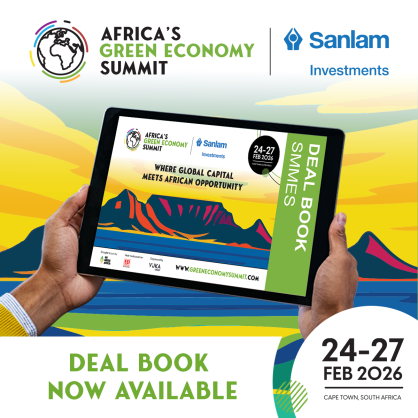
Africa's Green Economy Summit (AGES 2026) is set to host an unparalleled showcase of investment-ready green economy projects from across the continent. With over 100 applications meticulously vetted by its expert investors committee, nearly 30 pioneering Pan-African initiatives have been selected to present their transformative solutions. This curated pipeline, spanning crucial sectors from clean energy to climate-smart agriculture, underscores Africa's pivotal role in the global green transition and AGES 2026's commitment to connecting global capital with impactful African ventures.
Elodie Delagneau, Investment Project Lead at VUKA Group, emphasised the significance of this year's selection: "The overwhelming response and the exceptional quality of applications reaffirm Africa's immense potential in the green economy. AGES 2026 is not merely a conference; it is the definitive platform where serious capital meets serious impact. Our rigorous vetting process ensures that investors encounter thoroughly de-risked and scalable projects that are poised to deliver both significant financial returns and verifiable environmental and social benefits."
A curated pipeline of innovation
The Pitch Programme is the culmination of extensive market research and rigorous evaluation, designed to identify and elevate projects that are not only innovative but also strategically aligned with Africa's sustainable development goals. These initiatives represent the cutting edge of green and blue economy solutions, ready to drive tangible progress across the continent.
Our committee, comprised of leading investors and industry experts, has meticulously selected nearly 30 game-changing ventures. This sneak peek offers a glimpse into the future of Africa's green economy, featuring solutions that are ripe for investment and set to transform industries and communities alike.
Approaching Africa's critical green economy verticals
AGES 2026 will present a diverse portfolio of projects categorised into eight high-growth sectors, each offering compelling investment opportunities:
- Energy: Powering Africa's Green Transformation
The sector is fundamental for Africa's development, with over 600 million lacking electricity. Projects range from utility-scale solar and wind to mini-grids, energy storage, and green hydrogen initiatives. These ventures offer rapid emissions reductions, enhance energy security, and unlock new economic opportunities. Investors will find projects leveraging Africa's abundant renewable resources, supported by favourable policies and innovative financing.
- Transport & E-Mobility: Accelerating Sustainable Connectivity
Addressing urbanisation and emissions, this sector showcases projects focused on electrifying Africa's transport systems. Initiatives span electric buses, two/three-wheelers, and innovative logistics solutions. These projects aim to reduce fossil fuel consumption, improve urban air quality, and enhance economic productivity through modern, efficient, and clean mobility infrastructure.
- Waste & Circular Economy: Transforming Waste into Value
This critical sector tackles public health, urban resilience, and climate mitigation by converting waste into valuable resources. Projects include advanced recycling facilities, waste-to-energy solutions, organic waste composting, and innovative approaches to utilising invasive species. These ventures create jobs, reduce landfill reliance, and generate new revenue streams from what was once considered waste.
- Water & Resilience: Safeguarding Africa's Most Precious Resource
Water security is paramount for health, agriculture, and industrial activity, especially as climate change intensifies drought and flood risks. Projects in this sector focus on building resilient water infrastructure, developing decentralised water services, and implementing climate-resilient solutions such as groundwater monitoring and integrated catchment rehabilitation.
- Sustainable Agriculture & Food Systems: Cultivating Africa's Future
With agriculture central to livelihoods, this sector presents projects focused on sustainable practices that increase productivity, climate resilience, and food security. Initiatives range from vertical farming and biochar-based fertilisers to agri-tech platforms and cold chain solutions. These projects aim to reduce emissions, enhance soil health, boost yields, and empower smallholder farmers across the continent.
- Biodiversity & Nature Finance: Safeguarding Africa's Natural Capital
Africa's vast biodiversity underpins essential ecosystem services and climate regulation. Projects in this sector mobilise capital to protect, restore, and sustainably manage critical ecosystems like forests, wetlands, and coastal zones. Initiatives such as REDD+ programs and blue carbon projects offer high-impact conservation opportunities with significant co-benefits for local communities and tourism.
- Digitalisation & Climate Tech: Accelerating Green Innovation
Digital tools are proving to be powerful accelerators for climate solutions, optimising energy use, enhancing agricultural productivity, and improving resource management. This sector features projects leveraging IoT, AI, and blockchain for supply chain traceability, carbon accounting, and new green business models. These technologies reduce transaction costs and dramatically increase the scalability of green projects.
- Carbon Markets & Credits: Monetising Climate Action
Carbon markets are emerging as a powerful mechanism to mobilise private capital for climate mitigation and nature-based solutions. Projects here focus on generating high-integrity carbon credits through renewables, avoided deforestation, mangrove restoration, methane capture, and sustainable agriculture. These initiatives channel crucial finance to projects that deliver verifiable climate benefits alongside significant social outcomes.
Experience the power of connection
AGES 2026 stands as Africa's most influential gathering for green investment, innovation, and policy. The summit is meticulously designed to foster direct connections between global capital and the most promising green economy projects.
"The Pitch Programme offers an unparalleled opportunity for investors to engage directly with the innovators shaping Africa's green future," Delagneau added. "Beyond the pitches, attendees will benefit from purpose-built matchmaking sessions, networking opportunities with leading DFIs, corporate partners, and policymakers, and deep insights into the continent's evolving green economy landscape. Our goal is to significantly accelerate deal flow and ensure that every investor finds projects that align with their financial and impact mandates."
The summit also includes a robust mentorship program for pitching projects, ensuring they are investor-ready and equipped with compelling narratives. This holistic approach reinforces AGES 2026's commitment to not just showcasing projects but actively facilitating their success and growth.
AGES 2026 is poised to be a pivotal event in driving Africa's just transition, underscoring the continent's leadership in developing scalable, sustainable, and economically viable solutions to global challenges.
More information or registration: www.GreenEconomySummit.com
To download the event brochure, click here (https://apo-opa.co/4pRd1LN).
Distributed by APO Group on behalf of VUKA Group.Additional Link:
Download the Deal Book to explore all of the confirmed projects pitching at AGES 2026: https://apo-opa.co/48iElMV
Media enquiries and interview requests:
Nomsa Mdhluli
Nomsa@tishalacommunications.com
+27 71 628 6231
Elize Engle
Pr1@tishalacommunications.com
+27 82 762 4946
Tshepang Mokoena
Pr@tishalacommunications.com
+27 76 682 9608
Registration enquiries:
Mzamo Jika
mzamo.jika@wearevuka.com
Letlatsa Sekhele
letlatsa.sekhele@wearevuka.com
Prudence Chishimba
prudence.chishimba@wearevuka.com
MSGBC Conference to Spotlight Regional Infrastructure, Logistics Opportunities

Major milestones across the MSGBC basin are accelerating the region's rise as a leading African energy hub, with the Greater Tortue Ahmeyim (GTA) LNG project commencing commercial operations and Senegal's Sangomar oilfield coming online. These achievements mark a decisive shift in the basin's capabilities, positioning the MSGBC region as a growing exporter of both gas and liquids while attracting new waves of international investment. Yet as production scales upward, the region's long-term competitiveness will hinge not only on what is produced, but on how efficiently those resources can reach global markets.
The upcoming MSGBC Oil, Gas & Power 2025 conference and exhibition will feature a panel session titled Integrated Infrastructure & Logistics: Beyond the Port to Global Markets. The session will focus on investment needs and opportunities in integrated infrastructure and logistics to connect the region's expanding energy market and mineral resource production to regional and global markets. The panel will bring together senior representatives from key companies that play a significant role in the MSGBC region's infrastructure and logistics landscape, including speakers from private equity firm Actis, industrial manufacturer Neway Valve, management firm EPCM Holdings and logistics provider Africa Global Logistics.
Explore opportunities, foster partnerships and stay at the forefront of the MSGBC region's oil, gas and power sector. Visit www.MSGBCOilGasAndPower.com to secure your participation at the MSGBC Oil, Gas & Power 2025 conference. To sponsor or participate as a delegate, please contact sales@energycapitalpower.com.
The panel will highlight the importance of integrated infrastructure in enabling the development of the MSGBC region's energy and mineral resources. The discussion is expected to cover multimodal transport infrastructure, including pipelines, ports and rail, as well as the role of logistics and industrial suppliers in supporting energy and mining projects. Attendees will have the opportunity to hear directly from companies that are actively contributing to the region's growing energy and industrial sectors, including the GTA gas project, Mauritania's Energy Service Zone and other key initiatives.
The MSGBC region's energy and mineral sectors are increasingly drawing international attention, with investment focused on both export infrastructure and domestic industrialization. Integrated transport networks, including pipelines and regional rail connections, are critical to unlocking the economic potential of these resources. As such, the panel is set to provide insight into the companies, partnerships and infrastructure solutions that are shaping the MSGBC region's ability to connect its production to global markets, while also supporting regional economic growth and industrial development.
“This panel underscores the critical role of integrated infrastructure and logistics in connecting the MSGBC region's energy and mineral resources to regional and global markets. It will provide a platform for industry leaders to share insights on the partnerships and solutions driving economic growth and sustainable development across the basin,” states Sandra Jeque, Events and Project Director, Energy Capital & Power.
Distributed by APO Group on behalf of Energy Capital & Power.Follow the Money: How Bank Accounts Expose Payroll Fraud

Payroll fraud creates considerable losses for South African companies and taxpayers. The Public Servant Association revealed that ghost employees are costing the public purse nearly R4 billion. The Chartered Institute of Payroll Professionals estimated that payroll fraud steals at least R100 million annually from businesses and represents roughly 10% of business fraud cases.
Yet, these are not the activities of mastermind criminals. Payroll fraud is often incredibly basic. But when there are dozens to thousands of employees on the books, detecting these crimes can be resource- and time-intensive.
Diligent monitoring, audits, and face-to-face confirmation campaigns will expose and discourage payroll fraud. But these approaches are often also resource intensive. Fortunately, there is another method that works well in the short term: checking bank account details.
Bank accounts don't lie
Payroll criminals manipulate employee information. They can load ghost employees onto systems as new hires or edit existing records, such as those of departing employees, rather than remove them. They can abuse the profiles of infrequently paid employees such as contractors and freelancers, skimming money when legitimate payments aren't due or adding inflated charges that are diverted to a different account.
They can also change banking details right before and after payroll runs, hoping to avoid detection since such changes can sidestep proper processes, hide inside dense financial records, and not show up unless there is an audit of payroll activities.
In all of these abuses, changes to banking details are the common thread, says Yolande Schoültz, founder of YSchoültz Attorneys | Conveyancers | Notaries.
"For payroll fraud to work, money to be misappropriated and to be fraudulently paid over to a bank account, there must be a change in banking details."
Fraudsters alter payroll details, concealing their activities behind legitimate profiles and their role as system gatekeepers. However, most don't go as far as to forge relevant documents such as bank confirmation letters. When organisations have processes that dictate how to legitimately change employee bank details, they will keep those documents on file. Looking for those anomalies will expose payroll fraud.
Each month, check the new employees and terminations. The new employee records should have corresponding bank documentation reflecting their banking account details. The records of former employees should not have new banking details. If you compare those groups with the documents you have on file, you'll uncover irregularities.
"Even if that's the only verification you do, you are still mitigating payroll fraud," says Schoültz.
Signs of potential payroll fraud include:
- New employees on payroll with no or lacking corresponding banking documentation
- Profiles of terminated employees that are still active
- Bank account changes on profiles of employees that receive infrequent or variable payments
- Altered banking records with no corresponding documentation or requests
- The same bank account details appearing on multiple records
- Changes to banking details right before and after payroll runs
Monthly spot checks on new employee additions, or banking changes to terminated and infrequently paid employees, will show fraud patterns if there are any. Also conduct quarterly or biannual audits of payroll records, specifically looking for changes to banking details.
Simplifying fraud detection with technology
Why aren't organisations conducting these checks? The first issue is that management of payroll departments is often ambiguous. Do they fall under finance or human resources?
"Should payroll be a part of HR or finance? It's not either of the two; it's both, with finance taking the lead. Nevertheless, payroll can often operate independently from finance. When requests for verifications arise, they simply export a file and forward it to finance, which often accepts it without further scrutiny," says Schoültz.
The second is that conventional payroll software is typically isolated from people who should have oversight authority. Many companies still rely on payroll software that is at least 10 years old and typically lacks modern features such as remote access, ad hoc reporting, and integration with other business systems.
Modern payroll software that provides role-based access is a potent deterrent against payroll fraud because it removes barriers complicating payroll oversight, says Sandra Crous, MD of South African payroll and HR platform Deel Local Payroll.
"If you have a system where the head of HR or Finance can log in remotely and generate reports, you remove that isolation. They don't need to go through the payroll staff to see what is going on. And if they use these measures to regularly check on new and terminated employees, emphasising bank account changes, they'll uncover and discourage payroll fraud."
Payroll fraud may lack sophistication, but its cumulative impact is devastating. Vigilance over bank account details is a simple yet effective way to expose and discourage these crimes. By scrutinising banking detail changes and leveraging modern payroll software for oversight without bottlenecks, organisations can dramatically reduce their vulnerability to payroll fraud.
Distributed by APO Group on behalf of Deel Local Payroll, powered by PaySpace.For media queries please contact:
Victoria Lindsay
victoria@innocomm.co.za
About Deel Local Payroll:
Deel Local Payroll, powered by PaySpace, revolutionises payroll management. It offers online, multi-country payroll and HR management for businesses from start-ups through to enterprise in over 40 African countries, the United Kingdom, the Middle East, and Brazil.
Cloud-native, Deel Local Payroll, is scalable, configurable, highly secure, and easy-to-use—delivering anytime, anywhere access. It features payroll automation, self-service features, automatic legislation and feature updates, customised reporting, and more.
Since 2024, Deel Local Payroll has been part of Deel, operating as an independent subsidiary, serving its customers through the PaySpace platform.
Cabo Verde: African Development Bank Group approves €17.7 million to advance public sector digitisation

The Board of Directors of the African Development Bank Group (www.AfDB.org) has approved a €17.71 million loan to support the second phase of Cabo Verde's E-Governance and Public Financial Management Reform Programme.
The Bank's Board of Directors approved the financing on Monday, continuing support that began last year as the island nation seeks to leverage technology for economic growth and administrative efficiency.
“The aim of this budgetary support, building on the assistance provided last year, is to stimulate economic growth through digitisation and private-sector competitiveness, while advancing e-governance reforms to modernise public administration and consolidate public finances,” said Abdoulaye Coulibaly, Director of the Governance and Economic Reforms Department at the Bank.
The first component of the programme will advance ongoing digitisation reforms to strengthen private-sector competitiveness. Key measures include the introduction of e-Justice to digitise judicial processes, and the launch of a call for proposals to attract private operators to the country's technology park under the ‘digital nomads programme. Admission criteria will be developed to facilitate the establishment of digital nomads and high-growth technology firms.
The second component aims to modernise public administration and consolidate fiscal sustainability. The programme will continue to support policy actions aimed at strengthening transparency and improving the efficiency of public resource management. An action plan to rationalise tax expenditures will be developed and published, along with full estimates of annual tax expenditures in the 2026 budget to improve transparency.
The Bank will also finance a Public Expenditure and Financial Accountability assessment scheduled for the first quarter of 2026, funded through the Middle Income Countries Grant.
The Programme's main beneficiaries include the Ministry of the Digital Economy, the Central Bank of Cabo Verde, the Institute for Gender Equality and Equity, the National Directorate of State Revenue, and the Public Procurement Regulatory Authority.
Distributed by APO Group on behalf of African Development Bank Group (AfDB).Media contact:
Alexis Adélé
Communications and External Relations Department
media@afdb.org
About the African Development Bank Group:
The African Development Bank Group is Africa's premier development finance institution. It comprises three distinct entities: the African Development Bank (AfDB), the African Development Fund (ADF) and the Nigeria Trust Fund (NTF). On the ground in 41 African countries with an external office in Japan, the Bank contributes to the economic development and the social progress of its 54 regional member states. For more information: www.AfDB.org
Africa sets course for affordable, quality medicines with new 10-year roadmap
Download logo
African leaders and global partners have agreed on a bold 10-year regional vision to redesign how essential health products are financed, produced, and delivered, marking a major step toward ensuring that everyone in the African Region can access affordable, quality-assured medicines and health technologies.
Meeting at the Blue-Sky Visioning and Think Tank Workshop in Johannesburg from 25 to 27 November 2025, policy-makers, technical experts, and development partners co-created the foundations of a Regional Strategy on Market Shaping and Supply Chain for Essential Health Products (2025–2035). This forward-looking strategy sets out 14 strategic pillars to renovate Africa's fragmented systems and build resilient, efficient supply chains that can withstand global shocks.
This strategy represents a paradigm shift from Africa's current fragmented and donor-dependent health product landscape to a coordinated, self-reliant system. Today, only 35% of essential medicines are available in public health facilities, and out-of-pocket spending can represent up to 90% of total health expenditures in some countries, leaving millions exposed to catastrophic costs. In several countries, such as Malawi, where external aid accounts for up to 65% of all health spending, the system remains highly vulnerable to sudden funding shocks. Donor investments are also heavily concentrated in a few vertical programmes: one-third of all health aid goes to HIV/STI control and 14% to malaria, while less than 1% supports noncommunicable diseases. A recent WHO assessment found that 56% of African countries are already facing shortages of essential products, including vaccines, tuberculosis medicines, neglected tropical disease treatments, and NCD supplies, with some facilities temporarily closing due to stock-outs.
The new regional strategy aims to revamp production and access by promoting local manufacturing, pooled procurement, and coordinated, shock-resistant supply chains. The 10-year roadmap prioritizes regional procurement platforms and strategic warehousing, mechanisms expected to reduce reliance on emergency imports, which proved inadequate during COVID-19 when 38 African countries urgently requested medical supplies.
The strategy also aligns with the African Medicines Agency (AMA) mandate and leverages the African Continental Free Trade Area (AfCFTA) to reduce or eliminate tariffs on locally manufactured health products. By fostering domestic resource mobilization and innovative financing tools such as debt-for-health swaps and health impact investment platforms, the strategy moves Africa away from donor-driven models toward sustainable, homegrown solutions.
“This meeting is about reimagining what is possible when African countries take the lead in designing resilient and self-reliant systems to deliver essential health products. We are building a future where no community is left behind due to stock-outs, inefficiencies, or unaffordable prices” said Dr Adelheid Werimo Onyango, Director for Health Systems and Services, WHO Regional Office for Africa.
Participants at the workshop applied a creative, “blue-sky thinking” methodology to tackle long-standing bottlenecks. Discussions explored innovative approaches to strengthen governance, improve financing, drive digital transformation, promote local production, modernize waste management, and enhance emergency preparedness, aying the foundations for a future-proof supply chain ecosystem.
The initiative aligns with major regional and global frameworks, including the African Union's Pharmaceutical Manufacturing Plan, the African Medicines Agency (AMA) mandate, the WHO Access to Medicines Roadmap, and Sustainable Development Goal 3.8 on universal access to essential medicines and vaccines.
“The European Union is committed to advancing equitable access to essential health products across Africa. By supporting this regional strategy, we are investing in resilient health systems, stronger supply chains, and sustainable solutions that safeguard health for all” said Bianca Baluta, Health Policy Expert, European Union.
Once finalized, the strategy will serve as a unified blueprint to strengthen market systems, expand access to affordable, high-quality health products, and reinforce Africa's health security for the decade ahead.
Distributed by APO Group on behalf of WHO Regional Office for Africa.