
Explore more Articles in
Mali
Prime minister Ousmane Sonko of Senegal presides over the opening ceremony of the first edition of the west African festival of arts and culture...

Download logo
On Sunday, 30 November 2025, the City of Dakar, host of the event, welcomed the official launch of the first edition of the West African Festival of Arts and Culture. The opening ceremony was held under the chairmanship of the Prime Minister, H.E. Mr. Ousmane Sonko. Jointly organized by the ECOWAS and UEMOA Commissions, in partnership with the Republic of Senegal, the initiative gives concrete expression to a project conceived nearly thirty-eight years ago, aimed at strengthening regional integration through arts and culture.
In his address, the Mayor of Dakar, Abass Fall, recalled Senegal's legendary hospitality, described as the “Land of Arts and Culture,” and highlighted Dakar's plural identity as a “cosmopolitan, lively and vibrant city.” He underscored ECOFEST's vocation as a bridge between West African peoples and as a platform dedicated to the promotion of talents that shape the cultural vitality of the region.
For his part, Prime Minister H.E. Ousmane Sonko recalled that the Festival seeks to promote integration, social cohesion, peace and development through culture. This ambition is fully aligned with the resolve of the Government of Senegal to make culture a pillar of economic and social development, as well as an essential vector of sovereignty.
Delivering her message on behalf of Dr. Alieu Touray, President of the ECOWAS Commission, Prof. Fatou Sow Sarr commended the leadership of the President of the Republic of Senegal, Bassirou Diomaye Faye, for his commitment to culture and sub-regional integration. She also extended her gratitude to the President of the UEMOA Commission, Abdoulaye Diop, for his decisive role in the realization of ECOFEST. She further paid glowing tribute to the artists, creators, religious and traditional leaders who embody the living memory of the peoples of West Africa.
Anchored in ECOWAS Vision 2050 – “An ECOWAS of the Peoples: Peace and Prosperity for All” – the Festival highlights culture as a key lever for social cohesion, lasting peace and inclusive development. In a regional context marked by political and security crises, the chosen theme, “Political Mutations and Crises in West Africa: What Can Culture Do?” invites reflection on the role of the arts as spaces for expression, resilience and the reconstruction of social bonds. ECOWAS recalled that culture has always been at the heart of the dynamics of resistance and renewal, from the great West African empires to the present day.
The ceremony was enhanced by performances from renowned artists: Sidiki Diabaté (Mali), Ismaël Lô (Senegal), Solange Cesarovna (Cabo Verde) and Gyakie (Ghana). Through the subtle notes of the kora, traditional dances and powerful voices that resonated within the Grand Théâtre Doudou N'Diaye Coumba Rose, the audience and officials shared a moment of deep emotion and artistic communion.
ECOFEST 2025 will run until 6 December, featuring a rich programme of exhibitions, concerts, performances, professional meetings, workshops and cultural exchanges. This first edition seeks to showcase the diversity of artistic expressions from a region of multiple identities, united by a shared cultural heritage.
Distributed by APO Group on behalf of Economic Community of West African States (ECOWAS).New International Rescue Committee (IRC) data shows thousands of women and girls at risk as aid cuts cripple gender-based violence services in West Africa
Download logo
Across Burkina Faso, Mali, Niger and Nigeria, over 55% of gender-based violence (GBV) survivors supported in early 2025, have been left without continued access to essential, safe and confidential services for their recovery following broad funding cuts.
In Menaka, Mali, nearly 90% of survivors' cases are still waiting for full support.
In Burkina Faso, 52% of GBV cases remain unaddressed in the Sahel and North regions, with over 500 women and girls at risk of losing access to dignity kits, awareness sessions, and case management at the time of analysis.
In Nigeria, between 42% and 67% of GBV cases remain “open” following program closures across Borno, Adamawa, Katsina, and Zamfara States, leaving hundreds of women and girls without access to critical support.
In Niger, 26% of GBV cases in Diffa and Tillabéri are no longer being actively managed. In Balayera, IRC was the only actor providing protection services.
More than half of all survivors of gender-based violence (GBV) have lost access to critical support services following the initial complete suspension of essential funding in Niger, Burkina Faso, Mali, and Nigeria, according to data collected by the International Rescue Committee (IRC). As the protection gap widens, which leaves women and girls increasingly vulnerable to violence, isolation, and long-term harm, the IRC urges the international community of donor governments to significantly increase funding for organizations responding to GBV.
The abrupt suspension of case management, which came after large funding cuts in the first half of the year, deprived survivors of a vital service that had supported them from the moment they disclosed violence. Many had been accessing safe spaces where they could speak freely and receive life-saving medical care, psychosocial support, and legal assistance. Suddenly, survivors, many still grappling with ongoing trauma or threats, were left without anywhere to turn, their recovery interrupted, their choices curtailed, and their needs unmet.
Services shut down entirely for three to five months, depending on the country. Now, even as some programs have been brought back to partial operation, fewer than 55% of specialized GBV caseworkers have been rehired, meaning there is now limited coverage of GBV services in those locations.
Safiatou,* who lost access to IRC services for women at risk in eastern Mali, said:
“With the end of the project, I feel isolated. I keep my problems to myself because this project was special. It always gave us the opportunity to share our fears and concerns through listening sessions and awareness activities that addressed the challenges we face. The staff always responded to our concerns: they were like doctors to us girls.”
Yolande Longang, Women's Protection and Empowerment Technical Advisor for IRC in West Africa, said:
“When services were shut down, survivors were left in the dark. With urgent medical care and emotional support disrupted, survivors were left to endure their trauma in isolation. In contexts where access to comprehensive protection services including health, psychosocial, legal, and community-based support is largely limited or unavailable, their suffering remained invisible and unaddressed.
And when services finally resumed, in some locations, they were a shadow of what was needed. Even GBV case management was only partially restored, and support was limited to the most critical cases, those involving clinical management of sexual assault or imminent risk to life. This left countless survivors without the help they urgently needed, including girls at risk of child marriage and women experiencing intimate partner violence.”
GBV frontline workers were confronted with cases where survivors accessed services with significant delays; this is particularly troubling in cases of sexual assault, with GBV responders unable to provide the essential care within the critical 72-hour window following the assault. In regions where the IRC was the primary or sole provider of GBV services, the suspension has left a dangerous vacuum. With limited coverage and resources from alternative actors, many communities now rely on under-resourced local mechanisms that struggle to meet the demand for essential GBV support.
As humanitarian actors face severe funding cuts, administrative barriers, and security constraints, many open cases are left without follow-up care. Community-based organizations, though trained, lack the resources to fully assume service delivery, and government structures are too under-resourced to absorb the growing caseload.
Without urgent action to restore funding or mobilize alternative support, hard-won gains - from having appropriate levels of staffing to respond to GBV to working with communities to see GBV as a rights violation and women and girls as equal actors - risk being reversed. Operating within a broader ecosystem of humanitarian services, continued reductions in foreign aid are placing unprecedented strain on local organizations and decentralized systems already operating at their limits.
Urgent and sustained funding is essential to support GBV response organizations, including local organizations, to help close the widening gap in resources needed to protect women and girls. At the same time, it is essential to strengthen local structures and systems that provide vital support to survivors. In this world of hyper-prioritization in humanitarian response, we remind all actors that GBV prevention and response are lifesaving services and must be included in all response plans.
Distributed by APO Group on behalf of International Rescue Committee (IRC) .Basketball Africa League and Wave Côte d’Ivoire unveil newly renovated basketball court in Abidjan

The Basketball Africa League (BAL) (https://BAL.NBA.com) and Wave Côte d'Ivoire (Wave), Africa's fastest-growing mobile money platform, today unveiled a newly renovated basketball court at 4 Paniers (Four Baskets) in the Yopougon district of Abidjan. The renovated court is part of the BAL and Wave's collaboration to bring communities in Côte d'Ivoire and Senegal closer to the game and supports NBA Africa's commitment to build or renovate 1,000 basketball courts on the continent over the next decade.
The court was unveiled by Wave Côte d'Ivoire General Manager Katier Bamba and BAL Head of League Operations Ruben Boumtje-Boumtje at a ceremony at Yopougon 4 Paniers, which was followed by a basketball clinic for 50 boys and girls ages 16 and under from local schools and a U-23 3-on-3 tournament for male and female players.
“The renovation of this court reflects our commitment to working with partners like Wave to empower the youth of Africa,” said Boumtje-Boumtje. “Over the past year, our joint efforts with Wave, including hosting tournaments and creating safe spaces for young boys and girls to learn and play the game, will leave a lasting and meaningful impact in communities across Côte d'Ivoire and Senegal.”
“Taking part in the project of renovation of this basketball court alongside the BAL reflects Wave's mission to support and invest in the communities we serve,” said Bamba. Basketball is a powerful force for connecting communities, and we are proud to contribute to the creation of modern, accessible spaces where young people can learn, play, and thrive. This project is not just about renovating a court, but also about building confidence and inspiring the next generation for an even stronger Côte d'Ivoire tomorrow.”
Since their collaboration launched in March 2025, the BAL and Wave held “Tournoi des Quartiers” basketball tournaments in Abidjan and Dakar, Senegal featuring a 1,000,000 CAF prize for each winning team and provided an all-expenses paid trip for Reine Esther Yao from the U-18 Côte d'Ivoire Women's National Team to attend the 2025 BAL Finals in Pretoria, South Africa, in June.
Distributed by APO Group on behalf of Basketball Africa League (BAL).Contacts:
Marie-Pierre Anamba Onana
BAL
+221 78 637 70 62
manamba@thebal.com
Armel Assohou
Wave Côte d'Ivoire
+225 0595 7966 87
armel.assohou@wave.com
About the BAL:
The Basketball Africa League (BAL), a partnership between the International Basketball Federation (FIBA) and NBA Africa, is a professional league featuring 12 club teams from across Africa that concluded its fifth season in June 2025. Headquartered in Dakar, Senegal, the BAL builds on the foundation of club competitions FIBA Africa has organized across the continent and marks the NBA's first collaboration to operate a league outside North America. Fans can follow the BAL (@ theBAL) on Facebook (https://apo-opa.co/3K1ENWH), Instagram (https://apo-opa.co/3K2In2R), Threads (https://apo-opa.co/49NgtCe), X (https://apo-opa.co/49NyK2s), and YouTube (https://apo-opa.co/4rpAhC0) and register their interest in receiving more information at https://BAL.NBA.com.
About Wave:
Wave Mobile Money is Africa's fastest-growing mobile money product. Wave is using technology to build a radically inclusive and extremely affordable financial network. Our ambition is to make Africa the first cashless continent in the world. Wave is operating in nine countries (Senegal, Côte d'Ivoire, Uganda, Gambia, Sierra Leone, Mali, Burkina Faso, Cameroon and Niger). You can learn more at https://www.Wave.com.
SYNTHETIC REPORT – Pacis TV’s Participation in the Meeting of Catholic Television Directors of Africa and Madagascar
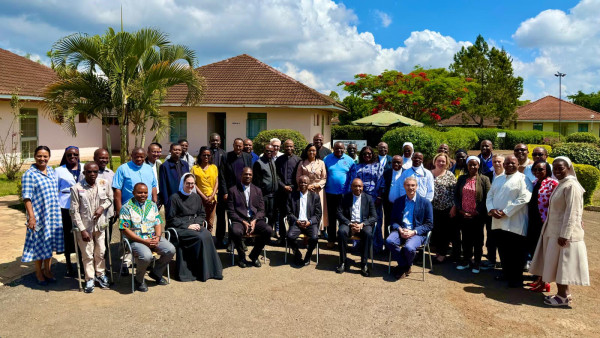
The continental meeting of Catholic Television Directors from Africa and Madagascar was held in Nairobi (Kenya) from 24 to 28 November 2025, with the participation of German partners and the Vatican Dicastery for Communication, represented by Sr. Nina, Communication Specialist.
Pacis TV had the honor of presenting:
- its recent achievements,
- its strategic projects,
- its continental and international collaboration opportunities.
- The channel also led some key segments of the meeting.
The opening session was delivered, on behalf of His Eminence Fridolin Cardinal Ambongo, by His Excellency Bishop Bernardine Mfumbusa, who was recently mandated in Kigali by the African bishops to coordinate communication within SECAM.
Participating countries: Ethiopia, Tanzania, Malawi, Zambia, Uganda, South Sudan, Kenya (AMECEA), Mali, Rwanda, Mozambique, Madagascar, Togo, Cameroon, Congo, Côte d'Ivoire, Burkina Faso, Nigeria, Germany, Argentina, Rome, and Austria.
Throughout the day, the Dicastery for Communication, Bishop Mfumbusa, and the CRTN/ACN team presented the Catholic Television Network Service for Africa Project, emphasizing:
- the urgent need to train communication experts within dioceses;
- the importance of avoiding competition with secular media;
- the mission of enlightening society through the power of truth;
- the need to strengthen collaboration with Catholic celebrities and influencers for the common good.
Special Participation of Rwandan Priests Studying at CUEA
Three Rwandan priests studying at the Catholic University of Eastern Africa received special permission to attend Pacis TV's presentation:
Fr. Patrice,
Fr. Jean de Dieu,
Fr. Damien Kimenyi.
They expressed great interest in the vision and orientations presented, thereby strengthening the link between academic formation and the Church's media mission.
SIGNIS International Update
SIGNIS also provided an update on the upcoming Kigali International Meeting scheduled for August 2026. This future gathering will prioritize:
- strengthening the digital media presence of Catholic institutions;
- developing artificial intelligence tools and influencer databases;
- addressing the communication gaps that persist in several episcopal conferences, some of which still lack official spokespersons.
Recognition of Pacis TV's Continental Leadership
After the exchanges among all African Catholic televisions, it became evident that Pacis TV stands among the leading Catholic TV stations on the continent. This recognition was strongly echoed by Mr. Nicolas Pompigne-Mognard, CEO of APO Group, who highlighted the channel's growing visibility, operational professionalism, and strategic impact across Africa.
Pacis TV is pleased to contribute actively to a renewed vision of Catholic communication in Africa, rooted in truth, collaboration, and service to the common good.
Distributed by APO Group on behalf of Pacis TV.Support to Senegal’s financing strategy: The Government of Senegal and the West African Development Bank (BOAD) enter into a strategic partnership for the structured...
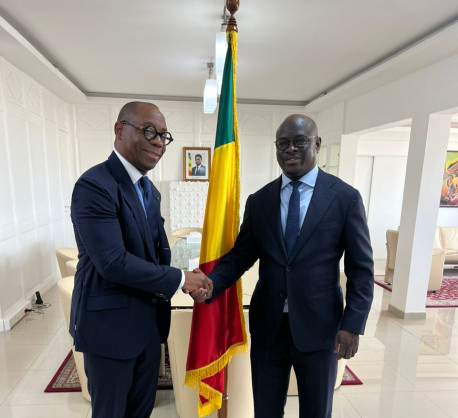
The Government of Senegal and the West African Development Bank (BOAD) (www.BOAD.org) have signed a Memorandum of Understanding establishing a strategic partnership framework based on the country's public asset development.
This innovative mechanism is designed to strengthen Senegal's financing strategy, to consolidate its financial performance and support its development goals, while improving resource mobilization. Structured around leveraging the economic potential of the country's infrastructure, the Senegal Asset Development Fund (FOVAS) will use revenues generated from these assets to diversify funding sources and provide sustainable support to national economic growth.
Under this partnership, BOAD will provide expertise in financial structuring and act as a catalyst in attracting private investors and international development partners. This initiative will help consolidate strategic infrastructure within a dedicated vehicle in order to mobilize additional resources for the State and improve the quality of services provided to the population.
Mr. Cheikh Diba, Minister of Finance and Budget, stated: “This agreement is a major step forward for Senegal. The FOVAS, more than just a financial mechanism, reflects the State's drive to structure the economic leveraging of public assets in a bid to create greater value, increase fiscal flexibility and strengthen the financing of our development process. We are confident that BOAD's expertise will be instrumental to the success of this initiative.”
“This partnership reflects the shared commitment of BOAD and the Government of Senegal to work jointly to accelerate funding mobilization. Our role will consist of supporting the Senegalese Government to unleash the value potential of its strategic assets, thereby ensuring sustainable investments and strengthening the country's financial resilience for the benefit of regional integration” emphasized Mr. Serge Ekue, President of BOAD.
Distributed by APO Group on behalf of Banque Ouest Africaine de Développement (BOAD).For further information, please contact:
Communication and Public Relations Department
Tel: +228 22 23 25 65
WhatsApp: +228 99 99 32 15
Fax: +228 22 23 24 38
Email : boadsiege@boad.org
Social Media:
Youtube: https://apo-opa.co/3XNUQug
About the West African Development Bank (BOAD):
The West African Development Bank (BOAD) is the common development finance institution of the member countries of the West African Monetary Union (WAMU). It is an international public institution whose purpose, as provided under Article 2 of its Articles of Association, is to promote the balanced development of its member countries and foster economic integration within West Africa by financing priority development projects. It is accredited to the three climate finance facilities (GEF, AF, GCF). Since 2009, BOAD sits as an observer at the UNFCCC and actively participates in discussions on devising an international climate finance system. Since January 2013, it has been home to the first Regional Collaboration Centre (RCC) on Clean Development Mechanism (CDM), whose aim is to provide direct support to governments, NGOs and the private sector in identifying and developing CDM projects. Since 15 October 2023, the Bank has been co-chairing the International Development Finance Club (IDFC) and has been holding the club's sole presidency as of 27 February 2025. This Club brings together 27 national, regional and multilateral development banks from around the world.
About the Republic of Senegal:
Senegal, a founding member of the West African Economic and Monetary Union (WAEMU), is located at the western end of Africa and bordered by Mauritania, Mali, Guinea, Gambia and Guinea-Bissau. With a population of about 18 million, the country actively participates in regional integration mechanisms, notably the monetary, financial, and regulatory components. Its diversified and growing economy contributes significantly to the performance of the entire zone. Therefore, Senegal plays a key role in the implementation and strengthening of community policies.