
Explore more Articles in
Industrial
Libya Energy & Economic Summit (LEES) 2026 to Spotlight United States (U.S.) Corporate Engagement as American Firms Recommit to Libya’s Energy Future
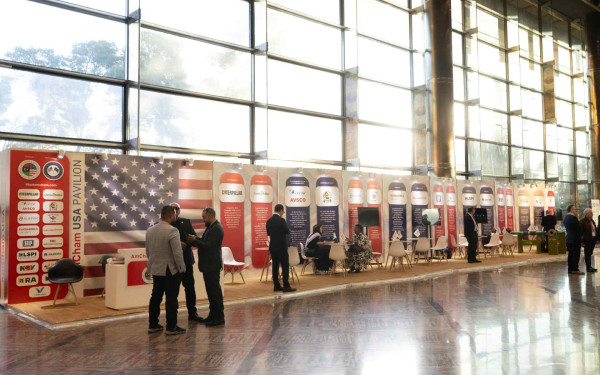

The Libya Energy & Economic Summit (LEES) 2026, taking place on January 24-26 in Tripoli, will showcase a renewed surge of U.S. participation as American companies re-engage with Libya's oil, gas and infrastructure sectors. This year marks a significant moment for U.S. investment momentum, reinforced through expanded commercial programming and strategic dialogues, signaling renewed confidence in Libya's oil, gas and infrastructure markets – and marking a strategic shift in the way American majors are approaching the region.
A major highlight of the Summit will be a dedicated U.S.-Libya Roundtable and a U.S. pavilion, underscoring growing institutional and corporate commitment to Libya's energy future. Discussions will explore collaboration in exploration, field redevelopment and energy services, highlighting areas where American firms can add unique value – from advanced technologies and workforce training to midstream and gas infrastructure innovation. Through these contributions, U.S. investment can accelerate technology transfer, strengthen local supply chains and support Libya's broader industrial development and energy transition objectives. Meanwhile, the pavilion will host a broad range of American firms, industry associations and technical service providers, offering a platform for partnerships across upstream, midstream, downstream and infrastructure development.
Industry leaders ConocoPhillips and SLB will feature prominently at LEES 2026, reflecting the resurgence of U.S.-linked investment interest. ConocoPhillips, a key partner in the Waha Oil Company, continues to support major redevelopment efforts aimed at boosting output at one of Libya's most strategic concessions. SLB, one of the most active technology and service providers in Libya, is deepening its collaboration with the NOC to enhance crude production, modernize operations and support the country's long-term sustainability goals. The company is deploying advanced drilling, well placement and production optimization technologies across priority fields, while expanding its footprint through new contracts – including a milestone agreement to drill three wells in the Nesr and Al-Waha fields. Hill International, meanwhile, recently secured a $235 million contract for the Structures A&E gas field project, forming part of a multi-billion-dollar program to strengthen Libya's natural gas capacity.
These players will be joined by Halliburton, Baker Hughes and ExxonMobil, all of which are deepening their engagement with Libya's National Oil Corporation (NOC) and assessing new commercial, technical and exploration opportunities. ExxonMobil recently signed an MoU with the NOC to undertake geological and geophysical studies covering four offshore blocks in the northwest and Sire Basin – reflecting analytical interest and preliminary evaluation of future partnership potential. The company is also expected to participate in Libya's current licensing round, which covers 22 onshore and offshore blocks.
Chevron has also re-emerged as a major talking point ahead of LEES 2026. Following high-level discussions in London, the NOC confirmed that Chevron is showing serious interest in returning to Libya after a 15-year hiatus. Talks have centered on cooperation in exploration, unconventional resources and undeveloped reservoirs, with Libyan officials emphasizing the country's significant untapped potential across oil and natural gas.
Technical programming will represent another major pillar of U.S. engagement. The Society of Petroleum Engineers Libya will host technical sessions on January 24, featuring discussions on enhanced oil recovery, field redevelopment, marginal field development strategies and digitalization in Libya's oilfields. On January 25 and 26, S&P Global Commodity Insights will lead specialized technical sessions covering market intelligence, production trends, resource monetization and global energy outlooks relevant to Libya's future planning. These sessions are designed to attract active exploration and support the NOC's ambitious target of 2 million barrels per day by 2030.
Institutional participation is set to complement private-sector involvement. The U.S. Embassy – expected to participate at LEES 2026 – supports expanded commercial cooperation between the two countries, encouraging transparent governance and reinforcing bilateral economic engagement. The American Chamber of Commerce (AmCham) in Libya – once again a strategic partner of the summit – continues to promote U.S. company participation following its Washington D.C. forum spotlighting opportunities across hydrocarbons, renewables and infrastructure.
“The U.S.-Libya Roundtable reflects a decisive turning point in commercial engagement,” says James Chester, CEO of Energy Capital & Power. “American companies are now investing in Libya in ways we haven't seen for decades – driving technology transfer, securing long-term production and helping the country realize its full energy potential.”
With exploration interest rising, redevelopment underway and several U.S. majors and service providers reassessing market entries, the U.S.-Libya Roundtable at LEES 2026 will serve as a critical platform to consolidate this momentum and shape a long-term roadmap for sustainable growth in one of the North Africa's most promising energy markets. With the previous edition of LEES featuring 18 U.S. companies in the national pavilion – momentum next year is expected to build significantly. Together, these developments mark a strategic pivot, with U.S. companies taking a leading role in shaping Libya's energy future by deploying capital, technology and expertise at an unprecedented scale.
Join industry leaders at the Libya Energy & Economic Summit 2026 in Tripoli and explore investment opportunities in one of North Africa's most dynamic energy markets. LEES 2026 offers a premier platform for partnerships, innovation and sector growth. Visit www.LibyaSummit.com to secure your participation. To sponsor or participate as a delegate, please contact sales@energycapitalpower.com.
Distributed by APO Group on behalf of Energy Capital & Power.A Blueprint for Energy Access: Empowering Africa through Innovation and Investment (By NJ Ayuk)

By NJ Ayuk, Executive Chairman, African Energy Chamber (https://EnergyChamber.org).
A few generations ago in America, grandparents often reminded children how fortunate they were by recalling stories of walking miles to school or doing homework by candlelight.
But for 27-year-old Emmanuel Malamba, who grew up in the rural district of Nkhotakota, Malawi, those aren't nostalgic tales — they're accounts of daily life. Malamba, now a graduate student in sustainable energy at the Malawi University of Business and Applied Sciences, shared his experiences in an interview with the United Nations Development Programme (UNDP) about energy poverty in his country.
For millions of Africans today, doing homework by candlelight like Malamba did remains a present-day reality. So is spending hours each day gathering firewood or charcoal to cook (a burden that falls disproportionately on women) and going without reliable power in hospitals and schools.
The result is stunted productivity, constrained industrial growth, and limited opportunities to escape poverty.
As noted in the African Energy Chamber's newly released "State of African Energy: 2026 Outlook Report," the situation is particularly dire in Africa's rural areas like Malamba's home community.
"The uneven distribution is largely due to better infrastructure investments in cities, where the concentration of population and economic activities makes it more viable for utility companies to provide services," the report explains. "In contrast, rural regions often face challenges such as lower population densities, higher costs of extending electricity networks, and lower incomes, which hinder the expansion of electrification efforts."
The situation is disheartening, to put it mildly — but not hopeless. I'm convinced that we can make major strides toward addressing rural Africa's energy poverty with two key approaches to delivering electricity. The first is distributed generation (DG) — small-scale power systems located close to where electricity is used, often relying on solar, wind, or hybrid mini-plants. The second is the use of microgrids, localized networks that generate, store, and distribute power to communities not connected to the main grid. Traditional grid extension is rarely feasible for rural communities, but DG systems and microgrids offer scalable, cost-effective, and increasingly low-carbon solutions that can deliver reliable power to schools, health centers, and households.
Africa's Dire Situation
Energy poverty is not unique to Africa. According to the International Energy Agency (IEA), nearly 760 million people worldwide still lack access to electricity — and four out of five of them live in sub-Saharan Africa. While energy poverty is declining globally, it's worsening across much of Africa. The situation is particularly acute in the western and eastern regions, where electrification rates stand at 59% and 54%, respectively, according to our 2026 Outlook Report.
The countries facing the most severe access gaps include Burkina Faso, Burundi, the Central African Republic, Chad, the Democratic Republic of Congo (DRC), Malawi, Niger, and South Sudan, each with electrification rates below 30%.
How can this be happening in today's high-tech world — and why is Africa struggling more than other developing regions? The chamber's report cites several interconnected causes:
- Limited infrastructure: Many African nations lack sufficient generation capacity, transmission lines, and distribution networks to reach their growing populations.
- Financial constraints: Developing and maintaining the power infrastructure requires capital that many African governments simply do not have. Private investors could help bridge the gap, but perceived political and regulatory risks continue to deter investment.
- Policy and regulatory barriers: Too often, inconsistent policies and bureaucratic delays drive away the very investors Africa needs. Transparent, predictable, and investor-friendly frameworks are still the exception, not the rule.
- Geographic and demographic challenges: Vast distances, difficult terrain, and widely dispersed rural populations make electrification complex and expensive.
Even when progress is made, rapid population growth offsets much of the gain. Sub-Saharan Africa adds roughly 2.5 million people each month, creating an enormous challenge for any electrification initiative. If that pace continues over the next six years, another 180 million people will require access to electricity.
And time and time again, rural households are consistently left behind. Extending traditional power grids across vast, sparsely populated regions can cost up to twice as much per connection as in urban areas, according to the IEA. In many cases, the few customers served cannot generate enough demand to justify such investments, leaving entire villages dependent on firewood, kerosene, or diesel generators.
Best Ways Forward
Africa cannot afford to wait for traditional grid expansion to catch up. The need for power in rural communities is immediate — but so are the opportunities. Through DG systems and microgrids, entire villages are gaining access to electricity for the first time.
Let me be clear: These approaches are not the only answers to Africa's energy poverty. As I've said many times, this is a complex challenge that demands multi-pronged strategies, including gas-to-power programs driven by Africa's abundant, cleaner natural gas resources. But DG and microgrids hold extraordinary potential, especially in remote areas where extending traditional grids remains unrealistic.
Decentralized systems, such as solar home units and mini-grids, deliver energy precisely where it's needed: directly to households, schools, and businesses that national utilities cannot reach efficiently. Off-grid solar systems already provide affordable, clean power to millions. In fact, they account for roughly one-quarter of all new electricity connections in sub-Saharan Africa since 2020. They are lighting classrooms, powering small shops, and supporting daily life in ways that once seemed impossible.
The potential only grows with microgrids. These localized networks can operate independently or in conjunction with national grids. They combine renewable energy sources such as solar, wind, and hydro, which are often supported by batteries to ensure round-the-clock reliability.
Expanding traditional power grids into sparsely populated areas is prohibitively expensive and inefficient. Transmission lines can cost between USD19,000 and USD22,000 per kilometer, with another USD9,000 per kilometer for distribution. In regions where homes are scattered and demand is limited, utilities must charge customers cost-reflective tariffs to recover costs — prices that most rural African households simply cannot pay.
Microgrids, by contrast, offer a faster, more affordable, and more sustainable path forward. They require lower capital investment, eliminate the need for long-distance transmission infrastructure, and can be deployed within months rather than years. With renewable technology costs dropping 25-30% since 2014, these systems are more affordable than ever before.
In Ghana, decentralized mini-grids have already proven to be the lowest-cost option for reaching remote communities. They are lighting homes, powering small enterprises, and enabling essential services. If scaled strategically, such localized systems could drive inclusive, bottom-up growth across rural Africa and finally deliver the progress that centralized grids have struggled to achieve.
Encouragingly, new financing models are emerging to accelerate these gains. Pay-as-you-go systems and blended public–private partnerships are helping developers expand microgrid deployment more rapidly and sustainably. In Nigeria, for example, a collaboration between MTN Nigeria and Lumos is bringing dependable, solar-powered electricity to households and small businesses that were once completely off the grid.
Capitalizing on the Opportunity
For DG systems and microgrids to reach their full potential, Africa must take deliberate steps to strengthen investment, innovation, and local capacity. The 2026 Outlook Report identifies multiple priorities that together form a practical roadmap for progress.
First, Africa must mobilize capital for scalable energy infrastructure. Deploying microgrids and DG systems requires substantial investment in solar panels, wind turbines, batteries, and inverters. The continent needs to attract more private capital and development finance — and channel it toward bankable, results-driven projects that can expand access quickly and sustainably.
At the same time, we must expand creative financing models that make energy access affordable. Pay-as-you-go solar, microfinance, and community-based systems are already transforming lives. In East Africa, M-KOPA Solar has reached more than a million homes through small daily mobile payments, while in Ghana and South Africa, community and municipal partnerships are proving that local ownership and private collaboration can accelerate progress.
These are only a few of the strategies highlighted in the Chamber's report — all centered on one goal: making reliable, affordable energy available to every African household.
As the report points out, achieving universal electricity access by 2030 will require more than USD30 billion a year in investment — over eight times current levels. That figure may sound daunting, but it represents one of the greatest opportunities of our time for those ready to help Africa build a modern, reliable energy future.
Encouragingly, progress is already underway. One exciting example is the “Mission 300” initiative. Jointly launched by the World Bank Group and the African Development Bank, it aims to connect 300 million Africans to electricity by 2030. Between mid-2023 and early 2025, it has already reached 21 million people, with projects actively underway to reach 100 million more. This kind of collaboration — among governments, financiers, developers, and communities — is what will finally turn Africa's energy deficit into a story of shared prosperity.
The path forward is clear. Africa must lead with balanced energy strategies that combine gas-to-power with pragmatic renewable energy solutions like DG systems and microgrids. But investors, governments, and development partners all have a role to play. With the right mix of policy reform, financing innovation, and political will, we can light up every home, every business, and every school on this continent.
"The State of African Energy: 2026 Outlook Report" is available for download. Visit https://apo-opa.co/48BLiJ1 to request your copy.
Distributed by APO Group on behalf of African Energy Chamber.Benin: the African Development Fund grants an additional $28 million in financing to boost the private sector’s contribution to the country’s economy
Download logo
The Board of Directors of the African Development Fund approved additional financing of $28 million for Benin to continue the Economic Governance and Private Sector Development Support Programme (PAGE-DSP) on 24 November 2025.
Following phases I and II, which were successfully implemented in 2023 and 2024, respectively, the objective of this financial support is to increase the contribution made by Benin's private sector to the economy. Specifically, it aims to improve the business climate, strengthen Special Economic Zones, support the agro-industrial sector and enhance climate resilience.
"This additional funding concludes the exemplary implementation of the first two phases of the programme by the Government of the Republic of Benin," said Robert Masumbuko, the African Development Bank Group's Country Manager in Benin.
In terms of expected outcomes, the programme aims to contribute to achieving convincing results by 2025: an increase in private investment to 35.5 percent of gross domestic product (GDP) in 2025 (compared with 29.9 percent in 2022); an increase in the amount of investment in the Glo-Djigbé Special Economic Zone to 23 billion CFA francs, approximately $40.5 million (compared with 11 billion CFA francs, approximately $19.3 million in 2021); and an increase in the value added of agri-food industries to 7.7 percent of GDP in 2025 (compared with 6.1 percent in 2022).
"This programme consolidates the results of the first two phases, which totalled approximately $100 million," said Ammar Kessab, Senior Programme Manager at the African Development Bank.
Several measures will be implemented as part of the programme. In particular, the Council of Ministers will adopt a decree on the National Competition Authority, which will define its powers, composition and funding. Bringing the Authority into operation will enable it to contribute to national competition policy and ensure free competition. A similar decision will concern the Directorate for the Promotion of E-commerce, which will be responsible for implementing the National E-commerce Strategy 2025–2029.
Another measure provides for updating the gender assessment in the agricultural sector to bring it into line with the "gender-responsive budgeting" approach. The gender assessment in the agricultural sector had not taken this approach to budgeting – which is now a requirement for all sectoral ministries – into account. The approach will enable the State to target its interventions aimed at women more effectively.
Distributed by APO Group on behalf of African Development Bank Group (AfDB).Media contact:
Alexis Adélé
Department of Communication and External Relations
media@afdb.org
About the African Development Bank Group:
The African Development Bank Group is Africa's premier development finance institution. It comprises three distinct entities: the African Development Bank (AfDB), the African Development Fund (ADF) and the Nigeria Trust Fund (NTF). Represented in 41 African countries, with an external office in Japan, the Bank contributes to the economic development and social progress of its 54 regional member states. For more information: www.AfDB.org
Africa Finance Corporation Secures US$75 Million Credit Line from the Arab Bank for Economic Development in Africa (BADEA) to Accelerate Infrastructure Development

Africa Finance Corporation (AFC) (www.AfricaFC.org), the continent's leading infrastructure solutions provider, has secured a US$75 million term loan facility from the Arab Bank for Economic Development in Africa (BADEA). This landmark transaction deepens AFC's strategic partnership with BADEA.
The agreement was signed by H.E. Abdullah Almusaibeeh, President of BADEA, and Mr. Samaila Zubairu, President & Chief Executive Officer of AFC, as part of AFC Day, held during the B20 Summit in Johannesburg. The signing underscores the two institutions' shared commitment to scaling sustainable development and unlocking long-term capital for African infrastructure.
The collaboration builds on BADEA's shareholder investment in 2020, and the cooperation framework signed that year to jointly develop and finance infrastructure across priority sectors. This new facility reinforces BADEA's role as a strategic partner and strengthens AFC's capacity to deliver transformational infrastructure across the continent.
The proceeds will support AFC's mandate to develop and finance critical power, transport and logistics, heavy industries, telecommunications and digital infrastructure, as well as mining and natural resources. Through its established project development, structuring and execution capabilities, AFC will channel the capital into high-impact projects that catalyse economic transformation.
“As a shareholder of AFC, BADEA has been a valued and long-standing partner in advancing our mandate,” said Mr. Zubairu. “By deploying capital into sustainable, high-impact infrastructure, we continue to create pathways for inclusive economic growth across the continent.”
“BADEA and AFC have been strategic partners in advancing Africa's development agenda, with a remarkable track-record of syndicated transformative projects with medium to long-term financial instruments including equity participation,” said H.E. Abdullah Almusaibeeh, President of BADEA. “Today's signing of this USD75 million line of credit speaks volumes about BADEA's agility to respond to development needs with a variety of instruments of different maturities.”
The facility also supports AFC's broader strategy to diversify its funding base and mobilise long-term capital for Africa's development. By strengthening collaboration with shareholder institutions such as BADEA, AFC continues to expand its capacity to finance resilient infrastructure and advance sustainable economic development across the continent.
Distributed by APO Group on behalf of Africa Finance Corporation (AFC).Media Enquiries:
Yewande Thorpe
Communications
Africa Finance Corporation
Mobile: +234 1 279 9654
Email: Yewande.thorpe@africafc.org
BADEA
Badea@badea.org
About AFC:
AFC was established in 2007 to be the catalyst for pragmatic infrastructure and industrial investments across Africa. The Corporation's approach combines specialist industry expertise with financial and technical advisory, project structuring, project development, and risk capital to address Africa's infrastructure needs and drive sustainable economic growth. Eighteen years on, AFC has built a track record as the partner of choice in Africa for delivering high-quality, transformational infrastructure assets that provide essential services across the continent. AFC has 47 member countries and has invested over US$17 billion since inception.
Visit www.AfricaFC.org
About BADEA:
BADEA is a rated multilateral development finance institution owned by 18 sovereign States, members of the League of Arab States which began operations in March 1975. The Bank's mission revolving around promoting social and economic development exclusively in Sub Saharan Africa, fostering cooperation between the Arab and the African regions through investment and trade.