Explore more Articles in
Healthcare
Dr. Rania Al-Mashat reviews Egypt’s efforts in implementing the first and second phases of the Universal Health Insurance System

Download logo
H.E. Dr. Rania Al-Mashat, Minister of Planning, Economic Development, and International Cooperation, participated in the 2025 High-Level Forum on Universal Health Coverage, as head of the Egyptian delegation, which included Dr. Ahmed El-Sobky, Chairman of the Healthcare Authority, and Ms. Mai Farid, Executive Director of the General Authority for Universal Health Insurance. The forum is organized by the Government of Japan, in cooperation with the World Health Organization (WHO) and the World Bank Group, in Tokyo, Japan, with the participation of senior government officials and international institutions, including Mr. Ajay Banga, President of the World Bank; Ms. Sanae Takaichi, Prime Minister of Japan; Dr. Tedros Adhanom Ghebreyesus, Director-General of the World Health Organization; and Dr. Budi Gunadi Sadikin, Minister of Health of Indonesia.
The forum witnessed the launch of the Universal Health Coverage (UHC) Knowledge Hub, an innovative platform established by the Government of Japan, the World Bank, and the World Health Organization to strengthen the exchange of experience and knowledge and support national healthcare policies. It includes Egypt alongside Nigeria, the Philippines, Kenya, Indonesia, Ghana, Cambodia, and Ethiopia.
In her remarks, H.E. Dr. Rania Al-Mashat stated that this pivotal event renews global commitment to an issue that lies at the heart of human development, affirming that Egypt believes that healthcare is a right for every citizen as well as an economic necessity; it is the foundation upon which production, job creation, and achieving inclusive and sustainable growth. H.E. pointed out that the world committed in 2015 to achieving universal health coverage by 2030, and for Egypt, this was not merely a target but a national strategy for investing in human capital—the strongest driver of inclusive and sustainable development.
H.E. noted that Egypt translated this commitment into concrete steps. Over the past five years, we have worked to increase spending on the health sector by nearly fourfold, which is a pivotal development because it allows us to align health objectives with development requirements, enhances the efficiency of services provided to citizens, and strengthens efforts to improve quality of life for individuals.
H.E. emphasized that the strategic objective we are working to achieve is to provide full coverage under the Universal Health Insurance System for all citizens in Egypt by 2030—an ambitious target requiring advanced technical capabilities, effective operational systems, in addition to providing sustainable financing that ensures the system's continuity and efficiency and achieves full health coverage throughout the Republic.
H.E. added that achieving universal health coverage is not limited to expanding service provision; it also includes strengthening sustainability and achieving value. In this context, Egypt is implementing a strategic transformation in health financing to improve the efficiency of public resource use and expand equity in accessing services. This transformation extends to the governance framework through the Ministerial Group for Human Development, which ensures a unified national vision, policy coherence, evidence-based prioritization, targeted investment allocation for the most vulnerable groups, and accelerated decision-making. This comprehensive government approach makes universal health coverage a central pillar of the human capital development agenda and links health progress with education, skills development, and economic empowerment.
Al-Mashat affirmed that achieving long-term growth depends primarily on investing in people above all else; investing in human beings is what enhances productivity and enables individuals to advance and participate effectively in the economy. It also contributes directly to reducing future spending on services, particularly in the health sector.
The Minister reviewed the Egyptian experience, noting that the health sector is one of the State's essential national priorities, not only as part of the social protection system but also as a fundamental pillar for achieving comprehensive development. This approach has been linked to a diverse set of initiatives and programs, noting the implementation of the Universal Health Insurance System in cooperation with the World Bank and other development partners, as well as the launch of several presidential initiatives that have played a vital role in expanding access to healthcare services provided to citizens throughout the Republic.
H.E. explained that the first phase of the Universal Health Insurance System covers six governorates with 5.1 million beneficiaries, with investments amounting to EGP 28.5 billion from 2018 to 2025 for the implementation of this phase. The second phase covers five governorates with 12.4 million beneficiaries out of the total population, and investments worth EGP 20 billion were allocated to develop healthcare facilities in this phase, in addition to concessional financing of $880 million from the World Bank, the French Development Agency (AFD), and the Japan International Cooperation Agency (JICA) to support the Universal Health Insurance System.
She also praised the role of the International Finance Corporation (IFC) and the French Development Agency (AFD) in supporting private-sector engagement, policy reforms, and institutional capacity building, efforts that enhance the resilience and efficiency of the healthcare system.
She continued: “As for the presidential health initiatives, their impact has reached nearly 90 million citizens through the provision of more than 250 million health services, including early detection campaigns, screenings for non-communicable diseases, and follow-up and treatment programs.”
Regarding the “Decent Life” Initiative, more than 2,000 primary healthcare units have been established or upgraded, significantly improving the quality of healthcare services in rural areas and relieving pressure on central and general hospitals. This reflects not only the scale of the efforts undertaken but also the clear integration among the various initiatives operating under a unified vision.
H.E. also emphasized that when measuring public health expenditure, focus should not be limited to what is allocated to the Universal Health Insurance System, as spending on water, sanitation, infrastructure, and other social services constitutes an important component of the overall picture and contributes indirectly to improving public health and reducing disease rates.
The Minister highlighted Egypt's experience in eliminating Hepatitis C, noting that the World Health Organization declared Egypt free of the disease. This achievement resulted from extensive vaccination campaigns and the domestic production of the vaccine by private-sector companies, underscoring the essential role played by all parties in the system: government, private sector, and international partners.
H.E. affirmed that the government's role lies in facilitation and empowerment by ensuring optimal utilization of each partner's strengths while providing a common platform that enables all parties to work together effectively.
The Minister of Planning, Economic Development, and International Cooperation concluded her remarks by reaffirming that investing in citizens, protecting the most vulnerable families, empowering youth, strengthening the healthcare system, and expanding productive employment opportunities form the foundation for building a more resilient, capable, and competitive economy.
Distributed by APO Group on behalf of Ministry of Planning, Economic Development, and International Cooperation - Egypt.Ethiopia launched the fourth National Action Plan on Antimicrobial Resistance during World Antimicrobial Resistance Awareness Week (WAAW) 2025 commemoration
Download logo
Ethiopia commemorated World Antimicrobial Resistance Awareness Week (WAAW) 2025 with a high-level national event held at the Africa CDC Headquarters in Addis Ababa, where the Government officially launched the Fourth National Action Plan for the Prevention and Containment of Antimicrobial Resistance (AMR) 2026–2030. The event took place under the global theme “Act Now: Protect Our Present, Secure Our Future.”
Senior leaders from the Ministry of Health, Ministry of Agriculture, and the Environmental Protection Authority joined representatives from WHO, FAO, Africa CDC, UKHSA, and other partners to highlight the urgent need for coordinated action to address AMR through a One Health approach.
In her keynote address, HE Dr Mekdes Daba, Minister of Health, underscored that AMR remains a growing global threat, directly responsible for 1.27 million deaths every year and associated with almost 5 million deaths worldwide. She noted that without decisive action, AMR-related mortality could increase by 70% by 2050, disproportionately affecting low- and middle-income countries.
Reflecting on Ethiopia's progress, the Minister highlighted achievements under the previous AMR plan, including a 59% increase in AMR awareness among healthcare workers, establishment of 26 AMR sentinel surveillance sites, implementation of antimicrobial stewardship programs in 328 health facilities, and strengthened infection prevention and control across the country. She also emphasized remaining gaps, including limited diagnostic capacity, shortages of skilled laboratory personnel, and inadequate regulatory enforcement.
The newly launched National Action Plan (NAP) 4.0 was developed through a rigorous, evidence-informed process, beginning with an end-term evaluation of the previous NAP to identify gaps, achievements, and lessons learned. Based on this assessment, a broad set of interventions was proposed—fully aligned with the Global Action Plan on AMR, informed by other countries' experiences, and guided by WHO's people-centered approach and related global AMR guidance. The SMART Choice prioritization tool was then applied to systematically select the most strategic, feasible, and high-impact interventions across the One Health spectrum. Subsequently, the WHO AMR costing and budgeting tool was used to establish a clear and realistic financial framework. The result is NAP 4.0: a comprehensive, evidence-based, and fully costed five-year plan designed to strengthen AMR surveillance, antimicrobial stewardship, laboratory systems, infection prevention and control, community awareness, and One Health coordination.
Partners, including the World Health Organisation, reaffirmed their commitment to supporting Ethiopia's implementation of NAP 4.0. WHO underscored the importance of sustained collaboration across sectors and pledged continued technical assistance for strengthening national AMR governance, surveillance, diagnostics, capacity building, and risk communication.
The event concluded with a multisectoral panel discussion, where government leaders and partners highlighted sector-specific roles and opportunities to accelerate implementation of the new plan. Participants expressed strong commitment to working together to reduce the burden of AMR and protect the effectiveness of life-saving medicines.
The launch of NAP 4.0 marks a significant milestone in Ethiopia's AMR response and ushers in a new phase of coordinated, evidence-based action to safeguard health, food security, and the environment. WHO remains a committed partner in supporting national efforts to “Act Now” for a safer future.
Distributed by APO Group on behalf of World Health Organization (WHO) - Ethiopia.International Volunteer Day: Munich Nurse Brings Medical Support Back to Her Home Country Madagascar
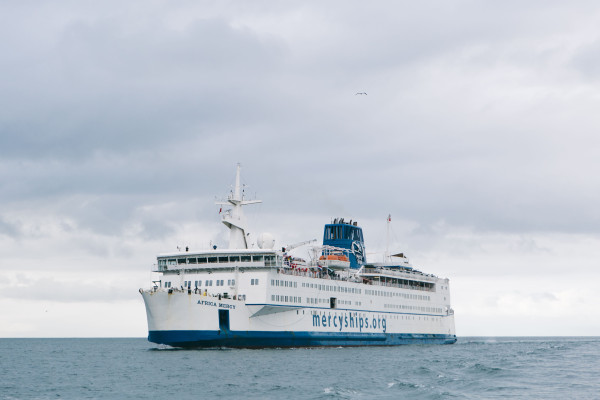
Since early November, Fahendrena Vanessa Rose de Lima Body, a trained nurse from Munich University Hospital, has been volunteering with Mercy Ships (www.MercyShips.org) on board the hospital ship Africa Mercy® in Madagascar. This will have been the organization's fifth field service in the country, and the 28-year-old will return to Germany in mid-December once it concludes. For Vanessa, who was born in Madagascar, this marks the fulfilment of a long-held dream: to bring urgently needed medical support to her home country.
Vanessa Body first learned German as a foreign language during her school years in Madagascar. Inspired by her cousin, who worked as a translator on the Africa Mercy in 2014, she knew early on that she wanted to pursue a medical career and hopefully volunteer with Mercy Ships one day. After staying in Gmund am Tegernsee as an au pair in 2017, strengthening her German through a voluntary social year, she then began her nursing training at the municipal hospital in Bad Tölz. She gained professional experience mainly in anesthesia and emergency care before moving to her current position at Munich University Hospital.
Vanessa speaks vividly about the critical healthcare situation in Madagascar.
“Anyone who needs medical care in Madagascar has to pay. Treatment, medication – everything is expensive, and most people simply cannot afford it,” she explained. “If you have no money, you must accept your illness. There is no universal health insurance.” While there are several hospitals in the capital Antananarivo, where her parents live, the situation for people in rural areas is far more challenging: long distances, underdeveloped road infrastructure, and unaffordable costs. “Sometimes people die simply because there is no help available in the countryside,” she says. “That is why the work of Mercy Ships is so important for this country. Thanks to donations, patients can receive surgery free of charge, and, through training programs, local healthcare workers gain skills that will continue to benefit communities long after the ship has left.”
Vanessa is grateful to finally be able to support her fellow Malagasy citizens in person:
“As part of the anesthesia team on board, I can help overcome language barriers. For patients, everything about the ship is unfamiliar. I help them build trust with the medical team, create a sense of safety, and ease their fears. It is a wonderful service that I am honored to provide.”
Vanessa will return to her job in Munich in mid-December. A few days later, Mercy Ships' ten-month mission in Madagascar will come to an end.
“Without our volunteers, Mercy Ships simply could not carry out its work,” emphasizes Lydia Rieger, Managing Director of Mercy Ships Germany in Landsberg am Lech. “This year alone, around 100 volunteers came from Germany and Austria. On International Volunteer Day, we want to highlight just how indispensable their contribution is – whether in medical roles, technical support, or numerous other functions on board.”
More information at www.MercyShips.de
Distributed by APO Group on behalf of Mercy Ships.For more information about Mercy Ships, contact:
international.media@mercyships.org
About Mercy Ships Deutschland e. V.:
Mercy Ships uses hospital ships to strengthen medical care in some of the world's least developed countries. Its comprehensive and long-term support programme includes donation-funded surgeries at the highest standard, training and capacity-building for local professionals, as well as agricultural and infrastructure projects.
Since its founding in 1978, Mercy Ships has worked in more than 55 countries, delivering services valued at over €1.85 billion. Around 3 million people have directly and indirectly benefited from the organisation's work. Each year, more than 2,500 volunteers from around 60 nations serve on board – specialists in surgery, dentistry, nursing, health education, teaching, cooking, navigation, engineering, and agriculture, all offering their time and expertise to help those in need.
With 16 national offices and an additional location in Africa, Mercy Ships brings lasting change to individuals and strengthens healthcare systems across entire countries. Mercy Ships is a non-profit organisation funded by donations. To support this work, please use the following bank details:
Further information at www.MercyShips.de