
Explore more Articles in
Healthcare
Merck Foundation Chief Executive Officer (CEO) meets The First Lady of Gabon and 13 African and Asian First Ladies to underscore their partnerships to...


Merck Foundation (www.Merck-Foundation.com), the philanthropic arm of Merck KGaA Germany, strengthened its long-term partnerships to enhance healthcare capacity and scholarship programs through high-level meeting held between Dr. Rasha Kelej, CEO of Merck Foundation, and The First Lady of the Gabonese Republic, H.E. Madam ZITA OLIGUI NGUEMA, who is also the Ambassador of Merck Foundation “More Than a Mother”. The meeting was held during the 7th Edition of the Merck Foundation First Ladies Initiative Summit 2025.
Senator, Dr. Rasha Kelej expressed, “It was a pleasure meeting my dear sister H.E. Madam ZITA OLIGUI NGUEMA, First Lady of the Gabonese Republic and the Ambassador of Merck Foundation “More Than a Mother” during the Merck Foundation First Ladies Initiative Summit 2025. Together, we have begun providing scholarships for young doctors in the fields of Oncology and Diabetes care. This is just the beginning of our efforts to transform the public healthcare landscape in the country, and we will continue to scale up the number of scholarships.”
Madam ZITA OLIGUI NGUEMA, First Lady of the Gabonese Republic & Ambassador of Merck Foundation More Than a Mother stated, “Our partnership with Merck Foundation, though initiated only last year in 2024, has already begun to yield meaningful outcomes. Together, we've embarked on initiatives aimed at enhancing healthcare capacity and addressing critical social and health challenges in Gabon. We have started to enroll our local doctors for the scholarship program. Moreover, we are also implementing the impactful program Educating Linda, through which we are providing annually, scholarships to 20 high performing girls who are underprivileged, ensuring they can continue their education until graduation. This program is particularly close to my heart because each of these girls will now have the opportunity to pursue the career of her choice and dreams.”
Watch the Speech of The First Lady of Gabon & Ambassador of Merck Foundation More Than a Mother during the Merck Foundation First Ladies Initiative Summit 2025 here: https://apo-opa.co/4aYbFdH
On day 2 of the Summit, Merck Foundation First Ladies Initiative- MFFLI committee meeting was conducted between The First Ladies of Africa and Merck Foundation Chairman and CEO, where the African and Asian First Ladies shared the impact report of Merck Foundation programs in their respective countries, and future strategy was discussed.
Watch the video of MFFLI committee meeting: https://apo-opa.co/4aVLhBa
“Merck Foundation has always believed in the importance of building healthcare capacity and has been working for it since 2012. We have so far provided 2500 scholarships for doctors from 52 countries in 44 underserved medical specialties. We will soon be enrolling more doctors from Gabon in various medical specialties in partnership with the First Lady and Ministry of Health of Gabon", added Senator, Dr. Rasha Kelej.
Merck Foundation, together with the Office of the First Lady of Gabon, recently conducted their first Health Media Training program with the aim to build the capacity of local media representatives to raise awareness on critical social and health issues such as ending gender-based violence and female genital mutilation, supporting girl education and women's empowerment, and addressing health challenges like diabetes and hypertension.
Merck Foundation also announced the Call for applications for their 8 important awards in partnership with The First Lady of Gabon for Media, Musicians, Fashion Designers, Filmmakers, students, and new potential talents in these fields.
Moreover, in partnership with The First Lady of Gabon, Merck Foundation has also launched seven children's storybooks, “More Than a Mother”, “Educating Linda”, “Jackline's Rescue”, “Not Who You Are”, “Ride into the Future” and “Sugar free Jude”, and “Mark's Pressure”. The storybooks launched in French language, address various social and health issues like breaking infertility stigma, supporting girl education, stopping GBV, diabetes and hypertension awareness.
The 7th Edition of Merck Foundation First Ladies Initiative was streamed live on the social media handles of Merck Foundation and Senator, Dr. Rasha Kelej, CEO of Merck Foundation:
@ Merck Foundation: Facebook (http://apo-opa.co/3Y2sXyL), X (http://apo-opa.co/4p4JrBD), Instagram (http://apo-opa.co/3YzDeCJ), and YouTube (http://apo-opa.co/3Y4PMlt).
@ Rasha Kelej: Facebook (http://apo-opa.co/3KEhBOB), X (http://apo-opa.co/48KLFBh), Instagram (http://apo-opa.co/3N6Dt5H), and YouTube (http://apo-opa.co/3YzAdlX).
Link to the YouTube live stream of Inaugural Session of Merck Foundation First Ladies High Level Panel: https://apo-opa.co/45i3tRV
Merck Foundation is transforming the Patient care landscape and making history together with their partners in Africa, Asia, and beyond, through:
- 2500+ Scholarships provided by Merck Foundation for doctors from 52 Countries in more than 44 critical and underserved medical specialties.
Merck Foundation is also creating a culture shift and breaking the silence about a wide range of social and health issues in Africa and underserved communities through:
- 3700+ Media Persons from more than 35 countries trained to better raise awareness about different social and health issues
- 8 Different Awards launched annually for best media coverage, fashion designers, films, and songs
- Around 30 songs to address health and social issues, by local singers across Africa
- 9 Children's Storybooks in three languages - English, French, and Portuguese
- 6 Awareness Animation films in five languages - English, French, Portuguese, Spanish and Swahili to raise awareness about prevention and early detection of Diabetes & Hypertension and supporting girl education.
- Pan African TV Program "Our Africa by Merck Foundation” addressing Social and Health Issues in Africa through “Fashion and ART with Purpose” Community
- 1040+ Scholarships provided to high performing but under-privileged African schoolgirls from 18 countries, to help them to complete their studies and empower them to reach their full potential.
- 15 Social Media Channels with more than 8 Million Followers.
Contact:
Mehak Handa
Community Awareness Program Manager
Phone: +91 9310087613/ +91 9319606669
Email: mehak.handa@external.merckgroup.com
Join the conversation on our social media platforms below and let your voice be heard!
Facebook: http://apo-opa.co/3Y2sXyL
X: http://apo-opa.co/4p4JrBD
Instagram: http://apo-opa.co/3YzDeCJ
YouTube: http://apo-opa.co/3Y4PMlt
Threads: http://apo-opa.co/45i3u8r
Flickr: http://apo-opa.co/4jnWBbP
Website: www.Merck-Foundation.com
Download Merck Foundation App: https://apo-opa.co/3N8Bq0Y
About Merck Foundation:
The Merck Foundation, established in 2017, is the philanthropic arm of Merck KGaA Germany, aims to improve the health and wellbeing of people and advance their lives through science and technology. Our efforts are primarily focused on improving access to quality & equitable healthcare solutions in underserved communities, building healthcare & scientific research capacity, empowering girls in education and empowering people in STEM (Science, Technology, Engineering, and Mathematics) with a special focus on women and youth. All Merck Foundation press releases are distributed by e-mail at the same time they become available on the Merck Foundation Website. Please visit www.Merck-Foundation.com to read more. Follow the social media of Merck Foundation: Facebook (http://apo-opa.co/3Y2sXyL), X (http://apo-opa.co/4p4JrBD), Instagram (http://apo-opa.co/3YzDeCJ), YouTube (http://apo-opa.co/3Y4PMlt), Threads (http://apo-opa.co/45i3u8r) and Flickr (http://apo-opa.co/4jnWBbP).
The Merck Foundation is dedicated to improving social and health outcomes for communities in need. While it collaborates with various partners, including governments to achieve its humanitarian goals, the foundation remains strictly neutral in political matters. It does not engage in or support any political activities, elections, or regimes, focusing solely on its mission to elevate humanity and enhance well-being while maintaining a strict non-political stance in all of its endeavors.
African States urged to strengthen women’s rights protections amid rising anti-gender pushback

At the African Commission on Human and Peoples' Rights (ACHPR) 85th Ordinary Session, leading women's rights organisation Equality Now (www.EqualityNow.org) issued a stark warning: women and girls across Africa continue to suffer serious human rights violations due to state inaction.
Equality Now urges all African governments to urgently enact and implement comprehensive measures to fulfil their legal obligations to uphold women's and girls' rights, outlined in key regional human rights instruments, including the African Charter on Human and Peoples' Rights and the Protocol on the Rights of Women in Africa, widely known as the Maputo Protocol. Human rights lawyer Deborah Nyokabi delivered Equality Now's statement to the ACHPR (https://apo-opa.co/4pcnzEA), highlighting where states are falling short of their commitments.
Nyokabi pointed to weak legal safeguards against sexual violence, limited access to justice and support services, widespread impunity for perpetrators, and persistent failures to tackle sexual exploitation and trafficking. She also stressed how the lack of reproductive healthcare is a preventable crisis putting millions of women, girls, and babies at risk. Another concern is the rise of anti-gender rights movements seeking to dismantle legal protections and block progress.
Barriers to justice for sexual and gender-based violence survivors
Across Africa, survivors of sexual and gender-based violence continue to face formidable barriers to justice and support services, despite strong regional legal frameworks and progressive sexual violence laws in some jurisdictions.
Equality Now's report, Barriers to Justice: Rape in Africa, Law, Practice and Access to Justice (https://apo-opa.co/44zPoPx), revealed that while rape is one of Africa's most pervasive crimes, the majority of cases don't make it to court, and even fewer result in a conviction. Gaps in laws and weak enforcement, under-resourced judicial systems, limited political will, and pervasive victim-blaming and discrimination foster a culture of impunity that emboldens perpetrators.
African governments must address sexual violence in conflict
A high-profile case illustrating the weaponisation of sexual violence by state actors was shared by Ugandan lawyer, journalist, and activist Agather Atuhaire (https://apo-opa.co/3L3he01), who has spoken out about being raped and tortured in Tanzanian state custody after being arrested on her way to support political opposition leader Tundu Lissu, a critic of Tanzania's government.
Sudan's devastating war provides a harrowing example of how sexual violence increases during conflict. In 2025, the International Criminal Court spoke of rape being used as a weapon of war (https://apo-opa.co/4p4dJo5), and a UN Fact-Finding Mission reported large-scale ethnically targeted sexual violence (https://apo-opa.co/3L9Wd3L).
In the Democratic Republic of Congo (DRC), the Ministry of Health recorded 73,400 sexual violence cases (https://apo-opa.co/4s92RYW) between January and July 2025, a 16% increase from the previous period. Alarmingly, the actual number is likely far higher, as countless incidents go unreported due to stigma, fear, insecurity, and significant legal and logistical obstacles faced by survivors in conflict-affected areas.
In August 2025, a historic judgment by the ACHPR held the DRC accountable for widespread sexual violence (https://apo-opa.co/4pHRtRQ) in a case filed to obtain justice for survivors of atrocities committed by Congolese military personnel on January 1, 2011, in South Kivu, where over 50 women were raped and tortured, with some murdered. The ACHRP ruled the DRC had violated multiple provisions of the African Charter and Maputo Protocol, including the rights to life, health, dignity, and protection from torture. Crucially, it recognised the gendered nature of the crimes, setting a precedent.
Nyokabi highlighted concerns over the DRC's inaction following the ACHRP's ruling, urging the government to issue a formal public apology to survivors, implement comprehensive reparative measures, and prosecute perpetrators. Equality Now also calls for a robust follow-up to ensure compliance with the ACHPR's decision, including a hearing on the implementation status and reporting by the DRC within the mandated 180-day period.
In Kenya, 2025 marked a historic first: the Kenyan government paid compensation for conflict-related sexual violence (https://apo-opa.co/4q2QMmF) to four survivors of the 2007–2008 post-election unrest. While this represents a significant step toward accountability, it remains deeply inadequate as hundreds of survivors of post-election sexual violence have received no redress.
Sexual exploitation and human trafficking
Sexual exploitation and trafficking are pervasive across Africa, fuelled by poverty, conflict, climate change, displacement, and cross-border trafficking. Although legal instruments exist, enforcement is inconsistent, and better-coordinated regional action is urgently needed.
Governments must move from commitment to implementation by harmonising and strengthening anti-trafficking laws, ensuring reparations for survivors, and investing in specialised justice mechanisms and survivor-centred services.
Anti-gender rights movements in Africa
The rise of anti-gender rights movement (https://apo-opa.co/4rYXfQR) is jeopardising legal protections for women and girls and threatening to undo decades of legal progress, endangering the well-being of millions. These efforts are not occurring in isolation. Well-funded international networks are increasingly influencing, coordinating with, and empowering African actors who oppose gender equality.
At a regional convening in Kenya in June 2025, ultra-conservative campaigners from the US and Europe joined African counterparts to advance an agenda framed as “promoting and protecting the sanctity of life, family values, and religious freedom.” In practice, their regressive plan contests reproductive healthcare, comprehensive sexuality education, and LGBTQ+ rights.
Emerging from the convening is the ‘Draft African Charter on Family, Sovereignty and Values.' Composed without participation from women's rights organisations, this charter promotes a narrow model of the “traditional family” and womenhood rooted in rigid, hierarchical gender roles that discriminate against women, girls, and LGBTQ+ individuals. It disregards diversity in family structures and aims to eliminate essential protections for family life and marriage equality.
Anti-gender rights ideology ignores the reality documented in Equality Now's report, Gender Inequality in Family Laws in Africa (https://apo-opa.co/4p2i8aW), which identifies how family life for many women and girls is blighted by control, violence, discrimination, and marginalisation.
Anti-gender rights actors jeopardise efforts to end FGM
A troubling example of anti-gender rights activism is illustrated by a constitutional challenge submitted to The Gambia's Supreme Court, requesting the country's law banning FGM be overturned on the grounds that it violates Gambians' constitutional rights to cultural, traditional, and religious freedoms. This follows a failed attempt in 2024, when MPs rejected a bill to repeal anti-FGM legislation.
Those striving to end FGM reject assertions that the practice is cultural or religious, emphasising that no tradition or religion can justify violating the rights, health, and safety of women and girls.
A 2025 ECOWAS Court ruling found Sierra Leone liable for human rights violations due to its failure to criminalise FGM (https://apo-opa.co/4pLlcJS), which the Court said “meets the threshold of torture.” Despite this judgment, the government still hasn't banned the practice. In neighbouring Liberia, FGM remains legal and pervasive. However, a bill to permanently ban all harmful practices affecting girls and women, including FGM, is being considered by lawmakers.
Equality Now calls on every African government to fully enforce existing anti-FGM laws and swiftly introduce legislation where legal protections are lacking.
Africa's reproductive justice crisis
Africa remains the most dangerous place globally to give birth, accounting for 70% of maternal deaths worldwide (https://apo-opa.co/48Mqm28). Most are preventable, with child marriage, criminalisation of healthcare services, and unsafe abortion all contributing factors.
Despite regional commitments, national laws often contain contradictions that hinder access to reproductive healthcare. In countries such as Kenya and Nigeria, outdated and overlapping laws create fear among healthcare providers and discourage them from offering safe abortion services. In Tanzania and Uganda, restrictive laws and policy reservations on the Maputo Protocol block access to critical reproductive healthcare.
Equality Now requests that the ACHPR continue advocating for African Union Member States to harmonise national laws with the Maputo Protocol's Article 14, which specifies that women's right to sexual and reproductive health should be ensured.
Nyokabi concludes, “Africa's civil society urges ACHPR Member States to uphold their binding commitments. Legal equality is not optional. It is a prerequisite for lasting peace, development, and justice.”
Distributed by APO Group on behalf of Equality Now.Notes to editors:
For media enquiries,contact
Michelle Tuva
Regional Communications Officer, Africa
mtuva@equalitynow.org
Tara Carey
Global Head of Media
Equality Now
Tcarey@equalitynow.org
T. +44 (0)7971556340 (available on WhatsApp and Signal)
Social Media:
Bluesky: https://apo-opa.co/4skZU7J
Facebook: https://apo-opa.co/44xT2cG
Instagram: https://apo-opa.co/4s4oR76
LinkedIn: https://apo-opa.co/4p1C0Lp
About Equality Now:
Equality Now (www.EqualityNow.org) is a worldwide human rights organisation dedicated to securing the legal and systemic change needed to end discrimination against all women and girls. Since its inception in 1992, it has played a role in reforming 120 discriminatory laws globally, positively impacting the lives of hundreds of millions of women and girls, their communities, and nations, both now and for generations to come.
Working with partners at national, regional and global levels, Equality Now draws on deep legal expertise and a diverse range of social, political and cultural perspectives to continue to lead the way in steering, shaping and driving the change needed to achieve enduring gender equality, to the benefit of all.
Access our groundbreaking report on rape in Africa that analyses sexual violence laws and law enforcement practices across 47 countries in Africa, including DRC: Barriers to Justice: Rape in Africa, Law, Practice and Access to Justice (https://apo-opa.co/44zPoPx).
For more details, go to www.EqualityNow.org
From Gorée to Energy Sovereignty: Africa’s Path to Energy Independence

Africa is at a crossroads. The continent is rich in resources, brimming with potential, and finally taking control of its own destiny. Nowhere was this clearer than at the MSGBC Oil, Gas & Power 2025 conference in Dakar, Senegal, held December 8-10, which brought together governments, investors, energy companies and multilateral organizations to discuss the next chapter of West Africa's energy revolution. The event was a showcase of opportunity: Senegal and Mauritania are now oil and gas producers, the region is attracting international investment, and African nations are stepping up to define their energy future on their own terms.
The significance of this moment was underscored by a visit to Gorée Island following the event. The island, a UNESCO World Heritage Site, is a powerful reminder of a time when Africans had no say over their own fate. Walking through the Maison des Esclaves and the “Door of No Return” reflected the parallels between history and today's energy debate. Just as past generations were stripped of agency, the Western world now pressures Africa to abandon its hydrocarbons ambitions – despite the continent needing its oil and gas to lift millions out of energy poverty and power industrial growth. For the African Energy Chamber (AEC), energy sovereignty represents a pathway toward self-determination, opportunity and a thriving future.
The AEC has long championed the idea that Africa must develop its resources to secure its people's future. More than 600 million Africans still lack access to electricity, and millions rely on biomass for cooking and heating. Oil and gas development, particularly natural gas, offers a fast, practical and scalable solution to deliver reliable, affordable energy while funding industrialization, education, healthcare and infrastructure. The Chamber frames this as both a moral and economic imperative: energy independence is essential for prosperity, and Africa has the right to decide its own path.
This message resonated throughout the MSGBC conference, where the Gas Exporting countries Forum (GECF) played a central role. Secretary General Eng. Mohamed Hamel delivered a keynote highlighting Senegal's first oil and gas production from the Sangomar and Greater Tortue Ahmeyim (GTA) projects, praising the country for entering a new era of energy prosperity. Through technical workshops, market outlook sessions and high-level interventions, the GECF demonstrated its commitment to supporting emerging producers, providing data-driven insights and helping African gas resources drive long-term economic growth. Both the GECF and the African Petroleum Producers' Organization were recognized for their leadership at this year's conference for leadership in fostering regional and global energy collaboration, reinforcing investor confidence in Africa's energy sector.
The MSGBC region itself is a story of optimism. The GTA LNG project, a cross-border venture between Senegal and Mauritania led by bp and Kosmos Energy, shipped its first LNG cargo in April 2025, while Senegal's Sangomar oil field, operated by Woodside Energy in partnership with Petrosen, started producing in June 2024. Exploration is accelerating, with Guinea-Conakry launching a 22-block bid round and The Gambia promoting offshore acreage with estimated reserves of 1.2 billion barrels. Infrastructure projects, gas-to-power plants and regional energy integration initiatives are progressing quickly, while Mauritania positions itself as a global green hydrogen hub.
“The story of Gorée Island and the story of Africa's energy development are intertwined,” stated NJ Ayuk, Executive Chairman, AEC. “Just as the island is a reminder of lost agency, the continent's current challenge is ensuring it can use its resources without external interference. Africa is proving it can responsibly develop oil and gas, attract investment and drive sustainable growth – all while asserting its sovereignty.”
For the AEC, the message is clear: Africa's resources are not a burden or a bargaining chip. They are the engine for industrialization, job creation and energy access. With projects like GTA, Sangomar and future green hydrogen ventures, and with the backing of organizations like the GECF, Africa is seizing control of its energy destiny. Gorée is a symbol for a powerful lesson: Africa is choosing to power its people, secure its future and show the world what self-determined energy development can achieve.
Distributed by APO Group on behalf of African Energy Chamber.The African Medical Centre of Excellence (AMCE) achieves two landmark successes as it completes its first Open-Heart Surgery and delivers West Africa’s first Stereotactic...
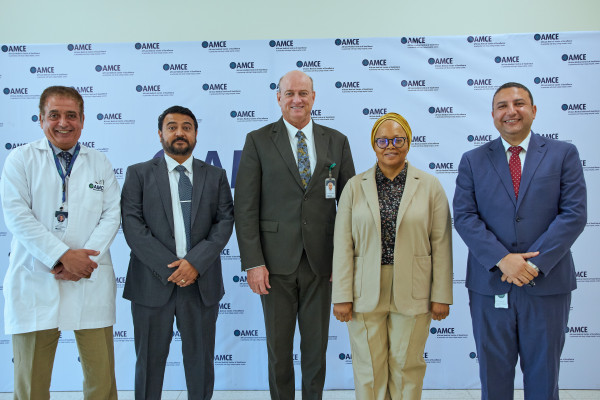
Only six months since its opening in June this year, the African Medical Centre of Excellence (AMCE) in Abuja is redefining top-class medical care in West Africa, achieving two ground-breaking clinical milestones. The world-class tertiary medical facility developed by African Export-Import Bank (Afreximbank) (www.Afreximbank.com) in partnership with King's College Hospital London, AMCE has successfully completed its first open-heart surgery – a complex Triple Coronary Artery Bypass Grafting (CABG) and delivered the region's first Stereotactic Body Radiation Therapy (SBRT) for lung cancer. These achievements underscore AMCE's commitment to providing complex, life-saving treatments in Africa, significantly reducing the critical need for medical travel abroad.
Building on the quaternary hospital's recent outpatient and inpatient landmark advancements, AMCE's clinical teams have rapidly expanded the Centre's capability to deliver high-acuity care across both cardiovascular medicine and oncology.
On the oncology front, AMCE successfully delivered West Africa's pioneer SBRT for lung cancer, a highly advanced radio surgical technique that achieves surgical-level precision without incision. The milestone case involved an octogenarian with a localised lung tumour who received treatment enabled by sophisticated imaging, real-time motion tracking, and highly personalised radiation planning.
In cardiovascular care, AMCE's cardiac team continues to scale its interventional and surgical capabilities. In its first six months of operations, the hospital has performed over ten successful cardiac interventions, including coronary angiographies, permanent pacemaker insertions, and percutaneous coronary interventions (PCI). The successful completion of its first CABG now places AMCE among the few centres in Africa offering a fully integrated cardiac care pathway from advanced diagnostics and interventional cardiology to complex open-heart surgery within one facility.
Together, these achievements underscore AMCE's commitment to world-class, patient-centred cancer care in West Africa and accelerates its long-term goal of reversing outbound medical tourism and averting brain drain by providing the infrastructure, technology, and training environment needed to support the continent's most skilled specialists.
Brian Deaver, Chief Executive Officer of AMCE, commented: " Delivering our first open-heart surgery and West Africa's first SBRT treatment represents a defining moment for AMCE and for healthcare on the continent. These milestones reflect the exceptional skill and dedication of our multidisciplinary teams, who have worked tirelessly to ensure that patients can access the most advanced cancer and cardiac care right here in Africa. With our oncology systems, Cath labs, and theatres fully operational, we are closing long-standing gaps in access to high-quality treatment and enabling people to receive life-saving care close to home. Our commitment remains steadfast: to invest in our people, technology, and infrastructure so that Africans no longer need to travel abroad for the highest standards of care."
Commenting on these remarkable milestones, Oluranti Doherty, Managing Director of Export Development, Afreximbank said “AMCE's successful delivery of its first open-heart surgery and West Africa's first SBRT treatment demonstrates the transformative impact of Afreximbank's investment in world-class medical infrastructure. These achievements show what is possible when we build capacity locally, reducing the continent's dependence on outbound medical tourism, retaining vital clinical expertise, and strengthening Africa's broader health ecosystem. AMCE is advancing a new era of health dignity for Africans, and we are proud to support its continued leadership in complex and innovative care.”
AMCE is also in the process of preparing patients for further complex procedures, including valve repairs and replacements. By expanding its cardiovascular and specialised services, the hospital is reinforcing its commitment to curb medical tourism by reversing the estimated US$6–10 billion Africans spend annually seeking treatment abroad and stem the long-standing brain drain of medical professionals by creating high-quality career opportunities within Africa's borders.
AMCE's key services include cardiovascular services, haematology, comprehensive oncology, and general medical services. The facility has a current capacity of 170 beds with a plan to expand to 500 beds. It features the largest stem cell laboratory in the region, fifteen post stem cell isolation rooms and three catheterisation laboratories. The facility also includes specialised imaging equipment including an 18 Mev cyclotron, 3 Tesla Magnetic Resonance Imaging, 256 slices computed tomography, brachytherapy machine with iridium source, 4 biosafety cabinets and 128 slices computed tomography machines.
Distributed by APO Group on behalf of Afreximbank.About the African Medical Centre of Excellence (AMCE) Abuja:
The African Medical Centre of Excellence (AMCE) Abuja is a US$300 million, fully operational, quaternary -level multi-specialty hospital developed by Afreximbank in collaboration with King's College Hospital London. Since opening in June 2025, AMCE has been delivering world-class specialist care and setting new benchmarks for clinical excellence, patient outcomes, and medical innovation across Africa.
Built to close critical gaps in Africa's healthcare landscape, AMCE provides comprehensive services across oncology, haematology, cardiovascular care, and general medicine. The hospital has already achieved major clinical milestones including successful open-heart surgery and advanced oncology procedures cementing its role as a hub for complex care on the continent.
AMCE's mission goes beyond treatment. By offering procedures that previously required travel abroad, the Centre is directly reducing medical tourism and helping retain top medical talent. Its growing workforce, spanning medical, technical, and administrative roles, is contributing to job creation, knowledge transfer, and the strengthening of Nigeria's health ecosystem. Through ongoing research, education, and partnerships, AMCE is shaping a more self-sufficient, skilled, and healthier future for Africa.
Côte d’Ivoire Catalyzes Nationwide Access to Clean Water with the Inauguration of the Galébré Urban Water Supply System

Côte d'Ivoire has taken an additional important step toward guaranteeing access to clean water with the inauguration of the urban water supply system for the Sub-Prefecture of Galébré. This is one of the first systems completed under the country's national Water for All (Eau Pour Tous) program. Designed to improve the lives of 35,000 inhabitants in the long term, this modern infrastructure, delivered by Mitrelli (https://Mitrelli.com), reinforces the Government of Côte d'Ivoire's commitment to ensure that clean water becomes a fundamental right for everyone.
This inauguration marks a flagship achievement within the Government's broader Water for All program, to modernize water infrastructure nationwide and close long-standing gaps in access for underserved communities. It will ultimately provide more than 1.5 million people across 200 sub-prefectures with sustainable access to potable water.
The inauguration, held on December 12, was led by H.E. Bouaké Fofana, Minister of Hydraulics and Sanitation, reaffirming the Government of Côte d'Ivoire's determination to expand equitable access to clean water across rural and semi-urban regions. Distinguished attendees included H.E. Moussa Sanogo, Minister of Heritage, State Portfolio, and Public Enterprises, H.E. Belmonde Dogo, Minister of National Cohesion, Solidarity and the Fight Against Poverty, H.E. Anne-Désirée Ouloto-Lamizana, Minister of Civil Service and Administrative Modernization, as well as regional authorities: the General Director of ONEP Ibrahiman Berté, traditional leaders, and community representatives. Mitrelli was represented by the country leadership team and the project team.
The newly inaugurated urban water supply system in Galébré will serve 35,000 inhabitants in the long term, providing a reliable and sustainable supply of clean water. The infrastructure includes a complete urban water supply system designed to improve public health, reduce waterborne diseases, and support socio-economic development across the region.
As of December 2025, significant progress has been achieved by the Government with the support of Mitrelli across the Water for All national programs. Works are currently underway in 25 villages. An additional six sites are scheduled to begin in December, while three more villages are expected to be completed before year-end. Provisional receptions for several sites are planned for January 2026.
These advancements reflect a coordinated national effort to strengthen water security, upgrade essential services, and improve resilience across Côte d'Ivoire.
Abdoul Hien, Country General Manager, Mitrelli Côte d'Ivoire, stated: “It is an honor to work with the Government of Côte d'Ivoire in advancing this historic initiative. The Water for All program is transforming daily life for communities across the country. Galébré is a first step; more will come. By delivering sustainable access to clean, safe water, we are enabling better health, stronger educational outcomes, and new economic opportunities. Mitrelli is committed to working alongside national and local partners to ensure long-term, impactful results for the country.”
This inauguration demonstrates how strategic water infrastructure can directly improve public health, strengthen community development, and unlock economic potential. Reliable access to potable water reduces diseases, frees time for education - not only but especially for women and girls - and supports agricultural, commercial, health-related and social activities. Côte d'Ivoire's progress through the Water for All program signals a nationwide shift toward sustainable and inclusive development.
Distributed by APO Group on behalf of Mitrelli Group.Mitrelli media contact:
Emmanuelle Bendenoun
Global Communications Manager
Emmanuelle.b@mitrelli.com
Follow us on:
LinkedIn: https://apo-opa.co/3MEPCic
About Mitrelli:
Mitrelli (https://Mitrelli.com), a Swiss-based international company with over a decade of profound impact in Africa, has been collaborating closely with African leadership, governments, businesses, and communities, investing in and implementing innovative, holistic, and sustainable national-scale solutions. To date, the company has over 100 national-scale projects implemented across the continent, spanning housing, water, food, and energy, as well as key societal accelerators such as education, healthcare, and technology.
To learn more, visit us at https://Mitrelli.com.