
Explore more Articles in
confidence
MIR Holding: Mouhamad Dieng and President Adama Borrow lay the groundwork for collaboration
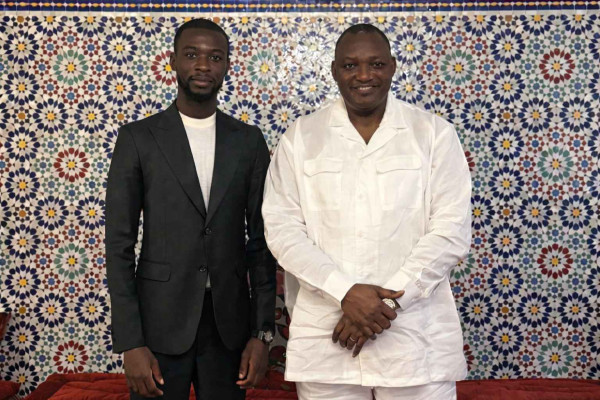

MIR Holding (https://MIRHolding.Odoo.com), a global investment group, is exploring potential investments in The Gambia after its Chief Executive Officer, Mouhamad Dieng, held talks with His Excellency President Adama Barrow.
The meeting focused on the role of private investment in supporting economic growth, improving infrastructure and strengthening key productive sectors, as the Gambian government seeks to attract long-term capital to diversify its economy.
MIR Holding identified several sectors of interest, including digital infrastructure and urban infrastructure, real estate and tourism. These sectors are central to The Gambia's development strategy, given their potential to boost productivity, employment and foreign investment.
According MIR Holding's guiding principles, any potential investment would be subject to due diligence and structured in close coordination with public authorities and local partners. The group emphasised governance, regulatory clarity and long-term project viability as key criteria in its investment decisions.
Digitalisation was discussed as a cross-cutting priority, with a focus on strengthening digital infrastructure and improving service delivery. Infrastructure development was also highlighted as a prerequisite for enhancing connectivity and supporting private sector growth.
Real estate and tourism were also identified as areas with significant upside potential, particularly projects aligned with global standards and sustainability principles, while responding to local market needs.
“Governance and policy predictability were central to the discussions. Investors require clear regulatory frameworks and institutional stability to commit long-term capital, MIR Holding's CEO Mouhamad Dieng noted.
“Public-private dialogue is critical to building investor confidence and this visit to The Gambia is part of MIR Holding's broader pan-African strategy to expand its footprint across the continent while aligning investments with national development agendas.” He added.
The group operates across investment, real estate, services and infrastructure, and positions itself as a long-term partner rather than a short-term financial investor.
MIR Holding and Gambian authorities are expected to continue technical discussions in the coming months to assess specific project opportunities and partnership structures, the sources said.
Distributed by APO Group on behalf of MIR Holding.Press contact :
Elisabeth TINE
Communication officer
contact@brainz-sn.com
Tel. 00 33 843 99 47
About MIR Holding:
MIR Holding is a global investment group with operations across several strategic sectors, including investment, real estate, services and infrastructure. The group focuses on long-term value creation, governance and sustainable impact, working in partnership with public and private stakeholders. MIR Holding aims to contribute to Africa's economic transformation by developing projects aligned with national priorities and international investment standards.
African Energy Chamber (AEC) Voices Support for Venezuela, Emphasizing Stability as the Gateway to Energy Recovery and Long-Term Growth
Download logo
Venezuela enters 2026 amid heightened uncertainty following the detention of the country's president by the United States and the subsequent announcement by the supreme court that Delcy Rodríguez has assumed the role of Acting President. These developments have placed renewed focus on the importance of institutional continuity and stability at a moment when Venezuela's economic and energy future hangs in the balance.
For the African Energy Chamber (AEC), stability remains the single most critical requirement for development. Venezuela holds the largest proven oil reserves in the world, a resource base with the potential to transform the country's economic trajectory, rebuild infrastructure and restore energy security. Realizing this potential, however, will depend on predictable governance, responsible resource management and the creation of mutually beneficial contractual frameworks that encourage long-term investment. At this critical juncture, the AEC calls on the energy industry and the international community to provide maximum support to Acting President Rodríguez, encouraging unity, institutional continuity and a nationally driven development agenda.
“This is the time to continue encouraging everyone to invest in Venezuela. We call on African states and leaders as well as the Global South to give the Acting President and the Venezuelan people support as they determine their future, sovereignty and how they want to proceed,” stated NJ Ayuk, Executive Chairman, AEC.
The AEC has long-held a strong working relationship with both Acting President Rodríguez and Venezuela at large. For her part, Acting President Rodríguez - who also serves as Oil Minister - has long-supported Africa's right to use its oil resources to better the lives of its people. Under her leadership, the country - through its state-owned PDVSA - has developed strong international ties with Africa. Looking ahead, the Chamber believes that the Global South stands to benefit from continued multilateral, respectful engagement.
Importantly, Venezuela is not isolated from the Global South's energy dialogue. As a founding member of OPEC, Venezuela has spearheaded the inclusion of African countries in the organization, recognizing their role in stabilizing global energy markets. Meanwhile, as an Honorary Member of the African Petroleum Producers' Organization, the country has long recognized the value of South-South cooperation, shared technical expertise and collective approaches to resource development. This relationship underscores Venezuela's alignment with producer nations that view hydrocarbons not as a liability, but as a development tool capable of driving industrialization, energy security and social progress when managed responsibly.
Beyond that, Venezuela continues to lead capacity building programs with African companies and students. The country trains African students, fosters leadership development and opens opportunities for African companies to invest in the country - not only in energy but various other sectors.
For Venezuela, oil remains the backbone of the economy and the most powerful lever available to accelerate recovery. Even after years of decline, hydrocarbons still account for close to 90% of export revenues and more than half of government income, while contributing an estimated 17% to 20% of GDP. Venezuela holds the world's largest proven oil reserves at approximately 303 billion barrels, representing around 17% of global reserves. At current and projected oil prices, the in-ground notional value of these resources is measured in the tens of trillions of dollars, placing Venezuela among the most strategically significant energy geographies in the world.
Production realities, however, highlight both the scale of the challenge and the opportunity ahead. After collapsing to roughly 300,000 barrels per day (bpd) in 2020, output has recovered to approximately 900,000 to 1.1 million barrels per day as of early 2026. This remains far below the historical peak of 3.4 million bpd reached in the late 1990s, but it demonstrates that Venezuela's industry is not irreparably damaged. With stable governance, regulatory clarity and sustained investment of around $10 billion per year, production in the country has the potential to reach 2.5 million bpd over the next decade, with a return to peak levels requiring cumulative investment in the range of $80 billion to $100 billion.
The heart of this recovery lies in the Orinoco Heavy Oil Belt, which covers some 55,000 km2 and contains nearly 90% of Venezuela's reserves. Blocks such as Petropiar, Ayacucho and the Zuata Complex anchor current output, though the extra-heavy nature of the crude means that access to dilutants, upgrading capacity and modern technology will be essential. Alongside oil, offshore natural gas presents an important diversification opportunity. Projects such as the Dragon field, estimated to hold more than 4 trillion cubic feet of gas, and the Cocuina-Manakin development near Trinidad offer pathways to monetize gas through regional LNG markets, support power generation and reduce the economy's overreliance on crude exports.
Infrastructure rehabilitation will be equally critical. Venezuela's refining system, with nameplate capacity of around 1.46 million bpd, is operating at just 10% to 20% due to decades of deferred maintenance. Pipelines, many of them more than 50 years old, require billions of dollars in upgrades, while the country's state-owned Petróleos de Venezuela, S.A. estimates total infrastructure needs of roughly $58 billion to restore functionality across the value chain. These investments have the potential to become employment engines and confidence signals that can rapidly improve domestic economy conditions.
International participation, mutually-beneficial investment terms, transparency and local involvement will be indispensable in this process. Existing involvement by companies such as Chevron, which currently produces around 240,000 to 250,000 bpd through joint ventures, illustrates the catalytic role that experienced operators can play. European firms including Eni, Repsol and Shell, alongside service providers such as SLB, Baker Hughes and Halliburton, have maintained a presence focused on asset integrity and selective growth under constrained conditions. By evolving into mutually-beneficial contracts, these relationships can form the backbone of a broader re-engagement by the global energy industry.
“Venezuela sits atop extraordinary natural wealth, and the lesson from Africa is clear: when stability is prioritized and the energy sector is allowed to function responsibly, hydrocarbons can drive recovery, unity and long-term development. The industry and the international community must come together at this critical moment,” concluded Ayuk.
Distributed by APO Group on behalf of African Energy Chamber.Africa’s Upstream Future: Momentum Builds, but Investment Discipline Remains a Hurdle (By NJ Ayuk)
Download logo
By NJ Ayuk, Executive Chairman, African Energy Chamber (https://EnergyChamber.org).
Two breakthrough offshore discoveries in Namibia in 2022 — one by Shell and one by TotalEnergies — marked an important milestone for the country's future energy landscape and for Africa's broader upstream ambitions.
The excitement generated by high-impact discoveries creates a ripple effect that benefits the entire continent. I'm convinced that the ongoing interest we're seeing today in African exploration and production (E&P) stems in part from the major discoveries in Namibia, alongside recent successes in Côte d'Ivoire, Angola, and Egypt.
When you factor in advances in E&P technology, the promise of newly emerging basins, and the continued strength of Africa's established producing regions, there are genuine reasons to feel confident about the future of African oil and gas.
That sentiment is reflected in the African Energy Chamber's 2026 Outlook Report, "The State of African Energy," which projects renewed momentum in the continent's upstream market during the next several years. According to the report, global E&P capital expenditure (capex) is forecast to reach approximately USD504 billion by 2026, with Africa contributing about USD41 billion.
Africa's hydrocarbon production is expected to remain stable at roughly 11.4 million barrels of oil equivalent per day (boe/d) through 2026, and new projects are on track to increase output toward 13.6 million boe/d by 2030.
Yes, the report acknowledges that optimism is being tempered by caution. Keen to protect their balance sheets, investors are scrutinizing opportunities closely. But overall, the potential for sustained upstream expansion is truly promising for African states with petroleum reserves. The key will be doing as much as possible to attract the capital needed to pursue the next wave of discoveries.
Frontier and Emerging Basins Signal Strong New Potential
As investors weigh their options, the most compelling signs of progress are coming from Africa's frontier and emerging basins.
In Namibia's Orange Sub-Basin, where more than 6 billion boe have been discovered in less than four years, operators are preparing the next wave of high-impact wells. Côte d'Ivoire, meanwhile, is seeing a surge of activity around its recent deepwater finds.
Egypt, which already has long history as a producing state, is experiencing fresh momentum in underexplored offshore acreage. Earlier this year, drilling in the Herodotus Basin confirmed gas at the Nefertari-1 well.
Even in Libya, where hydrocarbons have been produced for decades, frontier acreage remains. BP and Eni aim to spud the Matsola-1 ultra-deepwater gas prospect later this year. If it delivers, the well could pave the way for deeper Sirte Basin exploration and reduce geological risk across the broader Gulf of Sirte.
"The continent continues to offer up new frontiers, all of which may draw exploration capital," our Outlook report notes. "Places to keep an eye on are the ultra-deepwater portion of the Congo Fan in Angola, the Gabon–Douala Deep Sea Basin offshore São Tomé and Príncipe, the Namibe Basin in Namibia and Angola, the Herodotus Basin offshore Egypt and the offshore portion of the Sirte Basin.
"Others that have already played host to exploration cycles may still present significant opportunities in a similar fashion to the Côte d'Ivoire–Tano Basin. One example is the MSGBC Basin, where over 9.5 Bboe was discovered between 2014 and 2019, but which is still viewed as immature in terms of exploration."
Still, prospects alone are not enough. To translate discoveries into development, Africa must confront the operational and investment challenges that stand in the way.
Data, Imaging, and a New Era of African Prospecting
As encouraging as the upstream outlook is, Africa's geology remains complex, and that complexity can shape how and where companies invest. In parts of West Africa, for example, thick layers of salt can distort seismic signals and make it difficult to identify potential reservoirs with confidence. And in the far south, strong offshore currents can interfere with seismic acquisition itself, degrading data quality and forcing operators to invest in more advanced imaging and noise-reduction technologies.
But as our Outlook report notes, technology is starting to change these dynamics. "Recent advancements in seismic acquisition, processing technologies, and drilling capabilities have enabled exploration efforts over the past decade to target more intricate prospects at greater depths in Africa as elsewhere," it states.
These advances have been helping oil and gas companies de-risk prospects once considered too complex or too costly to pursue.
Emmanuelle Garinet, TotalEnergies' vice president for exploration in Africa, has pointed to Namibia as a prime example of how high-resolution seismic imaging and advanced subsurface modeling can reshape exploration strategies. She noted that the company's decision to drill the Venus prospect — which lies within the Namibian portion of the Orange Sub-Basin — was possible because the technical data provided enough confidence to reduce uncertainty ahead of drilling. The results validated that choice: the 2022 Venus-1 discovery, estimated at 1.5 to 2 billion barrels of recoverable oil, stands as the largest ever made in sub-Saharan Africa. Its scale has reshaped expectations for what may still be unlocked across the Orange Sub-Basin.
The trend is also visible offshore Angola, where better subsurface imaging and advanced drilling systems are opening deepwater and ultra-deepwater opportunities in heavily salt-influenced geology. Azule Energy aims to drill the Kianda prospect in late 2025. If the ultra-deepwater test succeeds, it could pave the way for exploration across a vast area — more than 30,000 square kilometers — previously viewed as high risk.
The Capital Challenge: Competing for Global Investment
But geological complexity isn't the only factor shaping investment decisions. Political and security challenges persist in several countries — among them Nigeria, Mozambique, and the Democratic Republic of the Congo — and can materially affect both operations and capital flows. Add to that the lack of clarity around monetization and industrialization pathways, and it becomes clear why some investors remain cautious.
The Outlook report notes that upstream capital spending in Africa has risen consistently over the past three years as the sector recovers from the pandemic-related lows of 2020. Even so, worldwide investment growth has not kept pace with the strong cash flows generated by upstream operations. Analysts from firms like Wood Mackenzie and Deloitte all describe the same pattern: Companies are channeling a significant share of their cash flow into dividends, buybacks, and debt reduction instead of chasing growth at any cost.
In short, Africa is competing for capital at a time when global investors are more disciplined than ever.
In this environment, African states cannot simply assume that interest in our geology will translate into final investment decisions. We must move quickly to capitalize on today's E&P appetite by reducing above-ground risks, providing clear monetization and industrialization pathways, and building stable, predictable frameworks that give investors the confidence to commit for the long term.
The window of opportunity is open, but it will not stay open forever.
"The State of African Energy: 2026 Outlook Report" is available for download. Visit https://apo-opa.co/4aKVLn1 to request your copy.
Distributed by APO Group on behalf of African Energy Chamber.Bank One earns triple international recognition for Small and Medium Enterprises (SME), Private Banking and Custody excellence
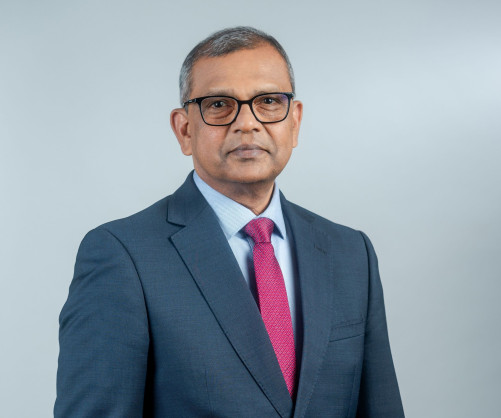
Bank One (https://BankOne.mu) has earned three international awards, affirming its strength across key banking segments. The bank has been named Best SME Bank in Mauritius and Best Private Bank in Mauritius by Global Finance magazine, and Best Custodian Bank in the Indian Ocean by CFI . co.
These accolades position Bank One as a trusted partner to a wide spectrum of clients, from small businesses powering local growth to high-net-worth individuals and institutional investors operating across complex markets.
Sunil Ramgobin, CEO of Bank One, stated: "These awards are the result of our teams' dedication and our clients' confidence in the way we do business. We are focused on delivering banking that is intelligent, responsive and grounded in real needs. Whether supporting a business expansion, guiding families through wealth planning, or enabling cross-border investments, our ambition is to build a bank that moves with purpose and delivers value that lasts."
Small and medium-sized enterprises contribute nearly one-third of Mauritius' gross value added and employ close to half of the national workforce. At the same time, Mauritius is gaining momentum as a regional center for wealth creation, with its millionaire population expected to nearly double by 2033. Bank One's recognition in both SME and private banking confirms its ability to support growth across all layers of the economy, from B2B partnerships and shareholder value to individual prosperity
In the custody space, CFI . co commended Bank One's advanced infrastructure, which includes near-instant portfolio reporting, direct access to Euroclear, and dedicated support for multiple African currencies. These capabilities enable institutional clients to settle trades efficiently across time zones and markets.
Guillaume Passebecq, Head of Consumer Banking, Private Banking & Wealth Management, commented:
"Each of these segments, SME, Private Banking and Custody, demands a distinct approach. What ties them together is our commitment to precision, speed and relevance. In SME banking, we work closely with entrepreneurs to unlock growth. In Private Banking, we tailor solutions that evolve with our clients' ambitions. And in Custody, we deliver the infrastructure and insight that institutional investors need to operate confidently across borders. These awards are signals that we are on the right path, and we intend to keep raising the bar."
Looking ahead, Bank One is advancing its vision of a more connected banking experience through digital innovation and personalized engagement. The opening of the Bank One Tribeca Lounge marks an important step in this direction, creating a space where clients can access services in a setting designed for collaboration and convenience. This initiative reflects our broader ambition to integrate physical and digital touchpoints, ensuring that the future of banking remains accessible, relevant and aligned with evolving client needs.
Distributed by APO Group on behalf of Bank One Limited.For Media Enquiries:
Virginie Couronne
Senior Communication and Contents Specialist
Tel: +230 202 9200, +230 5258 2926
Email: virginie.appapoulay@bankone.mu; info@bankone.mu
A: 16, Sir William Newton Street, Port Louis 11328, Mauritius
About Bank One:
Bank One Limited was established in 2008 as a joint venture between I&M Group, a key player in East Africa's financial sector, and CIEL Finance, the finance arm of CIEL Group, one of Mauritius's foremost conglomerates. Based in Mauritius, Bank One serves businesses and individuals across Africa and beyond, providing tailored financial solutions designed to meet their diverse and developing needs. The Bank benefits from the extensive regional presence of its shareholders in key markets such as Kenya, Tanzania, Rwanda, Uganda, Madagascar, and Mauritius. We provide a comprehensive range of products and services across Corporate and Institutional Banking, Treasury Services, Consumer Banking, Private Banking, Custody Services, Business Banking and Wealth Management. Our services are designed to help businesses grow, manage risk, and optimize their financial resources and help individuals achieve their personal goals through a comprehensive mix of savings, loans, payments, and investment solutions.
Global Service Providers, Industrial Specialists Join the Libya Energy & Economic Summit (LEES) 2026 as Bronze Sponsors
Download logo
The Libya Energy & Economic Summit (LEES) 2026 (https://LibyaSummit.com), taking place in Tripoli from January 24-26, continues to attract a broad cross-section of international and regional companies aligned with Libya's upstream growth, infrastructure modernization and economic revitalization agenda. The event has confirmed (Kellogg Brown & Root) KBR , TGS, Bharat Tanks & Vessels (BTV), Go Gas Holding, Regus and SIXT as Bronze Sponsors, underscoring strong private-sector engagement as Libya accelerates toward its production and investment targets.
The participation of these companies reflects growing confidence in Libya's reform-driven energy strategy, which combines aggressive upstream expansion with renewed focus on gas monetization, logistics, infrastructure and investor enablement. Together, the Bronze Sponsors represent the technical depth, advisory expertise and operational support required to translate policy momentum into executable projects.
Global engineering and advisory firm KBR brings decades of experience in Libya, spanning upstream engineering, infrastructure planning and government advisory services. As a strategic partner to Libya's National Oil Corporation (NOC) (https://apo-opa.co/3Ll9nLh), KBR is providing feasibility studies, technical reviews and project delivery frameworks across oil, gas, power and infrastructure. Its long-standing footprint positions KBR as a key enabler of Libya's next investment cycle.
Energy data and intelligence company TGS supports Libya's upstream revival through advanced subsurface analytics and seismic data coverage. With one of the world's largest energy data libraries, TGS provides 2D and 3D seismic datasets that help governments and operators de-risk exploration and accelerate decision-making, particularly relevant as Libya opens new acreage across the Sirte, Murzuq and Ghadames basins.
India-based BTV joins LEES 2026 as Libya prioritizes midstream and downstream infrastructure upgrades. Specializing in ASME-certified pressure vessels, LPG spheres, cryogenic tanks and transport equipment, BTV is positioned to support storage and distribution systems for LNG, LPG, ammonia and emerging fuels. Its capabilities align with Libya's need to modernize fuel logistics while preparing for future energy vectors such as hydrogen and CO₂ handling.
Go Gas Holding, a regional energy company active in Libya's gas value chain, reflects the growing emphasis on gas capture, domestic supply and downstream infrastructure. As Libya advances projects at Waha, Bouri and the Western Libya Gas Project, Go Gas' focus on distribution and logistics complements national efforts to improve power generation and reduce flaring.
Beyond energy operations, Regus and SIXT support the broader investment ecosystem. Regus provides flexible office infrastructure in Tripoli, enabling international firms to establish rapid local presence, while SIXT – operating through its Libyan franchise – delivers secure mobility solutions for executives, project teams and summit delegates.
“The participation of these Bronze Sponsors reflects the depth and diversity of expertise required to support Libya's energy resurgence, from upstream advisory and data to infrastructure, logistics and investor enablement. Their engagement at LEES 2026 underscores growing international confidence in Libya's reform agenda and the opportunities emerging across the entire energy value chain,” states James Chester, CEO, Energy Capital & Power.
Together, the Bronze Sponsors reinforce LEES 2026's role as a convergence point for operators, service providers and investors shaping Libya's energy and economic future.
Distributed by APO Group on behalf of Energy Capital & Power.South Africa: President Ramaphosa expresses condolences following tragic fire in the Swiss Alps
Download logo
President Cyril Ramaphosa has expressed his deep sadness at the loss of life resulting from a devastating fire in the Swiss town of Crans-Montana in Switzerland on New Year's Day, 1 January 2026.
On behalf of the Government and people of the Republic of South Africa, President Ramaphosa conveys heartfelt condolences to the families and loved ones of those who lost their lives, as well as to the people and Government of the Swiss Confederation during this time of profound grief.
“South Africans stand in solidarity with the people of Switzerland as they mourn this tragic loss of life. Our thoughts and prayers are with the bereaved families and all those affected by this heartbreaking incident,” the President said.
President Ramaphosa also extended words of support to the emergency services and first responders who acted with courage and dedication in the face of this tragedy, and expressed confidence that the Swiss people will draw strength from their unity and resilience in this difficult moment.
Distributed by APO Group on behalf of The Presidency of the Republic of South Africa.