Explore more Articles in
Climate Change
African States urged to strengthen women’s rights protections amid rising anti-gender pushback
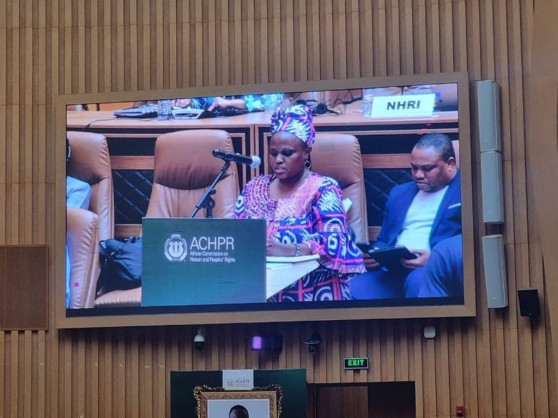

At the African Commission on Human and Peoples' Rights (ACHPR) 85th Ordinary Session, leading women's rights organisation Equality Now (www.EqualityNow.org) issued a stark warning: women and girls across Africa continue to suffer serious human rights violations due to state inaction.
Equality Now urges all African governments to urgently enact and implement comprehensive measures to fulfil their legal obligations to uphold women's and girls' rights, outlined in key regional human rights instruments, including the African Charter on Human and Peoples' Rights and the Protocol on the Rights of Women in Africa, widely known as the Maputo Protocol. Human rights lawyer Deborah Nyokabi delivered Equality Now's statement to the ACHPR (https://apo-opa.co/4pcnzEA), highlighting where states are falling short of their commitments.
Nyokabi pointed to weak legal safeguards against sexual violence, limited access to justice and support services, widespread impunity for perpetrators, and persistent failures to tackle sexual exploitation and trafficking. She also stressed how the lack of reproductive healthcare is a preventable crisis putting millions of women, girls, and babies at risk. Another concern is the rise of anti-gender rights movements seeking to dismantle legal protections and block progress.
Barriers to justice for sexual and gender-based violence survivors
Across Africa, survivors of sexual and gender-based violence continue to face formidable barriers to justice and support services, despite strong regional legal frameworks and progressive sexual violence laws in some jurisdictions.
Equality Now's report, Barriers to Justice: Rape in Africa, Law, Practice and Access to Justice (https://apo-opa.co/44zPoPx), revealed that while rape is one of Africa's most pervasive crimes, the majority of cases don't make it to court, and even fewer result in a conviction. Gaps in laws and weak enforcement, under-resourced judicial systems, limited political will, and pervasive victim-blaming and discrimination foster a culture of impunity that emboldens perpetrators.
African governments must address sexual violence in conflict
A high-profile case illustrating the weaponisation of sexual violence by state actors was shared by Ugandan lawyer, journalist, and activist Agather Atuhaire (https://apo-opa.co/3L3he01), who has spoken out about being raped and tortured in Tanzanian state custody after being arrested on her way to support political opposition leader Tundu Lissu, a critic of Tanzania's government.
Sudan's devastating war provides a harrowing example of how sexual violence increases during conflict. In 2025, the International Criminal Court spoke of rape being used as a weapon of war (https://apo-opa.co/4p4dJo5), and a UN Fact-Finding Mission reported large-scale ethnically targeted sexual violence (https://apo-opa.co/3L9Wd3L).
In the Democratic Republic of Congo (DRC), the Ministry of Health recorded 73,400 sexual violence cases (https://apo-opa.co/4s92RYW) between January and July 2025, a 16% increase from the previous period. Alarmingly, the actual number is likely far higher, as countless incidents go unreported due to stigma, fear, insecurity, and significant legal and logistical obstacles faced by survivors in conflict-affected areas.
In August 2025, a historic judgment by the ACHPR held the DRC accountable for widespread sexual violence (https://apo-opa.co/4pHRtRQ) in a case filed to obtain justice for survivors of atrocities committed by Congolese military personnel on January 1, 2011, in South Kivu, where over 50 women were raped and tortured, with some murdered. The ACHRP ruled the DRC had violated multiple provisions of the African Charter and Maputo Protocol, including the rights to life, health, dignity, and protection from torture. Crucially, it recognised the gendered nature of the crimes, setting a precedent.
Nyokabi highlighted concerns over the DRC's inaction following the ACHRP's ruling, urging the government to issue a formal public apology to survivors, implement comprehensive reparative measures, and prosecute perpetrators. Equality Now also calls for a robust follow-up to ensure compliance with the ACHPR's decision, including a hearing on the implementation status and reporting by the DRC within the mandated 180-day period.
In Kenya, 2025 marked a historic first: the Kenyan government paid compensation for conflict-related sexual violence (https://apo-opa.co/4q2QMmF) to four survivors of the 2007–2008 post-election unrest. While this represents a significant step toward accountability, it remains deeply inadequate as hundreds of survivors of post-election sexual violence have received no redress.
Sexual exploitation and human trafficking
Sexual exploitation and trafficking are pervasive across Africa, fuelled by poverty, conflict, climate change, displacement, and cross-border trafficking. Although legal instruments exist, enforcement is inconsistent, and better-coordinated regional action is urgently needed.
Governments must move from commitment to implementation by harmonising and strengthening anti-trafficking laws, ensuring reparations for survivors, and investing in specialised justice mechanisms and survivor-centred services.
Anti-gender rights movements in Africa
The rise of anti-gender rights movement (https://apo-opa.co/4rYXfQR) is jeopardising legal protections for women and girls and threatening to undo decades of legal progress, endangering the well-being of millions. These efforts are not occurring in isolation. Well-funded international networks are increasingly influencing, coordinating with, and empowering African actors who oppose gender equality.
At a regional convening in Kenya in June 2025, ultra-conservative campaigners from the US and Europe joined African counterparts to advance an agenda framed as “promoting and protecting the sanctity of life, family values, and religious freedom.” In practice, their regressive plan contests reproductive healthcare, comprehensive sexuality education, and LGBTQ+ rights.
Emerging from the convening is the ‘Draft African Charter on Family, Sovereignty and Values.' Composed without participation from women's rights organisations, this charter promotes a narrow model of the “traditional family” and womenhood rooted in rigid, hierarchical gender roles that discriminate against women, girls, and LGBTQ+ individuals. It disregards diversity in family structures and aims to eliminate essential protections for family life and marriage equality.
Anti-gender rights ideology ignores the reality documented in Equality Now's report, Gender Inequality in Family Laws in Africa (https://apo-opa.co/4p2i8aW), which identifies how family life for many women and girls is blighted by control, violence, discrimination, and marginalisation.
Anti-gender rights actors jeopardise efforts to end FGM
A troubling example of anti-gender rights activism is illustrated by a constitutional challenge submitted to The Gambia's Supreme Court, requesting the country's law banning FGM be overturned on the grounds that it violates Gambians' constitutional rights to cultural, traditional, and religious freedoms. This follows a failed attempt in 2024, when MPs rejected a bill to repeal anti-FGM legislation.
Those striving to end FGM reject assertions that the practice is cultural or religious, emphasising that no tradition or religion can justify violating the rights, health, and safety of women and girls.
A 2025 ECOWAS Court ruling found Sierra Leone liable for human rights violations due to its failure to criminalise FGM (https://apo-opa.co/4pLlcJS), which the Court said “meets the threshold of torture.” Despite this judgment, the government still hasn't banned the practice. In neighbouring Liberia, FGM remains legal and pervasive. However, a bill to permanently ban all harmful practices affecting girls and women, including FGM, is being considered by lawmakers.
Equality Now calls on every African government to fully enforce existing anti-FGM laws and swiftly introduce legislation where legal protections are lacking.
Africa's reproductive justice crisis
Africa remains the most dangerous place globally to give birth, accounting for 70% of maternal deaths worldwide (https://apo-opa.co/48Mqm28). Most are preventable, with child marriage, criminalisation of healthcare services, and unsafe abortion all contributing factors.
Despite regional commitments, national laws often contain contradictions that hinder access to reproductive healthcare. In countries such as Kenya and Nigeria, outdated and overlapping laws create fear among healthcare providers and discourage them from offering safe abortion services. In Tanzania and Uganda, restrictive laws and policy reservations on the Maputo Protocol block access to critical reproductive healthcare.
Equality Now requests that the ACHPR continue advocating for African Union Member States to harmonise national laws with the Maputo Protocol's Article 14, which specifies that women's right to sexual and reproductive health should be ensured.
Nyokabi concludes, “Africa's civil society urges ACHPR Member States to uphold their binding commitments. Legal equality is not optional. It is a prerequisite for lasting peace, development, and justice.”
Distributed by APO Group on behalf of Equality Now.Notes to editors:
For media enquiries,contact
Michelle Tuva
Regional Communications Officer, Africa
mtuva@equalitynow.org
Tara Carey
Global Head of Media
Equality Now
Tcarey@equalitynow.org
T. +44 (0)7971556340 (available on WhatsApp and Signal)
Social Media:
Bluesky: https://apo-opa.co/4skZU7J
Facebook: https://apo-opa.co/44xT2cG
Instagram: https://apo-opa.co/4s4oR76
LinkedIn: https://apo-opa.co/4p1C0Lp
About Equality Now:
Equality Now (www.EqualityNow.org) is a worldwide human rights organisation dedicated to securing the legal and systemic change needed to end discrimination against all women and girls. Since its inception in 1992, it has played a role in reforming 120 discriminatory laws globally, positively impacting the lives of hundreds of millions of women and girls, their communities, and nations, both now and for generations to come.
Working with partners at national, regional and global levels, Equality Now draws on deep legal expertise and a diverse range of social, political and cultural perspectives to continue to lead the way in steering, shaping and driving the change needed to achieve enduring gender equality, to the benefit of all.
Access our groundbreaking report on rape in Africa that analyses sexual violence laws and law enforcement practices across 47 countries in Africa, including DRC: Barriers to Justice: Rape in Africa, Law, Practice and Access to Justice (https://apo-opa.co/44zPoPx).
For more details, go to www.EqualityNow.org
A Stronger Africa Requires Stronger Investment Policies (By NJ Ayuk)
Download logo
By NJ Ayuk, Executive Chairman, African Energy Chamber (https://EnergyChamber.org/).
Investor confidence in Algeria's energy sector is climbing. The country — already one of Africa's most active oil and gas producers — has seen even more momentum in 2025.
In October, Algeria's national oil company, Sonatrach, announced a USD5.4 billion partnership with Saudi Arabia's Midad Energy to explore and develop new fields in the Illizi Basin. The government has also entered advanced talks with ExxonMobil and Chevron on a groundbreaking framework that would give US companies access to Algeria's vast natural gas reserves — a first in the nation's history. Earlier this year, Sonatrach and China's Sinopec signed a Memorandum of Understanding (MoU) to jointly assess and potentially develop resources in the Gourara and Berkine-Est basins.
These agreements are not emerging in a vacuum. They reflect the deliberate reforms Algeria has enacted in recent years: simplifying business registration, establishing special economic zones, improving contract transparency, and signaling a stronger commitment to international partnership. As a result, the country is drawing a diverse roster of major players, from Eni and Equinor to TotalEnergies.
Algeria's progress offers a timely lesson for African nations with petroleum resources. Africa's oil and gas sector will require billions in new investment over the next decade, yet securing capital has become more difficult. As noted in the African Energy Chamber's (AEC) “State of African Energy: 2026 Outlook Report," Western financial institutions continue to retreat from fossil-fuel financing, and many investors remain cautious about perceived risks in emerging markets.
The governments that confront these challenges by adopting investor-friendly policies and strengthening governance will be the ones to realize the key benefits of oil and gas, including energy security, job creation, and broader economic growth.
Algeria shows what is possible when reforms align with clear investment objectives. Other countries that have taken similar steps, such as Angola and Nigeria, are also seeing renewed activity. But this cannot remain limited to a handful of markets. The resources are here. The opportunities are here. Now is the time to act.
The Opportunity Is Enormous. The Capital Isn't.
Africa certainly doesn't lack opportunity — it has an abundance of it. The continent holds an estimated 125 billion barrels of proven oil reserves and roughly 625 trillion cubic feet of natural gas as of 2025. These are not abstract numbers; they represent jobs, infrastructure, and prosperity waiting to be unlocked.
According to our outlook report, Africa's overall hydrocarbon production is projected to hold steady at around 11.4 million barrels of oil equivalent per day (MMboe/d). But maintaining — let alone expanding — that output requires continuous investment. Wells decline. Infrastructure ages. New discoveries must be developed. Without consistent capital inflows, Africa risks leaving its wealth in the ground.
And while our outlook points to encouraging signs of renewed spending — particularly in countries like Namibia, Angola, and Mozambique — the continent remains far from reaching its full investment potential. The AEC estimates that the continent faces an annual energy finance gap between USD31.5 billion and USD45 billion. External investment is expected to average roughly USD35 billion per year between 2020 and 2030 — a level that will not deliver the production growth Africa needs to meet rising domestic demand or strengthen export capacity.
Investment Won't Come Without Reform
Whether Africa can increase production hinges on several factors, but few are more important than governments' ability to offer investment terms that meet industry needs. Oil and gas projects demand massive upfront capital — often in the hundreds of millions or even billions of dollars — and investors are keenly aware of the risks associated with frontier markets. These risks include political instability, abrupt regulatory changes, contract uncertainty, weak infrastructure, and security concerns. On top of that, private-sector financiers continue to face global pressure to channel capital toward renewable energy rather than fossil fuels.
If African countries want to compete for scarce investment dollars, they must demonstrate that their markets are stable, predictable, and commercially attractive.
One of the greatest deterrents to investors is slow or unpredictable regulatory approval processes. Lengthy permitting timelines, unclear requirements, or frequent policy changes can stall projects and undermine returns. Governments must streamline approvals and establish transparent regulatory frameworks with firm timelines. Fast, direct communication channels between regulators and companies also make an enormous difference in reducing delays.
A proven approach is the creation of one-stop regulatory agencies that consolidate multiple approvals under one roof. Equatorial Guinea has implemented a system that allows investors to establish a business within a week, and Angola recently launched a one-stop center for local content compliance in the oil and gas sector. These reforms dramatically reduce friction and make markets far more competitive.
Equally important is ensuring strong governance and transparency. Stable fiscal regimes, predictable contract terms, and anti-corruption measures help de-risk projects and give investors the confidence to commit long-term capital. Countries such as Nigeria and Ghana have emphasized clear rules, transparent licensing processes, and improved sector governance as central pillars of their investment strategies — and these efforts are widely recognized as strengthening investor trust.
The Green Energy Gap Africa Cannot Afford
Ironically, even as global institutions push investors to prioritize renewable energy, Africa is experiencing a significant green-energy investment shortfall.
Our outlook report addresses this problem: “Africa's renewable energy sector holds the potential to reshape the power landscape and enhance energy security for millions. However, given Africa is the second most populous continent in the world, the scale of investment in the renewable energy sector remains significantly behind that of other global initiatives.
“Between 2020 and 2025, Africa invested USD34 billion in clean power technologies, with 52% directed towards solar power and 25% towards onshore wind. Despite this investment, Africa's share of global investments is projected to be just 1.5% in 2025.”
Just like the fossil-fuel financing gap, this shortfall is tied directly to investor risk perceptions. As the report explains, Africa continues to lag other regions because its energy markets are seen as high risk, marked by political instability, regulatory uncertainty, inadequate infrastructure, policy reversals, corruption concerns, and burdensome bureaucracy. Limited access to capital and high interest rates compound these challenges.
African governments must adopt policies that counter these concerns. The same reforms that draw investment into oil and gas — transparent rules, predictable contract terms, streamlined approvals, and stable fiscal regimes — will also increase investor confidence in solar, wind, hydrogen, and other green energy sources.
Strengthening renewable-energy financing is urgent, particularly because one of the power sources with the greatest potential to support Africa's long-term energy security and economic growth is also among the costliest to develop: nuclear energy.
To grasp the scale of the challenge, consider that Africa plans to spend around USD105 billion to build 15,000 MW of new nuclear power capacity by 2035. Egypt's 4,800 MW project on the continent is expected to cost nearly USD29 billion alone.
Yet the potential benefits of nuclear power cannot be overstated. As our report says, "Nuclear offers a unique advantage: it delivers stable baseload power, crucial for replacing fossil fuel generation and for stabilising grids that increasingly depend on intermittent renewable sources." Without that stability, Africa risks unreliable supply as less-predictable solar and wind take on larger shares of the energy generation mix.
And while traditional nuclear infrastructure requires massive upfront capital, new small modular reactor technologies offer "smaller, more flexible project scales and lower capital requirements," our report notes. For example, a microreactor with 10–20 MW output can cost between USD50 million and USD300 million, while a 300 MW SMR might cost around USD900 million to USD1 billion, much less than conventional nuclear plants.
For African countries seeking long-term, low-carbon energy security, encouraging nuclear investment will be worth the effort. But Africa cannot fully unlock its renewable-energy potential — or its nuclear potential — without creating a policy environment in which investors feel confident financing long-term, capital-intensive projects.
A Call for the World Bank to Step Up
Even with growing private-sector participation, Africa will need far greater financial support to develop its oil and gas resources, scale renewables, and build the foundation for a viable nuclear sector. Private capital alone cannot meet the scale of Africa's energy needs.
This is why the AEC continues to call on the World Bank to end its 2017 ban on financing upstream oil and gas projects, a policy adopted in response to global concerns about greenhouse gases and climate change. Africa cannot eliminate its widespread energy poverty without responsibly developing its natural gas resources. Gas-to-power projects offer one of the fastest and most affordable pathways to expanding electricity access, providing the reliable baseload supply needed to power households, industries, and growing cities. And at a time when renewable-energy investment remains far below required levels, revenues from oil and gas can help finance the long-term transition to cleaner energy sources.
The AEC welcomes the World Bank's decision to lift its ban on financing nuclear energy, as well as its ongoing review of restrictions surrounding natural gas exploration and production. But review is no longer enough. The pace of change must match the urgency of Africa's energy crisis.
Population growth is accelerating faster than our electrification efforts, meaning every incremental gain is being swallowed by demographic realities. Africa needs the capital to expand access to electricity rapidly and at scale — not in 10 or 20 years, but now. By maintaining its prohibition on upstream oil and gas financing, the World Bank is unintentionally contributing to prolonged energy poverty, limiting Africa's ability to industrialize and undermining progress toward a balanced and sustainable energy future.
Lifting this ban would not undermine global climate goals. On the contrary, it would support Africa's responsible use of natural gas as a transition fuel, while enabling the continent to invest in renewables, storage, and nuclear power — the technologies that will power Africa for generations to come. What Africa needs from the World Bank is not hesitation, but partnership.
I would add that the AEC is not the only voice calling for change. The United States government has also urged the World Bank to reconsider its restrictions. As US President Donald Trump's administration recently noted, multilateral development banks cannot fulfil their core mandates if the World Bank continues to restrict natural-gas financing. "An all-of-the-above energy strategy that provides for the financing of upstream gas would be a positive step towards reconnecting the World Bank, and all other multilateral development banks, to their core missions of economic growth and poverty reduction," a spokesperson for the US Treasury Department told the Financial Times.
A Decisive Moment
Africa's energy future will not be secured through rhetoric or cautious half-measures. It will be secured by creating the conditions that allow investment to flow — conditions that give global partners the confidence to support our oil and gas resources, expand our renewable-energy capacity, and build the nuclear infrastructure that can anchor our long-term energy security.
If African governments embrace reform rather than stagnation and if institutions like the World Bank commit to partnership instead of prohibition, Africa can end energy poverty, drive industrialization, and give millions the reliable power they need to thrive. Africa's future depends on what we choose to do today.
“The State of African Energy: 2026 Outlook Report” is available for download. Visit https://apo-opa.co/3Yv2WZ8 to request your copy.
Distributed by APO Group on behalf of African Energy Chamber.Liberia secures Global Environment Facility (GEF) approval for landmark mercury-reduction project in the gold mining sector, backed by the African Development Bank Group
Download logo
The Global Environment Facility (GEF) has approved a transformative project developed by the Environmental Protection Agency (EPA) of Liberia and supported by the African Development Bank Group (www.AfDB.org) to dramatically reduce mercury pollution from artisanal and small-scale gold mining (ASGM). The project, with $7.67 million in GEF financing and an additional $24.57 million in indicative co-financing from the Bank Group, will help build a safer, cleaner, and more sustainable gold mining sector in Liberia.
The initiative marks Liberia's entry into the planetGOLD programme, a global effort supported by the GEF that has already assisted more than 20 countries in reducing mercury use while improving environmental health and livelihoods. The project advances planetGOLD's global strategy, which focuses on strengthening policy and regulatory frameworks, expanding financial inclusion, promoting mercury-free technologies, and cultivating partnerships across government, communities, and the private sector.
It also builds on the African Development Bank's Institutional Support for Enhanced Domestic Revenue Mobilization and Reform Implementation Project, which is helping to improve transparency and governance in Liberia's mining sector.
“This is a powerful example of programmatic incrementality,” says Anthony Nyong, Bank Group Director for Climate Change and Green Growth. “The foundations established through the African Development Bank's institutional support are now being expanded into a full-scale environmental and socio-economic transformation of Liberia's mining sector. It proves that development and environmental protection can go hand-in-hand.”
“The approval of this project marks a significant milestone in our efforts to reduce mercury pollution worldwide,” says Carlos Manuel Rodríguez, CEO and Chairperson of the Global Environment Facility. “By supporting a comprehensive approach that combines policy reform, technology, and community engagement, we are helping Liberia lead the way toward a cleaner, safer, and more sustainable gold mining sector.”
“This approval is a major victory for the people and environment of Liberia,” said Dr. Emmanuel K. Urey Yarkpawolo, Executive Director of Liberia's EPA of Liberia. “By tackling mercury pollution at its source, we are protecting our miners, safeguarding our rivers and forests, and building a cleaner and more prosperous gold mining sector. This project moves Liberia closer to a future where economic growth and environmental protection go hand in hand in fulfillment of our NDC 3.0.”
Mercury contamination from gold mining poses severe risks to human health, water sources, soil, and ecosystems across Liberia. The largely informal nature of artisanal mining has also contributed to deforestation, biodiversity loss, and economic instability, leaving miners with limited access to formal markets and sustainable practices.
The project will deliver tangible benefits, including:
- Reduction of 50 metric tons of mercury over five years
- Restoration of 10,000 hectares of degraded land
- Avoidance of 148,000 metric tons of CO₂ emissions
- Safer working conditions and improved livelihoods for 20,000 people, including 12,000 women.
Through formalisation, access to finance, clean technologies, and community engagement, this project positions Liberia to fulfill its commitments under the Minamata Convention on Mercury and contribute to Sustainable Development Goals on climate, health, biodiversity, and decent work.
As part of the broader planetGOLD+ initiative, Liberia will gain from regional and global collaboration, including peer learning opportunities and access to a proven network of innovative practices from other GEF-supported countries. This collective approach not only strengthens the scalability and sustainability of national efforts but also accelerates global progress toward eliminating mercury from gold supply chains. Fully aligned with Liberia's commitments under the Minamata Convention on Mercury, the project marks a pivotal step toward building a mercury-free gold sector that balances environmental stewardship with inclusive and sustainable economic development.
Distributed by APO Group on behalf of African Development Bank Group (AfDB).Media Contact:
Sonia Borrini
Climate Change & Green Growth Department
Email: s.borrini@afdb.org
About the GEF:
The Global Environment Facility (GEF) includes several multilateral funds working together to address the planet's most pressing challenges in an integrated way. Its financing helps developing countries address complex challenges and work towards meeting international environmental goals. Over the past three decades, the GEF has provided more than $26 billion in financing, primarily as grants, and mobilised another $153 billion for country-driven priority projects. More information at https://www.TheGEF.org/
About the African Development Bank Group:
The African Development Bank Group is Africa's premier development finance institution. It comprises three distinct entities: the African Development Bank (AfDB), the African Development Fund (ADF) and the Nigeria Trust Fund (NTF). On the ground in 41 African countries with an external office in Japan, the Bank contributes to the economic development and the social progress of its 54 regional member states. For more information: www.AfDB.org
The Forest Stewardship Council (FSC) approves Interim Forest Stewardship Standard for Sierra Leone

The IFSS will help guide forest managers, businesses, and other stakeholders in managing forests responsibly and ensuring the sustainable sourcing of forest products within the country.
Complementing national and international commitments
This milestone comes at a time when Sierra Leone is intensifying its efforts to protect its vital forest resources. The IFSS is designed to complement the Protect Sierra Leone Programme (https://ProtectSierraLeone.com), a major government initiative under the Ministry of Environment and Climate Change. Launched in early 2025, this programme is designed to safeguard biodiversity and natural resources, including 30x30 targets set by the Global Biodiversity Framework (GBF) (https://apo-opa.co/4rZQq1p), which aim to protect 30% of the world's land and ocean by 2030. The programme also supports climate-resilient livelihoods, habitat restoration, community forests, and the growth of green economies.
The new IFSS will also help Sierra Leone meet its international commitments, including its AFR100 (the African Forest Landscape Restoration Initiative) commitment (https://apo-opa.co/4s2zgju) to restore 0.7 million hectares of land by 2030. It also supports Sierra Leone's climate change goals, including its commitment to reduce emissions by 10% by 2030 and 25% by 2050, compared to 2005 levels. With this new standard, Sierra Leone can strengthen its forest protection and help reverse the loss of 2.17 million hectares of tree cover between 2001 and 2024, a 39% decrease from 2000.
Opportunities for livelihoods and conservation
Beyond strengthening forest protection, the standard provides crucial opportunities for forest products to play a larger role in providing better employment for locals.
Currently, Sierra Leone has about 14.7% forest cover, with an additional 61.1% of its land classified as other wooded land. With the IFSS in place, the country is better equipped to increase protection for its diverse ecosystems, including evergreen and semi-deciduous rainforests, swamp forests, mangroves, and extensive regenerating forests. This enhanced protection will also enable the country to benefit from ecosystem services.
Finally, the standard provides independent evidence of responsible forest management. It promotes continuous improvement in addressing key issues, such as preserving the country's biodiversity and protecting the land rights of local communities.
Patrick Epie, FSC's coordinator for Congo Basin and West Africa, said:
" Sierra Leone's Interim Forest Stewardship Standard represents a significant milestone in advancing FSC's mission in West Africa. It provides a robust framework to promote responsible forest management, support national and international environmental commitments, and strengthen community livelihoods. This achievement reinforces Sierra Leone's commitment to sustainable forest governance and contributes to the broader regional effort to align forest management with global sustainability goals."
The official (English) version of the IFSS can be consulted in the FSC Document Centre (https://apo-opa.co/4pBXTlD). For more news, visit FSC Africa's website (https://Africa.FSC.org).
For questions about the standard or the approval process, please get in touch with the FSC Country Requirements Team at country_requirements@fsc.org.
Distributed by APO Group on behalf of Forest Stewardship Council.Media contacts:
Israel Bionyi
Senior Regional Communications Manager
FSC Africa
i.bionyi@fsc.org
FSC Africa
www.Africa.FSC.org
T: +49 (0) 228 367 66 0
F: +49 (0) 228 367 66 65
Visit FSC Africa website (https://Africa.FSC.org) for more related news.