
Explore more Articles in
Algeria
As European Union (EU) Plans Russian Gas Exit, Ministers to Convene in Paris to Chart Africa’s Export Potential

Download logo
In the wake of seismic shifts in the European energy landscape, the Invest in African Energy (IAE) 2026 Forum in Paris will host a Ministerial Dialogue on “Unlocking Africa's Gas Supply for Global Energy Security.” This strategic session will examine how Africa can turn its untapped gas reserves into a reliable and sustainable source of supply. With Europe seeking to diversify away from Russian gas, the dialogue highlights both the continent's growing role in global energy markets and the opportunity for African producers to attract long-term investment.
Recent developments underscore the urgency of Africa's role in global energy security. Last month, EU countries agreed to phase out their remaining Russian gas imports, with existing contracts benefiting from a transition period: short-term contracts can continue until June 2026, while long-term contracts will run until January 2028. In parallel, the European Commission is pushing to end Russian LNG imports by January 2027 under a broader sanctions package aimed at limiting Moscow's energy revenues.
Africa's role in this rebalancing is already gaining momentum. Algeria recently renewed its gas supply agreement with ČEZ Group, ensuring continued deliveries to the Czech Republic. In Libya, the National Oil Corporation (NOC) has approved new compressors at the Bahr Essalam field to boost output and reinforce flows via the Greenstream pipeline to Italy. These developments complement the Structures A&E offshore project – led by Eni and the NOC – which is expected to bring two platforms online by 2026 and produce up to 750 million cubic feet per day, supporting both domestic and European demand.
West Africa is pursuing ambitious export routes as well. Nigeria, Algeria and Niger have revived the Trans-Saharan Gas Pipeline (TSGP), with engineering firm Penspen commissioned earlier this year to revalidate its feasibility. The proposed $25 billion Nigeria–Morocco pipeline is also advancing as a long-term corridor linking West African gas to European markets. Meanwhile, the Greater Tortue Ahmeyim (GTA) project off Mauritania and Senegal came online earlier this year, with its first phase targeting 2.3 million tons of LNG annually. In June, the project delivered its third cargo to Belgium's Zeebrugge terminal, marking the first African LNG shipment from GTA to Europe. Together, these milestones underscore a strategic convergence: African producers are accelerating efforts to scale up exports just as Europe intensifies its search for reliable alternatives to Russian gas.
Yet, as the ministerial session will explore, unlocking Africa's gas supply demands sustained investment, regulatory alignment, environmental management and community engagement. For Europe, diversification of supply is a strategic necessity; for African producers, it is an opportunity to accelerate development, build infrastructure and secure long-term capital.
At IAE 2026, these shifts will be examined by the officials and stakeholders driving them. The Ministerial Dialogue brings African energy leaders together with European policymakers, industry players and investors in a setting that supports practical, solution-focused discussion on supply, export strategies and future cooperation. As Europe adapts its gas strategy and African producers progress major projects, the Forum provides a direct platform for ministers to outline priorities and for investors to engage with key decision-makers.
Distributed by APO Group on behalf of Energy Capital & Power.About Invest in African Energy (IAE) 2026:
IAE 2026 (http://apo-opa.co/4o5Paqa) is an exclusive forum designed to connect African energy markets with global investors, serving as a key platform for deal-making in the lead-up to African Energy Week. Scheduled for April 22–23, 2026, in Paris, the event will provide delegates with two days of in-depth engagement with industry experts, project developers, investors and policymakers. For more information, visit www.Invest-Africa-Energy.com. To sponsor or register as a delegate, please contact sales@energycapitalpower.com
African Development Bank welcomes major Algerian development initiatives as two forge an even stronger partnership
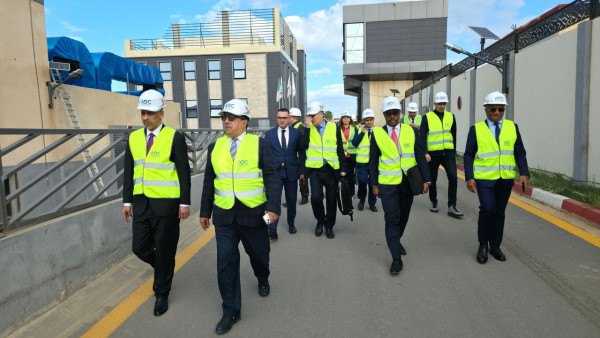
The African Development Bank (AfDB) (www.AfDB.org) has officially been earmarked as Algeria's international partner in the country's renewed efforts to engage with external financing, marking a key milestone in the ongoing partnership between Algeria and the Bank Group.
During his official visit to Algeria on 16-17 November, Dr Sidi Ould Tah, President of the African Development Bank, expressed his deep gratitude to Algerian President Abdelmadjid Tebboune for this significant decision. Ould Tah emphasised that the move represented a strategic step forward in Algeria's development and its relationship with the Bank Group.
As part of the 2025 Finance Law, Algeria has initiated its approach to external financing, focusing on large-scale projects of national importance. A central priority is the development of the Laghouat–Ghardaïa–El Meniaa railway line (495 km), with an estimated cost of $2.8 billion.
This rail line marks the first phase of a major Trans-Saharan Railway corridor, which will eventually stretch from the north of the country to Tamanrasset and beyond, connecting to Niger. This new logistics route will not only open up the southern regions of Algeria but will also provide a vital transport link for landlocked countries in the Sahel, facilitating access to essential resources and markets.
The project is part of Algeria's broader national railway expansion plan, which aims to double the country's railway network to 10,000 km by 2030, with a long-term goal of reaching 15,000 km. This expansion aligns with Algeria's broader goal of modernising its infrastructure to reduce transportation costs, integrate isolated regions, and increase the domestic processing of valuable natural resources, including critical and industrial minerals.
Minister of Hydrocarbons and Mines, Mohamed Arkab, underscored the government's commitment to adding value to the country's raw materials. “We can no longer accept exporting our raw materials in their unprocessed state,” said Arkab.
Algeria has set ambitious targets to increase the local transformation of hydrocarbons from 30 percent to 60 percent by 2035, supported by a $60 billion investment plan running from 2025 to 2029. The country also aims to expand its capacity in petrochemicals, hydrogen, and other gas derivative industries, with a focus on upgrading fertilizer, oil, tire, and mineral processing.
In the mining sector, Algeria is positioning itself as a leader in the extraction and processing of critical minerals such as iron, zinc, gold, and rare earths. Many of these resources are located in the Saharan region, often huge distances from existing infrastructure. The Trans-Saharan Railway will provide the necessary logistical support to unlock the potential of these remote deposits, enabling local processing and improving access to markets in Algeria and neighbouring countries.
Ould Tah expressed strong support for Algeria's ambitions, highlighting the alignment of the country's industrial transformation with the African Development Bank's strategic vision. “The localisation of value, industrialisation, and mineral sovereignty are key pillars of Africa's future,” Ould Tah said, referencing a recent study by BloombergNEF, which indicated that Africa has a clear competitive advantage in producing battery precursors. He called for a coordinated approach across African nations to protect and sustainably enhance the continent's critical mineral resources.
The visit also focused on Algeria's efforts to strengthen energy and water security. The Bank President visited the “Fouka 2” seawater desalination plant, which is part of Algeria's broader efforts to address water scarcity exacerbated by prolonged drought in the Mediterranean region.
The country currently operates 19 desalination plants. Five more units are set to come online by 2027, increasing desalination capacity to meet an impressive 60 percent of national water needs by 2030.
Algeria's years-long expertise in liquefied petroleum gas (LPG) distribution was also highlighted as a model for the continent. The country provides 75 percent of its households with LPG, including cities in the southern desert region, through locally designed and built infrastructure. This experience is seen as a valuable contribution to the African Union's clean energy transition efforts, with the African Development Bank supporting similar clean cooking initiatives across the continent.
Minister of the Interior, Local Authorities, and Transport, Saïd Sayoud, and Minister of Public Works and Basic Infrastructure, Abdelkader Djellaoui, highlighted Algeria's exceptional capacity to manage large infrastructure projects. The country recently completed 950 km of railway in just 24 months using entirely domestic resources and expertise. This execution capacity is critical for supporting the ongoing development of key North-South corridors and strategic mining lines.
President Ould Tah praised Algeria's ambitious vision and ability to execute high-quality projects, declaring: “The ambition of the Algerian government, the quality of its projects, and its national execution capacity make it a central partner for Africa's transformation.”
Distributed by APO Group on behalf of African Development Bank Group (AfDB).Additional Link:
https://apo-opa.co/47ZqARW
Contact:
Chawki Chahed
Communication and External Relations Department
email: media@afdb.org
About the African Development Bank Group:
The African Development Bank Group is Africa's premier development finance institution. It comprises three distinct entities: the African Development Bank (AfDB), the African Development Fund (ADF) and the Nigeria Trust Fund (NTF). On the ground in 41 African countries with an external office in Japan, the Bank contributes to the economic development and the social progress of its 54 regional member states. For more information: www.AfDB.org