
Explore more Articles in
Senegal
Senegal Charts Gas-to-Power Strategy at MSGBC 2025
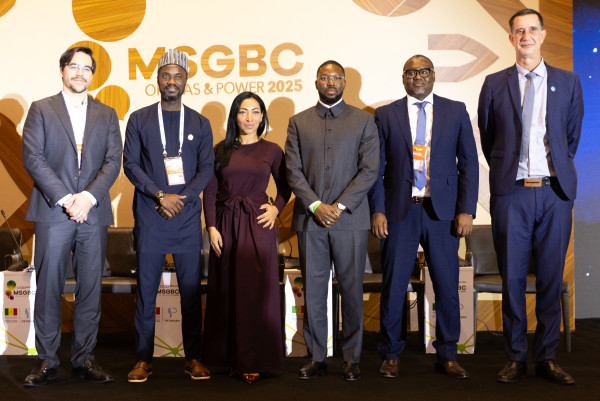

Senegal is emerging as a continental leader in gas-to-power solutions, combining innovative technical models with flexible project delivery to meet rapidly growing electricity demand, panelists said on Tuesday at the MSGBC Oil, Gas & Power 2025 conference in Dakar.
Senegal's approach is already showing results: the country launched Africa's first LNG-to-power project this July without subsidies, highlighting a model that could serve as a blueprint for the region, according to Zackarie Fortin-Brazeau, Vice President for LNG to Power & Clean Technologies at Karpowership.
“This is a milestone for the continent and showcases the proof of discipline and strong execution here in Senegal,” Fortin-Brazeau said. He noted that Senegal's electricity demand is growing by 9–10% per year, among the fastest in the world. “Keeping up with this demand requires reliability, flexibility and speed. New turbines today take around five years to procure, deliver and install – this is why powerships play a long-term role in countries that have quick emerging power.” Fortin-Brazeau emphasized that floating powerships can be deployed faster and at lower cost than land-based plants, complementing renewable energy sources by providing generation that can respond quickly to intermittent supply.
The push for gas integration is underpinned by a broader strategic shift, according to Papa Toby Gaye, Director General of national electricity company SENELEC. “This strategy is built on decentralizing capacity. We understand that electricity costs depend heavily on the type of fuel used… If we are able to introduce gas into the mix, we can significantly reduce electricity prices,” Gaye said. He added that smaller, distributed power plants will allow Senegal to flexibly integrate gas as it becomes available.
Technical execution remains central to these efforts. Pape Momar Lô, CEO of state-owned Réseau Gazier du Sénégal, emphasized rigorous preparation, including stakeholder consultation, mapping and environmental planning. He also highlighted the wider potential of gas infrastructure: “Even today, the conversation has moved beyond simply ‘gas-to-power' to ‘gas-to-X.' This reflects that various industries – whether in agriculture, transportation, aquaculture, health or fishing – can adapt and take advantage of this gas infrastructure for their own development. We need a strong legal framework, with a strong gas code to make sure this is sustainable.”
The economic case for gas-to-power in Africa was reinforced by Dr. Riverson Oppong, CEO of the Chamber of Oil Marketing Companies. “We have tested gas-to-power not only in Ghana but other African countries. The technology is tested, acceptable, and most importantly, very affordable,” he said. Highlighting Ghana's experience, he noted that switching from crude oil or diesel to gas cut electricity tariffs significantly, illustrating the financial impact of integrating gas.
From a financial and operational perspective, Dominique Gadelle, VP Early Engagement Gas at TechnipEnergies, highlighted the pillars of successful gas-to-power projects: revenue security, risk reduction, ESG compliance and technological integration. “Switching from fuel to natural gas is one of the most credible pathways, as it can reduce CO₂ emissions per megawatt-hour by approximately 50%,” he said. Gadelle also emphasized forward-looking planning for the sector: gas-to-power is a lever to transition from coal and fuel to cleaner electricity, but networks should eventually be ready to integrate hydrogen and reduce reliance on carbon to meet future energy demands.
Distributed by APO Group on behalf of Energy Capital & Power.Gambia National Petroleum Corporation (GNPC) Urges Stronger Regional National Oil Company (NOC) Partnerships at MSGBC Energy Event

The Gambia's national oil company (NOC), Gambia National Petroleum Corporation (GNPC), has urged regional NOCs in West Africa to partner on accelerating exploration across the country's onshore acreage.
The call was made by Cany Jobe, Director of Exploration and Production at GNPC, during the Leveraging Frontier Discoveries for Growth in West Africa panel at MSGBC Oil, Gas & Power 2025 in Dakar on December 9.
“We are looking for partners to help us de-risk the onshore and bolster regional collaboration with NOCs, including Petrosen,” Jobe said, adding, “Onshore is where we are lagging, and we do not have much data there.”
Petrosen – Senegal's NOC – noted that less than 10% of the MSGBC Basin has been explored and highlighted efforts to expand activities into deeper waters, where additional 3D seismic data is required.
“We see a lot of similarity in our basin with other world-class basins throughout the world, which gives us a lot of confidence,” said Abu Mbengue, Director of Exploration and Promotion, Petrosen E&P.
Mauritania's NOC, Société Mauritanienne des Hydrocarbures (SMH), underscored the country's track record of 11 oil and gas discoveries from more than 80 wells onshore and offshore. The NOC emphasized the scale of recent data acquisition, with over 100,000 km² of 3D seismic data now available.
“If you see the offshore of Mauritania, all petroleum systems are working well,” said Hammadi EL Hadji, Exploration Director, SMH. “The MSGBC basin is one of the greatest basins in the world and we have immense potential regarding oil and gas.”
Energy data and intelligence firm TGS – which holds one of the world's largest multi-client libraries of geophysical and geological data – announced that it is preparing new vessels for deployment in West Africa. The company is also introducing low-frequency data sources to enhance data richness and resolution.
“Seismic is our business and we are very much built in the multi-client model,” said Robert Holden, Vice President – Africa, Mediterranean and Middle East, TGS, adding, “We also have enhancements in satellites, storage and cloud technologies.”
Elsewhere in the MSGBC region, Guinea-Bissau is experiencing renewed offshore exploration activity, driven by entries from major international companies including Apus Energy. The company holds the shallow-water Sinapa and Esperança licenses, where a well was drilled in 2024 and a potential follow-up well is under consideration for 2027.
“We have embarked on a journey to deliver a well offshore Guinea-Bissau,” said Michael Mosesyan, Drilling Manager at Apus Energy. “While we have not hit the same volumes as the Sangomar oil field, we did encounter some oil plays in the Sinapa and Esperança licenses.”
Building on the Sangomar oilfield in Senegal and the Greater Tortue Ahmeyim (GTA) LNG development along the Senegal-Mauritania maritime border, the MSGBC Basin has seen substantial growth in offshore investment. As operator of the GTA project, bp confirmed it is working with both governments to deliver Phase 2, with start-up targeted for 2027.
“In terms of future phases, bp, its partners and the governments of Senegal and Mauritania are working together to unlock the next phase in the best possible way,” said Mariama Ndao, Deputy Country Manager-Senegal, bp. “We are laser-focused in our mission to deliver the next chapter of the GTA project.”
Distributed by APO Group on behalf of Energy Capital & Power.Leaders Honored as MSGBC 2025 Awards Spotlight a Transformative Year in Regional Energy

This year's MSGBC Oil, Gas & Power 2025 conference and exhibition concluded its opening day with a gala dinner and awards ceremony on December 9, celebrating a transformative year for the region's energy sector. With Senegal and Mauritania entering a new chapter as oil and gas producers and the broader MSGBC basin accelerating investment across hydrocarbons, renewables and green hydrogen, the evening honored outstanding leaders, companies and institutions whose contributions are shaping West Africa's evolving energy landscape.
“MSGBC, we are here,” stated Birame Soulèye Diop, Minister of Energy, Petroleum and Mines, Senegal, adding, “What we discuss this evening may shape the future of Senegal. We are writing a page of history.”
Senegalese oil and gas engineering services company Gorée Offshore-Senegal has received the Local Content Excellence Award for its exceptional contributions towards national capacity building. As a homegrown engineering services company, Gorée Offshore-Senegal has become a trusted partner to major operators, recently securing contracts with MODEC, Woodside Energy and Subsea 7 on the Sangomar oilfield project and Greater Tortue Ahmeyim LNG development. With Senegal aiming to boost production at Sangomar, expand domestic processing and maximize local benefits under a revised petroleum code, Gorée Offshore-Senegal stands out for creating high-skilled jobs, advancing knowledge transfer and supporting national self-sufficiency.
Guinea-Conakry's Ministry of Energy was honored with the Renewable Energy Pioneer Award. The country is emerging as a regional clean energy leader through major hydropower developments such as Souapiti (450 MW) and Amaria (300 MW), expanded solar infrastructure including the 84 MW CleanPower Generation project, and ambitious electrification and modernization programs targeting universal access by 2030.
For steering one of the world's most ambitious green hydrogen strategies, the Green Hydrogen Recognition Award was presented to Taghiya Abeiderrahmane, Director of Low Carbon Hydrogen at Mauritania's Ministry of Energy and Petroleum. Backed by a pioneering national hydrogen code and a clear government roadmap, Mauritania is partnering with major developers on multi-gigawatt projects such as AMAN (30 GW), Nour (10 GW) and Megaton Moon (60 GW) – initiatives set to reshape regional energy systems and position the country as a global hub for green hydrogen, ammonia and low-carbon industry.
The Female Pioneer in the Industry Award was presented to Cany Jobe, Director of Exploration and Production at the Gambia National Petroleum Corporation, recognizing her exceptional leadership, technical expertise and long-standing contribution to Africa's upstream sector. Jobe has emerged as one of West Africa's most influential geoscience and exploration leaders, championing frontier basin development, driving collaboration initiatives and advancing opportunities for women across the energy value chain.
As the region advances toward a new era of energy growth, integration and sustainability, the 2025 MSGBC Oil, Gas & Power award recipients stand as exemplars of the leadership driving that momentum. Their achievements highlight the MSGBC basin's rising global profile and reinforce the conference's role as a catalyst for innovation, collaboration and long-term development.
“At MSGBC, what it really comes to in the end, it comes to people,” stated NJ Ayuk, Executive Chairman of the African Energy Chamber. “It comes to people. We want to thank Petrosen for hosting this evening. They have a big vision; they have big goals, and they have the audacity to want to accomplish them. This kind of ambition is what has become significant to MSGBC.”
Distributed by APO Group on behalf of Energy Capital & Power.Senegal to Launch Pipeline Network Construction Before End of 2025

Senegal's state-owned midstream company Reseau Gazier du Sénegal is set to begin construction of a domestic gas pipeline network before the end of 2025, according to Birame Soulèye Diop, Minister of Energy, Petroleum & Mines of Senegal.
Minister Diop made the announcement during the ministerial panel at MSGBC Oil, Gas & Power 2025 on Tuesday, which brought together energy ministers and senior officials from Senegal, Mauritania, Guinea-Bissau, Guinea-Conakry and The Gambia to discuss regional cooperation and sustainable energy development.
“We are leveraging domestic gas as a transitional energy source, providing access to energy and clean cooking. RGS is leading this initiative and we hope to lay the first stone of the pipeline network before the end of 2025,” Minister Diop stated. Minister Diop outlined the country's integrated strategy for gas, emphasizing multiple uses beyond export. “The integrated strategy sees the sector as a whole, from gas-to-power to gas-to-industry, but also applications in transport and agriculture,” Minister Diop explained.
Lamin Camara, Permanent Secretary, Ministry of Petroleum and Energy, The Gambia echoed Minister Diop's comments on regional integration and collaboration. “Regional cooperation is at the heart of our policy. We are in discussions with Mauritania and Senegal to be part of the gas pipeline network and benefit from its resources,” Camara said. On developing The Gambia's hydrocarbon potential, he noted, “We have completed three negotiations and hope to sign agreements with major and mid-size companies before year-end.”
Mohamed Ould Khaled, Minister of Petroleum and Energy of Mauritania, emphasized cross-border collaboration. “The Greater Tortue Ahmeyim gas project shared with Senegal is a successful example of regional cooperation, providing gas to multiple partners. We aim to develop our countries and industries together, working closely with neighboring states to maximize opportunities,” noted Minister Khaled.
Bachir Camara, Deputy Minister of Guinea-Conakry, highlighted collaboration with other West African national oil companies. “We are upgrading governance and cooperating with Senegal's Petrosen and Ivory Coast's Petroci to strengthen regional collaboration and improve exploration outcomes,” Minister Camara stressed.
Meanwhile, Celedónio Plácido Vieira, Minister of Natural Resources of Guinea-Bissau, also spoke on leveraging regional potential. “We started reforming our petroleum code in 2014 to attract investment, and now we want to engage with the NOCs of neighboring countries. Cooperation is key to making the MSGBC basin more attractive,” Vieira said. Minister Diop concluded, “Senegal shares oil resources with Guinea-Bissau at the border and it is crucial to work together considering the potential of their blocks.”
Distributed by APO Group on behalf of Energy Capital & Power.Gas Exporting Countries Forum (GECF), African Petroleum Producers’ Organization (APPO) Chiefs Honored at MSGBC 2025 for Driving Regional, Global Energy Cooperation

The Secretary Generals of intergovernmental organizations the Gas Exporting Countries Forum (GECF) and the African Petroleum Producers' Organization (APPO) were awarded the Gas Market Development and & Innovation Award and Regional Energy Collaborator Award, respectively, at this year's MSGBC Oil, Gas & Power 2025 conference and exhibition.
The awards were given to Eng. Mohamed Hamel, Secretary General, GECF and Dr. Omar Farouk Ibrahim, Secretary General, APPO during the opening ceremony of the event on December 9.
Eng. Hamel was bestowed the award in recognition of his efforts to enhance global gas cooperation during a key turning point for the MSGBC basin. Through his guidance, the GECF has promoted policy alignment, market transparency and data-drive analysis, enabling new LNG-producing nations such as Senegal and Mauritania to integrate more effectively into global markets.
“As global energy systems evolve, natural gas will remain essential for industrialization, economic growth and stability. The GECF is committed to supporting emerging producers with data-driven insights, dialogue and collaboration. Together, we can ensure that the region's gas resources become a catalyst for long-term, inclusive prosperity,” stated Eng. Hamel.
Meanwhile, in recognition for his pivotal role in advancing African-led energy development at a time of accelerated industry growth across the continent, Dr. Ibrahim's leadership at APPO has served to bolster policy harmonization, nurture joint initiatives among member states and champion the establishment of the African Energy Bank – an emerging financial instrument expected to unlock significant capital for oil, gas and associated infrastructure.
“For too long, our industry has relied heavily on external financing, technology and markets,” Dr. Ibrahim stated, adding, “That model is no longer sustainable. We are working to build African capacity, strengthen regional centers of excellence and ensure our resources drive development at home. The path forward is one of cooperation, self-reliance and strategic unity across the continent.”
Together, these awards underscore the strategic importance of regional and international collaboration as West Africa enters a new phase of energy expansion.
Distributed by APO Group on behalf of Energy Capital & Power.