
Explore more Articles in
Ivory Coast
16 Days of Activism against gender-based violence: Five Bold Moves to end digital gender-based Violence — and unlock Africa’s digital promise (By Jemimah Njuki...

Download logo
By Jemimah Njuki , Director of the Women, Gender and Civil Society Department at the African Development Bank (www.AfDB.org) and Ndey Oley Cole, senior program manager.
The 16 Days of Activism against Gender-Based Violence campaign is an international campaign led by the United Nations to challenge violence against women and girls. From 25 November - 10 December, this year's 16 Days campaign targets how to end digital violence against women and girls. African Development Bank Director for Women, Gender and Civil Society Jemimah Njuki and Senior Programme Officer Ndey Oley Cole share five bold moves to end digital gender-based violence and unlock Africa's digital promise.
Every day, countless African women and girls face harassment, threats, and abuse online — acts that silence their voices and limit their participation in the digital economy. In sub-Saharan Africa, 34 percent of young people aged between 18 and 24 experience online bullying, and according to UN Women 28 percent of women in sub-Saharan Africa had experienced online violence. These figures underscore that digital Gender-Based Violence is not an abstract problem — it is a pervasive barrier to equality, opportunity, and empowerment.
As Africa accelerates its digital transformation, we must ensure that safety and inclusion travel together. Ending digital gender-based violence is central to achieving inclusive growth, human dignity, and the promise of Africa's digital future. Here are five bold moves we can take to make online spaces safer and more empowering for women and girls.
1 Enact Comprehensive, Gender-Responsive Cyber Laws
Many African countries still lack laws that clearly define and criminalise digital forms of gender-based violence. Where legislation exists enforcement often falls short - and survivors frequently face limited protection. African governments must develop and enforce laws that recognise digital gender-based violence as a crime, ensure survivor-centred protections, and foster cross-border cooperation to tackle transnational digital abuse. Development partners, including the African Development Bank, are ready to support legal reforms through technical assistance and policy dialogue.
2 Embed Online Safety into Digital and National Development Strategies
Despite investments in broadband infrastructure and digital skills, many information and communications technology strategies overlook online safety — especially for women. Rwanda's National Cyber Security Policy shows how online safety can be integrated into national development agendas. Governments must mandate “safety by design,” fund public education on digital rights, and include digital safety in school curricula. Aligning investments in technology with secure, inclusive policies ensures that the digital economy benefits everyone.
3 Hold Tech Platforms Accountable
Tech platforms profit from African users yet often provide minimal culturally adapted content moderation, limited grievance mechanisms, and inadequate protections for women. The South Africa's Film and Publication Board Amendment Act offer benchmarks for transparency, accountability, and timely content removal. Africa needs a regional framework to set minimum safety standards, enforce content regulation, and create real-time grievance redress systems. Platforms must prioritize user safety as they expand across the continent.
4 Invest in Survivor-Led Innovation and Gender-Sensitive Digital Solutions
African women are not just victims — they are innovators creating tech-enabled solutions. Organizations such as Pollicy in Uganda and the Center for Information Technology and Development in Nigeria develop digital safety tools, train communities, and advocate for online rights. Targeted funding can amplify these efforts. For example, the African Development Bank's Korea Africa Economic Cooperation Trust Fund, in partnership with UN Women, is supporting a project in Côte d'Ivoire that empowers disadvantaged women and girls through education and digital technology, improving access to decent employment and entrepreneurial opportunities. Investing in survivor-led initiatives not only protects women but strengthens the ecosystem for innovation and social change.
5 Build a Pan-African Data System on Digital Gender-Based Violence
We cannot solve what we cannot measure. Currently, there is no standardised, continent-wide data on digital gender-based violence, and little disaggregated national data. UN Women's Women Count initiative shows how rigorous, gender-responsive data can drive policy change. Africa needs a continental strategy backed by ethical data collection, gender-disaggregated indicators, and open civil society access. The African Development Bank's Gender Data Portal (https://apo-opa.co/4aluszz), the Africa Gender Index Analytical Report (https://apo-opa.co/496KBqp), and capacity-building for national statistics offices are already making progress. Expanding these efforts ensures that policymakers and communities can respond effectively to the scope and trends of digital gender-based violence.
A Call to Action
Ending digital gender-based violence is achievable - but only if governments, tech platforms, funders, and citizens act decisively. Governments must adopt and enforce laws, embed online safety in national strategies, and invest in survivor-led initiatives. Tech platforms must prioritize user protection and accountability. Donors and development partners must fund Gender-responsive innovations. And we all must recognize that a safer digital Africa is not just a moral imperative — it is an economic and social one.
Africa's digital promise depends on women and girls being able to participate safely, freely, and confidently. By taking bold, coordinated action now, we can ensure that the next generation of African innovators and leaders thrives in a digital space that protects, empowers, and uplifts them.
Distributed by APO Group on behalf of African Development Bank Group (AfDB).Côte d’Ivoire Catalyzes Nationwide Access to Clean Water with the Inauguration of the Galébré Urban Water Supply System

Côte d'Ivoire has taken an additional important step toward guaranteeing access to clean water with the inauguration of the urban water supply system for the Sub-Prefecture of Galébré. This is one of the first systems completed under the country's national Water for All (Eau Pour Tous) program. Designed to improve the lives of 35,000 inhabitants in the long term, this modern infrastructure, delivered by Mitrelli (https://Mitrelli.com), reinforces the Government of Côte d'Ivoire's commitment to ensure that clean water becomes a fundamental right for everyone.
This inauguration marks a flagship achievement within the Government's broader Water for All program, to modernize water infrastructure nationwide and close long-standing gaps in access for underserved communities. It will ultimately provide more than 1.5 million people across 200 sub-prefectures with sustainable access to potable water.
The inauguration, held on December 12, was led by H.E. Bouaké Fofana, Minister of Hydraulics and Sanitation, reaffirming the Government of Côte d'Ivoire's determination to expand equitable access to clean water across rural and semi-urban regions. Distinguished attendees included H.E. Moussa Sanogo, Minister of Heritage, State Portfolio, and Public Enterprises, H.E. Belmonde Dogo, Minister of National Cohesion, Solidarity and the Fight Against Poverty, H.E. Anne-Désirée Ouloto-Lamizana, Minister of Civil Service and Administrative Modernization, as well as regional authorities: the General Director of ONEP Ibrahiman Berté, traditional leaders, and community representatives. Mitrelli was represented by the country leadership team and the project team.
The newly inaugurated urban water supply system in Galébré will serve 35,000 inhabitants in the long term, providing a reliable and sustainable supply of clean water. The infrastructure includes a complete urban water supply system designed to improve public health, reduce waterborne diseases, and support socio-economic development across the region.
As of December 2025, significant progress has been achieved by the Government with the support of Mitrelli across the Water for All national programs. Works are currently underway in 25 villages. An additional six sites are scheduled to begin in December, while three more villages are expected to be completed before year-end. Provisional receptions for several sites are planned for January 2026.
These advancements reflect a coordinated national effort to strengthen water security, upgrade essential services, and improve resilience across Côte d'Ivoire.
Abdoul Hien, Country General Manager, Mitrelli Côte d'Ivoire, stated: “It is an honor to work with the Government of Côte d'Ivoire in advancing this historic initiative. The Water for All program is transforming daily life for communities across the country. Galébré is a first step; more will come. By delivering sustainable access to clean, safe water, we are enabling better health, stronger educational outcomes, and new economic opportunities. Mitrelli is committed to working alongside national and local partners to ensure long-term, impactful results for the country.”
This inauguration demonstrates how strategic water infrastructure can directly improve public health, strengthen community development, and unlock economic potential. Reliable access to potable water reduces diseases, frees time for education - not only but especially for women and girls - and supports agricultural, commercial, health-related and social activities. Côte d'Ivoire's progress through the Water for All program signals a nationwide shift toward sustainable and inclusive development.
Distributed by APO Group on behalf of Mitrelli Group.Mitrelli media contact:
Emmanuelle Bendenoun
Global Communications Manager
Emmanuelle.b@mitrelli.com
Follow us on:
LinkedIn: https://apo-opa.co/3MEPCic
About Mitrelli:
Mitrelli (https://Mitrelli.com), a Swiss-based international company with over a decade of profound impact in Africa, has been collaborating closely with African leadership, governments, businesses, and communities, investing in and implementing innovative, holistic, and sustainable national-scale solutions. To date, the company has over 100 national-scale projects implemented across the continent, spanning housing, water, food, and energy, as well as key societal accelerators such as education, healthcare, and technology.
To learn more, visit us at https://Mitrelli.com.
Afreximbank says Africa must raise factoring volumes to at least €240 billion to support Small and Medium Enterprises (SME)-led transformation
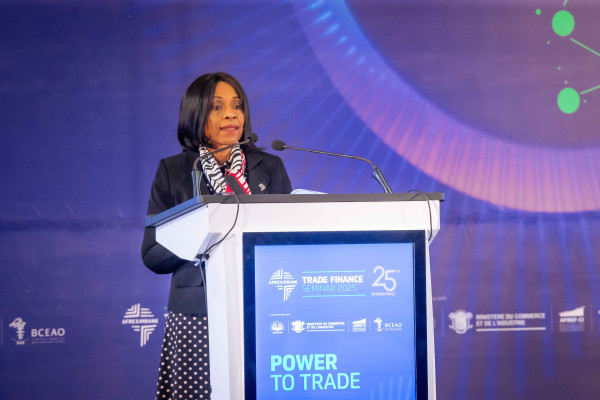
Afreximbank (www.Afreximbank.com) has highlighted the critical importance of factoring and supply chain finance (SCF) in narrowing Africa's Small and Medium Enterprises (SMEs) financing gap and building resilient value chains across the continent.
Speaking at Afreximbank's annual Factoring Workshop in Abidjan, Côte d'Ivoire, Mrs Kanayo Awani, Executive Vice President, Intra-African Trade and Export Development (IAED) at Afreximbank and Member of the FCI Executive Committee, noted that although Africa's factoring volumes have more than doubled in recent years, increasing from €21.6 billion in 2017 to €50 billion in 2024, and with nearly 200 factoring companies now operating across the continent, current activity still remains significantly below Africa's transformative potential.
She said: “Although SMEs account for more than 90% of Africa's businesses and over 60% of employment and GDP, they continue to face a financing gap estimated at US$300 billion annually.
“To catalyse SME-led growth, Africa must scale factoring volumes to at least €240 billion, equivalent to about 10% of the continent's GDP. Achieving this will require increased financing, deeper legal reforms, expanded training and strong industry partnerships.”
Also speaking at the workshop, Mr Neal Harm, Secretary General of FCI, said that factoring and supply chain finance are critical to unlocking SME growth in Africa, calling for practical solutions, strong partnerships, and collaborative action to turn the day's discussions into tomorrow's transactions.
Representing Dr Jean-Claude Kassi Brou, Governor of the Central Bank of West Afircan States (BCEAO), Mr. Charlie Dingui, Special Advisor to the National Director stressed the importance of SME financing for driving socio-economic development across UEMOA member states.
“By enabling businesses to convert their accounts receivable into immediate liquidity, factoring improves cash flow and stimulates growth, particularly in environments marked by long payment delays and collection challenges,” said Mr Dingui.
Côte d'Ivoire presents a significant opportunity to boost economic development by expanding its factoring market. The country's factoring and supply chain finance sector is estimated to have a potential of US$5 billion, a notable prospect in an economy where the cocoa sector alone supports millions of livelihoods. Yet, only 12% of SMEs currently seek working capital from formal financial institutions, relying instead on informal sources largely due to high financing costs, perceived SME risk, strict loan requirements, and slow approval processes.
The annual Factoring workshop is part of Afreximbank and FCI's long-standing commitment to expanding awareness and strengthening technical expertise on factoring and supply chain finance, key enablers essential to advancing the implementation of the African Continental Free Trade Area (AfCFTA).
To date, more than 5,000 delegates have been trained through over 25 capacity-building initiatives. Training is available through the Certificate of Trade Finance in Africa (COTFIA), the Afreximbank Academy (AFRACAD), FCI's online and bespoke factoring training programmes, and the FCI Mentoring Programme.
Distributed by APO Group on behalf of Afreximbank.Media Contact:
Vincent Musumba
Communications and Events Manager (Media Relations)
Email: press@afreximbank.com
Follow us on:
X: https://apo-opa.co/4q2reWm
Facebook: https://apo-opa.co/3YiPAyY#
LinkedIn: https://apo-opa.co/3XMOefM
Instagram: https://apo-opa.co/4oCyXJj
About Afreximbank:
African Export-Import Bank (Afreximbank) is a Pan-African multilateral financial institution mandated to finance and promote intra- and extra-African trade. For over 30 years, the Bank has been deploying innovative structures to deliver financing solutions that support the transformation of the structure of Africa's trade, accelerating industrialisation and intra-regional trade, thereby boosting economic expansion in Africa. A stalwart supporter of the African Continental Free Trade Agreement (AfCFTA), Afreximbank has launched a Pan-African Payment and Settlement System (PAPSS) that was adopted by the African Union (AU) as the payment and settlement platform to underpin the implementation of the AfCFTA. Working with the AfCFTA Secretariat and the AU, the Bank has set up a US$10 billion Adjustment Fund to support countries effectively participating in the AfCFTA. At the end of December 2024, Afreximbank's total assets and contingencies stood at over US$40.1 billion, and its shareholder funds amounted to US$7.2 billion. Afreximbank has investment grade ratings assigned by GCR (international scale) (A), Moody's (Baa2), China Chengxin International Credit Rating Co., Ltd (CCXI) (AAA), Japan Credit Rating Agency (JCR) (A-) and Fitch (BBB-). Afreximbank has evolved into a group entity comprising the Bank, its equity impact fund subsidiary called the Fund for Export Development Africa (FEDA), and its insurance management subsidiary, AfrexInsure (together, "the Group"). The Bank is headquartered in Cairo, Egypt.
For more information, visit: www.Afreximbank.com
Sierra Leone’s President and Chairman of Economic Community of West African States (ECOWAS) Heads of State, Dr. Julius Maada Bio, Arrives in Abidjan, Côte...
Download logo
His Excellency Dr. Julius Maada Bio, President of the Republic of Sierra Leone and Chairman of the Authority of Heads of State and Government of the Economic Community of West African States (ECOWAS), has arrived in Abidjan ahead of the inauguration of His Excellency President Alassane Ouattara.
President Ouattara was re-elected President of the Republic of Côte d'Ivoire following the 25 October 2025 presidential elections, and his swearing-in ceremony is scheduled to take place in Abidjan.
President Bio was warmly received at the Félix Houphouët-Boigny International Airport by the Prime Minister of Côte d'Ivoire, His Excellency Robert Beugré Mambé, along with senior government officials and members of the diplomatic corps.
As Chairman of ECOWAS, President Bio's presence underscores Sierra Leone's strong commitment to regional cooperation, democratic consolidation, and strengthening bilateral relations with Côte d'Ivoire and other West African nations. The visit also reflects the collective leadership role President Bio continues to play in promoting peace, economic integration, and good governance across the ECOWAS region.
Distributed by APO Group on behalf of State House Sierra Leone.